
Nylon 11 (PA11): Composition, Material and Structure


Nylon 11 (PA11) is a semi-crystalline polyamide polymer derived from 11-aminoundecanoic acid, a monomer sourced from castor oil, making it one of the few high-performance engineering plastics produced from a renewable biological feedstock. The Nylon 11 belongs to the nylon family but carries a longer carbon chain between amide groups than most standard nylon grades, directly influencing its flexibility, moisture resistance, and dimensional stability in demanding environments.
The composition of Nylon 11 centers on repeating amide linkages (-CO-NH-) separated by 10 methylene (-CH₂-) units per monomer unit, producing a molecular structure with lower amide group density than Nylon 6 or Nylon 6/6. The reduced amide density lowers water absorption to 0.9% compared to 2.5% to 3.5% for standard nylon grades, preserving mechanical properties in humid and wet service conditions. Key properties include tensile strength from 50 MPa to 60 MPa, elongation at break from 250% to 350%, and a service temperature range from -40°C to 130°C. Nylon 11 serves automotive fuel lines, oil and gas flexible pipes, electrical cable sheathing, industrial powder coatings, and selective laser sintering (SLS) additive manufacturing due to its combination of flexibility, chemical resistance, and bio-based origin.
What Is Nylon 11 (PA11)?
Nylon 11 is a semi-crystalline aliphatic polyamide engineering thermoplastic produced by the condensation polymerization of 11-aminoundecanoic acid, a monomer derived from castor bean oil. The number 11 in the designation refers to the 11 carbon atoms present in the monomer unit, which distinguishes the polymer's chain architecture from other nylon grades produced from shorter or different monomer combinations. The material achieves a melting point from 183°C to 190°C, a glass transition temperature of approximately 46°C, and a density of 1.03 g/cm³ to 1.05 g/cm³, making it one of the lightest engineering polyamides commercially available. The long carbon chain between amide groups produces a more flexible molecular backbone than Nylon 6 or Nylon 6/6, resulting in superior low-temperature impact resistance down to -40°C and lower equilibrium moisture absorption of 0.9% at 23°C and 50% relative humidity. Nylon 11 serves demanding applications in automotive fuel systems, oil and gas offshore flexible risers, pneumatic tubing, and SLS powder bed additive manufacturing because no standard nylon grade simultaneously matches its combination of flexibility, chemical resistance, and renewable monomer origin.
How Is Nylon Classified Within the Nylon Family?
Nylon is classified within the polymer family by the number and arrangement of carbon atoms in the monomer or monomer pair used during polymerization, with each designation reflecting the chain length that determines the material's amide group density and resulting mechanical character. Single-number nylons (Nylon 6, Nylon 11, Nylon 12) derive from a single amino acid or lactam monomer, while double-number nylons (Nylon 6/6, Nylon 6/10, Nylon 6/12) derive from a diamine and a diacid reacted in combination. Nylon 11 sits at the flexible end of the semi-crystalline nylon spectrum, alongside Nylon 12, due to the long 11-carbon monomer chain that spaces amide groups further apart than shorter-chain grades. Nylon 6 and Nylon 6/6 carry higher amide group density, producing greater stiffness, higher moisture absorption, and higher melting points at 220°C to 265°C compared to Nylon 11's melting range of 183°C to 190°C. The classification directly predicts Nylon Properties, including water absorption, flexibility, chemical resistance, and service temperature for each grade within the family.
Is Nylon a Type of Polyamide?
Yes, nylon is a type of polyamide. Every nylon grade belongs to the polyamide polymer family because each contains repeating amide linkages (-CO-NH-) along the main polymer backbone formed during condensation polymerization. The term polyamide is the chemical classification, while nylon is the commercial designation applied specifically to synthetic aliphatic polyamides developed originally by DuPont in the 1930s. Not all polyamides are nylon. Aromatic polyamides (aramids), including Kevlar and Nomex, carry amide linkages connected to aromatic ring structures rather than aliphatic carbon chains, placing them in a distinct performance category with tensile strength exceeding 3,000 MPa and decomposition temperatures above 400°C. Nylon grades are exclusively aliphatic polyamides, meaning their amide groups connect linear carbon chains without aromatic rings in the main backbone. Nylon 11 qualifies as both a nylon and a polyamide under the chemical definition, produced from an aliphatic monomer with an amide-forming functional group at each end of the 11-carbon chain.
What Is the Composition of Nylon 11?
Nylon 11 is composed of 11-aminoundecanoic acid monomers linked through condensation polymerization, where the amine group (-NH₂) at one end of each monomer reacts with the carboxylic acid group (-COOH) at the other end to release water and form an amide bond (-CO-NH-). The reaction repeats across thousands of monomer units to build a high-molecular-weight polymer chain with a degree of polymerization typically from 100 to 500 repeat units per chain. The monomer 11-aminoundecanoic acid is produced industrially from ricinoleic acid, extracted from castor oil by pyrolysis and subsequent chemical conversion steps. Castor oil content in Nylon 11 production reaches approximately 1 kg of castor oil per 1 kg of polymer, confirming the bio-based carbon fraction is exactly 100% by mass of the monomer unit. Carbon content in the repeat unit is 72.1% by weight, hydrogen content is 11.6%, nitrogen content is 7.6%, and oxygen content is 8.7% , giving the molecular formula (C₁₁H₂₁NO)ₙ per repeat unit with a monomer molecular weight of 201.3 g/mol.
What Is Nylon 11 Made Of at the Molecular Level?
The Nylon 11 is made at the molecular level are listed below.
- Amide Linkage (-CO-NH-): The amide bond forms the structural backbone connection from one monomer unit to the next during condensation polymerization. Each amide group participates in intermolecular hydrogen bonding with adjacent chains, contributing to crystallinity and mechanical strength.
- Methylene Chain (-CH₂-): Ten consecutive methylene units separate each amide group in the Nylon 11 repeat unit, producing a long, flexible aliphatic segment. The methylene chain length directly determines the material's flexibility, low-temperature performance, and low water absorption relative to shorter-chain polyamides.
- Amine Terminal Group (-NH₂): Free amine end groups at polymer chain termini influence molecular weight, melt viscosity, and dye affinity. Amine end group concentration typically ranges from 30 to 60 milliequivalents per kilogram in commercial Nylon 11 grades.
- Carboxylic Acid Terminal Group (-COOH): Acid end groups at the opposite chain terminus balance amine content and affect hydrolytic stability and adhesion characteristics in coatings and composite applications.
- Hydrogen Bonds: Intermolecular N-H···O=C hydrogen bonds from one chain to adjacent chains drive crystallization, producing a crystallinity degree from 20% to 35% in standard Nylon 11 grades at room temperature.
Is Nylon 11 a Synthetic Polymer?
Yes, Nylon 11 is a synthetic polymer produced through an industrial chemical polymerization process, even though its monomer derives from a natural plant source. The monomer 11-aminoundecanoic acid does not exist in castor oil directly but is manufactured through a multi-step chemical conversion of ricinoleic acid involving pyrolysis, hydrobromination, and ammoniation reactions performed at an industrial scale. The polymerization of 11-aminoundecanoic acid into Nylon 11 occurs through condensation polymerization at temperatures from 210°C to 230°C under controlled pressure, forming amide bonds and releasing water as a condensate byproduct. The process requires industrial reactors and precise temperature, pressure, and residence time control to achieve the target molecular weight and mechanical property profile. The bio-based monomer origin qualifies Nylon 11 for a 100% bio-based carbon content certification under ASTM D6866, but the polymerization chemistry classifies it unambiguously as a Synthetic Polymer produced by deliberate chemical synthesis rather than natural biosynthesis in the plant.
What is the Difference Between Polyamide vs. Nylon?
The difference between polyamide vs nylon is shown in the table below.
How Do Polyamide and Nylon Compare in Structure and Use?
The comparison of polyamide and nylon in structure and use is listed below.
- Backbone Chemistry: Polyamide encompasses both aliphatic and aromatic backbone structures, while nylon refers exclusively to aliphatic polyamides where carbon chains connect amide groups without aromatic ring interruption. Aramid polyamides (Kevlar) achieve tensile strength above 3,000 MPa through aromatic ring stiffness unavailable in any nylon grade.
- Monomer Source: Nylon monomers derive from petrochemical feedstocks (caprolactam, adipic acid, hexamethylenediamine) or bio-based sources (11-aminoundecanoic acid from castor oil for Nylon 11), while polyamide includes naturally occurring amide-bonded proteins such as silk and wool alongside all synthetic variants.
- Industrial Applications: Nylon grades serve mechanical, structural, and fluid-handling applications at operating temperatures from -40°C to 130°C in standard grades. Aromatic polyamides serve ballistic protection, aerospace thermal insulation, and high-temperature filtration at continuous service temperatures from 180°C to 220°C, where nylon grades would melt or degrade.
- Processing Methods: Nylon grades are processed through injection molding, extrusion, SLS powder sintering, and film casting at melt temperatures from 200°C to 330°C, while aromatic polyamides require solution spinning or specialized high-temperature processing incompatible with standard thermoplastic equipment.
Are Nylon and Polyamide the Same Material?
No, nylon and polyamide are not the same material, though every nylon is a polyamide. Polyamide is the broader chemical family defined by the presence of amide linkages (-CO-NH-) in the polymer backbone, encompassing both synthetic engineering plastics and naturally occurring protein structures. Nylon is a commercial subcategory restricted to synthetic aliphatic polyamides, excluding aromatic polyamides and natural amide-bonded polymers from the classification. The terms are used interchangeably when referring to engineering thermoplastics such as PA6, PA6/6, PA11, and PA12 because all fall within both the nylon and polyamide definitions simultaneously in everyday industrial practice. The distinction matters most when comparing standard nylon grades to aramid polyamides or when reviewing regulatory and material certification documents that use the Polyamide Definition in its full chemical scope. A material described only as polyamide in a technical data sheet requires clarification on backbone type (aliphatic or aromatic) before mechanical property comparisons with specific nylon grades are valid.
What Are the Key Properties of Nylon 11?
The key properties of Nylon 11 are listed below.
- Tensile Strength: Nylon 11 achieves tensile strength from 50 MPa to 60 MPa at room temperature, providing structural reliability in tubing, hose, and mechanical component applications without requiring reinforcement fillers in standard grades.
- Elongation at Break: Elongation reaches 250% to 350%, making Nylon 11 one of the most flexible semi-crystalline engineering polyamides available at room temperature and down to -40°C.
- Low Water Absorption: Equilibrium moisture absorption at 23°C and 50% relative humidity measures 0.9%, compared to 2.5% to 3.5% for Nylon 6 and Nylon 6/6, preserving dimensional stability and mechanical properties in humid or wet environments.
- Service Temperature Range: Continuous service temperature spans from -40°C to 130°C, with short-term peak resistance to 150°C in stabilized grades.
- Chemical Resistance: Nylon 11 resists hydrocarbons, fuels, oils, greases, and most solvents, with demonstrated compatibility with gasoline, diesel, hydraulic fluid, and automotive brake fluid in fuel line and fluid handling applications.
- Density: Density from 1.03 g/cm³ to 1.05 g/cm³ makes Nylon 11 lighter than Nylon 6 (1.13 g/cm³) and Nylon 6/6 (1.14 g/cm³), reducing component weight in aerospace and automotive tubing systems.
- Impact Resistance: Notched Izod impact strength from 5 kJ/m² to 10 kJ/m² at room temperature, with retained toughness at -40°C, distinguishing Nylon 11 from stiffer polyamide grades that embrittle at sub-zero temperatures.
How Do Nylon Material Properties Affect Performance?
Nylon material properties affect performance by determining how the polymer responds to mechanical stress, temperature variation, chemical exposure, and moisture absorption across the service life of the component. Each property influences a distinct aspect of functional behavior, and no property operates independently in real service conditions. Low water absorption of 0.9% in Nylon 11 directly preserves dimensional tolerances in precision tubing and mechanical components exposed to humidity, where Nylon 6, absorbing 2.5% to 3.5% moisture, would swell measurably and lose stiffness proportional to absorbed water content. High elongation from 250% to 350% allows Nylon 11 tubing to accommodate vibration, pressure surges, and installation routing without cracking or stress whitening at bend radii as tight as 5 times the tube outer diameter. Chemical resistance to fuels, oils, and hydraulic fluids confirms Nylon 11's suitability for automotive and industrial fluid handling, where contact with hydrocarbons would degrade lower-resistance polymers (PVC or polyethylene) within months. Service temperature coverage from -40°C to 130°C without mechanical property collapse gives Nylon 11 a wider functional range than many competing flexible thermoplastics at equivalent wall thickness.
Is Nylon Known for High Strength and Flexibility?
Yes, nylon is known for strength and flexibility, but the balance between the two varies significantly across grades. Nylon 11 represents the flexible end of the nylon performance spectrum, prioritizing elongation and low-temperature toughness over maximum tensile strength. Nylon 6/6 achieves tensile strength from 80 MPa to 90 MPa with elongation at break from 15% to 60%, making it the stronger but less flexible option for structural mechanical components. Nylon 11 reaches tensile strength from 50 MPa to 60 MPa with elongation from 250% to 350%, sacrificing stiffness in exchange for flexibility and impact resistance at temperatures down to -40°C. The trade-off is engineered intentionally through the longer methylene chain in the Nylon 11 monomer, which spaces amide groups further apart and reduces intermolecular hydrogen bonding density, producing a softer, tougher matrix that absorbs energy through large deformation rather than fracturing at low strain values.
What Is the Structure of Nylon 11?
The structure of Nylon 11 has a linear aliphatic polyamide structure consisting of repeating units with the molecular formula (C₁₁H₂₁NO)ₙ, where each unit contains one amide group (-CO-NH-) connected to a chain of 10 methylene groups (-CH₂-). The long methylene segment between amide groups defines the polymer's flexible character by reducing the frequency of hydrogen-bonding sites along the chain compared to shorter-chain polyamides. The polymer adopts a semi-crystalline morphology at room temperature, with crystalline regions forming through intermolecular hydrogen bonding from N-H groups on one chain to C=O groups on adjacent parallel chains. Crystallinity degree ranges from 20% to 35% depending on processing conditions, thermal history, and nucleating agents present in the formulation. The amorphous regions surrounding crystalline lamellae provide the flexibility and toughness that characterize Nylon 11's mechanical behavior, while crystalline regions contribute stiffness, chemical resistance, and dimensional stability. Crystal structure in Nylon 11 takes an α-form configuration under standard processing conditions, with a chain repeat distance of 11.3. Å along the molecular axis. The combination of crystalline order and amorphous flexibility gives Nylon 11 its distinctive balance of tensile strength from 50 MPa to 60 MPa alongside elongation exceeding 250%.
How Does Nylon Molecular Structure Influence Its Properties?
Nylon molecular structure influences properties by controlling the density of hydrogen-bonding amide groups along the chain, the degree of crystallinity achievable during processing, and the flexibility of methylene segments connecting amide groups. Each structural variable translates directly into a measurable mechanical or physical property difference across nylon grades. Higher amide group density in short-chain nylons (Nylon 6, Nylon 6/6) increases intermolecular hydrogen bonding, raising crystallinity to 35% to 45%, melting point to 220°C to 265°C, and moisture absorption to 2.5% to 3.5%. The longer methylene chain in Nylon 11 reduces amide group frequency, lowering hydrogen bond density and producing crystallinity from 20% to 35%, a melting point of 183°C to 190°C, and moisture absorption of only 0.9%. The amorphous chain segments between crystalline lamellae in Nylon 11 are longer than those in Nylon 6 or Nylon 6/6 at equivalent crystallinity, giving the polymer greater molecular mobility at temperatures above the glass transition of 46°C. The increased chain mobility directly produces elongation values from 250% to 350% and notched impact resistance from 5 kJ/m² to 10 kJ/m² at room temperature.
Does Nylon Have a Repeating Polyamide Chain Structure?
Yes, nylon has a repeating polyamide chain structure defined by the alternating amide linkage (-CO-NH-) and carbon chain segments extending throughout the entire polymer backbone. The repeat unit in Nylon 11 contains one amide group and 10 methylene groups, and the pattern repeats from 100 to 500 times per individual polymer chain at commercial molecular weights. The repeating structure determines every bulk property of the material by establishing how frequently hydrogen bonds form between adjacent chains, how densely the chains pack in crystalline regions, and how freely the chain segments between amide groups rotate at operating temperature. Removing or disrupting the regular repeat sequence through copolymerization introduces amorphous character that reduces crystallinity, melting point, and stiffness while increasing flexibility and transparency. Commercial Nylon 11 homopolymer maintains the regular (C₁₁H₂₁NO)ₙ repeat throughout the chain without interruption, producing the consistent semi-crystalline morphology and property profile that performance applications in tubing, coatings, and SLS powder beds depend on.
What Is Polyamide in Relation to Nylon 11?
Polyamide is the chemical family classification that Nylon 11 belongs to, defined by the presence of repeating amide linkages (-CO-NH-) in the polymer main chain formed during condensation polymerization. Nylon 11 is designated PA11 in ISO and DIN material standards, where PA stands for polyamide, and 11 identifies the 11-carbon monomer chain length. The polyamide designation carries functional significance beyond naming convention. Regulatory standards (ASTM, ISO, and SAE) reference material requirements by polyamide designation for fluid-contact applications, meaning a fuel line specification calling for PA11 excludes PA6, PA12, or any other polyamide grade not explicitly approved. The amide linkage in Nylon 11 provides the hydrogen bonding capacity that drives crystallinity, chemical resistance, and mechanical strength, distinguishing polyamides from polyolefins, polyesters, or other engineering thermoplastics with different backbone chemistries. Understanding Nylon 11 as a member of the polyamide family explains both its shared characteristics with other nylon grades and the property differences produced by its unique 11-carbon monomer chain architecture.
Why Is Nylon 11 Classified as a Polyamide?
Nylon 11 is classified as a polyamide because its molecular backbone contains repeating amide bonds (-CO-NH-) formed during the condensation polymerization of 11-aminoundecanoic acid, satisfying the chemical definition of polyamide under IUPAC nomenclature and all relevant polymer classification standards. The amide bond in Nylon 11 forms when the amine functional group (-NH₂) of one monomer molecule reacts with the carboxylic acid group (-COOH) of another, releasing a water molecule and creating the -CO-NH- linkage. The reaction repeats across thousands of monomer units, building the polyamide chain that defines the material's identity. Every physical and chemical property associated with polyamide behavior in Nylon 11, including hydrogen bonding capacity, hydrolytic susceptibility, crystallization behavior, and solubility in polar solvents like formic acid and m-cresol, derives directly from the amide bond chemistry present throughout the chain. The ISO 16396-1 standard formally designates the material as PA11, confirming polyamide classification with the 11-carbon chain length as the distinguishing structural identifier.
Is Polyamide 11 Always a Synthetic Material?
Yes, Polyamide 11 is always a synthetic material because it is produced exclusively through industrial condensation polymerization of 11-aminoundecanoic acid, a monomer that does not exist in nature and must be manufactured through a multi-step chemical conversion process starting from castor oil. Castor oil contains ricinoleic acid as its primary fatty acid component, but 11-aminoundecanoic acid is not present in the oil and does not form through any natural biological process. The conversion from ricinoleic acid to 11-aminoundecanoic acid requires pyrolysis at 500°C to 600°C, followed by hydrobromination and ammoniation reactions performed under controlled industrial conditions. The bio-based carbon content of the resulting monomer qualifies Nylon 11 for 100% renewable carbon certification under ASTM D6866, but the synthetic nature of both the monomer production and the subsequent polymerization process places Nylon 11 firmly in the category of synthetic engineering polymers regardless of the natural origin of the starting raw material.
What Is the Difference Between Polyamide vs. Nylon?
The difference between polyamide vs nylon is listed below.
- Nylon 11 vs. Nylon 6: Nylon 6 derives from caprolactam (6-carbon monomer), achieving higher tensile strength from 70 MPa to 85 MPa and a melting point of 220°C, but absorbs 2.5% to 3.5% moisture compared to Nylon 11's 0.9%, losing dimensional stability in wet environments that Nylon 11 maintains.
- Nylon 11 vs. Nylon 6/6: Nylon 6/6 reaches tensile strength from 80 MPa to 90 MPa and a melting point of 265°C with elongation from 15% to 60%, offering greater stiffness but less flexibility than Nylon 11's 250% to 350% elongation for tubing and hose applications requiring tight bend radii.
- Nylon 11 vs. Nylon 12: Nylon 12 derives from laurolactam (12-carbon monomer) and shares similar flexibility and moisture absorption with Nylon 11, but carries a petroleum-based monomer origin compared to Nylon 11's bio-based castor oil source, with slightly lower melting point from 175°C to 180°C versus Nylon 11's 183°C to 190°C.
- Nylon 11 vs. Nylon 6/10: Nylon 6/10 offers lower moisture absorption than Nylon 6/6 but higher than Nylon 11 at 1.5%, with a melting point of 220°C and tensile strength from 55 MPa to 65 MPa, placing it from Nylon 6 to Nylon 11 in the stiffness-flexibility spectrum.
- Bio-based Origin: Nylon 11 is the only major commercial nylon grade produced entirely from a Nylon Types renewable bio-based monomer, qualifying for bio-based content certification under ASTM D6866 at 100% renewable carbon fraction, a distinction no petroleum-derived nylon grade achieves.
How Does Nylon 11 Compare to Other Polyamides?
Nylon 11 compares to other polyamides by offering superior chemical resistance, flexibility, and moisture absorption properties. Nylon 11 occupies the flexible, low-moisture-absorption segment of the polyamide performance spectrum, delivering properties that shorter-chain polyamides cannot match at equivalent processing conditions. The comparison centers on amide group density, which decreases as carbon chain length increases from Nylon 6 through Nylon 11 and Nylon 12, producing predictable trends in stiffness, moisture uptake, melting point, and chemical resistance. Shorter-chain polyamides (PA6, PA6/6) achieve higher tensile strength from 70 MPa to 90 MPa and melting points from 220°C to 265°C due to greater amide group density and a stronger intermolecular hydrogen bonding network. The same hydrogen bonding density that increases strength also drives moisture absorption to 2.5% to 3.5%, causing dimensional changes and mechanical property reduction in humid environments. Nylon 11's lower amide density produces tensile strength from 50 MPa to 60 MPa at the cost of stiffness but gains 0.9% moisture absorption, 250% to 350% elongation, and toughness at -40°C that PA6 and PA6/6 cannot deliver without impact modifier additives at the same thickness.
Is Nylon 11 More Flexible Than Standard Nylon Grades?
Yes, Nylon 11 is more flexible than standard nylon grades, including Nylon 6 and Nylon 6/6. Elongation at break from 250% to 350% in Nylon 11 substantially exceeds the 15% to 60% range of Nylon 6/6 and 40% to 80% range of Nylon 6 under equivalent test conditions at room temperature. The flexibility difference traces directly to the longer methylene chain in the Nylon 11 repeat unit, which spaces amide groups further apart and reduces the density of intermolecular hydrogen bonds, restricting chain mobility. Fewer hydrogen bonds per unit chain length produce a softer, more mobile amorphous phase that deforms plastically under load rather than fracturing at low strain. Low-temperature flexibility is especially pronounced, with Nylon 11 retaining impact resistance and elongation down to -40°C, where Nylon 6 and Nylon 6/6 become notch-sensitive and brittle. The flexibility advantage makes Nylon 11 the preferred polyamide for flexible tubing, hose assemblies, and powder-coated surfaces requiring deformation tolerance under mechanical and thermal cycling.
What Are the Uses of Nylon 11?
The uses of Nylon 11 are listed below.
- Automotive Fuel and Fluid Lines: Nylon 11 tubing and multilayer hose assemblies carry gasoline, diesel, brake fluid, and hydraulic fluid in automotive underhood environments at temperatures from -40°C to 130°C with pressure ratings from 10 bar to 40 bar.
- Pneumatic and Air System Tubing: Nylon 11 pneumatic tubing operates in factory automation and compressed air systems at pressures from 10 bar to 16 bar, with flexibility allowing tight routing in confined machine spaces.
- Electrical Wire and Cable Protection: Nylon 11 sheathing on electrical cables provides abrasion resistance, chemical resistance, and flexibility in industrial wiring harnesses and offshore subsea cable systems.
- Oil and Gas Industry Components: Nylon 11 lines flexible risers, umbilicals, and downhole tubing in offshore oil and gas production, with service lives exceeding 20 years in hydrocarbon and seawater exposure.
- Industrial Protective Coatings and Powders: Nylon 11 powder coatings apply to metal substrates by fluidized bed or electrostatic spray at thicknesses from 250 µm to 500 µm, providing corrosion and impact protection.
- 3D Printing and Additive Manufacturing Parts: PA11 powder grades for selective laser sintering (SLS) produce flexible, impact-resistant functional parts with elongation from 30% to 50% in the sintered condition.
- Sports and High-Performance Consumer Goods: Nylon 11 appears in ski boot shells, tennis racket strings, and sporting equipment requiring toughness, low weight, and performance at sub-zero temperatures.
1. Nylon 11 Used for Automotive Fuel and Fluid Lines
Nylon 11 serves as the primary material for single-layer and multilayer automotive fuel and fluid tubing due to its combination of hydrocarbon resistance, flexibility at -40°C, and long-term thermal stability at 130°C continuous service temperature. SAE J30 and SAE J2260 standards govern fuel hose requirements for permeation resistance, pressure retention, and temperature performance, with Nylon 11 meeting or exceeding the specifications for Class A fuel systems handling gasoline, ethanol blends up to E85, and diesel fuel. Wall thicknesses from 0.8 mm to 2.0 mm at outer diameters from 6 mm to 25 mm cover the range of underhood fuel feed, return, and vapor lines on passenger vehicles and commercial trucks.
2. Nylon 11 Used for Pneumatic and Air System Tubing
Nylon 11 pneumatic tubing serves compressed air and inert gas distribution in industrial automation, robotics, and factory equipment at working pressures from 10 bar to 16 bar and temperatures from -40°C to 100°C. The material's flexibility allows minimum bend radii from 4 to 6 times the outer diameter without kinking or flow restriction, enabling compact routing in multi-axis robot arms and tight control panel enclosures. Outer diameters from 4 mm to 16 mm in wall thicknesses from 0.75 mm to 1.5 mm cover standard pneumatic fitting sizes in metric and inch configurations used across European and North American automation systems.
3. Nylon 11 Used for Electrical Wire and Cable Protection
Nylon 11 jacketing and conduit protect electrical conductors in industrial, automotive, marine, and offshore applications where abrasion resistance, chemical resistance, and flexibility must coexist across service lives from 10 to 25 years. The material resists cutting and abrasion at a Shore D hardness from 60 to 70, protecting wire bundles routed through metal glands, conduit fittings, and moving machine components. Subsea umbilical cables incorporating Nylon 11 outer sheaths maintain electrical insulation integrity at water depths exceeding 3,000 meters under hydrostatic pressure and continuous seawater exposure over multi-year deployment periods.
4. Nylon 11 Used for Oil and Gas Industry Components
Nylon 11 is the standard thermoplastic liner material for flexible risers and flowlines in offshore oil and gas production, where the internal pressure sheath contacts produced fluids including crude oil, natural gas, water, and methanol at temperatures from 60°C to 130°C and pressures from 50 bar to 1,000 bar in deep-water applications. API 17J and API 17B standards govern flexible pipe design requirements, with Nylon 11 liners achieving service lives exceeding 20 years in continuous hydrocarbon service validated by full-scale testing at accelerated pressure and temperature conditions. Offshore installations in the North Sea, Gulf of Mexico, and pre-salt Brazilian fields specify Nylon 11 liners in risers with lengths from 500 m to over 3,000 m from the wellhead to the floating production platform.
"Nylon 11 is a total powerhouse for flexible, low-moisture applications, but treating it like standard Nylon 6 or 6/6 during the design phase is a quick way to miss your tolerances. Because its unique molecular chain yields higher volumetric shrinkage and lower baseline stiffness, you have to design your wall thicknesses and snap-fits around its specific processing behavior (especially when moving from SLS prototypes to injection-molded production). True optimization means looking past the ideal data sheet and matching your CAD geometry to the physical realities of the shop floor."
5. Nylon 11 Used for Industrial Protective Coatings and Powders
Nylon 11 powder coatings apply to steel, aluminum, and cast iron substrates through fluidized bed dipping or electrostatic spray processes at substrate preheat temperatures from 280°C to 320°C, producing adherent coatings from 250 µm to 500 µm thick. The coating provides impact resistance exceeding 138.87 lb·in by ASTM D2794, salt spray corrosion resistance exceeding 1,000 hours by ASTM B117, and chemical resistance to oils, fuels, and alkaline cleaning agents in food processing equipment, valve bodies, pipe fittings, and automotive underbody components. Nylon 11 powder particle size distributions from 80 µm to 250 µm serve both fluidized bed and electrostatic application methods, covering thin decorative coatings to heavy functional protection layers on industrial hardware.
6. Nylon 11 Used for 3D Printing and Additive Manufacturing Parts
PA11 powder grades for selective laser sintering produce functional parts with tensile strength from 45 MPa to 55 MPa, elongation from 30% to 50%, and Charpy notched impact resistance from 5.5 kJ/m² to 7.8 kJ/m² in the sintered condition, making Nylon 11 SLS parts significantly tougher and more flexible than PA12 or glass-filled polyamide alternatives at equivalent layer thickness. The bio-based origin of PA11 powder qualifies components for applications requiring renewable material certification, including consumer products and packaging-adjacent components subject to environmental compliance requirements. Powder refresh rates from 30% to 50% new powder per build maintain consistent laser sintering performance across production batches on EOS, Farsoon, and equivalent SLS platform systems.
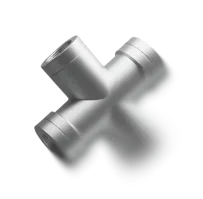
7. Nylon 11 Used for Sports and High-Performance Consumer Goods
Nylon 11 appears in ski boot shells, snowboard bindings, tennis racket strings, and sporting equipment requiring low-temperature toughness, impact resistance, and dimensional stability across temperatures from -40°C to 60°C encountered in outdoor sports environments. Ski boot shells molded from Nylon 11 compounds maintain flex stiffness and structural integrity at -20°C, where Nylon 6 or ABS shells would embrittle and crack under impact from falls or rough terrain. Tennis strings extruded from Nylon 11 monofilament at diameters from 1.25 mm to 1.35 mm provide elongation and energy return characteristics that synthetic gut and polyester strings cannot replicate at equivalent tension and gauge.
What Are the Advantages of Using Nylon 11?
The advantages of using Nylon 11 are listed below.
- Bio-based and Sustainable Origin: Nylon 11 derives from castor oil, achieving 100% bio-based carbon content certification under ASTM D6866, reducing dependence on petroleum feedstocks and qualifying the material for sustainable product programs without compromising mechanical performance.
- Low Moisture Absorption: Equilibrium moisture absorption of 0.9% at 23°C and 50% relative humidity preserves dimensional tolerances and mechanical properties in humid or wet service conditions, where PA6 and PA6/6 absorb 2.5% to 3.5% and lose stiffness proportionally.
- Exceptional Flexibility: Elongation from 250% to 350% and retained toughness at -40°C make Nylon 11 suitable for flexible tubing, hose, and cable jacket applications requiring deformation tolerance across a wide service temperature range.
- Excellent Chemical Resistance: Resistance to hydrocarbons, fuels, oils, and hydraulic fluids supports 20+ year service life in automotive fuel systems and offshore oil and gas flexible risers under continuous fluid contact.
- Wide Service Temperature Range: Continuous operation from -40°C to 130°C covers most automotive, industrial, and offshore application requirements without requiring thermal stabilizer additives beyond standard commercial grades.
- Long Service Life: Nylon 11 flexible risers in offshore oil and gas service achieve validated service lives exceeding 20 years under API 17J test protocols, reducing lifecycle replacement costs in subsea infrastructure.
- Versatile Processing: Nylon 11 processes through extrusion, injection molding, fluidized bed powder coating, electrostatic spray coating, and SLS sintering, covering application forms from precision tubing to thick protective coatings on large structural components.
Disclaimer
The content appearing on this webpage is for informational purposes only. Xometry makes no representation or warranty of any kind, be it expressed or implied, as to the accuracy, completeness, or validity of the information. Any performance parameters, geometric tolerances, specific design features, quality and types of materials, or processes should not be inferred to represent what will be delivered by third-party suppliers or manufacturers through Xometry’s network. Buyers seeking quotes for parts are responsible for defining the specific requirements for those parts. Please refer to our terms and conditions for more information.