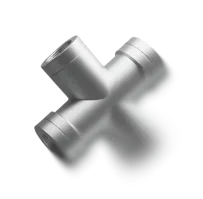
Inconel X750


Inconel X750 is a nickel-chromium superalloy precipitation-hardened with aluminum and titanium additions, engineered for exceptional strength, corrosion resistance, and oxidation resistance at temperatures from cryogenic conditions to approximately 980°C. The alloy carries the Unified Numbering System designation UNS N07750 and conforms to multiple AMS specifications covering bar, sheet, strip, wire, and ring forms.
The core properties of Inconel X750 derive from a gamma prime (γ') precipitate phase that forms within the nickel-chromium matrix during aging heat treatment, locking dislocation movement and maintaining mechanical integrity under sustained thermal and mechanical loading. Chemical composition centers on 70% minimum nickel with chromium (14 to 17%), with titanium (2.25 to 2.75%), aluminum (0.4 to 1.0%), niobium (0.7 to 1.2%), and iron (5 to 9%) as the primary strengthening and stabilizing elements. Tensile strength reaches 1,100 to 1,380 MPa at room temperature, depending on heat treatment conditions, retaining approximately 70 to 80% of that strength at 650°C. Industrial applications span aerospace turbine components, high-temperature springs, bolting and fasteners, nuclear reactor internals, gas turbine blades, and oil and gas wellhead equipment, where the alloy's combination of elevated-temperature strength and environmental resistance is unmatched by conventional alloy steels. Xometry supplies Inconel X750 components across the full range of AMS-qualified forms and heat treatment conditions.
What Is Inconel X750?
Inconel X750 is a precipitation-hardenable nickel-chromium superalloy designated UNS N07750, developed for high-strength service at temperatures from -196°C to 980°C. The alloy is a member of the Inconel family of nickel-base superalloys, distinguished from solid-solution-strengthened grades by its age-hardening response: aluminum and titanium additions react with the nickel matrix during a controlled aging heat treatment to form a coherent intermetallic precipitate phase (Ni₃(Al, Ti), designated γ'), which pins dislocations and prevents plastic deformation at elevated temperatures. The base composition centers on a nickel-chromium matrix (approximately 70% Ni, 15.5% Cr), with iron (5 to 9%) providing cost reduction and matrix stability, niobium (0.7 to 1.2%) contributing to carbide formation and matrix stabilization, and carbon (0.08% maximum) controlled to limit grain boundary carbide embrittlement. Room-temperature tensile strength ranges from 1,100 to 1,380 MPa and yield strength from 690 to 1,100 MPa, depending on heat treatment condition, while elongation of 15 to 25% confirms meaningful ductility despite the high strength level. The alloy's resistance to oxidizing environments at temperatures above 650°C, combined with its fatigue and creep resistance, positions Inconel X750 as a standard material for aerospace fasteners, gas turbine springs, and nuclear reactor core components. Xometry machines and fabricates Inconel X750 components across all AMS-qualified product forms.
What Are the Chemical Composition and Key Elements of Inconel X750?
The chemical composition and key elements of Inconel X750 are shown in the table below.
What Are the Mechanical Properties of Inconel X750?
The mechanical properties of Inconel X750 are shown in the table below.
How Does Inconel X750 Achieve its High Strength?
Inconel X750 achieves its high strength primarily through precipitation hardening, a mechanism in which coherent intermetallic precipitate particles form within the nickel-chromium matrix during controlled aging heat treatment and obstruct dislocation movement under load. The precipitate phase, designated gamma prime (γ'), has the ordered L1₂ crystal structure with composition Ni₃(Al, Ti), forming as coherent cuboidal particles from 20 to 50 nm in diameter within the face-centered cubic (FCC) austenite matrix (γ) after aging at 700°C to 845°C for 16 to 24 hours. The coherency between γ' precipitates and the γ matrix creates a misfit strain field that significantly raises the stress required for dislocation glide, increasing yield strength from approximately 310 MPa in the annealed condition to 690 to 1,100 MPa after aging. Titanium additions (2.25 to 2.75%) and aluminum additions (0.4 to 1.0%) control the γ' volume fraction and solvus temperature: higher titanium-to-aluminum ratios raise the γ' solvus above 950°C, allowing precipitates to remain stable at service temperatures up to 870°C without dissolution. Niobium (0.7 to 1.2%) contributes to carbide formation and matrix stabilization at grain boundaries, while chromium in solid solution strengthens the matrix against high-temperature deformation. The two-stage aging treatment specified in AMS 5670 (1,093°C solution anneal followed by 845°C and 704°C aging) maximizes γ' distribution uniformity and achieves the highest combination of tensile strength and stress-rupture life.
What Are the AMS Specifications for Inconel X750?
The AMS Specifications for Inconel X750 are listed below.
- AMS 5542: AMS 5542 covers Inconel X750 sheet, strip, and plate in the annealed condition, with a maximum thickness of 3.18 mm. The specification requires a maximum tensile strength of 896 MPa, a maximum yield strength of 414 MPa, and a minimum elongation of 30% on a 50 mm gauge length after annealing at 1,093°C to 1,121°C.
- AMS 5582: AMS 5582 covers seamless tubing of Inconel X750 for high-temperature service, specifying wall thickness tolerances, ovality limits, and hydrostatic test requirements. Tubing is supplied in the annealed condition with mechanical properties matching the AMS 5542 sheet requirements.
- AMS 5598: AMS 5598 covers Inconel X750 welding wire for gas tungsten arc (GTAW) and gas metal arc (GMAW) welding. The specification controls composition limits tightly, particularly titanium and aluminum, to ensure adequate weld metal precipitation hardening response after post-weld aging.
- AMS 5667: AMS 5667 covers bar, rod, and rings in the solution-treated and single-aged condition (annealed at 1,093°C, aged at 704°C for 20 hours). Minimum tensile strength is 1,103 MPa, minimum yield strength is 758 MPa, and minimum elongation is 20%.
- AMS 5668: AMS 5668 covers bar, rod, forgings, and rings solution-treated and aged (equalized at 843°C for 24 hours, then aged at 704°C for 20 hours), targeting high stress-rupture strength for springs and heavily loaded fasteners.
- AMS 5669: AMS 5669 covers Inconel X750 bar and forgings in the annealed condition only, for applications where precipitation hardening will be applied after final machining.
- AMS 5670: AMS 5670 covers bar, rod, and forgings in the fully heat-treated condition with a two-step aging cycle (solution treat at 1,093°C, equalize at 843°C for 24 hours, age at 704°C for 20 hours), achieving the highest available tensile and yield strength combination in bar form.
- AMS 5747: AMS 5747 covers Inconel X750 forgings and forging stock in the solution-treated condition for subsequent machining and age hardening. The specification addresses grain size limits, ultrasonic inspection requirements, and forging reduction ratios for aerospace-critical components.
What Is the Difference Between AMS 5668 and AMS 5670?
The difference between AMS 5668 and AMS 5670 are AMS specifications for precipitation-hardened Inconel X750 bar, rod, and forgings, but differ in the heat treatment sequence applied and the resulting mechanical property balance. AMS 5668 specifies a three-step heat treatment: solution annealing at 1149°C, followed by stabilization at 843°C for 24 hours and aging at 704°C for 20 hours. The equalization step at 843°C partially dissolves coarse carbides and stabilizes the grain boundary structure, producing a material optimized for stress-rupture and creep resistance at temperatures from 540°C to 760°C with tensile strength from 1,100 to 1,240 MPa. AMS 5670 specifies a three-step treatment: solution anneal at 1,093°C to 1,121°C, followed by the same 843°C equalization and 704°C aging sequence used in AMS 5668. The high-temperature solution anneal dissolves all prior precipitates and carbides, producing a homogeneous, clean matrix that reprecipitates γ' uniformly during the subsequent aging steps. AMS 5670 achieves higher and more consistent tensile and yield strengths (tensile strength 1,240 to 1,380 MPa, yield strength 1,000 to 1,100 MPa) than AMS 5668 but with marginally lower stress-rupture ductility at temperatures above 760°C. AMS 5668 is preferred for spring and structural applications requiring long-term creep resistance; AMS 5670 is preferred for fasteners, turbine discs, and components requiring maximum short-term tensile and fatigue strength.
What Heat Treatment Options Are Available for Inconel X750?
Heat treatment options available for Inconel X750 are listed below.
- Annealing (Solution Treatment): Annealing at 1,093°C to 1,121°C for 1 to 4 hours, followed by air or water quenching, dissolves all precipitate phases and produces a homogeneous FCC austenite matrix. Annealed Inconel X750 has tensile strength from 896 to 1,034 MPa and elongation above 20%, providing a soft, workable starting condition for subsequent forming, machining, or welding before age hardening.
- Single Aging (AMS 5667 Condition): A two-step treatment consisting of stress equalization at 885°C for 24 hours followed by precipitation aging at 704°C for 20 hours produces γ' precipitates uniformly throughout the matrix. Single aging achieves tensile strength from 1,103 to 1,241 MPa and yield strength from 758 to 900 MPa, with elongation from 18 to 22%. The condition is suitable for moderately loaded components operating below 650°C.
- Equalization and Aging (AMS 5668 Condition): A three-step triple heat treatment starting with a full solution anneal at 1149°C for 2 to 4 hours, followed by stabilization at 843°C for 24 hours and precipitation aging at 704°C for 20 hours, produces a stable grain boundary carbide network and a fine γ' distribution optimized for creep and stress-rupture resistance. The condition is specified for high-temperature springs, gas turbine sealing rings, and structural components in the 650°C to 760°C service range.
- Full Solution Treat, Equalize, and Age (AMS 5670 Condition): A two-step cycle consisting of a lower-temperature solution anneal at 982°C, followed by furnace cooling and precipitation treating at 732°C to 621°C for a total of 18 hours, produces the highest and most consistent tensile properties available from Inconel X750 Tensile strength reaches 1,241 to 1,380 MPa and yield strength 1,000 to 1,100 MPa, making the condition the standard for aerospace fasteners and high-load structural hardware.
- Low-Temperature Stress Relief: Stress relief at 540°C to 600°C for 4 hours is applied to finished machined components to reduce residual stresses from machining without altering the precipitation hardened microstructure. Dimensional stability under cyclic thermal and mechanical loading improves measurably after stress relief treatment.
What Are the Temperature Limits of Inconel X750?
The temperature limit of Inconel X750 extends from -196°C to 980°C in structural applications, with the upper limit governed by the γ' precipitate solvus temperature and the onset of accelerated oxidation. The alloy retains significant toughness and tensile strength at cryogenic temperatures (-196°C) at the lower end, making it acceptable for liquid nitrogen service. Factors such as loading mode and section thickness govern the specific cryogenic limit. The alloy maintains tensile strength above 690 MPa up to 650°C and above 480 MPa up to 760°C. Above 870°C at the upper service boundary, γ' precipitates dissolve progressively, causing a rapid reduction in strength; sustained structural loading above 870°C is not recommended. Oxidation resistance extends to approximately 980°C in air, supported by the Cr₂O₃ scale formed from 14 to 17% chromium content. In hot corrosion environments containing sulfates or chlorides (gas turbine combustion zones), the effective upper limit drops to 760°C to 870°C, depending on contaminant concentration. Spring and fastener applications specify a continuous service limit of 650°C to preserve relaxation resistance and fatigue life over service periods exceeding 100,000 hours.
What Are the Main Applications of Inconel X750?
The main applications of Inconel X750 are listed below.
- Aerospace Turbine Components: Gas turbine engines use Inconel X750 for turbine blades, vanes, sealing rings, and transition liners operating at 540°C to 870°C. The alloy's stress-rupture strength (415–485 MPa at 650°C for 100 hours) and oxidation resistance to 980°C meet the sustained high-temperature loading and thermal cycling demands of both military and commercial aero-engines.
- High-Temperature Springs: Inconel X750 is a primary material for aerospace and industrial high-temperature springs, retaining spring rate and load under continuous stress at temperatures from 315°C to 649°C. Spring wire produced to AMS 5698 and AMS 5699 maintains relaxation rates below 5% after 1,000 hours at 540°C, compared to relaxation rates of 15 to 30% for high-alloy steel springs at the same temperature.
- Fasteners and Bolting: Aerospace and industrial fasteners (bolts, studs, nuts, washers) in Inconel X750 AMS 5670 condition achieve tensile strengths from 1,241 to 1,380 MPa with consistent clamping force retention at operating temperatures up to 650°C. The alloy is specified for flange bolting in high-temperature pressure vessels and turbine casings where steel bolts would creep and lose clamping load.
- Nuclear Reactor Internals: Inconel X750 baffle bolts, holddown springs, and control rod guide tubes are standard components in pressurized water reactor (PWR) internals, where irradiation resistance, corrosion resistance in high-temperature water at 320°C to 360°C, and stress-relaxation resistance over 40-year service lives are mandatory.
- Gas Turbine Rings and Seals: Compressor and turbine sealing rings, retaining rings, and labyrinth seals are produced from Inconel X750 rings and forgings (AMS 5747), exploiting the combination of high yield strength (1,000 MPa) and dimensional stability under cyclic thermal loading from 20°C to 760°C.
- Oil and Gas Wellhead Equipment: Downhole springs, retaining rings, and pressure-containing components in sour gas environments use Inconel X750 for its resistance to chloride stress corrosion cracking and hydrogen sulfide embrittlement at wellbore temperatures from 120°C to 230°C.
How Is Inconel X750 Used in Aerospace Applications?
Inconel X750 is used in aerospace applications across airframe and propulsion structures, where sustained mechanical loading at temperatures from -54°C to 870°C eliminates lower-alloy alternatives. The alloy is used for turbine disc rim seals in gas turbine engines, compressor blade retaining rings, turbine vane inner bands, and casing stiffening rings. The AMS 5670 condition provides tensile strength above 1,241 MPa and yield strength above 1,000 MPa at room temperature, retaining approximately 70% of those values at 650°C, ensuring structural integrity through engine takeoff and cruise thermal cycles. High-temperature springs in afterburner nozzle actuators and variable-area exhaust nozzle mechanisms rely on Inconel X750's stress-relaxation resistance: spring rate retention above 95% after 1,000 hours at 540°C is achievable with properly aged wire. Airframe bolting in titanium-to-steel structural joints specifies Inconel X750 fasteners to prevent galvanic corrosion incompatibility and to maintain clamping preload at aerodynamic heating temperatures from 200°C to 400°C. Military aircraft combustion chamber liners and transition ducts use sheet and formed Inconel X750 in the annealed condition for thermal cycling resistance, with oxidation protection from the Cr₂O₃ scale maintained reliably to 980°C. Xometry machines and finishes Inconel X750 aerospace components to AS9100 quality standards.
How Is Inconel X750 Used in Nuclear Applications?
Inconel X750 is used in nuclear applications for pressurized water reactor (PWR) internal components, where the combination of irradiation resistance, aqueous corrosion resistance, and dimensional stability under long-term stress in 320°C to 360°C primary coolant water is essential. The most critical nuclear application is baffle-former bolting: Inconel X750 baffle bolts secure the core barrel baffle plates that direct coolant flow through the fuel assembly region, and they are required to maintain clamping preload over 40-year design service lives under continuous neutron irradiation fluences exceeding 10²¹ n/cm². Holddown springs in PWR reactor vessel internals use Inconel X750 rings and formed spring assemblies to maintain vertical positioning of the reactor core under coolant hydraulic uplift forces of up to 2,224 kN, with spring relaxation below 5% over the design life. Control rod guide tube pins, thimble screw inserts, and grid spring clip elements in fuel assemblies also specify Inconel X750 for its hardness retention after irradiation. The alloy's susceptibility to irradiation-assisted stress corrosion cracking (IASCC) in high-fluence zones has been a focus of nuclear materials research, according to the research "Irradiation-Assisted Stress Corrosion Cracking of Austenitic Stainless Steels and Nickel Alloys," by Peter L. Andresen and Ford, March 15, 1994, driving controlled heat treatment qualification requirements for nuclear-grade material per ASTM B637.
How Is Inconel X750 Used in Oil and Gas Applications?
Inconel X750 addresses the mechanical and chemical demands of downhole oil and gas environments, where wellbore temperatures from 120°C to 260°C, pressures from 34 MPa to 138 MPa, and corrosive media containing hydrogen sulfide (H₂S), carbon dioxide (CO₂), and chloride brines eliminate carbon steel and low-alloy steel alternatives. Downhole completion springs (packer mandrel springs, safety valve springs, and subsurface control valve springs) use Inconel X750 wire and strip in the AMS 5698 or AMS 5699 condition, retaining spring load within 3 to 5% relaxation after 10,000 hours at 200°C. Wellhead and Christmas tree bolting specifies Inconel X750 per NACE MR0175 / ISO 15156-3 for sour service environments, where hydrogen sulfide partial pressures exceed 0.3 kPa. The alloy passes NACE TM0177 tensile and C-ring stress corrosion cracking tests in H₂S-saturated brine at 24°C when heat-treated to a hardness below 35 HRC, qualifying it for downhole components in sour gas wells. Retention rings, snap rings, and shear pins in production packers, bridge plugs, and liner hangers are additional oil field components regularly produced from Inconel X750 bar and machined to precise tolerances by Xometry's CNC machining services.
What Forms Is Inconel X750 Available in?
The forms of Inconel X750 available are listed below.
- Bar and Rod: Round, square, and hexagonal bar from 6.35 mm to 355 mm in diameter is the most widely stocked form, available in annealed (AMS 5669), single-aged (AMS 5667), and fully heat-treated (AMS 5668, AMS 5670) conditions. Bar is the primary feedstock for machined fasteners, shaft sleeves, and structural fittings.
- Sheet and Strip: Sheet from 0.25 mm to 3.18 mm thickness (AMS 5542) and strip from 0.025 mm to 0.25 mm thickness (AMS 5598) are supplied in the annealed condition for forming, deep drawing, and roll forming of sealing rings, combustion liners, and spring strips before age hardening.
- Plate: Plates above 3.18 mm thickness are available in annealed condition for flame cutting and machining of heavy flanges, pressure vessel components, and structural brackets.
- Wire: Round wire from 0.1 mm to 9.5 mm diameter is available in AMS 5698 (spring temper, single-aged) and AMS 5699 (spring temper, equalized and aged) conditions for coiled spring, weaving, and mesh applications.
- Forgings and Forging Stock: Closed-die and open-die forgings in billet weights from 1 kg to 2,000 kg are produced to AMS 5747, covering turbine discs, rings, flanges, and complex near-net-shape aerospace components.
- Seamless Tubing: Tubing from 6.35 mm to 76.2 mm outer diameter (AMS 5582) serves heat exchanger, thermowell, and hydraulic line applications requiring pressure integrity at elevated temperature.
- Rings: Rolled and forged rings from 50 mm to 3,000 mm outer diameter in annealed or heat-treated condition are standard for compressor sealing rings, retaining rings, and turbine casing stiffening bands.
What Is Inconel X750 Wire Used for?
The uses of Inconel X750 are listed below.
- High-Temperature Coil Springs: Spring wire in AMS 5698 condition (single-aged, tensile strength 1,172 to 1,379 MPa) is wound into compression, extension, and torsion springs for aerospace actuators, gas turbine nozzle positioners, and afterburner fuel control valves. Spring loads are retained above 95% after 1,000 hours at 540°C.
- Downhole Oil and Gas Springs: Wire in AMS 5699 condition (equalized and aged) is coiled into packer mandrel springs, safety valve springs, and subsurface flow control valve springs rated for continuous service at 200°C to 260°C in H₂S and CO₂ environments. The wire diameter ranges from 1.0 mm to 9.5 mm with coil outer diameters from 12 mm to 150 mm.
- Nuclear Hold-Down and Clip Springs: Formed wire clips and leaf spring elements in PWR fuel assembly spacer grids use Inconel X750 wire for dimensional retention under irradiation over 40-year design lives. Grid spring clips maintain lateral fuel rod support forces from 4.5 N to 11 N per contact throughout the fuel cycle.
- Welding Wire: Wire supplied to AMS 5778 is used as GTAW filler metal for joining Inconel X750 components or for overlay welding of high-temperature wear surfaces. Post-weld aging at 704°C for 16 hours recovers weld metal precipitation hardening response to approximately 80% of wrought metal strength.
- Woven Mesh and Braided Shielding: Fine wire from 0.1 mm to 0.5 mm is woven into high-temperature mesh screens, braided exhaust seals, and knitted gaskets for gas turbine exhaust systems operating from 500°C to 870°C.
How Does Inconel X750 Compare to Other Inconel Alloys?
The comparison of Inconel X750 to other Inconel alloys is shown in the table below.
How Does Inconel X750 Compare to Inconel 718?
Inconel X750 and Inconel 718 are precipitation-hardened nickel superalloys, but differ in strengthening mechanism, maximum service temperature, and primary application domains. Inconel 718 achieves higher room-temperature yield strength (1,034 to 1,241 MPa versus 690 to 1,100 MPa for X750) through a dominant γ'' (Ni₃Nb) precipitate phase, which forms in greater volume fraction due to the higher niobium content of 718 (4.75 to 5.5% versus 0.7 to 1.2% in X750). At temperatures above 650°C, however, the γ'' phase in 718 transforms progressively to the stable but less coherent delta (δ) phase, reducing strength sharply above 700°C. Inconel X750's γ' phase (Ni₃Al, Ti) remains coherent and effective to approximately 870°C, giving X750 a minor advantage in creep and relaxation resistance at temperatures up to 704°C over 718. X750 is therefore preferred for springs, sealing rings, and structural hardware requiring strength retention above 650°C, while 718 dominates turbine disc, shaft, and structural hardware requiring maximum yield strength below 650°C. Weldability is similar in difficulty for both alloys: strain-age cracking during post-weld heat treatment is a risk in grades, requiring careful preheat and aging practice. Xometry's application engineers select from X750 and Inconel 718 based on service temperature profile and strength requirements.
How Does Inconel X750 Compare to Inconel 625?
Inconel X750 and Inconel 625 differ in their strengthening mechanism, which produces substantially different mechanical properties and application profiles. Inconel 625 is a solid-solution-strengthened alloy: its strength arises from molybdenum (8 to 10%) and niobium (3.15 to 4.15%) dissolved in the nickel-chromium matrix, producing tensile strength from 827 to 1,034 MPa and elongation from 30 to 60% without any aging heat treatment. Inconel X750 requires a multi-step aging cycle to develop precipitation-hardened strength (1,100 to 1,380 MPa), but achieves meaningfully higher strength at the cost of lower ductility (15 to 25%). Inconel 625 provides superior corrosion resistance, particularly in reducing acid environments, seawater, and high-chloride media, due to its 8 to 10% molybdenum content, which stabilizes the passive oxide film against pitting and crevice corrosion. X750 offers better oxidation resistance above 760°C from its higher combined nickel and chromium levels. Weldability strongly favors 625: the alloy is used as a cladding and overlay material on carbon steel pressure vessels, specifically for its crack-free weldability, while X750 requires post-weld aging and carries a strain-age cracking risk in the weld heat-affected zone. Applications requiring corrosion resistance and formability specify Inconel 625; applications requiring high strength at elevated temperature specify X750.
"As design engineers, we often rely on tight geometric tolerances to guarantee performance in extreme environments. With a precipitation-hardened superalloy like Inconel X750, however, your physical model is only half the story. If your drawing fails to explicitly match the heat treatment specification to your specific thermal and loading profiles, high-temperature relaxation will defeat your design long before your dimensional limits are ever tested."
Is Inconel X-750 stronger than Alloy Steel?
Inconel X750 is stronger than alloy steels at elevated temperatures, but comparable grades of high-alloy steel match or exceed X750 at room temperature in certain strength metrics. Quenched and tempered alloy steels (AISI 4340, 300M) achieve tensile strengths from 1,380 to 2,070 MPa and yield strengths from 1,241 to 1,793 MPa, which exceed X750's room-temperature values of 1,100 to 1,380 MPa tensile and 690 to 1,100 MPa yield. Above 315°C, the advantage shifts decisively to Inconel X750. Alloy steels begin to lose strength rapidly above 400°C due to tempered martensite decomposition and carbide coarsening, with tensile strength dropping to 50 to 60% of room-temperature values by 540°C. Inconel X750 retains 75 to 85% of its room-temperature tensile strength at 540°C and 70 to 80% at 650°C. The density of X750 (8.28 g/cm³) is similar to that of steel (7.85 g/cm³), so the specific strength (strength-to-weight ratio) advantage of X750 at elevated temperature is preserved. Corrosion resistance in oxidizing, sulfurous, and chloride environments further distinguishes X750 from alloy steels in aerospace, nuclear, and oil and gas service.
What Are the Corrosion and Oxidation Resistance Properties of Inconel X750?
The corrosion and oxidation resistance properties of Inconel X750 are derived from its 14 to 17% chromium content and 70% minimum nickel base. The chromium oxidizes preferentially at the alloy surface, forming a dense, adherent Cr₂O₃ scale that acts as a diffusion barrier against oxygen penetration at temperatures from 650°C to 980°C. The high nickel content (70% minimum) provides intrinsic resistance to chloride-induced stress corrosion cracking, distinguishing the alloy from austenitic stainless steels, which become susceptible to chloride stress corrosion cracking above approximately 60°C in concentrated chloride environments. The alloy resists oxidation in air, combustion gases, and steam atmospheres to 980°C without significant scale spallation over exposure periods up to 1,000 hours. In aqueous environments from ambient temperature to 360°C (PWR primary coolant), Inconel X750 maintains a passive oxide film (primarily NiO and Cr₂O₃) that limits general corrosion rates to below 0.025 mm per year. Resistance is maintained in neutral and mildly acidic chloride solutions, dilute sulfuric acid below 10% concentration, phosphoric acid, and most organic acids. The alloy performs less reliably in strongly reducing mineral acids (concentrated HCl, HF), where molybdenum-containing alloys such as Inconel 625 are preferred. Xometry's material guidance documents specify X750 for high-temperature corrosion-resistant components where strength and corrosion resistance must coexist.
How Long does it Take for Inconel X-750 to Oxidize?
The formation of a protective Cr₂O₃ oxide scale on Inconel X750 begins within seconds of first exposure to oxygen or air at temperatures above 400°C, but the timescale for measurable oxidation depth or mass change extends over hundreds to thousands of hours depending on temperature and atmosphere. Parabolic oxidation kinetics govern scale growth: the scale reaches a thickness of approximately 1 to 3 µm after 100 hours of exposure and 2 to 5 µm after 1,000 hours at 760°C in air, producing a mass gain of 0.1 to 0.3 mg/cm² per 100 hours. At 980°C, the maximum recommended oxidation service temperature, scale growth accelerates: mass gain reaches approximately 1.0 to 2.5 mg/cm² after 100 hours, with occasional local spallation of the oxide scale during thermal cycling. Scale spallation exposes fresh alloy surface, locally resetting the oxidation timeline and causing net material loss instead of scale accumulation.
Does Inconel X750 Resist Stress Corrosion Cracking?
Inconel X750 resists stress corrosion cracking (SCC) in most service environments, but its resistance is heat-treatment-dependent and environment-specific. In chloride solutions at temperatures from ambient to 200°C, properly aged X750 (hardness below 35 HRC, approximately 331 HB) passes NACE TM0177 Method A and C-ring tests in saturated H₂S brine at 24°C, qualifying it for sour service per NACE MR0175 / ISO 15156-3. The resistance at these hardness levels arises from the high nickel content (70% minimum), which suppresses the hydrogen embrittlement mechanism responsible for SCC in lower-nickel austenitic and martensitic alloys. Susceptibility to hydrogen stress cracking increases in H₂S environments at hardness levels above 35 HRC (achievable in the AMS 5670 double-aged condition for some bar sizes), and NACE qualification requires specific hardness verification. In PWR primary water (high-temperature, high-purity water at 320°C to 360°C), irradiation-assisted stress corrosion cracking (IASCC) is a documented concern at neutron fluences above 10²¹ n/cm², driving ongoing material qualification programs for nuclear-grade X750 baffle bolt applications. In non-irradiated aqueous service and atmospheric environments, SCC is not a practical concern for components maintained below 35 HRC.
Can Inconel X750 be Welded?
Inconel X750 is weldable, but the process requires careful procedure development to manage two primary risks: strain-age cracking in the heat-affected zone (HAZ) and precipitation of detrimental phases during post-weld heat treatment. Strain-age cracking occurs when residual weld stresses and thermal contraction during post-weld aging cause intergranular cracking before the matrix can accommodate the strain through plastic flow, a risk associated with high titanium-plus-aluminum content alloys where γ' precipitation is rapid. Gas tungsten arc welding (GTAW) with Inconel X750 filler wire (AMS 5778) or Inconel 82 filler (ERNiCr-3) is the preferred process. Preheating to 150°C to 200°C reduces thermal gradient and HAZ cooling rate. Post-weld heat treatment requires a solution anneal at 1,093°C before aging to dissolve HAZ precipitates and allow stress relief before γ' reprecipitation. Direct aging of welded components without a prior solution anneal produces high strain-age cracking risk, particularly in thick sections above 12.7 mm. Weld joint efficiency reaches 70 to 85% of base metal tensile strength in properly solution-treated and aged assemblies. Xometry's welding engineers develop qualified procedures (AWS D1.1 / ASME Section IX) for X750 weld assemblies requiring post-weld heat treatment certification.
Disclaimer
The content appearing on this webpage is for informational purposes only. Xometry makes no representation or warranty of any kind, be it expressed or implied, as to the accuracy, completeness, or validity of the information. Any performance parameters, geometric tolerances, specific design features, quality and types of materials, or processes should not be inferred to represent what will be delivered by third-party suppliers or manufacturers through Xometry’s network. Buyers seeking quotes for parts are responsible for defining the specific requirements for those parts. Please refer to our terms and conditions for more information.