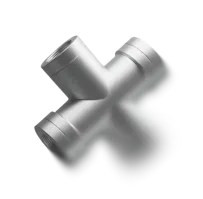
PVDF (Polyvinylidene Fluoride): Material and Structure


PVDF (Polyvinylidene Fluoride) is a high-performance fluoropolymer recognized for excellent chemical resistance, mechanical strength, and thermal stability. The material performs reliably under exposure to aggressive chemicals (acids, mild bases, solvents), ultraviolet radiation, moisture, and elevated temperatures, though it is vulnerable to strong alkalis. The structure consists of repeating vinylidene fluoride monomer units arranged in a semi-crystalline molecular network with strong carbon-fluorine bonds. Strong molecular bonding gives PVDF excellent durability, low permeability, and long service life across demanding operating conditions. Industrial sectors use PVDF for chemical processing equipment, electrical insulation, protective coatings, filtration membranes, semiconductor fluid handling systems, and photovoltaic modules. Continuous service temperatures commonly reach 150°C, while melting occurs from 170°C to 177°C. High purity grades support applications that require low contamination and stable performance.
PVDF (Polyvinylidene Fluoride) is distinguished from standard plastic materials through superior resistance against chemicals, weathering, heat, and ultraviolet exposure. The material delivers greater dimensional stability and longer service life under demanding operating conditions, although higher manufacturing costs accompany advanced performance. The structure supports fabrication methods (injection molding, extrusion, machining, welding), which expand industrial manufacturing options. Material selection depends on operating temperature, chemical compatibility, mechanical load, fabrication requirements, and project budget. Careful evaluation of performance requirements identifies the appropriate PVDF grade for reliable long-term industrial service.
What Is PVDF (Polyvinylidene Fluoride)?
PVDF (Polyvinylidene Fluoride) is a high-performance fluoropolymer recognized for excellent chemical resistance, durability, and thermal stability. PVDF contains repeating vinylidene fluoride units that form a semi-crystalline structure with strong carbon-fluorine bonds. Fluorine atoms protect polymer chains from chemical attack and environmental degradation. Mechanical properties remain stable under elevated temperatures, ultraviolet exposure, and corrosive processing conditions. Continuous operating temperatures commonly reach 150°C, while melting occurs from 170°C to 177°C. Low water absorption supports dimensional stability across humid environments. Industrial sectors apply PVDF to piping systems, storage tanks, wire insulation, semiconductor equipment, filtration membranes, and architectural coatings. Manufacturing processes (extrusion, injection molding, machining, welding) support diverse component designs. Material selection depends on chemical compatibility, operating temperature, mechanical loading, and fabrication requirements. Long service life reduces maintenance requirements across demanding industrial environments.
Why Is PVDF Known as a High-Performance Plastic?
PVDF is known as a high-performance plastic because material properties remain stable under demanding thermal, chemical, and environmental conditions. Strong carbon-fluorine bonds resist degradation from aggressive chemicals (acids, mild alkalis, solvents) and prolonged ultraviolet exposure. Semi-crystalline morphology supports good tensile strength, impact resistance, and dimensional stability during extended service. Continuous operating temperatures commonly reach 150°C without substantial property loss. Low moisture absorption preserves dimensional accuracy during humid operating conditions. High purity grades satisfy strict contamination requirements across semiconductor and pharmaceutical manufacturing. Electrical insulation properties support wire, cable, and electronic component applications. Chemical processing equipment relies on PVDF for pipes, valves, pumps, and storage vessels exposed to corrosive fluids. Long operational life offsets higher material costs across demanding engineering projects. Reliable performance under harsh operating conditions distinguishes PVDF from standard engineering plastics.
Is PVDF a Thermoplastic Polymer?
Yes, PVDF is a thermoplastic polymer. Heat softens PVDF without permanently changing molecular structure, and cooling restores solid form through repeated processing cycles. Manufacturers process PVDF through extrusion, injection molding, thermoforming, and welding for industrial components. Semi-crystalline morphology supports strength, chemical resistance, and dimensional stability after repeated thermal processing. Continuous service temperatures commonly reach 150°C, while melting occurs near 170°C to 177°C. Recyclable processing characteristics distinguish thermoplastic materials from permanently cured polymer systems. Material selection depends on operating temperature, chemical exposure, and fabrication requirements. Manufacturing engineers evaluate processing behavior of thermoplastics vs. thermosets when selecting polymers for industrial applications.
What Is the Chemical Structure of PVDF?
The chemical structure of PVDF is a repeating chain of vinylidene fluoride monomer units with the molecular formula (CH₂CF₂)ₙ. Carbon atoms form the polymer backbone, while fluorine atoms bond tightly to alternating carbon atoms. Strong carbon-fluorine bonds create outstanding chemical stability and resistance against oxidation, ultraviolet radiation, and corrosive substances. Semi-crystalline morphology develops through regular molecular chain arrangement, which supports high tensile strength and dimensional stability. Crystallinity commonly ranges from 35% to 60%, depending on processing conditions and resin grade. Low water absorption preserves physical properties during prolonged moisture exposure. Stable molecular architecture supports reliable performance across chemical processing, electrical insulation, filtration, semiconductor manufacturing, and architectural coating applications. Material properties remain consistent during extended exposure to demanding industrial environments. Molecular structure determines mechanical performance, thermal stability, and chemical resistance throughout the service life.
How Is Polyvinylidene Fluoride Made?
Polyvinylidene fluoride is made through polymerization of vinylidene fluoride monomers under carefully controlled temperature and pressure conditions. Manufacturers perform suspension polymerization or emulsion polymerization to produce high-purity polymer resin with consistent molecular weight. Polymer chains develop through free radical reactions that connect vinylidene fluoride molecules into long molecular structures. Controlled processing forms a semi-crystalline thermoplastic with predictable mechanical properties and chemical resistance. Resin pellets undergo extrusion, injection molding, compression molding, or machining after polymer production. Processing parameters influence crystallinity, strength, dimensional stability, and surface quality. Quality control verifies molecular weight distribution, purity, melt flow characteristics, and mechanical performance before industrial use. Finished PVDF materials support demanding applications across chemical processing, electrical systems, filtration equipment, semiconductor manufacturing, and architectural coatings.
Does PVDF Have a Semi-Crystalline Structure?
Yes, PVDF does have a semi-crystalline structure. Crystalline regions provide strength, chemical resistance, and thermal stability, while amorphous regions contribute toughness and processability. Crystallinity commonly ranges from 50% to 70%, depending on resin grade and manufacturing conditions. Semi-crystalline morphology supports low moisture absorption, excellent dimensional stability, and reliable mechanical performance during prolonged service. Stable molecular organization provides better dimensional stability than PTFE, though the material remains susceptible to creep under sustained loading, especially at elevated temperatures. Material properties remain consistent across chemical processing systems, electrical insulation, filtration equipment, and semiconductor manufacturing applications. The semi-crystalline structure contributes directly to long service life under demanding industrial operating conditions.
"Engineers often specify high-performance fluoropolymers like PVDF in their designs, assuming their elevated thermal limits guarantee dimensional stability under continuous load. In manufacturing reality, these unfilled thermoplastics remain viscoelastic: they will inevitably creep when subjected to sustained mechanical stress at temperature. Proper DFM requires designing mechanical joints and sealing surfaces with this cold flow in mind rather than relying solely on the material's bulk datasheet values."
What Are the Properties of PVDF Material?
The properties of PVDF material are responsible for reliable performance across demanding industrial applications. Strong molecular bonding supports excellent resistance against chemicals, heat, ultraviolet radiation, and moisture. Physical characteristics remain stable during prolonged service under harsh operating conditions. Material selection depends on operating temperature, chemical exposure, mechanical loading, and fabrication requirements.
The properties of PVDF material are listed below.
- Chemical Resistance: PVDF resists aggressive chemicals (acids, mild alkalis, solvents) without rapid degradation. Stable molecular bonds preserve mechanical properties during prolonged chemical exposure.
- Heat Resistance: PVDF maintains structural stability during continuous service near 150°C. Melting commonly occurs from 170°C to 177°C under standard atmospheric pressure.
- Mechanical Strength: PVDF provides good tensile strength, impact resistance, and abrasion resistance. Stable mechanical properties support demanding industrial components under sustained loading.
- UV Resistance: PVDF withstands prolonged sunlight exposure without substantial discoloration or property loss. Fluorine-rich molecular structure limits ultraviolet degradation.
- Electrical Insulation: PVDF provides reliable dielectric performance across electrical and electronic applications. High electrical resistivity supports wire insulation and cable jacketing.
- Low Water Absorption: PVDF absorbs very little moisture during service. Low moisture uptake preserves dimensional stability and mechanical performance across humid environments.
What Is the Glass Transition Temperature of PVDF?
The glass transition temperature of PVDF is around 35°C below zero, although values vary slightly across resin grades and testing methods. Polymer chains gain greater molecular mobility after the temperature rises above the transition point. Mechanical stiffness decreases gradually before melting occurs near 170°C to 177°C. Semi-crystalline morphology preserves structural integrity across a broad operating temperature range. Glass transition differs from melting because crystalline regions remain intact after amorphous regions soften. Thermal analysis methods (Differential Scanning Calorimetry, Dynamic Mechanical Analysis) determine transition values during material characterization. Engineers evaluate mechanical performance, thermal behavior, and dimensional stability through the glass transition temperature when selecting PVDF for demanding industrial applications.
How Does PVDF Perform Under Heat and Chemicals?
PVDF performs under heat and chemicals through stable molecular bonding that resists degradation across demanding industrial environments. Strong carbon-fluorine bonds protect polymer chains from aggressive chemicals (acids, mild alkalis, solvents) and prolonged thermal exposure. Continuous operating temperatures commonly reach 150°C without substantial property loss. Semi-crystalline morphology preserves tensile strength, dimensional stability, and impact resistance during extended service. Low moisture absorption limits dimensional changes under humid operating conditions. Chemical processing equipment applies PVDF to pipes, valves, storage tanks, pumps, and filtration systems exposed to corrosive media. Long service life reduces maintenance frequency across harsh processing environments. Reliable thermal and chemical stability supports consistent performance across semiconductor manufacturing, electrical insulation, and industrial fluid handling systems.
Does PVDF Have a High Melting Point?
Yes, PVDF does have a high melting point. PVDF melts from 170°C to 177°C, depending on resin grade, molecular weight, and manufacturing conditions. Elevated melting temperature supports reliable performance across demanding industrial environments exposed to sustained heat. Semi-crystalline morphology preserves strength and dimensional stability until melting begins. Strong carbon-fluorine bonds contribute to thermal durability and resistance to permanent deformation during normal operating conditions. Heat resistance supports fabrication processes (extrusion, injection molding, compression molding) without rapid material degradation. Industrial applications (chemical processing, semiconductor manufacturing, electrical insulation, filtration equipment) rely on thermal stability for consistent long-term performance.
What Are the Advantages of PVDF?
The advantages of PVDF are evident across industrial applications that require long service life and stable material performance. Strong chemical resistance, thermal stability, and weather durability support reliable operation under demanding conditions. Mechanical properties remain consistent during prolonged exposure to corrosive chemicals, ultraviolet radiation, and elevated temperatures. Material selection balances performance requirements against fabrication complexity and project cost.
The advantages of PVDF are listed below.
- Chemical Resistance: PVDF withstands aggressive chemicals (acids, mild alkalis, solvents). Stable molecular bonds reduce chemical degradation during prolonged service.
- Weather Resistance: PVDF resists ultraviolet radiation, moisture, and outdoor weathering. Surface properties remain stable after extended environmental exposure.
- Long Service Life: PVDF maintains mechanical strength and dimensional stability across demanding operating environments. Long operational life reduces replacement frequency.
What are the disadvantages of PVDF? The disadvantages of PVDF are higher material cost, lower flexibility than soft engineering plastics, and controlled processing requirements during manufacturing. Higher resin prices increase project costs compared with standard plastics. Greater stiffness limits suitability for applications that require repeated flexing or elastic deformation. Processing demands accurate temperature control because excessive heat affects polymer properties. Specialized welding and fabrication equipment improves finished component quality across industrial production. Machining parameters require careful adjustment to reduce stress and preserve dimensional accuracy. Material selection depends on operating conditions, fabrication methods, mechanical loading, chemical exposure, and project budget. Higher initial cost commonly balances against extended service life, low maintenance, and reliable performance under harsh industrial environments.
Why Is PVDF Used in Demanding Environments?
PVDF is used in demanding environments because strong carbon-fluorine bonds resist heat, corrosive chemicals, ultraviolet radiation, and weathering. Semi-crystalline morphology preserves mechanical strength, dimensional stability, and low moisture absorption during prolonged industrial service. Continuous operating temperatures commonly reach 150°C without substantial property loss. Chemical processing facilities apply PVDF to pipes, valves, pumps, storage tanks, and filtration systems exposed to aggressive process fluids. Electrical industries apply PVDF for insulation because stable dielectric properties remain consistent under harsh operating conditions. Outdoor installations benefit from excellent resistance against sunlight, oxidation, and environmental aging. Long operational life reduces maintenance frequency and equipment replacement across demanding industrial applications. Reliable performance under severe operating conditions supports chemical processing, semiconductor manufacturing, water treatment, marine equipment, and architectural coating systems.
Is PVDF Resistant to UV Exposure and Corrosion?
Yes, PVDF is resistant to UV exposure and corrosion. Strong carbon-fluorine bonds protect the polymer from ultraviolet degradation, oxidation, moisture, and aggressive chemicals throughout prolonged service. Mechanical strength and surface appearance remain stable after extended outdoor exposure. Chemical resistance protects pipes, tanks, valves, and coated surfaces from corrosive process fluids. Low water absorption supports dimensional stability across humid environments. Architectural coatings retain color and gloss after years of environmental exposure. Industrial facilities select PVDF for chemical processing, marine equipment, water treatment systems, and outdoor electrical components because long-term durability reduces maintenance requirements. Material performance demonstrates excellent corrosion resistance across demanding operating environments.
How Does PVDF Compare With Other Plastic Materials?
PVDF compares with other plastic materials through superior chemical resistance, thermal stability, ultraviolet durability, and long-term mechanical performance. Strong carbon-fluorine bonds provide greater protection against corrosive chemicals and environmental degradation than standard engineering plastics. Continuous operating temperatures commonly reach 150°C, while low moisture absorption preserves dimensional stability during prolonged service. Standard plastics satisfy general-purpose applications, although harsh industrial environments demand higher-performance materials. Higher material cost accompanies advanced durability and chemical stability. Engineers evaluate operating temperature, chemical compatibility, mechanical loading, fabrication method, and project budget before material selection. Chemical processing systems, semiconductor equipment, filtration assemblies, and electrical insulation commonly benefit from PVDF because demanding service conditions require reliable material performance. Material selection begins with understanding different types of plastics used across industrial manufacturing.
What Makes PVDF Different From PTFE and PVC?
The balance of strength, chemical resistance, and thermal stability makes PVDF different from PTFE and PVC. PVDF provides higher mechanical strength and stiffness than PTFE, while PTFE delivers greater resistance against aggressive chemicals and lower friction. PVC offers lower material cost and adequate performance for general industrial applications, although temperature capability and chemical durability remain lower than PVDF. Continuous operating temperatures for PVDF commonly reach 150°C, while PTFE performs at substantially higher temperatures. Material selection depends on operating environment, fabrication method, mechanical loading, chemical exposure, and project budget. Machined industrial components commonly use PVDF because dimensional stability remains high during demanding service. Manufacturing methods applied to PVC CNC machining demonstrate different performance requirements from PVDF machining.
Is PVDF Stronger Than PVC?
Yes, PVDF is tougher and more thermally stable than PVC, though rigid PVC typically exhibits a higher baseline tensile strength at room temperature. PVDF provides greater impact resistance and superior strength retention under demanding high-temperature operating conditions. Continuous operating temperatures commonly reach 150°C, while PVC performs across a lower temperature range. Strong carbon-fluorine bonds improve resistance against aggressive chemicals, ultraviolet radiation, and environmental aging. Mechanical properties remain stable during prolonged industrial service under harsh processing conditions. PVC remains suitable for general-purpose piping, construction products, and electrical insulation where performance requirements remain less demanding. Material selection depends on operating temperature, chemical exposure, mechanical loading, fabrication method, and project budget. Higher strength and durability make PVDF suitable for critical industrial components exposed to severe service conditions.
Where Is PVDF Material Commonly Used?
PVDF material is commonly used in industrial sectors that demand high chemical resistance, thermal stability, and long service life. Strong mechanical properties support reliable performance across harsh operating environments. Low moisture absorption and excellent weather durability preserve material integrity during prolonged service. Material selection depends on application requirements, operating conditions, and fabrication methods.
PVDF material is commonly used in the applications listed below.
- Chemical Processing Equipment: PVDF forms pipes, valves, storage tanks, pumps, and fittings. Chemical resistance protects equipment exposed to aggressive process fluids.
- Protective Coatings: PVDF coats architectural panels, industrial equipment, and structural components. Weather resistance preserves color, gloss, and surface durability during outdoor exposure.
- Filtration Membranes: PVDF supports water purification, wastewater treatment, and chemical filtration systems. Stable polymer properties maintain filtration performance under demanding conditions.
- Electrical Components: PVDF insulates wires, cables, connectors, and electronic components. High dielectric strength supports reliable electrical performance.
- Solar Panels: PVDF protects photovoltaic backsheets from ultraviolet radiation, moisture, and environmental degradation. Long service life supports outdoor energy systems.
- Semiconductor Industry: PVDF transports high-purity chemicals through fluid handling systems. Low contamination characteristics satisfy demanding semiconductor manufacturing requirements.
Why Is PVDF Popular for Coatings, Membranes, and Pipes?
PVDF is popular for coatings, membranes, and pipes because strong carbon-fluorine bonds provide outstanding resistance against chemicals, ultraviolet radiation, moisture, and weathering. Semi-crystalline morphology preserves strength and dimensional stability during prolonged industrial service. Protective coatings maintain surface appearance and corrosion protection across outdoor structures and processing equipment. Filtration membranes retain chemical stability during water treatment, pharmaceutical production, and chemical processing. Pipes transport aggressive process fluids without rapid degradation under elevated temperatures. Low moisture absorption preserves dimensional accuracy across humid operating environments. Long service life reduces maintenance frequency and replacement costs throughout industrial facilities. Reliable performance supports chemical processing, semiconductor manufacturing, water treatment, architectural construction, and energy production across demanding operating conditions.
Can PVDF Be Used for Custom Plastic Injection Molding?
Yes, PVDF can be used for custom plastic injection molding. Controlled melt processing produces precise components with excellent chemical resistance, thermal stability, and mechanical strength. Manufacturers apply PVDF to valves, fittings, electrical insulators, semiconductor components, and fluid handling parts that require dimensional accuracy and long service life. Processing temperatures commonly range from 200°C to 290°C, depending on resin grade and part geometry. Careful mold temperature control improves crystallinity, surface quality, and mechanical performance. PVDF is inherently non-hygroscopic and typically does not require pre-drying prior to melt processing, eliminating the risk of moisture-related defects. Industrial manufacturing benefits from reliable processing characteristics and stable physical properties through plastic injection molding.
Can PVDF Be Used Outdoors?
Yes, PVDF can be used outdoors. Strong carbon-fluorine bonds resist ultraviolet radiation, moisture, oxidation, and weathering during prolonged environmental exposure. Surface appearance remains stable because color retention and gloss retention exceed standard engineering plastics under harsh outdoor conditions. Low water absorption preserves dimensional stability during changing weather conditions. Architectural panels, roofing systems, photovoltaic backsheets, piping systems, and protective coatings apply PVDF for extended outdoor service. Thermal stability supports performance across hot and cold climates without rapid material degradation. Chemical resistance protects exposed surfaces from acid rain, industrial pollutants, and salt-laden environments. Mechanical properties remain consistent after prolonged sunlight exposure, which extends component service life across demanding outdoor installations. Long service life reduces maintenance requirements across industrial facilities and construction projects exposed to demanding environmental conditions.
How Do You Choose the Right PVDF Material?
Customers choose the right PVDF material by following a six-step process. First, identify the operating temperature because continuous service commonly reaches 150°C, while melting occurs from 170°C to 177°C. Second, evaluate chemical exposure through compatibility data (acids, mild alkalis, solvents, oxidizers). Third, determine mechanical loading by reviewing tensile strength, impact resistance, and dimensional stability requirements. Fourth, confirm environmental exposure through ultraviolet radiation, moisture, and outdoor weather conditions. Fifth, select a manufacturing process (injection molding, extrusion, machining, welding) that matches part geometry and production volume. Lastly, compare material cost against expected service life, maintenance requirements, and performance objectives. Careful evaluation produces reliable component performance, longer operational life, and consistent results across demanding industrial applications.
Which Factors Should You Consider Before Selecting PVDF?
The factors customers should consider before selecting PVDF are operating conditions, fabrication requirements, and long-term performance expectations. Careful evaluation improves material selection for demanding industrial applications. Material properties vary according to resin grade, processing method, and service environment. Proper selection supports reliable performance throughout the expected service life.
The factors customers should consider before selecting PVDF are listed below.
- Temperature: Confirm operating temperature remains within the recommended service range. Continuous service commonly reaches 150°C, while melting occurs from 170°C to 177°C.
- Chemical Exposure: Review compatibility with process chemicals (acids, mild alkalis, solvents, oxidizers). Chemical resistance varies according to concentration, pressure, and operating temperature.
- Mechanical Load: Evaluate tensile strength, impact resistance, wear resistance, and dimensional stability. Mechanical requirements influence resin grade selection.
- Outdoor Exposure: Assess ultraviolet radiation, moisture, oxidation, and weather conditions. Outdoor service requires long-term environmental durability.
- Manufacturing Method: Match material selection with fabrication processes (injection molding, extrusion, machining, welding). Manufacturing requirements affect component quality and production efficiency.
- Cost: Compare material cost against expected service life, maintenance requirements, and operating performance. Higher initial investment commonly supports lower lifecycle costs.
Is PVDF the Right Material for Your Application?
Yes, PVDF is the right material for the application. Operating conditions that demand excellent chemical resistance, thermal stability, ultraviolet durability, and reliable mechanical performance support PVDF selection. Material selection depends on operating temperature, chemical exposure, mechanical loading, fabrication method, regulatory requirements, and project budget. Continuous service commonly reaches 150°C without substantial property loss under recommended operating conditions. Low water absorption preserves dimensional stability across humid environments. Strong carbon-fluorine bonds protect polymer chains from aggressive chemicals, oxidation, and environmental degradation. Industrial sectors apply PVDF to chemical processing equipment, semiconductor fluid handling systems, electrical insulation, filtration membranes, photovoltaic components, and architectural coatings. Careful evaluation of performance requirements confirms material suitability for demanding industrial applications that require long service life and consistent operational reliability.
Disclaimer
The content appearing on this webpage is for informational purposes only. Xometry makes no representation or warranty of any kind, be it expressed or implied, as to the accuracy, completeness, or validity of the information. Any performance parameters, geometric tolerances, specific design features, quality and types of materials, or processes should not be inferred to represent what will be delivered by third-party suppliers or manufacturers through Xometry’s network. Buyers seeking quotes for parts are responsible for defining the specific requirements for those parts. Please refer to our terms and conditions for more information.