Grey Cast Iron: Composition, Properties, and Applications


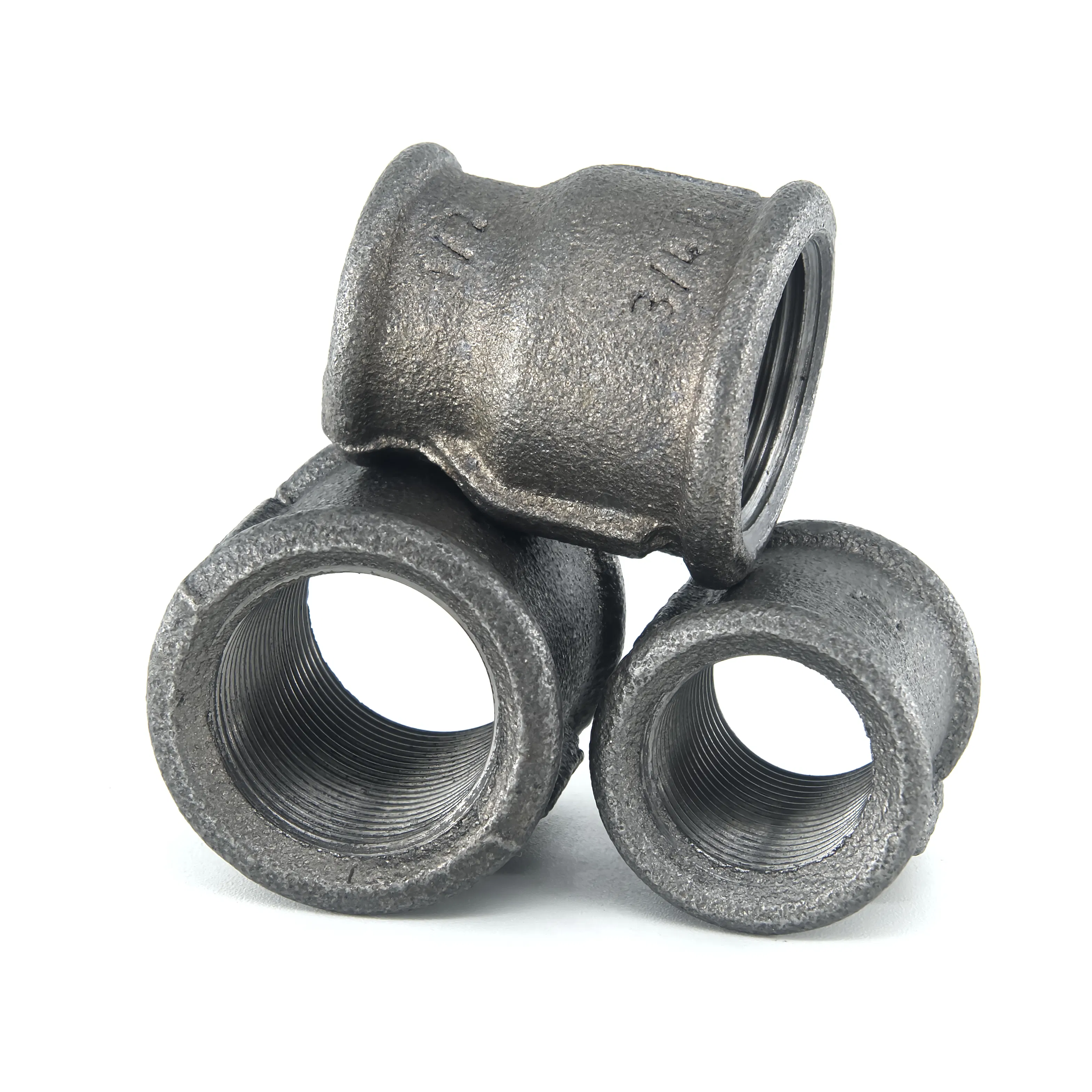
Grey cast iron is a ferrous alloy in which carbon precipitates as flake graphite during solidification, producing the characteristic grey color visible on a fractured surface. Grey cast iron accounts for approximately 70-75% of all iron casting production worldwide, making it the most widely produced type of cast iron. The widespread use of the alloy stems from its excellent castability, machinability, and vibration-damping properties, which make it suitable for a broad range of industrial components.
Grey cast iron covers four defining pillars. The chemical composition, microstructure, mechanical properties, and industrial applications. The chemical composition governs how graphite forms during solidification, while the microstructure determines hardness, strength, and thermal behavior. Mechanical properties such as tensile strength, compressive strength, and density dictate where the material performs reliably. Industrial applications span automotive, construction, machine tools, and piping, where the material's combination of castability and wear resistance delivers consistent performance. Xometry offers custom grey cast iron casting services for components across the full range of grades and geometries.
What Is Grey Cast Iron?
Grey cast iron is a ferrous alloy containing carbon in the range of 2.5 to 4.0% and silicon from 1.0 to 3.0%, in which the carbon solidifies as flake graphite rather than as iron carbide. The flake graphite network is responsible for the grey fracture surface that gives the material its name. Grey cast iron sits within the broader cast iron family, distinguished from white cast iron by its graphite morphology and from ductile iron by the shape of its graphite particles. The alloy is produced by melting pig iron with scrap steel and ferroalloys, then casting the melt into sand or permanent molds at temperatures from 1,260°C to 1,480°C. Controlled cooling rates and silicon content promote graphite precipitation rather than cementite formation, producing the soft, machinable matrix characteristic of the grade. Grey cast iron castings appear in engine blocks, machine tool beds, brake rotors, pipe fittings, and pump housings, reflecting the material's balance of low production cost, good thermal conductivity, and excellent damping capacity.
What Does the Term Grey Cast Iron Mean in Metallurgy?
The term grey cast iron, in metallurgy, refers to a cast iron alloy whose carbon content precipitates entirely or predominantly as flake graphite within a ferrite or pearlite matrix during solidification. The term "grey" describes the appearance of a freshly fractured surface, which displays a grey color due to the exposed graphite flakes rather than the bright, white appearance associated with iron carbide (cementite). The precipitation of carbon as graphite instead of carbide is the defining metallurgical event, controlled by silicon content, cooling rate, and carbon equivalent. Carbon equivalent (CE) is the metallurgical parameter used to express the combined effect of carbon and silicon, calculated as CE = %C + (%Si + %P)/3. A carbon equivalent at or above the eutectic value of 4.3 promotes graphite formation during solidification. The graphite flakes act as stress concentrators in the matrix, thereby limiting tensile strength but greatly improving compressive strength, machinability, and vibration damping. Xometry's casting capabilities cover the full range of grey cast iron grades, from low-carbon structural grades to high-carbon damping alloys.
What Is the Carbon Content in Grey Cast Iron?
The carbon content in grey cast iron ranges from 2.5% to 4.0% by weight, with the most common production grades falling from 3.0% to 3.5%. The lower end of the range, from 2.5% to 3.0%, produces harder, stronger castings with lower graphite density, while the upper end, from 3.5% to 4.0%, promotes a higher volume fraction of graphite flakes, improving machinability and damping at the expense of tensile strength. Several factors govern where a specific casting falls within the range. Section thickness is a primary influence: thin sections cool faster, suppressing graphite growth and requiring higher carbon content to maintain graphite formation. Heavier sections retain heat longer, allowing graphite to form at lower carbon levels. Silicon content interacts directly with carbon, since silicon is a strong graphitizer that shifts the eutectic carbon content lower. Alloying additions (chromium, molybdenum, nickel) and melting practice also affect how much carbon remains dissolved in the matrix versus precipitating as graphite flakes.
Is Grey Cast Iron the Same As Gray Cast Iron?
Grey cast iron and grey cast iron are identical materials. The difference is purely a spelling convention tied to regional English usage: "grey" follows British English spelling standards, while "gray" follows American English conventions. The terms refer to the same ferrous alloy, defined by flake graphite in a pearlitic or ferritic matrix, a carbon content of 2.5 to 4.0%, and a silicon content of 1.0 to 3.0%. Standards literature reflects the same duality. ASTM A48, the primary American standard for grey iron castings, uses the spelling "gray iron," while ISO and many European technical documents use "grey iron." Engineers and metallurgists treat the terms as interchangeable in technical communication, and no compositional or microstructural distinction exists between the "to" region. Xometry's material specifications accommodate both designations across its casting order workflow.
What Is the Chemical Composition of Grey Cast Iron?
The chemical composition of grey cast iron consists primarily of iron, carbon, and silicon, with manganese, sulfur, and phosphorus present as secondary elements and chromium, nickel, or molybdenum added in alloyed grades. Carbon ranges from 2.5% to 4.0% and is the primary determinant of graphite volume, while silicon, from 1.0% to 3.0%, acts as the main graphitizer, stabilizing flake graphite during solidification instead of allowing cementite to form. Manganese content typically falls from 0.5% to 1.0%, providing matrix strengthening and counteracting the embrittling effect of sulfur by forming manganese sulfide (MnS) rather than iron sulfide (FeS). Phosphorus, kept below 0.15% in most engineering grades, forms steadite (a hard iron-phosphide eutectic), which increases hardness and wear resistance at the cost of brittleness. Sulfur is held below 0.12% to prevent porosity and improve melt fluidity. Alloyed grey cast iron grades incorporate up to 0.5% chromium for wear resistance, up to 2.0% nickel for matrix toughening, and up to 1.0% molybdenum for elevated-temperature strength.
What Elements Make up the Composition of Grey Cast Iron?
The elements that make up the composition of grey cast iron are listed below.
- Iron (Fe): Iron is the base matrix element, comprising approximately 93 to 95% of grey cast iron by weight. The iron matrix forms as ferrite, pearlite, or a combination of the two during cooling, providing the load-bearing structure within which graphite flakes precipitate.
- Carbon (C): Carbon is present from 2.5% to 4.0% and is the element responsible for graphite flake formation. Carbon content above the eutectic point (4.3% CE) promotes hypereutectic solidification and coarser graphite flakes, while hypoeutectic compositions (CE below 4.3%) yield finer graphite distributions.
- Silicon (Si): Silicon is present from 1.0% to 3.0% and functions as a graphitizing agent by reducing the solubility of carbon in iron and slowing cementite formation during cooling. Higher silicon levels produce softer, more machinable castings.
- Manganese (Mn): Manganese content ranges from 0.5% to 1.0% and neutralizes the embrittling effect of sulfur by forming manganese sulfide inclusions. Manganese promotes pearlite formation and increases matrix strength.
- Sulfur (S): Sulfur is held below 0.12% in most grades. Excess sulfur combines with iron to form iron sulfide at grain boundaries, reducing ductility and increasing hot-cracking susceptibility.
- Phosphorus (P): Phosphorus is typically controlled below 0.15%, where it forms a hard ternary eutectic (steadite) that improves wear resistance but increases brittleness when present in excess.
How does Silicon Content Affect Grey Cast Iron Composition?
Silicon content affects grey cast iron composition by reducing the stability of iron carbide (Fe₃C) during solidification and cooling. Graphite formation is moderate, and the matrix tends toward pearlite at silicon levels from 1.0% to 1.5%, producing higher tensile strength in the range of 250 to 350 MPa. Graphitization is promoted more aggressively at silicon levels from 2.0% to 3.0%, leading to a predominantly ferritic matrix with lower tensile strength (150 to 250 MPa) but improved machinability and ductility. Silicon influences the carbon equivalent: for every 1% increase in silicon, the effective carbon equivalent increases by approximately 0.33%, shifting the alloy closer to or past the eutectic point. A grey cast iron with 3.2% C and 2.4% Si carries a carbon equivalent of approximately 4.0, placing it near the eutectic region and producing fine, evenly distributed type A graphite flakes. High silicon content (above 3.5%) can cause ferrite embrittlement through solid-solution hardening, reducing impact resistance at ambient temperatures. Xometry's engineering team specifies silicon ranges for each casting application based on section thickness, required machinability, and matrix hardness targets.
Does Grey Cast Iron Contain More Carbon Than Malleable Iron?
Grey cast iron contains more carbon than malleable iron in its as-cast state. Grey cast iron carries 2.5% to 4.0% carbon, whereas malleable iron begins as white cast iron with a total carbon content of 2.0% to 2.9%, primarily as iron carbide (cementite) instead of free graphite. The carbon in malleable iron is present as combined carbon (carbide) in the as-cast white iron precursor and is only converted to temper carbon (irregular graphite nodules) during a prolonged annealing heat treatment at 900°C to 1,000°C. Malleable iron carries a similar total carbon percentage to grey cast iron after annealing, but the graphite morphology differs: malleable iron contains rounded temper carbon clusters, while grey cast iron retains interconnected flake graphite. The flake morphology gives grey cast iron lower tensile strength and lower ductility relative to malleable iron, but superior castability and vibration-damping capacity.
What Does the Microstructure of Grey Cast Iron Look Like?
The microstructure of grey cast iron consists of a metallic matrix containing embedded graphite flakes distributed throughout the cross-section of the casting. The fracture surface appears uniformly grey due to the high density of exposed graphite flakes at a macroscopic level. Optical metallography reveals graphite flakes as dark at the microscopic level, elongated structures within a continuous matrix of pearlite, ferrite, or a mixture of the two phases, depending on composition and cooling rate. Pearlite, the most common matrix phase in engineering grades, appears as alternating lamellae of ferrite and cementite (Fe₃C) at a spacing of approximately 0.1 to 1.0 µm. A fully pearlitic matrix produces tensile strength values from 200 to 350 MPa and Brinell hardness from 180 to 260 HB. A ferritic matrix reduces strength to 100 to 200 MPa but improves machinability. Transition zones from the casting surface to the center display differences in graphite size and matrix phase fraction due to cooling rate gradients. Xometry's metallurgical quality checks include microstructure verification against ASTM A247 graphite classifications.
What Types of Graphite Structures Appear in the Microstructure of Grey Cast Iron?
The types of graphite structure that appear in the microstructure of grey cast iron are listed below.
- Type A (Uniform Flake): Type A graphite consists of randomly oriented, uniformly distributed flakes of medium length (25 to 100 µm) throughout the matrix. The type A structure forms at moderate cooling rates in near-eutectic compositions and represents the most desirable graphite morphology, providing the best combination of strength, machinability, and damping capacity.
- Type B (Rosette Flake): Type B graphite forms a rosette pattern in which fine graphite flakes radiate outward from a central nucleus. The rosette structure develops during undercooled solidification and is common in thin-walled castings or at the surface layers of heavier sections where cooling is faster.
- Type C (Kish Graphite): Type C graphite appears as coarse, straight primary flakes that form in hypereutectic compositions (CE above 4.3%). The large flake size reduces strength and makes the matrix prone to fracture along graphite planes, limiting Type C structures to low-stress applications.
- Type D (Interdendritic Flake): Type D graphite forms fine, interdendritic flakes distributed between austenite dendrites during rapid cooling or in the presence of high silicon content. Type D structures appear near casting surfaces and in thin sections, producing a good surface finish but lower damping capacity relative to Type A.
- Type E (Interdendritic Segregated Flake): Type E graphite is similar to Type D in size but shows preferential orientation along dendrite boundaries. Type E structures arise in undercooled, off-eutectic compositions and are associated with reduced machinability due to hard spots in the matrix.
How Does the Flake Graphite Structure Form in Grey Cast Iron?
Flake graphite structure forms in grey cast iron through a eutectic solidification reaction in which carbon, supersaturated in the liquid iron, precipitates simultaneously with austenite as the melt cools from approximately 1,150°C to 1,200°C (depending on silicon content). Silicon reduces the thermodynamic stability of iron carbide relative to graphite, allowing carbon atoms to nucleate and grow as hexagonal graphite crystals rather than as cementite. Graphite nucleation begins on heterogeneous nucleation sites, typically silicon-based inclusions or existing graphite particles from the charge materials. Graphite crystals grow by preferential addition of carbon atoms along the basal plane of the hexagonal graphite lattice once nucleated, producing the characteristic elongated flake morphology. Growth continues until solidification is complete, with flake length and distribution controlled by the local cooling rate and carbon availability. Slow cooling at rates below 5°C per minute promotes growth of long Type A flakes, while rapid cooling at rates above 20°C per minute produces shorter, more random Type B or D flakes. Inoculation treatments, typically additions of ferrosilicon or calcium-silicon alloys at 0.05% to 0.5% of melt weight, refine graphite nucleation and promote uniform Type A distribution.
Does the Microstructure of Grey Cast Iron Affect its Machinability?
The microstructure of grey cast iron affects its machinability. The graphite flakes act as built-in lubricants during cutting, reducing tool-workpiece friction and producing short, friable chips that clear the cutting zone easily. Type A graphite (uniform, medium-length flakes) produces the best machinability because the continuous graphite network interrupts cutting forces at regular intervals, reducing tool temperature and extending tool life. A ferritic matrix machine more freely than a pearlitic matrix: ferritic grey cast iron (Brinell hardness 140 to 180 HB) allows cutting speeds approximately 20 to 30% higher than fully pearlitic grades (180 to 260 HB). Hard phases such as steadite (from excess phosphorus) and free cementite in a chilled zone dramatically reduce machinability by increasing tool wear rates. Type D and Type E graphite, common in rapidly cooled surfaces, are associated with harder matrices and increased surface roughness during machining. Xometry's grey cast iron CNC machining services account for matrix hardness and graphite type when selecting cutting parameters.
What Are the Physical Properties of Grey Cast Iron?
The physical properties of grey cast iron are shown in the table below.
What Is the Tensile Strength and Hardness of Grey Cast Iron?
The tensile strength and hardness of grey cast iron range from 100 MPa to 400 MPa, depending on grade, graphite morphology, and matrix structure. ASTM A48 Class 20 grey iron carries a minimum tensile strength of 138 MPa (20,000 psi), while Class 60 reaches 414 MPa (60,000 psi). The most widely used structural grades, Class 30 and Class 35, deliver tensile strengths from 207 to 241 MPa with Brinell hardness values from 180 to 220 HB. Hardness in grey cast iron is governed primarily by matrix phase composition. A fully pearlitic matrix produces hardness from 200 to 260 HB, while a mixed ferrite-pearlite matrix falls from 150 to 200 HB, and a fully ferritic matrix sits from 130 to 170 HB. Free cementite or steadite phases raise local hardness above 400 HB in chilled surface zones. The compressive strength of grey cast iron is 3 to 4 times its tensile strength, typically ranging from 570 to 1,380 MPa, which makes the material far better suited for compressive loading than tensile loading. Xometry's material datasheets provide grade-specific tensile and hardness data for component design.
What Is the Density of Grey Cast Iron?
The density of grey cast iron ranges from 6,800 to 7,800 kg/m³, with a commonly referenced value of 7,150 kg/m³ for standard pearlitic grades. The variation in density arises from differences in graphite volume fraction: graphite has a density of approximately 2,200 kg/m³, far below the 7,870 kg/m³ density of pure iron, so higher graphite content (driven by higher carbon and silicon levels) reduces the bulk density of the casting. Hypereutectic grey cast iron with carbon equivalent above 4.3 and higher graphite density approaches the lower end of the range, near 6,800 to 7,000 kg/m³. Hypoeutectic grades with lower graphite content and a predominantly pearlitic matrix cluster from 7,200 to 7,400 kg/m³. Density is a critical parameter for rotating components (brake rotors, flywheels) and structural castings (machine tool beds), where mass directly affects dynamic loads and foundation sizing. Accurate density values are available through Xometry's material specification library for component weight estimates.
Why Is Grey Cast Iron Harder Than Pure Iron?
Grey cast iron is harder than pure iron because its microstructure contains phases that are substantially harder than the soft, single-phase ferritic structure of pure iron. Pure iron (commercially pure, 99.9%+ Fe) has a Brinell hardness of approximately 60 to 80 HB, while grey cast iron ranges from 130 to 300 HB depending on grade and matrix composition. The hardness increase arises from two mechanisms. First, the pearlitic matrix, formed by the eutectoid decomposition of austenite into alternating ferrite and cementite lamellae, provides dispersion hardening at the sub-micron scale. Cementite (Fe₃C) has a hardness of approximately 800 to 1,100 HB, and its fine distribution within pearlite raises the effective matrix hardness well above that of pure ferrite or pure iron. Second, silicon and manganese dissolved in the ferrite lattice produce solid-solution strengthening that further increases matrix resistance to indentation. Carbon equivalent, cooling rate, and alloying element concentrations all shift the hardness within the grey cast iron range.
Does Grey Cast Iron Have Good Compressive Strength?
Grey cast iron has compressive strength relative to its tensile strength, making it well-suited for applications where compressive loading dominates. Compressive strength values range from 570 MPa to 1,380 MPa, approximately 3 to 4 times the tensile strength of the same grade. A Class 30 grey cast iron with a tensile strength of 207 MPa carries a compressive strength of approximately 600 to 800 MPa. The high compressive strength arises from the graphite flake geometry: under compressive load, flakes are forced closed rather than being pulled apart, so the stress-concentrating effect of the flake tips does not reduce strength as it does in tension. The continuous graphite network absorbs and redistributes compressive stress across the section. Machine tool beds, engine blocks, and press frames exploit the high compressive strength and vibration-damping characteristics of grey cast iron to maintain dimensional stability under sustained loads.
Can Grey Cast Iron Be Welded?
Grey cast iron is weldable, but the process requires strict preheat and post-weld heat treatment protocols to prevent cracking. The high carbon content (2.5% to 4.0%) and the presence of graphite flakes make the heat-affected zone (HAZ) prone to re-melting and re-solidifying as white cast iron (martensite and cementite), which is extremely brittle. Preheat temperatures from 250°C to 650°C are required to reduce thermal gradients and suppress HAZ hardening. Shielded metal arc welding (SMAW) with nickel-based electrodes (ENi or ENiFe-CI classifications) is the most common method, since nickel absorbs carbon without forming carbides and produces a tough, machinable weld bead. Braze welding with bronze filler rods at lower temperatures (700°C to 900°C) reduces HAZ hardening risk for repair applications. Welded grey cast iron joints achieve 70 to 90% of the base metal's compressive strength when properly executed, but remain less than equivalent ductile iron welds. Xometry's casting engineers recommend casting repair design over structural welding for load-bearing applications.
How Is Grey Cast Iron Made?
Grey cast iron is made by following the six steps below.
- Charge Preparation. The furnace charge consists of pig iron (30 to 60%), foundry returns (gates, risers, and scrap castings at 20 to 40%), and steel scrap (10 to 30%). Carbon, silicon, manganese, and alloy additions are calculated based on the target composition and weighed before charging.
- Melting. Cupola furnaces, induction furnaces, or electric arc furnaces melt the charge to temperatures from 1,400°C to 1,550°C. Induction furnaces dominate modern foundry practice for compositional accuracy, while cupola furnaces remain in use for high-volume, lower-specification production.
- Composition Adjustment. Spectroscopic analysis of the molten bath guides the addition of ferrosilicon, ferromanganese, or carbon raisers to bring the melt within target ranges before tapping.
- Inoculation. Ferrosilicon or calcium-silicon inoculants (0.05% to 0.5% of melt weight) are added to the ladle or mold during pouring to promote uniform Type A graphite nucleation and suppress undercooled graphite.
- Casting and Cooling. Melt is poured into green sand, resin-bonded sand, or permanent metal molds. Controlled cooling from the solidification temperature to shake-out produces the target matrix phase structure.
- Finishing. Castings are cleaned by shot blasting, fettled to remove gates and risers, and inspected dimensionally and metallurgically before delivery.
What Raw Materials Are Used in the Manufacturing Process of Grey Cast Iron?
The raw materials used in the manufacturing process of grey cast iron are listed below.
- Pig Iron: Pig iron is the primary carbon source, produced by smelting iron ore with coke and limestone in a blast furnace. It carries 3.5% to 4.5% carbon, 0.5% to 1.5% silicon, and traces of manganese and phosphorus. Pig iron sets the baseline composition of the melt before dilution with scrap.
- Steel Scrap: Steel scrap (carbon content below 0.3%) dilutes the high carbon level of pig iron to bring the charge within the 2.5% to 4.0% carbon target range of grey cast iron. Stainless or alloyed scrap is avoided unless deliberate alloy additions are intended.
- Foundry Returns: Gates, risers, and reject castings from previous pours are remelted as foundry returns, typically constituting 20 to 40% of the charge. Returns must be compositionally known and free from contamination.
- Ferrosilicon: Ferrosilicon (75% to 90% Si) is added as a ladle or furnace addition to adjust silicon content, promote graphitization, and serve as an inoculant. Typical additions range from 0.5% to 2.0% of melt weight.
- Ferromanganese: Ferromanganese (65% to 75% Mn) adjusts manganese content to the target 0.5% to 1.0% range, neutralizing sulfur and promoting pearlite formation.
- Coke (Cupola Furnaces): Metallurgical coke serves as both the fuel and the primary carbon-addition source in cupola furnaces, with coke-to-iron ratios from 1:8 to 1:12.
- Limestone: Limestone (CaCO₃) acts as a flux in cupola and blast furnace operations, reacting with silica and alumina impurities to form a removable slag.
What Is the Role of Pig Iron in Grey Cast Iron Production?
The role of Pig iron in grey cast iron production serves as the primary carbon-bearing charge material in grey cast iron production, providing the high carbon content (3.5% to 4.5%) and baseline silicon, manganese, and phosphorus levels required to produce a eutectic or near-eutectic grey iron melt. Achieving 2.5% to 4.0% carbon from steel scrap alone requires large carbon additions, without pig iron, increasing process variability and energy consumption. The consistency of pig iron composition standardized by grade (foundry pig iron grades 1, 2, or 3 in ASTM A43 and equivalent standards) simplifies charge calculation and reduces the risk of off-composition heats. Higher silicon pig iron grades (Grade 1: Si 2.5 to 3.0%) are preferred for thin-section castings where full graphitization is required, while lower silicon grades (Grade 3: Si 1.0 to 1.5%) suit heavier sections with slower natural cooling. Xometry's foundry partners select pig iron grades based on casting section thickness, target hardness, and required graphite type to maintain consistent mechanical properties across production runs.
How Does the Casting Process Shape Grey Cast Iron Products?
To process shapes of cast grey cast iron products, follow the five steps below.
- Pattern and Mold Preparation. Patterns (wood, plastic, or metal) are rammed into green sand or resin-bonded sand to create the mold cavity. The mold includes a gating system (sprue, runners, gates) to deliver metal and risers (feeders) to compensate for solidification shrinkage. Draft angles from 1° to 3° are applied to vertical pattern surfaces to allow clean pattern withdrawal.
- Melt Pouring. Inoculated melt at 1,320°C to 1,420°C is poured into the mold cavity at a controlled rate. Pouring temperature is the primary variable controlling cooling rate: higher pouring temperatures extend solidification time and promote Type A graphite, while lower temperatures accelerate cooling and risk Type D or chilled structures.
- Solidification and Cooling. Grey cast iron solidifies from the mold wall inward over 2 to 30 minutes, depending on section thickness. The eutectic solidification at approximately 1,150°C to 1,160°C precipitates austenite and graphite simultaneously. Continued cooling from 760°C to 727°C (the eutectoid range) transforms austenite into pearlite or ferrite, depending on silicon content and cooling rate.
- Shake-out and Cleaning. Castings are removed from the mold at temperatures of 400°C to 600°C. Sand is separated and reclaimed, and castings proceed to shot blasting to remove residual sand and oxide scale.
- Fettling and Inspection. Gates and risers are removed by sawing, grinding, or flame cutting. Dimensional inspection, hardness testing, and metallographic sampling verify that castings meet specifications before shipment. Xometry's pig iron casting workflow includes in-process spectroscopic checks at pouring to maintain composition control.
Does Slow Cooling Affect the Graphite Formation in Grey Cast Iron?
Slow cooling affects the graphite formation of coarser, longer, and more uniform Type A graphite flakes in grey cast iron. At cooling rates below 5°C per minute through the eutectic solidification range (1,150°C to 1,200°C), carbon atoms have sufficient time to diffuse through the melt and attach to growing graphite crystals, producing flakes from 50 to 150 µm in length. The longer flakes improve vibration damping and machinability. Below the eutectoid temperature (727°C), slow cooling further promotes the formation of a ferritic matrix by allowing carbon to diffuse out of austenite into the graphite flakes rather than being retained as cementite in pearlite. A fully ferritic grey cast iron produced by slow furnace cooling has Brinell hardness from 130 to 160 HB and compressive strength from 550 to 700 MPa. Slow cooling is specified for large machine tool castings (bed weights from 1,000 kg to 50,000 kg) where stress relief and machinability are prioritized over maximum strength.
What Are the Applications of Grey Cast Iron?
The applications of grey cast iron are found in engineering, construction, and transportation sectors due to its high compressive strength, thermal conductivity, and vibration-damping capacity. Grey cast iron finds application across a wide range of industries due to its combination of high castability, excellent compressive strength, vibration-damping capacity, and low production cost. The material's carbon equivalent near the eutectic point gives it excellent mold-filling characteristics, enabling complex geometries with thin walls and deep pockets to be cast reliably in a single operation at casting costs from [$0.50 to $5.00 per kg] depending on section complexity and finish requirements. The primary mechanical attributes driving application selection are its compressive strength (570 to 1,380 MPa), thermal conductivity (40 to 60 W/m·K), and damping capacity, which is 10 to 20 times higher than steel. Vibration damping makes grey cast iron the preferred material for machine tool structures, where relative motion from cutting forces must be absorbed to maintain dimensional accuracy. Thermal conductivity and heat-resistance make it a reliable choice for brake rotors, engine blocks, and exhaust manifolds. Wear resistance from the graphite self-lubrication effect extends service life in sliding contact applications (cylinder liners, piston rings, pump housings).
Why Is Grey Cast Iron Widely Used in Machine Tools and Engine Components?
Grey cast iron is widely used in machine tool and engine component applications because its combination of vibration-damping capacity, compressive strength, and thermal stability matches the performance demands of the service environment better than most alternative materials at comparable cost. In machine tools (lathes, milling machines, grinding machines), the cast iron bed and column absorb cutting vibrations 10 to 20 times more effectively than welded steel fabrications of equivalent mass, maintaining sub-micron positional accuracy during machining. The high compressive strength (600 to 900 MPa in Class 30 to 40 grades) resists deflection under clamping and cutting loads, while the thermal stability reduces thermal growth from motor and spindle heat. Engine components benefit from the thermal conductivity (40 to 60 W/m·K), which conducts combustion heat away from cylinder walls efficiently, and from the graphite self-lubrication at piston ring-to-bore contact surfaces, reducing wear at sliding speeds from 5 to 15 m/s. Engine blocks in grey cast iron weigh from 30 to 120 kg and are produced at casting costs significantly below equivalent aluminum alloy blocks, which makes the material the cost-efficient choice for commercial vehicles, diesel generators, and industrial engines where weight is not the primary design constraint.
What Industries Use Grey Iron Castings?
The industries that use grey iron castings are listed below.
- Automotive: The automotive industry consumes approximately 40 to 45% of global grey iron casting output. Brake rotors, engine blocks, cylinder heads, exhaust manifolds, clutch plates, and differential housings are produced from grey cast iron grades Class 25 to 40. A passenger vehicle contains from 30 kg to 100 kg of grey iron castings, depending on powertrain type.
- Machine Tool Manufacturing: Machine tool builders use grey cast iron for beds, columns, headstocks, and saddles, exploiting its vibration-damping coefficient (specific damping capacity 20 to 80% versus 2 to 5% for steel). Machine tool castings range from 50 kg to 50,000 kg per component.
- Pipe and Fittings: The water and wastewater infrastructure sector uses grey cast iron pipe (ASTM A126 Class B and C) and fittings for pressure ratings from 1.0 MPa to 2.5 MPa. Grey iron pipe diameters range from 50 mm to 1,200 mm.
- Construction and Architecture: Manhole covers, gutter frames, bollards, and decorative facade elements are cast from grey iron for durability and design flexibility. Load ratings for grey iron manhole covers reach Class D400 (400 kN wheel load per EN 124).
- Pump and Valve Manufacturing: Pump housings, impellers, and valve bodies operate under internal pressures from 0.5 MPa to 10 MPa, relying on grey cast iron's pressure-tightness and corrosion resistance in water and mild chemical service.
- Power Generation: Turbine casings, compressor housings, and generator frames for industrial power plants use alloyed grey cast iron grades for resistance to thermal cycling from 200°C to 500°C service temperatures.
What Are the Specific Uses of Grey Cast Iron in Automotive and Construction?
The specific uses of grey cast iron in automotive and construction are listed below.
- Brake Rotors (Automotive): Brake rotors are among the highest-volume grey cast iron components, produced in Class 30 to 35 (ASTM A48), weighing from 4 kg to 18 kg per unit. The graphite flake network provides thermal conductivity of 48 to 55 W/m·K, conducting frictional heat from the rotor surface to the surrounding air. Rotor operating temperatures reach 400°C to 700°C during severe braking. Grey cast iron's high heat capacity (460 to 540 J/kg·K) stores thermal energy without distortion, reducing brake fade compared to aluminum alternatives.
- Engine Blocks (Automotive): Grey cast iron engine blocks in Class 25 to 35 contain the cylinder bores, water jacket passages, crankshaft bearing seats, and oil gallery networks in a single complex casting. Block weights range from 30 kg for four-cylinder passenger car engines to 600 kg for large diesel commercial vehicle engines. Internal bore finishes from 1.6 to 3.2 µm Ra are achieved directly by boring and honing the grey iron cylinder walls.
- Manhole Covers and Frames (Construction): Grey cast iron manhole covers conforming to EN 124 and AASHTO H-20 loading standards resist wheel loads up to 400 kN (Class D400). Cover weights range from 30 kg to 120 kg, depending on the clear opening size (300 mm to 900 mm).
- Column Bases and Architectural Connectors (Construction): Structural column bases, corbels, and facade brackets are cast in grey iron for corrosion resistance and high compressive capacity (600 to 1,000 MPa), with individual castings from 10 kg to 500 kg produced in grades IS Grade FG 200 to FG 300.
How Does Grey Cast Iron Compare to Other Cast Iron Types?
Grey cast iron comparison to other cast iron types is shown in the table below.
What Is the Difference Between Grey Cast Iron and White Cast Iron?
The difference between grey cast iron and white cast iron is shown in the table below.
What Is the Difference Between Grey Cast Iron and Ductile Iron?
The difference between grey cast iron and ductile iron is shown in the table below.
How Does Pig Iron Differ From Grey Cast Iron?
Pig iron and grey cast iron differ in their purpose, processing state, and usability as engineering materials. Pig iron is an intermediate ironmaking product, produced in a blast furnace by smelting iron ore with coke and limestone at temperatures above 1,500°C. It carries 3.5% to 4.5% carbon, 0.5% to 1.5% silicon, 0.1% to 0.5% manganese, and elevated levels of sulfur and phosphorus, making it unsuitable for direct use as a structural material. Grey cast iron is a refined casting alloy produced by remelting pig iron with steel scrap and foundry returns in a cupola or induction furnace, adjusting composition to target ranges, inoculating to control graphite morphology, and casting into shaped molds. The refining process reduces sulfur to below 0.12%, controls phosphorus below 0.15%, sets silicon from 1.0% to 3.0% for graphitization control, and adjusts carbon to 2.5% to 4.0%. The resulting casting displays defined mechanical properties (tensile strength 100 to 400 MPa, hardness 130 to 300 HB) and dimensional accuracy suitable for machined engineering components. Pig iron is therefore a raw material input; grey cast iron is a finished engineered product.
Is Grey Cast Iron Stronger Than Ductile Iron?
Grey cast iron is not stronger than ductile iron in tensile strength or impact resistance. Ductile iron delivers tensile strength from 400 to 900 MPa and elongation from 2% to 20%, while grey cast iron achieves tensile strength from 100 to 400 MPa and elongation below 1%. The critical difference is graphite morphology: ductile iron's spheroidal graphite nodules do not act as stress concentrators in the way that grey iron's interconnected flake network does, allowing load transfer through the iron matrix more efficiently. Grey cast iron surpasses ductile iron in compressive strength (up to 1,380 MPa versus 700 to 1,200 MPa for ductile iron), vibration-damping capacity (10 to 20 times higher), and thermal conductivity (40 to 60 W/m·K versus 25 to 40 W/m·K). Applications requiring tensile or impact resistance specify ductile iron; applications requiring damping, machinability, and compressive capacity specify grey cast iron.
What Are the Standard Grades and Classifications of Grey Cast Iron?
The standard grades and classifications of Grey Cast Iron are listed below.
- ASTM A48 (USA): ASTM A48 classifies grey iron by minimum tensile strength in thousands of psi. Classes range from Class 20 (138 MPa / 20,000 psi) to Class 60 (414 MPa / 60,000 psi). Classes 20 to 40 are most widely produced; Classes 50 and 60 require controlled alloying and inoculation to achieve the higher strength levels.
- IS 210 (India): IS 210 designates grey cast iron grades as FG, followed by minimum tensile strength in MPa: FG 150, FG 200, FG 260, FG 300, FG 350, and FG 400. FG 200 and FG 260 are the most commonly specified grades for general engineering.
- EN 1561 (Europe): EN 1561 uses the designation EN-GJL (Grey Cast Iron with Lamellar graphite) followed by minimum tensile strength: EN-GJL-100 to EN-GJL-350.
- ISO 185: ISO 185 classifies grey iron as ISO 185/JL/HB, covering tensile classes from 100 MPa to 350 MPa with optional hardness classes.
- ASTM A126 (Pipe and Fittings): ASTM A126 classifies grey iron for pressure-retaining castings (pipe flanges, valves, fittings) into Class A (minimum 138 MPa), Class B (207 MPa), and Class C (276 MPa).
- JIS G 5501 (Japan): JIS G 5501 designates grades FC100 to FC350, where the number following "FC" indicates minimum tensile strength in MPa.
What Are the IS Standard Grades of Grey Cast Iron?
The IS standard grades of Grey Cast Iron are listed below.
- FG 150: FG 150 is the lowest-strength IS 210 grade, with a minimum tensile strength of 150 MPa and Brinell hardness from 130 to 180 HB. The grade is specified for lightly loaded castings (covers, housings, decorative components) where machinability and castability take priority over strength.
- FG 200: FG 200 delivers a minimum tensile strength of 200 MPa and hardness from 160 to 220 HB. The grade is widely used for general engineering castings, including pump bodies, gearbox housings, and automotive components that do not require high mechanical loading.
- FG 260: FG 260 carries a minimum tensile strength of 260 MPa and hardness from 180 to 230 HB, achieving its properties through a predominantly pearlitic matrix. Machine tool components and medium-duty engine castings are typical FG 260 applications.
- FG 300: FG 300 achieves 300 MPa minimum tensile strength with hardness from 200 to 260 HB through a fully pearlitic or alloyed pearlitic matrix. Cylinder liners, brake drums, and crankcase components operating under moderate cyclic stress use FG 300.
- FG 350: FG 350 requires alloying (nickel, chromium, or molybdenum) or controlled inoculation to achieve 350 MPa minimum tensile strength and hardness from 210 to 290 HB. Heavily loaded diesel engine components and wear-resistant castings specify FG 350.
- FG 400: FG 400 is the highest IS 210 grade, with a minimum tensile strength of 400 MPa and hardness from 230 to 300 HB. Production of FG 400 requires close compositional control, alloying additions, and verified pearlitic microstructure, limiting it to specialty applications such as high-duty brake components and industrial machinery frames.
What Does FG260 and A126 Material Designation Mean for Grey Cast Iron?
FG 260 is a material designation from IS 210 (Bureau of Indian Standards), the Indian standard for grey cast iron. "FG" stands for Flake Graphite, confirming the graphite morphology as lamellar flakes rather than nodular or temper carbon forms. The number "260" specifies the minimum tensile strength in MPa (260 MPa) that the casting must achieve when tested on a separately cast test bar. FG 260 corresponds approximately to ASTM A48 Class 40 and EN-GJL-250 in terms of mechanical property level. ASTM A126 is an American standard specifically for grey iron castings used in pressure-containing applications (valves, flanges, pipe fittings). A126 classifies grey iron into Class A (minimum 138 MPa), Class B (minimum 207 MPa), and Class C (minimum 276 MPa). The designation does not specify graphite morphology explicitly but requires grey iron (flake graphite) by material type. A126 Class B is widely used for water and steam valve bodies rated to 1.4 MPa working pressure, while Class C covers higher-pressure fittings to 2.8 MPa. Xometry's casting services cover components to both IS 210 and ASTM A126 specifications.
Does the FG Designation Indicate Flake Graphite in Grey Cast Iron Standards?
The FG designation in grey cast iron standards directly and explicitly indicates flake graphite microstructure. In IS 210, EN 1561, and related international standards, "FG" is an abbreviation for "Flake Graphite," distinguishing the alloy from nodular (spheroidal) graphite iron designated "SG" or "GJS" and from compacted graphite iron designated "CG" or "GJV." The distinction carries practical significance in procurement and engineering documentation: a drawing or purchase order specifying FG 260 requires a grey cast iron casting with lamellar graphite verified per ASTM A247 or equivalent, minimum 260 MPa tensile strength, and the associated machinability, damping, and thermal conductivity properties of the flake graphite family. Specifying an SG (ductile iron) grade by mistake in place of an FG grade on a machine tool bed or brake component would produce a materially different performance outcome in service. Xometry's quoting process captures material designation, including the FG or SG prefix, to prevent substitution errors in casting procurement.
Disclaimer
The content appearing on this webpage is for informational purposes only. Xometry makes no representation or warranty of any kind, be it expressed or implied, as to the accuracy, completeness, or validity of the information. Any performance parameters, geometric tolerances, specific design features, quality and types of materials, or processes should not be inferred to represent what will be delivered by third-party suppliers or manufacturers through Xometry’s network. Buyers seeking quotes for parts are responsible for defining the specific requirements for those parts. Please refer to our terms and conditions for more information.