Pig Iron: Definition, Composition and Uses


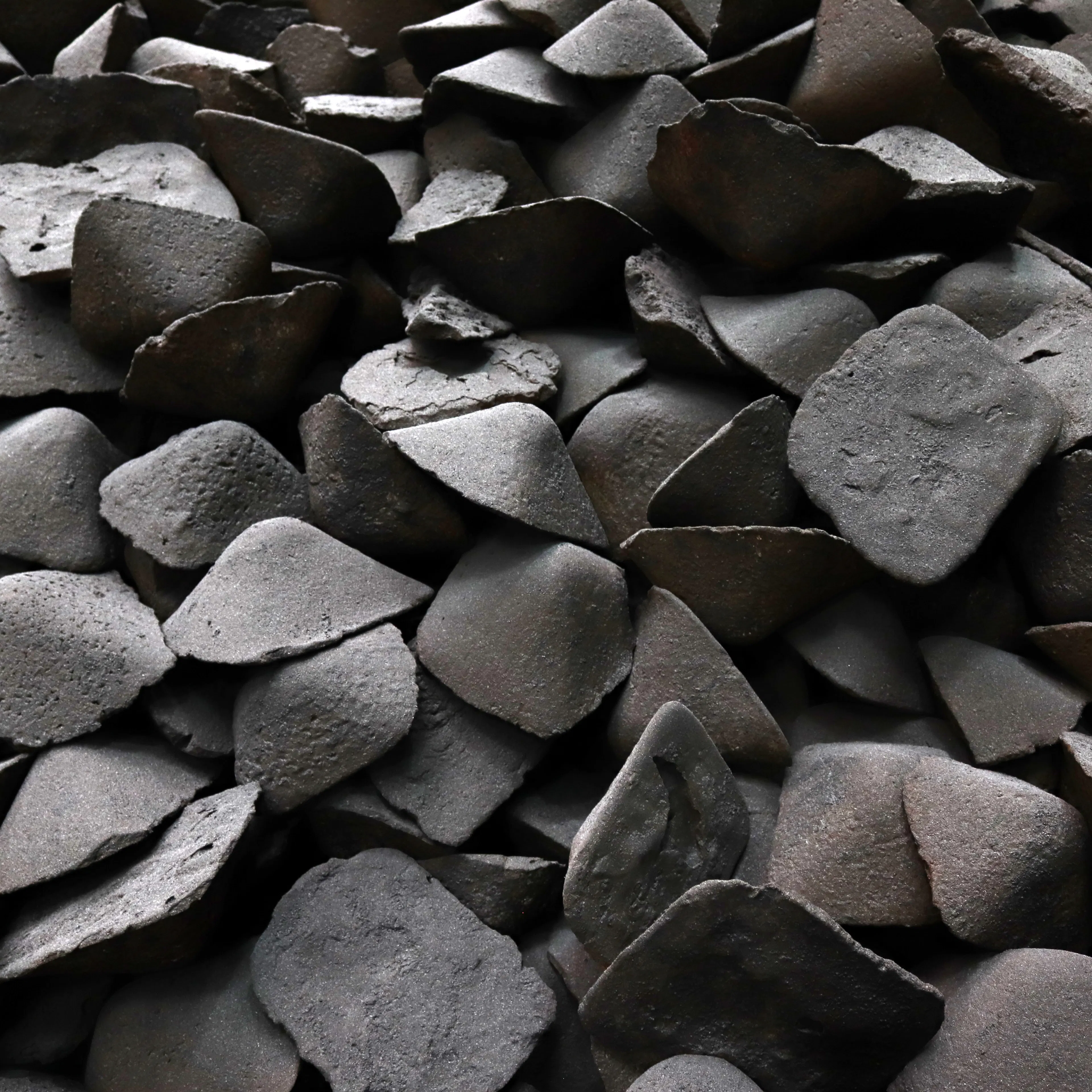
Pig iron is the crude, high-carbon iron product obtained from a blast furnace through the smelting of iron ore, coke, and limestone at temperatures exceeding 1,600°C, serving as the primary intermediate material in the iron and steel production chain. Pig iron contains carbon from 3.5% to 4.5% by weight, along with impurities including silicon (0.5% to 1%), manganese (0.25% to 2.5%), phosphorus (below 0.12%), and sulfur (below 0.05%), making it too brittle for direct structural use but ideal as a feedstock for further refining into steel and cast iron.
The name "pig iron" originates from the traditional casting method where molten iron from the blast furnace was poured into a central channel (the "sow") feeding smaller branching molds ("pigs"), a layout resembling a sow nursing piglets. Pig iron properties include a density of approximately 7.2 g/cm³, a melting point from 1,150°C to 1,200°C (lower than pure iron due to carbon depression), and extreme brittleness resulting from high carbon content. Its primary applications are steelmaking in basic oxygen furnaces (BOF) and electric arc furnaces (EAF), cast iron production, wrought iron manufacturing, foundry casting, alloy production, and industrial machinery components, establishing pig iron as the foundational raw material of the global iron and steel industry.
What Is Pig Iron?
Pig iron is an intermediate iron product obtained directly from a blast furnace, characterized by high carbon content from 3.5% to 4.5% and significant impurity levels that make it unsuitable for direct structural applications but valuable as the primary raw material for steelmaking and cast iron production. Produced by reducing iron ore (Fe₂O₃ or Fe₃O₄) with coke and limestone at temperatures above 1,600°C, pig iron emerges as a liquid metal that is either transferred directly to a steelmaking furnace in molten form or cast into solid ingots for later remelting. The high carbon content that defines pig iron distinguishes it from steel (carbon below 2.14%) and wrought iron (carbon below 0.08%), placing pig iron at the highest end of the iron-carbon alloy spectrum among ferrous metals. Pig iron is used mainly as a raw material for steelmaking, where excess carbon and impurities are removed through oxygen blowing or electric arc refining to produce steel grades with controlled compositions.
What Is the Definition of Pig Iron in Metallurgy?
The definition of Pig Iron in metallurgy is the crude iron produced from iron ore in a blast furnace through carbothermic reduction, representing the first solid or liquid metallic product in the iron production sequence before any refining or alloying operations. The metallurgical definition of pig iron specifies a ferrous material with carbon content from 3.5% to 4.5%, a composition that exceeds the maximum carbon solubility in austenite (2.14%) and results in a material with a lower melting point, higher fluidity in the liquid state, and greater brittleness in the solid state compared to steel. In the iron-carbon phase diagram, pig iron compositions fall within the hypoeutectic to hypereutectic cast iron range, depending on exact carbon content. Pig iron serves as the base for further processing, with its high carbon and impurity content treated as a starting point for controlled refinement rather than a final material specification.
Is Pig Iron the Raw Product of a Blast Furnace?
Yes, pig iron is the raw product of a blast furnace, produced when iron ore, coke, and limestone are charged into the top of the furnace and subjected to temperatures exceeding 1,600°C generated by hot air blasts (at 900°C to 1,250°C) injected through tuyeres at the furnace base. The carbothermic reduction reactions convert iron oxides in the ore to metallic iron, which absorbs carbon from coke combustion and descends as liquid metal to the furnace hearth. Molten pig iron accumulates in the hearth and is periodically tapped through the iron notch, flowing into torpedo cars for transfer to steelmaking or into casting machines for solidification into ingots. The blast furnace produces pig iron continuously as long as raw materials are charged, with modern large-scale furnaces producing 5,000 to 10,000 metric tons per day.
Why Is It Called Pig Iron?
Pig iron is called "pig iron" because of the traditional casting shape that resembled piglets nursing from a sow, a visual analogy drawn from the layout of the sand molds into which molten iron was historically poured after tapping from the blast furnace. A central main channel (the "sow") was cast in sand in early iron foundries, with multiple shorter branching side channels ("pigs") extending perpendicularly from it, creating a dendritic mold pattern across the foundry floor. Molten iron flowed from the furnace tap hole through the sow channel and into the pig molds simultaneously, solidifying into oblong ingots connected to the central runner. The arrangement of numerous small ingots branching from a single large channel closely resembled the image of a sow with piglets feeding along her sides, prompting ironworkers to adopt the descriptive term "pig iron" for the resulting ingots.
How Did Pig Iron Get Its Name in Early Iron Production?
The name pig iron originated in early iron production from the practical casting method used by ironworkers to handle molten metal from blast furnaces before mechanized transfer equipment existed. Molten iron flowed through a main runner channel excavated in the foundry sand floor after tapping, called the "sow," and branched into rows of smaller rectangular depressions on either side, each forming an individual ingot. Workers observed that the small ingots arranged along the central channel resembled a litter of piglets nursing alongside their mother, making the term "pig iron" a natural and widely adopted description for the product. The "sow" designation for the main channel persisted alongside the "pig" designation for the individual ingots, with the term "pig iron" becoming standardized in British iron industry nomenclature by the 18th century and subsequently adopted globally.
Was Pig Iron Named After Its Shape in Molds?
Yes, pig iron was named after its shape in the sand molds used in early blast furnace casting, where the layout of a central runner (sow) feeding multiple smaller lateral ingot molds (pigs) visually resembled a sow nursing a litter of piglets. The individual pig ingots measured approximately 0.9 m to 1.2 m in length and weighed from 4 kg to 9 kg in traditional sand casting operations. The naming dates to early British metallurgy in the 17th and 18th centuries, when sand casting was the primary method of handling molten blast furnace iron. Modern continuous pig casting machines replaced sand molds, but the term pig iron persisted as the standard designation for blast furnace iron across the global steel industry.
What Is the Composition of Pig Iron?
The composition of Pig iron consists of iron with high carbon content from 3.5% to 4.5% and impurities including silicon (0.5% to 1.0%), manganese (0.25% to 2.5%), phosphorus (below 0.12%), and sulfur (below 0.05%), with the balance being iron at approximately 93% to 95% by weight. Carbon in pig iron exists in two forms: combined carbon as cementite (Fe₃C) and free carbon as graphite, with the ratio of the two forms depending on cooling rate and silicon content. Higher silicon content promotes graphite formation, producing a softer, more machinable iron, while lower silicon content promotes cementite formation, resulting in a harder, whiter fracture surface (white pig iron). Manganese partially counteracts the embrittling effect of sulfur by forming MnS rather than FeS at grain boundaries. Phosphorus increases fluidity of the melt, improving castability, but reduces impact toughness in the solidified metal. The specific impurity profile of pig iron directly determines its suitability for steelmaking, cast iron production, or foundry applications.
What Is the Carbon Percentage in Pig Iron?
The carbon percentage in Pig iron contains 3.5% to 4.5% by weight, a concentration substantially higher than the carbon content of any steel grade (maximum 2.14%) and representing the amount of carbon absorbed by liquid iron from coke during blast furnace smelting. Carbon absorption occurs as liquid iron contacts coke in the furnace hearth, dissolving carbon until near-saturation at blast furnace temperatures. The carbon content of pig iron is not fixed at a single value but varies depending on furnace operating temperature, coke rate, and burden composition; higher furnace temperatures increase carbon absorption toward the upper end of the 3.5% to 4.5% range. Pig iron with carbon above 4.3% is hypereutectic relative to the iron-carbon eutectic point (4.3% C at 1,154°C), while iron with carbon below 4.3% is hypoeutectic. The high carbon content is what makes pig iron brittle, gives it a lower melting point than pure iron, and necessitates refining before use in structural applications.
Does Pig Iron Contain More Than 3% Carbon?
Yes, pig iron contains more than 3% carbon, with the standard compositional range from 3.5% to 4.5% carbon by weight, placing it well above the 3% threshold in all normally produced blast furnace iron. The minimum carbon content of pig iron is bounded by the solubility of carbon in liquid iron at blast furnace temperatures (approximately 1,500°C to 1,600°C), which is close to 4% to 5%. The material would be classified as steel rather than pig iron at carbon levels below 2.14%; the boundary from 2.14% to 3.5% covers the cast iron range. The carbon content above 3% directly differentiates pig iron from all steel grades and most cast iron grades, confirming it as the highest-carbon iron product in the conventional ferrous metal classification system.
How Is Pig Iron Made?
Pig iron is made by smelting iron ore in a blast furnace using coke as the reducing agent and limestone as the fluxing agent, in a continuous high-temperature process that converts iron oxides into liquid metallic iron saturated with carbon. The blast furnace operates as a counter-current reactor: iron ore (sinter, pellets, or lump ore), coke, and limestone are charged into the top, while preheated air (hot blast) at 900°C to 1,250°C is injected through tuyeres at the bottom. Coke combustion in front of the tuyeres generates temperatures above 2,000°C and produces carbon monoxide (CO), which reduces iron oxides in the ore through the reactions Fe₂O₃ + 3CO → 2Fe + 3CO₂ at temperatures from 700°C to 1,000°C. Limestone (CaCO₃) decomposes to lime (CaO) and CO₂, with the lime reacting with silica, alumina, and other gangue minerals to form liquid slag that separates from the molten iron. Molten pig iron accumulates in the hearth and is tapped every 4 to 8 hours in modern blast furnaces.
How Is Pig Iron Produced From Iron Ore in a Blast Furnace?
Pig iron is produced from Iron ore, which is heated with coke and limestone in a blast furnace to separate molten iron through a series of chemical reduction reactions that progressively strip oxygen from iron oxide minerals. The reduction sequence proceeds from hematite (Fe₂O₃) to magnetite (Fe₃O₄) at temperatures above 570°C, magnetite to wüstite (FeO) at 570°C to 700°C, and wüstite to metallic iron (Fe) at temperatures above 700°C, with CO as the primary reductant at lower temperatures and direct reduction by coke carbon at temperatures above 1,000°C. The metallic iron produced by reduction drips through the coke bed, absorbing carbon (reaching 3.5% to 4.5%), silicon, manganese, and phosphorus from the furnace atmosphere and slag. Liquid pig iron, with a density of approximately 7.2 g/cm³, sinks below the lighter slag (density approximately 2.7 g/cm³) and collects in the furnace hearth, from which it is tapped as the final liquid product of blast furnace reduction.
Is Molten Pig Iron Tapped Directly From the Furnace?
Yes, molten pig iron is tapped directly from the blast furnace hearth through the iron notch, a refractory-lined tap hole opened by a hydraulic drill every 4 to 8 hours in modern large-scale operations. Molten pig iron flows from the tap hole through a main trough (the "iron runner") into torpedo cars (hot metal ladles) for transfer to a basic oxygen furnace (BOF) steelmaking plant, or into casting machines that solidify the iron into solid pig ingots for storage and shipment. The tap hole is resealed after each tapping using a clay gun that injects refractory material under pressure. Modern blast furnaces may have 2 to 4 tap holes to allow continuous operation, with tap holes rotated in sequence to manage hearth wear and maintain pig iron flow without interrupting furnace production.
What Are the Main Properties of Pig Iron?
The main properties of Pig Iron are listed below.
- Carbon Content: Pig iron contains carbon from 3.5% to 4.5% by weight, the highest carbon concentration of any iron product in the ferrous metals family. The high carbon content establishes its brittleness, low melting point, and limited workability.
- Density: Pig iron has a density of approximately 7.2 g/cm³, slightly lower than pure iron (7.87 g/cm³) due to the expansion of the iron lattice by dissolved carbon and silicon. The density varies from 7.0 g/cm³ to 7.4 g/cm³ depending on composition.
- Melting Point: The melting point of pig iron ranges from 1,150°C to 1,200°C, significantly lower than pure iron (1,538°C) due to the eutectic depression caused by high carbon and silicon content. The reduced melting point improves castability and fluidity.
- Brittleness: Pig iron is extremely brittle, with negligible ductility and elongation at fracture near 0%. The brittleness results from the high carbon content forming hard cementite (Fe₃C) or graphite phases that initiate cracks under tensile or impact loading. Pig iron cannot be rolled, forged, or drawn without fracturing.
- Hardness: Pig iron has a Brinell hardness from 160 HB to 260 HB, depending on carbon form and silicon content. White pig iron (cementite-rich) reaches the upper hardness range, while gray pig iron (graphite-rich) falls at the lower end.
- Compressive Strength: Pig iron withstands compressive loads more effectively than tensile loads, with compressive strength from 570 MPa to 700 MPa. The high compressive strength makes it functional in foundry applications where compressive loading dominates.
How Do High Carbon and Impurities Affect Pig Iron Properties?
High carbon and impurities in pig iron properties reduce ductility, toughness, and workability while increasing brittleness, hardness, and susceptibility to fracture under tensile or impact loads. Carbon at 3.5% to 4.5% forms cementite (Fe₃C) networks or graphite flakes within the iron matrix, both of which act as stress concentrators that initiate cracks under applied loads, reducing tensile strength to below 200 MPa and elongation at fracture to near 0%. Silicon from 0.5% to 1.0% promotes graphite formation and slightly reduces hardness compared to silicon-lean compositions. Phosphorus below 0.12% increases liquid metal fluidity, improving casting behavior but reducing impact toughness in the solid state, a property called cold-shortness. Sulfur below 0.05% forms iron sulfide (FeS) at grain boundaries, reducing hot-working performance, though manganese additions convert FeS to MnS, partially mitigating the effect. The combined impact of high carbon and impurities requires further refining before pig iron performs reliably in structural engineering applications.
Is Pig Iron Brittle Compared to Steel?
Yes, pig iron is more brittle than steel, with elongation at fracture near 0% compared to elongation values from 10% to 35% for mild and medium carbon steels. The brittleness of pig iron arises from carbon at 3.5% to 4.5%, which forms cementite networks (in white pig iron) or coarse graphite (in gray pig iron) that provide crack initiation sites throughout the microstructure. Steel with carbon below 2.14% forms a predominantly ferritic or pearlitic microstructure without the coarse cementite networks or free graphite that make pig iron mechanically unreliable in tension and impact. The Charpy impact energy of pig iron is below 5 J, compared to 27 J to over 100 J for structural steel grades, confirming pig iron's inferior toughness. The brittleness of pig iron limits its direct use to compressive-load applications and positions it primarily as a steel and cast iron feedstock.
How Does Pig Iron Compare to Other Iron Products?
Pig iron differs from other iron products through its raw, unrefined form, serving as the primary intermediate product in the iron-making process. Pig iron is less refined and more brittle than all other iron products in the ferrous metals family, containing the highest carbon levels and the greatest impurity content of any iron produced in the metallurgical process chain. Compared to cast iron (carbon 2% to 4%), pig iron contains higher silicon, sulfur, and phosphorus impurities and has not undergone the controlled remelting and composition adjustment that produces the specific microstructures of gray, ductile, or malleable cast iron. Compared to wrought iron (carbon below 0.08%), pig iron contains 50 to 60 times more carbon and none of the slag-fiber reinforcement that gives wrought iron its toughness and corrosion resistance. Compared to steel (carbon 0.008% to 2.14%), pig iron offers no direct structural utility without refining. Pig iron serves as the base material from which all other iron products are derived through controlled processing, making it the starting point rather than the endpoint of the ferrous metals production chain. Xometry's manufacturing platform produces precision components in iron-based materials derived from Iron (Fe) feedstocks processed through the full refining chain from pig iron.
What Is the Difference Between Pig Iron and Cast Iron?
The difference between Pig Iron and Cast Iron is shown in the table below.
Is Pig Iron Less Refined Than Cast Iron?
Yes, pig iron is less refined than cast iron, as it comes directly from the blast furnace without the secondary remelting, composition adjustment, and controlled solidification that convert pig iron into a specific cast iron grade. Cast iron production begins with remelting pig iron (along with steel scrap and cast iron returns) in a cupola furnace or electric induction furnace, where temperature, carbon content, silicon level, and alloying additions are adjusted to target the microstructure and mechanical properties of a specific grade. Gray iron requires silicon from 1.5% to 3.0% and controlled cooling rates to precipitate graphite flakes; ductile iron requires magnesium treatment (0.03% to 0.05% Mg) to produce nodular graphite. The remelting, composition control, and microstructure engineering steps that produce cast iron from pig iron represent the refining operations that distinguish the two materials.
How Does Pig Iron Serve as the Starting Material for Steel Types and Grades?
Pig iron serves as the starting material for steel types and grades by providing the high-iron, high-carbon melt from which steelmakers remove excess carbon and impurities through oxygen blowing, electric arc melting, and secondary metallurgy to produce steel compositions within specified ranges. In the basic oxygen furnace (BOF) process, molten pig iron (approximately 70% to 80% of the charge) is combined with steel scrap and subjected to a high-velocity oxygen lance, which oxidizes carbon from 3.5% to 4.5% down to the target steel carbon level (as low as 0.005% for interstitial-free steel). Alloying elements (chromium, nickel, molybdenum, vanadium, and manganese) are added after carbon reduction to produce specific steel types and grades. The BOF process converts a heat of pig iron (200 to 350 metric tons) into a steel grade within approximately 20 to 45 minutes, reflecting the efficiency of using pig iron's concentrated iron content as the base for steel chemistry.
How Is Pig Iron Processed to Create Specific Steel Grades?
Pig iron is processed to create specific steel grades by adjusting carbon content through oxygen blowing, removing phosphorus and sulfur through slag chemistry, and adding precise quantities of alloying elements during secondary metallurgy in a ladle furnace or vacuum degassing unit. The oxygen lance reduces carbon from the pig iron's 3.5% to 4.5% range to the target level for the steel grade being produced in the BOF process: below 0.25% for mild steels, 0.25% to 0.60% for medium carbon grades, 0.60% to 1.40% for high carbon grades, and above 10.5% chromium addition for stainless grades. Secondary metallurgy in a ladle furnace adjusts temperature, chemistry, and inclusion cleanliness before continuous casting into slabs, blooms, or billets. Vacuum degassing (RH or VD) removes hydrogen and reduces oxygen to below 15 ppm for demanding grades, including bearing steel, tire cord steel, and electrical steel, each starting from pig iron as the base iron source.
Is Pig Iron the Primary Raw Input for Carbon and Alloy Steels?
Yes, pig iron is a primary raw input for carbon and alloy steels produced through the integrated steelmaking route (blast furnace plus basic oxygen furnace), supplying the concentrated metallic iron base from which steel chemistry is built. In integrated steel plants, molten pig iron from the blast furnace accounts for 70% to 80% of the BOF charge, with the remainder comprising steel scrap. The pig iron contribution provides the liquid iron base, the initial carbon source, and the heat energy (from carbon oxidation) that drives the steelmaking process. In the electric arc furnace (EAF) route, pig iron in solid form is added as a carbon and iron source to supplement scrap charges, typically at 5% to 30% of total charge weight to control carbon content and dilute scrap impurities in high-quality carbon and alloy steel production.
How Is Pig Iron Converted Into 4130 Carbon Steel?
Pig iron is converted into 4130 carbon steel by refining excess carbon and impurities in a BOF or EAF, then adding chromium (0.8% to 1.1%) and molybdenum (0.15% to 0.25%) during secondary metallurgy in a ladle furnace to achieve the alloy composition that defines the grade. The refining stage reduces carbon from pig iron's 3.5% to 4.5% to the 4130 target range of 0.28% to 0.33%, while simultaneously oxidizing phosphorus below 0.035% and managing sulfur below 0.040% through slag treatment. Chromium is added as ferrochrome (FeCr) and molybdenum as ferromolybdenum (FeMo) in precisely weighed additions calculated from the steel heat weight and target composition. The resulting melt is cast into billets, which are rolled into bar, tube, or plate for subsequent heat treatment. Xometry's CNC machining services produce high-tolerance components from 4130 carbon steel, a grade whose production chain traces directly to pig iron refining and alloying.
Which Alloying Elements Are Added to Pig Iron to Produce 4130 Carbon Steel?
Alloying elements added to Pig Iron to produce 4130 Carbon Steel are Chromium (0.8% to 1.1%) and molybdenum (0.15% to 0.25%), which are the primary alloying elements added to refined pig iron during secondary metallurgy to produce 4130 carbon steel, along with manganese (0.40% to 0.60%) and silicon (0.15% to 0.35%) as standard additions. Chromium is added as high-carbon ferrochrome (HCFeCr) or low-carbon ferrochrome (LCFeCr), depending on the carbon budget of the heat, as chromium contributes carbon in its ferroalloy form. Molybdenum is added as ferromolybdenum (FeMo, approximately 60% to 70% Mo), a dense, high-melting-point alloy that dissolves efficiently in liquid steel above 1,600°C. Chromium increases hardenability by shifting the CCT curve and raises tempering resistance, while molybdenum suppresses temper embrittlement and further increases hardenability. The combination of chromium and molybdenum at the specified levels defines 4130 steel as a chromoly alloy with superior strength-to-weight performance compared to plain carbon steel.
Does 4130 Carbon Steel Require Chromium and Molybdenum Additions?
Yes, 4130 carbon steel requires chromium from 0.8% to 1.1% and molybdenum from 0.15% to 0.25% as mandatory alloying additions that define the grade according to AISI/SAE designation standards. Without chromium and molybdenum, the steel would be classified as a plain carbon steel rather than an alloy steel, with significantly lower hardenability, temper embrittlement susceptibility, and reduced performance at elevated temperatures. The "41" prefix in the AISI designation specifically identifies the chromium-molybdenum (chromoly) alloy family, with the "30" suffix denoting the carbon range of 0.28% to 0.33%. The chromium and molybdenum additions enable 4130 steel to achieve tensile strengths from 560 MPa (annealed) to over 1,150 MPa (quenched and tempered), a range not achievable in equivalent plain carbon steel.
How Is Pig Iron Refined to Manufacture 4150 Steel?
Pig iron is refined to manufacture 4150 steel by reducing carbon from the blast furnace level of 3.5% to 4.5% down to the 4150 target range of 0.48% to 0.53%, while adding chromium (0.8% to 1.1%) and molybdenum (0.15% to 0.25%) during secondary metallurgy to achieve the alloy specification. The refining process in a BOF or EAF oxidizes excess carbon through oxygen injection, monitored by process gas analysis and bath temperature measurement to achieve the precise carbon endpoint required. 4150 sits at the upper boundary of medium carbon steel at 0.48% to 0.53% carbon, providing higher hardness and strength after heat treatment compared to lower-carbon chromoly grades (4130, 4140) while maintaining sufficient toughness for heavy-duty mechanical applications. Xometry's material offerings include 4150 steel bar and plate for CNC-machined components requiring high strength, wear resistance, and hardenability in demanding service environments.
How Is the Carbon Content of Pig Iron Adjusted for 4150 Steel Production?
The Carbon content of pig iron is adjusted for 4150 steel production through a combination of BOF oxygen blowing, dynamic process control, and secondary metallurgy carbon adjustment in the ladle furnace. Oxygen lancing oxidizes carbon from 3.5% to 4.5% toward a tap target slightly above the 4150 specification (0.48% to 0.53%) in the BOF, accounting for carbon pickup from ferroalloy additions made after tapping. Carbon is finely adjusted using carburizing additions (petroleum coke, graphite electrodes) if the tap heat is over-blown below the target at the ladle furnace, or by further oxygen trimming if carbon is above specification. Continuous casting steel temperature and chemistry are verified at the tundish (holding vessel above the mold) to confirm the carbon is within the 0.48% to 0.53% range before the heat is cast into billets destined for 4150 steel bar production.
Is 4150 Steel Stronger Than Standard Carbon Steel?
Yes, 4150 steel is stronger than standard carbon steel of equivalent carbon content due to the combined effects of chromium and molybdenum alloying elements that increase hardenability and temper resistance beyond what carbon alone achieves. Plain carbon steel with 0.50% carbon (1050 steel) achieves tensile strengths from 620 MPa (annealed) to 870 MPa (quenched and tempered in 25 mm diameter bar), while 4150 chromoly steel at the same carbon level achieves 690 MPa (annealed) to 1,310 MPa (quenched and tempered in 25 mm diameter), a strength advantage of approximately 50% in the heat-treated condition. The hardenability improvement from chromium and molybdenum allows 4150 to achieve through-hardening in sections up to 75 mm diameter, compared to below 25 mm for 1050 carbon steel under equivalent quenching conditions.
How Is Pig Iron Transformed Into 1018 Steel?
Pig iron is transformed into 1018 steel by refining carbon from 3.5% to 4.5% down to the 1018 specification range of 0.15% to 0.20%, removing phosphorus below 0.040% and sulfur below 0.050%, and maintaining manganese from 0.60% to 0.90% without adding significant alloying elements. The refining process in a BOF uses intensive oxygen blowing to oxidize the majority of the carbon in the pig iron charge, driving the heat toward low carbon levels within 20 to 40 minutes. The risk of over-oxidation of iron is high at such low carbon targets, requiring precise oxygen control and the addition of deoxidizers (aluminum, silicon) after tapping to remove dissolved oxygen from the steel before casting. The resulting low-carbon composition of 1018 makes it soft, ductile, and easily machinable, suitable for cold-drawn bar stock used in shafts, pins, bushings, and general machined components.
What Refining Steps Reduce Carbon in Pig Iron to Meet 1018 Steel Specifications?
Carbon in pig iron is reduced to meet 1018 steel specifications (0.15% to 0.20%) through a primary oxygen blowing stage in the BOF, followed by deoxidation and chemistry trimming in the ladle furnace. High-purity oxygen injected at supersonic velocity through the lance reacts with dissolved carbon in the pig iron melt (C + O → CO gas) in the BOF, reducing carbon continuously as CO bubbles escape the bath. The oxygen blow is terminated when the carbon approaches the target, with tap carbon controlled to 0.15% to 0.22% to allow for carbon reversion and ferroalloy additions. Aluminum (0.02% to 0.05%) is added at tapping as a deoxidizer, removing dissolved oxygen as Al₂O₃ inclusions that float into the slag. Manganese (as ferromanganese) and silicon (as ferrosilicon) are added to achieve the 1018 composition, and the heat proceeds to continuous casting to produce 1018 steel billets.
Is 1018 Steel Classified as a Low Carbon Steel?
Yes, 1018 steel is classified as a low-carbon steel, containing carbon from 0.15% to 0.20% by weight, a range that falls comfortably within the low-carbon designation of below 0.25% used in standard steel classification systems, including ASTM and SAE/AISI. The low carbon content of 1018 steel produces a predominantly ferritic microstructure with small amounts of pearlite, giving the material high ductility (elongation from 15% to 25%), good toughness, and excellent weldability without requiring preheating in most applications. The low carbon keeps hardness moderate at approximately 126 HB to 163 HB in the cold-drawn condition, making 1018 suitable for parts requiring machining, bending, and forming. The combination of low cost, availability, and consistent mechanical properties makes 1018 steel one of the most widely used low-carbon grades in CNC machining and general fabrication.
How Does Pig Iron Become 1060 Carbon Steel?
Pig iron becomes 1060 carbon steel by reducing carbon from 3.5% to 4.5% to the 1060 specification range of 0.55% to 0.65% through controlled oxygen blowing in a BOF or EAF, maintaining manganese from 0.60% to 0.90%, and keeping phosphorus below 0.040% and sulfur below 0.050% without adding chromium, nickel, or other significant alloying elements. 1060 sits in the medium-to-high carbon range, where the pearlite fraction in the normalized microstructure increases compared to low-carbon grades at 0.55% to 0.65% carbon, raising hardness from approximately 200 HB to 241 HB and tensile strength from 620 MPa to 770 MPa. The carbon level in 1060 carbon steel is sufficient to allow effective hardening through quenching and tempering, producing surface hardness from 55 HRC to 60 HRC in thin sections, making the grade standard for springs, blades, rail components, and agricultural equipment.
How Is the Carbon Level Controlled When Refining Pig Iron Into 1060 Steel?
Carbon level is controlled when pig iron is refined into 1060 steel through endpoint carbon management in the BOF, where the oxygen blow is terminated at a bath carbon level slightly above the 0.55% to 0.65% target to allow for decarburization during tapping and ladle treatment. Dynamic process models in modern BOF operations predict carbon endpoint from accumulated oxygen input, off-gas analysis (CO/CO₂ ratio), and bath temperature, enabling operators to stop the oxygen blow within ±0.02% of the target carbon. Deoxidation practices use silicon and manganese as deoxidizers rather than aluminum at medium-to-high carbon levels like 1060, as aluminum deoxidation at higher carbon levels produces fine Al₂O₃ inclusions that require careful management to avoid reducing toughness. Continuous casting of 1060 steel uses controlled cooling in the strand to minimize centerline segregation of carbon, a defect that produces non-uniform hardness in finished bar or rod used for 1060 carbon steel products.
Does 1060 Carbon Steel Achieve Higher Hardness Than 1018 Steel?
Yes, 1060 carbon steel achieves higher hardness than 1018 steel due to its greater carbon content (0.55% to 0.65% versus 0.15% to 0.20%), which produces a higher pearlite fraction in the normalized microstructure and greater martensite hardness when quenched. 1060 steel reaches approximately 200 HB to 241 HB in the normalized condition, compared to 126 HB to 163 HB for cold-drawn 1018. 1060 achieves hardness values from 55 HRC to 60 HRC in thin sections after quenching and tempering, while 1018 is not commonly heat-treated to high hardness due to its low hardenability. The hardness advantage of 1060 over 1018 translates directly to greater wear resistance in applications including knife blades, springs, and agricultural tillage tools.
How Is High Carbon Steel Produced From Pig Iron?
High carbon steel is produced from pig iron by refining the blast furnace iron to retain carbon from 0.60% to 1.40% while removing phosphorus, sulfur, and other harmful impurities through controlled BOF or EAF steelmaking and secondary metallurgy. The refining process terminates carbon oxidation at a higher carbon endpoint than low or medium carbon grades, requiring precise process control to stop the BOF blow within a narrow carbon window without over-blowing below the target. High carbon steel production often uses the EAF route with selected scrap additions to achieve consistent chemistry, as the BOF process is more challenging to control at high carbon endpoints due to the difficulty of stopping oxygen injection precisely. Secondary metallurgy at the ladle furnace homogenizes chemistry and temperature, and vacuum degassing reduces hydrogen below 2 ppm to prevent flaking defects in high carbon steel bars and rods used in wire, springs, and tool applications.
Why Must Carbon From Pig Iron Be Precisely Controlled for High Carbon Steel?
Carbon from pig iron must be precisely controlled for high carbon steel because small deviations from the target carbon range (0.60% to 1.40%) produce large changes in hardness, brittleness, and heat treatment response that determine whether the finished steel meets specification. At carbon levels above the target, excess cementite forms at grain boundaries (hypereutectoid network carbides), creating brittle fracture paths that reduce impact toughness by 30% to 50% and increase the risk of quench cracking during hardening. At carbon levels below the target, the steel fails to achieve the hardness and wear resistance required for the intended application (wire rope requires 0.70% to 0.90% C; bearing steel 52100 requires 0.95% to 1.10% C). The tight carbon control required in high carbon steel production (typically ±0.03%) is managed through real-time melt sampling, optical emission spectrometry (OES), and ladle furnace trimming additions to maintain the precise carbon level that balances hardness against brittleness in the final product.
Does High Carbon Steel Provide Greater Wear Resistance Than Mild Steel?
Yes, high carbon steel provides greater wear resistance than mild steel due to higher carbon content, producing harder microstructural constituents (martensite, bainite, pearlite, cementite) that resist abrasive and adhesive wear modes more effectively than the soft ferrite-dominant microstructure of mild steel. Mild steel (0.05% to 0.25% C) in the normalized condition has a hardness from 110 HB to 150 HB, while high carbon steel (0.60% to 1.40% C) achieves 200 HB to 241 HB normalized and 55 HRC to 66 HRC after quench and temper. Abrasive wear resistance, measured by pin-on-disk testing, increases proportionally with hardness for steels in the 200 HB to 600 HB range. High carbon steel's superior wear resistance compared to mild steel makes it the standard material for cutting tools, springs, wire rope, rail track, and wear plate applications.
How Is Pig Iron Used in the Production of 434 Stainless Steel?
Pig iron is used in the production of 434 stainless steel by refining the blast furnace iron in a BOF or EAF to reduce carbon below 0.12% and then adding chromium from 16% to 18% and molybdenum from 0.75% to 1.25% during secondary metallurgy to achieve the ferritic stainless steel composition that defines grade 434. Chromium is the defining addition that transforms refined pig iron into stainless steel; at concentrations above 10.5%, chromium forms the passive Cr₂O₃ layer that resists corrosion, and at 16% to 18%, the grade achieves the corrosion performance standard for 434. Molybdenum in grade 434 enhances resistance to pitting and crevice corrosion beyond what chromium alone provides in grade 430, making 434 suitable for automotive trim and exhaust components exposed to road salt environments. Xometry's CNC machining and fabrication services process 434 stainless steel components, where the pig iron-derived ferritic stainless composition delivers chromium-based corrosion protection with molybdenum-enhanced pitting resistance.
How Is Chromium Introduced to Pig Iron for 434 Stainless Steel?
Chromium is introduced to refined pig iron for 434 stainless steel production by adding ferrochrome (FeCr) alloys during secondary metallurgy in a ladle furnace or argon oxygen decarburization (AOD) vessel after initial carbon reduction from the pig iron charge. The AOD process is particularly important for stainless steel production because it reduces carbon below 0.12% (the 434 specification maximum) without excessive chromium oxidation, which would occur in a standard BOF at the high chromium concentrations required for stainless grades. A mixture of argon and oxygen is blown into the steel melt; the argon dilutes CO gas above the bath in the AOD, lowering CO partial pressure and thermodynamically favoring carbon oxidation over chromium oxidation at the carbon levels targeted for ferritic stainless steel. High-carbon ferrochrome (HCFeCr, 6% to 9% C, 60% to 70% Cr) is added early in the refining process, with low-carbon ferrochrome (LCFeCr, below 0.10% C) used for final chromium trimming to avoid adding unwanted carbon at the end of refining.
Does 434 Stainless Steel Offer Better Corrosion Resistance Than Plain Carbon Steel?
Yes, 434 stainless steel offers better corrosion resistance than plain carbon steel due to the passive chromium oxide (Cr₂O₃) layer that forms spontaneously on 434's surface from its 16% to 18% chromium content, a protective mechanism absent in plain carbon steel. Plain carbon steel (1018, 1045, 1060) corrodes rapidly in atmospheric exposure, with corrosion rates from 50 µm/year to 200 µm/year in industrial environments, while 434 stainless steel maintains a protective passive film with negligible metal loss in the same conditions. Grade 434's molybdenum addition (0.75% to 1.25%) further improves resistance to pitting corrosion in chloride environments compared to grade 430, making 434 suitable for outdoor and coastal applications where plain carbon steel requires paint, galvanizing, or other protective coatings to prevent rapid corrosion.
What Are the Uses of Pig Iron?
The uses of Pig Iron are listed below.
- Making Steel: Pig iron supplies the concentrated iron base for BOF steelmaking, where it constitutes 70% to 80% of the furnace charge and provides the carbon and heat energy for the steelmaking reaction.
- Production of Cast Iron: Pig iron is remelted in cupola or induction furnaces with composition adjustments to produce gray iron, ductile iron, white iron, and malleable iron grades for casting into functional components.
- Manufacturing Wrought Iron: Pig iron is decarburized in a finery forge or puddling furnace to reduce carbon below 0.08%, producing wrought iron with slag inclusions for decorative and historical applications.
- Foundry Casting Applications: Pig iron is used directly as a foundry charge material for producing cast iron parts (engine blocks, pipe fittings, machine bases) through sand, permanent mold, and die casting processes.
- Alloy Production: Pig iron provides the iron base for producing specialized iron alloys (Ni-resist, high-silicon iron, white iron wear alloys) by adding alloying elements during remelting.
- Industrial Machinery and Construction Materials: Pig iron-derived cast iron is used in machine tool beds, lathe bases, column sections, and heavy structural castings where high mass, vibration damping, and compressive strength are required.
1. Pig Iron Used for Making Steel
Steel production is the primary use of pig iron globally, consuming 70% of all pig iron produced each year through the basic oxygen furnace (BOF) integrated steelmaking route. Molten pig iron from the blast furnace (hot metal at 1,400°C to 1,500°C) is charged into the BOF at 200 to 350 metric ton heat weights, constituting 70% to 80% of the charge, with the remainder being steel scrap. High-purity oxygen injected through a supersonic lance at 800 m/s to 1,000 m/s oxidizes carbon from 3.5% to 4.5% to the target steel carbon level (0.005% to 1.40% depending on grade) within 15 to 25 minutes. The exothermic oxidation of carbon and silicon in pig iron generates sufficient heat to melt the scrap addition and superheat the steel to 1,600°C to 1,680°C for casting. The BOF process converts pig iron into over 70% of the world's crude steel output, with global BOF steel production exceeding 1.2 billion metric tons annually. Pig iron's concentrated iron content, high carbon energy value, and consistent composition make it the preferred charge material for high-volume steel production worldwide.
2. Pig Iron Used for Production of Cast Iron
Pig iron is the primary feedstock for cast iron production, remelted in cupola furnaces, electric induction furnaces, or electric arc furnaces with controlled additions of steel scrap, cast iron returns, and alloying elements to produce specific gray iron, ductile iron, white iron, and malleable iron grades. Pig iron and scrap are alternately charged with metallurgical coke in cupola furnace melting, with limestone added as a flux; the resulting melt is tapped at temperatures from 1,400°C to 1,500°C into ladles for treatment and pouring. Gray iron production requires silicon from 1.5% to 3.0% (added as ferrosilicon) to promote graphite flake formation during solidification, producing a material with hardness from 150 HB to 260 HB and compressive strength from 570 MPa to 1,380 MPa. Ductile iron production requires magnesium treatment (0.03% to 0.05% Mg addition as magnesium ferrosilicon) to convert graphite from flakes to nodules, increasing tensile strength from below 200 MPa (gray iron) to 414 MPa to 827 MPa and elongation from 0% to 10% to 18%. Pig iron's consistent iron purity and controlled carbon content make it the preferred charge for high-quality cast iron production.
3. Pig Iron Used for Manufacturing Wrought Iron
Pig iron serves as the starting material for wrought iron manufacture through decarburization processes that reduce carbon from 3.5% to 4.5% down to below 0.08%, converting the brittle high-carbon iron into the soft, ductile, and fatigue-resistant material characterized by slag fiber inclusions. The historical puddling process (developed by Henry Cort in 1784) heated pig iron in a reverberatory furnace where ironworkers manually stirred the melt, exposing carbon to oxidizing furnace gases and progressively reducing carbon as CO was released. As carbon dropped, the iron's melting point rose, and the metal solidified into a spongy mass called a loop or bloom, which was then hammered or rolled to expel liquid slag and consolidate the iron into wrought iron bars. Modern wrought iron production is limited in scale, with applications focused on restoration metalwork, decorative ironwork, and heritage conservation projects where the material's distinctive slag-fiber microstructure and historical authenticity are required. Pig iron's role as the carbon-rich precursor to wrought iron remains the starting point of the wrought iron production chain.
4. Pig Iron Used for Foundry Casting Applications
Pig iron is used as a foundry charge material in iron casting operations, where it is remelted alongside cast iron returns, steel scrap, and ferroalloys to produce iron castings for automotive, industrial, and municipal applications. Foundry-grade pig iron is selected for consistent chemistry, low tramp elements (copper below 0.05%, tin below 0.03%, lead below 0.005%), and controlled sulfur below 0.040%, properties that ensure predictable melt behavior and microstructure in the cast components. In automotive foundries producing engine blocks, cylinder heads, and brake components, pig iron charge ratios from 20% to 50% of the total furnace charge maintain consistent carbon equivalent values and reduce the accumulation of tramp elements from steel scrap recycling. Ductile iron foundries producing pipe fittings, pump housings, and gearboxes use high-purity basic pig iron (sulfur below 0.020%) as the primary charge material because low sulfur levels are essential for magnesium treatment efficiency in nodular graphite formation. Foundry casting applications rely on pig iron's purity and consistency as the reference charge material for producing dimensionally accurate, defect-free iron castings.
5. Pig Iron Used for Alloy Production
Pig iron provides the iron base for producing specialized iron alloys by remelting with controlled additions of alloying elements that produce materials with properties not achievable in standard carbon or alloy steels. Ni-Resist austenitic cast iron, produced by adding 13% to 36% nickel to pig iron-derived melts, maintains austenitic microstructure at room temperature, providing excellent corrosion resistance, low thermal expansion, and good elevated-temperature properties for pump casings, valve bodies, and marine components. High-silicon iron (14% to 16% Si, produced from pig iron), known as Duriron, offers exceptional resistance to sulfuric and nitric acid environments at concentrations from 10% to 100%, used in chemical plant piping and reaction vessels. White iron wear alloys (Ni-Hard grades) produced from pig iron with 3% to 5% nickel and 1.5% to 7% chromium achieve hardness from 550 HB to 800 HB, used in ball mill liners, slurry pump impellers, and crusher parts. Pig iron's high iron purity and consistent carbon level make it the preferred base material for specialty iron alloy production where tight chemistry control is required.
6. Pig Iron Used for Industrial Machinery and Construction Materials
Pig iron-derived cast iron is the standard material for industrial machinery bases, machine tool structures, and heavy construction castings where high mass, vibration damping, compressive strength, and dimensional stability are required. Gray cast iron machine tool beds and columns, produced from pig iron-based melts with 1.5% to 3.0% silicon, provide vibration-damping capacity approximately 10 times greater than structural steel, reducing tool chatter and improving surface finish quality in precision grinding machines, lathes, and machining centers. Machine tool castings in gray iron weigh from 500 kg to over 50,000 kg per piece and require tight dimensional tolerances (±0.5 mm to ±2 mm) across large surfaces, achieved through controlled solidification and stress-relief annealing at 500°C to 600°C. Ductile iron castings produced from pig iron feedstocks are used in municipal water and sewer infrastructure as pipes, manhole covers, and valve bodies, with ductile iron pipe manufactured to AWWA C151 standards carrying internal working pressures from 1,380 kPa to 2,400 kPa in water distribution systems.
What Are the Advantages of Using Pig Iron?
The advantages of using Pig Iron are listed below.
- High Iron Content: Pig iron contains approximately 93% to 95% iron by weight, making it the most concentrated iron source available as a steelmaking charge material. The high iron content maximizes metallic yield in BOF and EAF steelmaking, reducing the quantity of raw material required per metric ton of steel produced.
- Low Raw Material Cost: Pig iron is produced from abundant iron ore at commodity prices from [$200 to $500] per metric ton, making it one of the most cost-effective iron sources for steelmaking compared to direct reduced iron (DRI) and high-quality scrap.
- Carbon Energy Contribution: The high carbon content of pig iron (3.5% to 4.5%) acts as a chemical fuel in the BOF process; oxidation of carbon to CO releases approximately 6.5 MJ to 7.5 MJ per kilogram of carbon burned, providing the thermal energy needed to melt the scrap addition and superheat the steel without external fuel.
- Consistent Composition: Blast furnace pig iron is produced with highly consistent composition within narrow impurity ranges (silicon ±0.1%, sulfur ±0.010%, phosphorus ±0.010%), enabling predictable steelmaking and casting metallurgy compared to variable-composition scrap.
- Versatile Downstream Processing: Pig iron serves as the starting material for steel, cast iron, wrought iron, and specialty alloys, making it the most versatile intermediate iron product in the ferrous metals production chain.
- Dilution of Scrap Tramp Elements: Adding pig iron to EAF scrap charges dilutes harmful tramp elements (copper, tin, arsenic, antimony) that accumulate in recycled scrap but cannot be removed by standard steelmaking refining, improving the quality of EAF steel for demanding applications, including automotive sheet and wire rod.
- Established Production Infrastructure: Blast furnace pig iron production is supported by mature global infrastructure, with over 500 blast furnaces operating worldwide at production rates from 1,000 to 12,000 metric tons per day per furnace, ensuring a reliable supply for integrated steelmakers and foundries at predictable cost.