PolyJet vs. SLA: Differences and Comparison


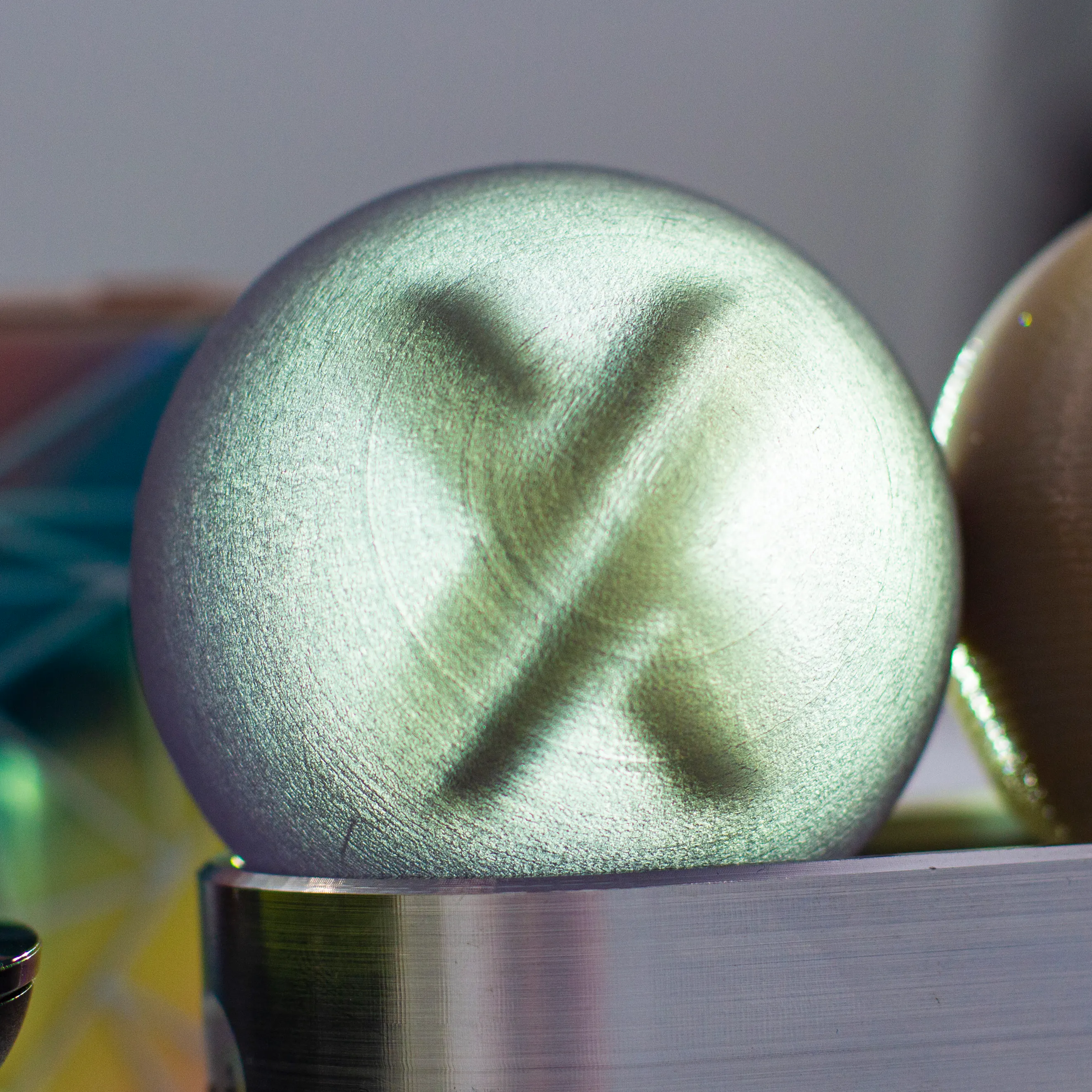
These two traditional methods have a lot in common. For example, they’re both additive manufacturing processes that use UV light to cure a liquid resin. They also both print layer by layer, albeit with some differences in the way they do so. So how exactly do they differ, and when would you use either one? Let’s find out.
PolyJet Definition and Comparison to SLA
First developed by Objet-Geometries in 2000, PolyJet 3D printers work quite similarly to inkjet printers. But, instead of depositing drops of liquid ink, PolyJet works by releasing drops of photopolymer, one layer at a time, until it builds a whole 3D model. As it’s being built, UV light cures and solidifies each layer. This type of printer uses multiple heads that work at the same time to lay down the material as well as any support material, which can later be removed by water jetting. If the support material is too thick, it might need some more post-processing like using a chemical bath, peeling, and washing off. These printers can actually print materials other than resin, too, and they can tackle rather large production volumes. But they can’t really make large-format parts. Here’s an image of some parts being printed in a PolyJet printer here at Xometry:

PolyJet printing has further advantages, too. For instance, it supports lots of different colors, and its parts have very good tensile strength. It also offers high-resolution parts, and when they’ve been printed, they’re cured well enough, so they won’t need to be placed into a UV oven like SLA parts would (more on this later). Lastly, it’s a very fast way of printing, especially for models that fit within a 5” cube. The one main drawback this technology has, especially over SLA, is that it tends to cost more because the materials are usually more expensive. You can find out more by checking out our guide on What is PolyJet.
What are the Advantages of PolyJet Compared to SLA?
PolyJet has the following advantages over SLA:
- PolyJet is more versatile than SLA. It has multi-material and multi-color capabilities.
- PolyJet parts have good tensile strength. This process can produce strong, sturdy, durable products.
- PolyJet is better in terms of resolution offerings.
- PolyJet-printed parts are sufficiently cured after printing. SLA, on the other hand, needs a UV oven to fully cure the part.
- PolyJet is capable of higher production volumes compared to SLA.
What are the Disadvantages of PolyJet Compared to SLA?
A disadvantage of PolyJet over SLA is its more costly materials.
SLA Definition and Comparison to PolyJet
SLA stands for Stereolithography, and it’s the first-ever 3D printing technology to be invented. It was created by Chuck Hull in the 1980s before he went on to found 3D Systems. This type of printer uses a UV laser to trace each layer of a part on the surface of a liquid resin tank. After each layer, the build platform lowers into the tank, exposing the layer to fresh resin so it can harden and bond to the layer before it. When the printing process is finished, the model is cleaned in a chemical bath, the supports are removed by hand, and the part is cured in a UV oven. Sometimes, it will need to be sanded to get it a little smoother. Unlike PolyJet, SLA is much better at making large prototypes and hollow parts because it uses an internal honeycomb structure that makes parts solid and of high quality. That’s another reason why SLA parts are often used in the healthcare and jewelry sectors.

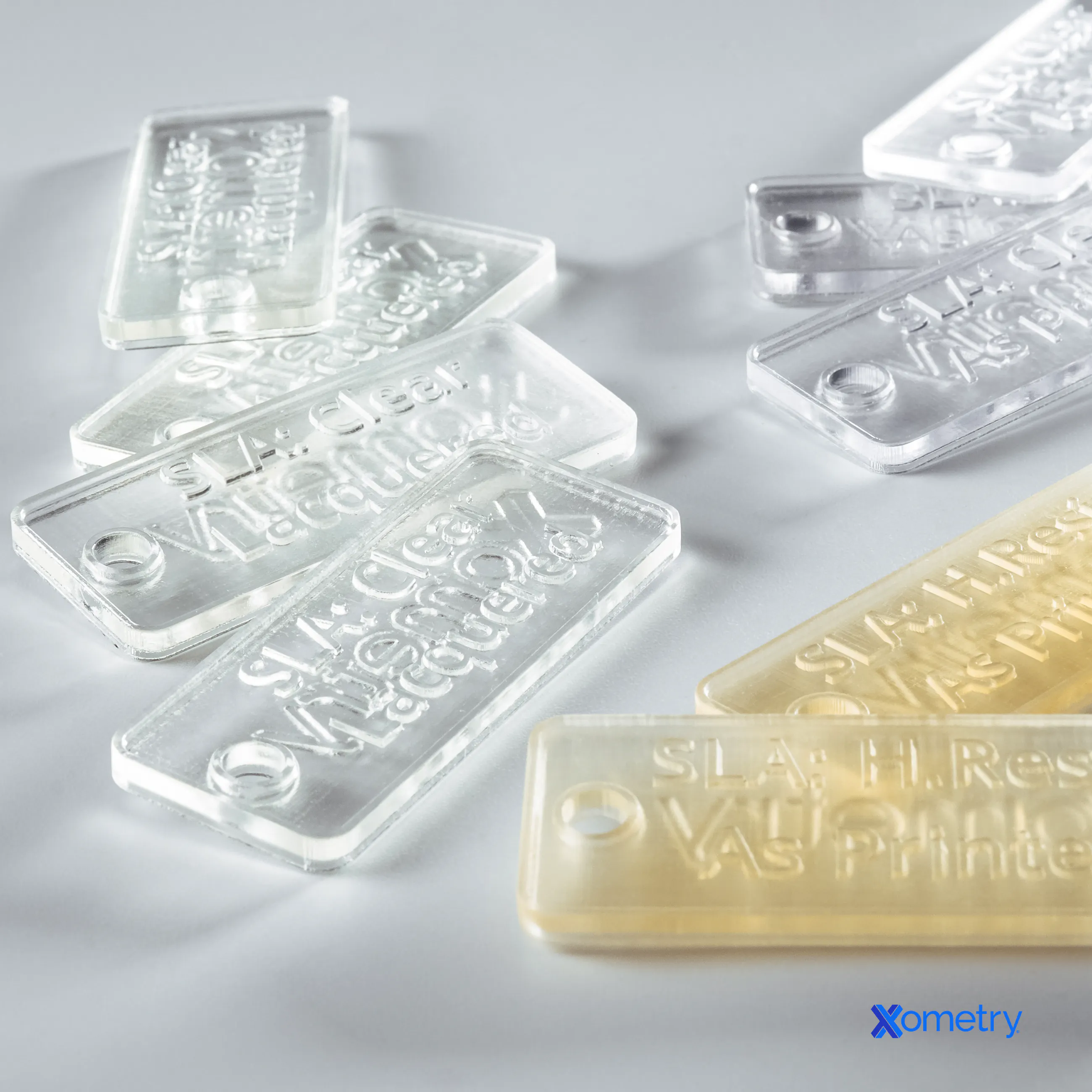
But, it does have some drawbacks. SLA printers are not as stable as PolyJet printers, which could result in variations between prints, especially if they’re supposed to be the same. Also, they’re not compatible with various materials, and they’re limited to gray, white, and clear color options. The layers these printers can make are usually much thicker, with SLA having a minimum thickness of around 50 microns and PolyJet going down to 16. The last two potential downsides are that SLA parts can be rather brittle and fragile (not great for functional prototypes), and the process can get quite messy—think resin spills, post-processing, and nasty odors.
To learn more, see our guide on What is SLA.
"PolyJet has the unique capability of blending multiple proprietary PolyJet materials, such as rigid to flexible to colored materials all in the same print job. SLA does not have that capability and only prints from one material at a time."
What are the Advantages of SLA Compared to PolyJet?
An advantage of SLA over PolyJet is that SLA can print mostly hollow parts using an interior honeycomb structure.
What are the Disadvantages of SLA compared to PolyJet?
Compared to PolyJet, SLA has the following disadvantages:
- SLA printers are not as stable as PolyJet printers. This results in variations of duplicate prints.
- SLA is not as versatile as PolyJet printers. SLA does not include multi-material capabilities and has limited color options (gray, white, and clear).
- SLA layers are thicker than PolyJet, with a minimum layer thickness of roughly 50 microns. PolyJet has a minimum layer thickness of 16 microns.
- SLA products are known to be brittle and fragile and are therefore not ideal for functional prototypes.
- SLA is messy, in terms of resin spills and post-processing processes, and can give off an odor.
Comparison Table Between PolyJet and SLA
We’ve put some attributes side by side to help you directly compare these two processes further:
PolyJet vs. SLA Attributes Comparisons
Both PolyJet and SLA printers are mainly used for industrial applications. They overlap in terms of pricing. PolyJet prices usually start at around $6,000 and can go past $75,000. SLA, on the other hand, has a wider pricing range that starts at around $1,200 and goes up to $100,000+ for industrial use. SLA is best suited for large models, whereas PolyJet is ideal for small, detailed prototypes. Both SLA and PolyJet printers perform well with intricate patterns and deliver excellent quality products.
PolyJet vs. SLA: Technology Comparison
SLA was the first 3D printing technology and is therefore well-established. PolyJet printers work by spraying droplets of photopolymer, layer upon layer, to form a 3D model on a building tray. A UV light is used to cure the resin. SLA, on the other hand, uses a laser beam to print a 3D model from the resin tank.
PolyJet vs. SLA: Material Comparison
PolyJet allows for a lot of versatility in terms of material selection. It can print rigid and flexible parts simultaneously in multiple colors. This is a unique feature that sets the PolyJet apart from most 3D printers. SLA, on the other hand, is limited to one material per printed object, with limited colors (gray hues).
PolyJet vs. SLA: Product Applications Comparison
The selection of either PolyJet or SLA will come down to the end product and its applications. PolyJet is one of the only printer types that allows for multi-color, multi-material printing. It is unmatched in terms of versatility. When printing with comparable materials, SLA performs better in larger prototypes, whereas PolyJet is better for smaller parts with finely detailed printing.
PolyJet printers are used in various industries including: medical, architecture, dentistry, and automotive. SLA printing, on the other hand, is used in industries such as jewelry, and healthcare.
PolyJet vs. SLA: Print Volume Comparison
PolyJet has a higher print volume than SLA--it is capable of producing more parts. However, the actual print volumes of both these types of printers are dependent on the model of printer used. In terms of build volume, SLA is capable of larger build volumes, whereas PolyJet is limited to smaller-sized prints.
PolyJet vs. SLA: Surface Finish Comparison
SLA and PolyJet both produce parts with a smooth surface finish. The difference is that PolyJet-printed parts have a smooth surface right off the build. SLA, on the other hand, requires sanding to achieve a smoother surface finish.
PolyJet vs. SLA: Cost Comparison
PolyJet and SLA are comparable in price. Although SLA has a broader range of available features, and therefore, a wider price range. In terms of material cost, PolyJet materials are typically more expensive due to their superior versatility and more expensive materials that cannot be used with SLA.
What are the Similarities Between PolyJet and SLA?
PolyJet and SLA share some similarities:
- Both form part of the 3D printing family called resin-based 3D printing.
- Both printers deliver excellent quality end products and are known for their accuracy and detail.
- Both SLA and PolyJet printers are used to print intricate details and patterns.
What are the Other Comparisons for PolyJet Besides SLA?
The following 3D printers compare well with PolyJet 3D printers:
- PolyJet vs. Multijet: Multijet Printing (MJP) shares the same technology and process as PolyJet. Both use UV lamps to cure liquid photopolymers. To learn more, see our full guide on PolyJet vs. Multijet.
What are the Other Comparisons for SLA Besides PolyJet?
The following is an alternative to SLA:
- SLA vs. DLP: Like SLA, DLP (Direct Light Processing) builds parts by curing liquid photopolymer materials. Both technologies produce parts with very high levels of accuracy. To learn more, see our full guide on SLA vs. DLP.
Frequently Asked Questions on PolyJet and SLA
How Xometry Can Help
To learn more about PolyJet, SLA, or any related process or material, you can reach out to one of our representatives. Xometry provides lots of services for all your manufacturing, prototyping and production needs, including CNC machining, 3D printing, and laser cutting. Visit our website to learn more, or upload your designs to the Xometry Instant Quoting Engine® and get started straight away.
Disclaimer
The content appearing on this webpage is for informational purposes only. Xometry makes no representation or warranty of any kind, be it expressed or implied, as to the accuracy, completeness, or validity of the information. Any performance parameters, geometric tolerances, specific design features, quality and types of materials, or processes should not be inferred to represent what will be delivered by third-party suppliers or manufacturers through Xometry’s network. Buyers seeking quotes for parts are responsible for defining the specific requirements for those parts. Please refer to our terms and conditions for more information.