4140 Alloy Steel: Composition, Properties, and Industrial Applications


4140 alloy steel is a chromium-molybdenum steel known for its exceptional strength, toughness, and versatility. 4140 alloy steel composition includes chromium and molybdenum, which improve its hardenability, wear resistance, and ability to withstand high-stress environments. AISI 4140 is used in industries such as automotive, aerospace, and manufacturing, where high-strength components like gears, shafts, and crankshafts are required. The 4140 steel material’s ability to perform under extreme conditions makes it ideal for heavy-duty applications.
4140 alloy steel offers better toughness and wear resistance than many carbon steels compared to other steel grades. It is less resistant to corrosion and more expensive than other alloys. The combination of high tensile strength, hardness, and impact resistance makes AISI 4140 a top choice for demanding applications, providing reliability and durability in high-performance environments.
What is 4140 Alloy Steel?
AISI 4140 steel is a versatile medium-carbon alloy steel known for its excellent combination of strength, toughness, and wear resistance. The 4140 steel's composition consists of 0.38-0.43% carbon, which contributes to its hardness and strength. It includes 0.75-1.00% manganese, which improves hardenability, and 0.90-1.20% chromium and 0.15-0.25% molybdenum, which improve its resistance to wear and fatigue, as well as its ability to perform under higher temperatures.
AISI 4140 is considered a high-performance material in various industrial applications, as a low-alloy steel. The steel is classified under the AISI (American Iron and Steel Institute) and SAE (Society of Automotive Engineers) systems. The numbering systems provide a way to identify the steel's chemical composition and mechanical properties. The AISI system assigns a 4-digit code, where the first digit is the series, the second digit indicates the alloying elements, and the last two digits specify the carbon content range. SAE uses a similar system, which further distinguishes materials based on their composition.
AISI 4140 is commonly used for producing high-strength components such as gears, shafts, crankshafts, and heavy-duty fasteners. AISI 4140 ability to retain toughness and strength, even under heavy loads and high-stress conditions, makes it suitable for demanding applications like automotive, aerospace, and industrial machinery. The steel is heat-treated to achieve different hardness levels depending on the specific requirements of the application, offering flexibility in performance characteristics.
How is 4140 Alloy Steel Different From Carbon Steel?
AISI 4140 alloy steel and carbon steel are used materials, but has distinct differences in composition and performance. AISI 4140 alloy steel contains carbon as well as additional alloying elements such as chromium, molybdenum, and sometimes vanadium. The elements improve the steel’s mechanical properties, offering greater strength, toughness, and resistance to wear. The chromium in AISI 4140 helps improve its hardness and resistance to oxidation, while molybdenum enhances its ability to maintain strength at high temperatures. It makes AISI 4140 suitable for heavy-duty applications like gears, shafts, and crankshafts that require strength and resistance to fatigue.
Carbon steel consists of iron and carbon, on the other hand, with little to no additional alloying elements. The performance of carbon steel depends largely on its carbon content, which affects its hardness and strength. Low-carbon steel, for example, is more ductile and malleable but lacks the strength and hardness of higher-carbon steel. It is more susceptible to wear, while carbon steel is more cost-effective than alloy steel, and corrosion and high-temperature degradation due to the absence of protective alloying elements.
Carbon steel is less resistant to oxidation and heat than AISI 4140 alloy steel, making it less suitable for high-stress, high-temperature applications. Carbon steel's versatility and cost-effectiveness make it a good choice for general-purpose applications such as construction, pipelines, and basic machinery. However, for tasks requiring enhanced strength, durability, and heat resistance, AISI 4140 alloy steel is the superior material. The key difference lies in the additional alloying elements in AISI 4140, which provide specific advantages that carbon steel lacks.
How is 4140 Alloy Steel Produced and Processed?
AISI 4140 alloy steel is produced through a process that involves melting, alloying, and shaping the steel to achieve its desired properties. The production begins with melting raw materials in an electric arc furnace, where the iron is combined with alloying elements like chromium, molybdenum, and manganese. The steel is poured into molds to form billets or ingots after melting.
The steel then undergoes various shaping processes, including hot rolling or forging. Hot rolling involves heating the steel to high temperatures and passing it through rollers to shape it into bars, plates, or other desired forms. Forging, on the other hand, involves shaping the steel by applying compressive forces using hammers or presses. Heat treatment follows to refine the material’s properties. Heat treatment processes such as quenching and tempering are common for AISI 4140. Quenching involves heating the steel to a high temperature and then rapidly cooling it in water or oil, which increases its hardness. After quenching, tempering is performed to reduce brittleness by reheating the steel to a specific temperature below the critical point, followed by air cooling.
The final processing step includes machining, where the steel is cut, drilled, or shaped to meet specific dimensions and surface finishes. The production and processing steps result in a high-performance steel with excellent strength, toughness, and wear resistance, making AISI 4140 suitable for a wide range of demanding applications.
What Are the Mechanical Properties of 4140 Alloy Steel?
The mechanical properties of 4140 Alloy Steel are listed below.
- Tensile Strength: AISI 4140 alloy steel has a high tensile strength, typically ranging from 95,000 psi in the annealed state to over 150,000 psi when heat-treated. It resists breaking under tension, making it suitable for components that experience pulling forces.
- Yield Strength: The yield strength of AISI 4140 ranges from approximately 60,000 psi in the annealed state to over 140,000 psi when quenched and tempered. It indicates the material’s ability to withstand deformation under stress without permanent changes in shape.
- Hardness: AISI 4140 is known for its hardenability, with tempered hardness typically ranging from 25 to 50 HRC depending on the application requirements. The hardness allows it to resist wear and abrasion, making it suitable for heavy-duty applications.
- Toughness: The toughness of AISI 4140 is exceptional, allowing it to absorb impact energy without fracturing. The property ensures its reliability under conditions involving shocks and high-stress environments.
How Does the Chemical Composition of 4140 Alloy Steel Affect its Performance?
The chemical composition of AISI 4140 alloy steel includes carbon (C) in the range of 0.38-0.43%, manganese (Mn) at 0.75-1.00%, chromium (Cr) at 0.90-1.20%, and molybdenum (Mo) at 0.15-0.25%. The elements directly influence the steel’s performance in various ways.
Carbon increases the hardness and strength of the steel. Higher carbon content contributes to improved tensile strength but reduces ductility. Manganese improves hardenability and increases toughness by combining with sulfur to prevent brittleness and aiding in grain refinement. Chromium enhances hardenability and wear resistance, though its low concentration in 4140 provides only minimal improvement to oxidation resistance compared to plain carbon steel. Molybdenum increases the steel's ability to maintain strength at high temperatures, enhances wear resistance, and improves hardenability.
The combination of the elements allows AISI 4140 to have a strong balance of hardness, machinability, and corrosion resistance. The steel performs well in applications that require high wear resistance and toughness under stress while maintaining machinability for ease of processing.
What Are the Thermal and Physical Properties of 4140 Alloy Steel?
The thermal and physical properties of 4140 Alloy Steel are listed below.
- Density: 4140 alloy steel has a density of approximately 7.85 g/cm³. High density adds weight and solid mass to structural and load-bearing parts. Heat treatment does not change density significantly, but the mass influences heating and cooling rates during quenching. Thick sections require controlled heating to avoid uneven temperature distribution.
- Modulus of Elasticity: 4140 steel holds a modulus of elasticity near 200 GPa. High stiffness allows components to resist elastic deformation under load. Heat treatment increases strength and hardness, yet the modulus remains nearly constant across conditions. Designers rely on stable stiffness while adjusting hardness through quenching and tempering.
- Thermal Conductivity: 4140 steel shows thermal conductivity around 42–45 W/m·K at room temperature. Moderate conductivity controls how fast heat travels through the material during forging and heat treatment. Lower conductivity compared to plain carbon steel slows heat transfer and demands precise temperature control. Controlled heating and cooling improve hardness response and reduce distortion in finished parts.
How Does the Microstructure of 4140 Alloy Steel Change During Heat Treatment?
The microstructure of AISI 4140 alloy steel changes during heat treatment processes like annealing, quenching, and tempering. Each process alters the steel’s grain structure, hardness, and mechanical properties. 4140 alloy steel is heated to a high temperature and then slowly cooled during annealing. The process results in a softer and more ductile microstructure. The 4140 annealed properties are characterized by a coarse pearlite or spheroidized structure, which improves machinability and relieves internal stresses. The steel becomes more suitable for further processing or forming, as it reduces hardness and increases toughness.
Quenching involves heating 4140 alloy steel to its austenitizing temperature and then rapidly cooling it, typically in oil, to transform the structure. The process transforms the microstructure into martensite, which increases hardness and strength. However, quenching introduces brittleness, as the rapid cooling traps carbon within the structure, leading to a hard but fragile material.
Tempering follows quenching and involves reheating the steel to a lower temperature before cooling it again. The process adjusts the 4140 microstructure by transforming brittle martensite into tempered martensite, significantly increasing toughness while reducing hardness to the desired level. 4140 tempered steel displays a more balanced combination of strength and ductility, making it suitable for applications requiring high performance and durability. The microstructural changes play a crucial role in determining the steel's mechanical properties, making heat treatment a required step in tailoring 4140’s performance for specific applications.
Which Factors Affect the Machinability of 4140 Alloy Steel?
The machinability of 4140 alloy steel is influenced by several factors, including hardness level, cutting tools, and heat treatment. Hardness plays a significant role, as harder materials are more difficult to machine. 4140 alloy steel’s hardness varies depending on its heat treatment, with higher hardness levels making machining more challenging. Cutting tools must be selected carefully to ensure they withstand the steel's hardness and manage heat generation without wearing out quickly. Tools with high wear resistance, such as carbide or cobalt alloys, are used for machining 4140. Heat treatment affects machinability. Processes like annealing soften the steel, making it easier to machine, while quenching and tempering increase hardness, which makes cutting more difficult.
Comparing 4140 annealed vs 4140 pre-hardened machinability, 4140 annealed steel is generally easier to machine due to its lower hardness. The softer microstructure allows cutting tools to move through the material with less resistance, reducing tool wear and improving cutting speed. 4140 pre-hardened steel has higher hardness in contrast, which makes machining more difficult. The increased hardness demands more robust cutting tools and slower machining speeds to prevent tool damage, while pre-hardened steel does not require further heat treatment. The selection of annealed and pre-hardened 4140 depends on the required mechanical properties and the specific machining conditions.
Does 4140 Alloy Steel Resist Corrosion and Rust?
No, 4140 alloy steel does not have corrosion and rust resistance. 4140 alloy steel offers good strength, toughness, and wear resistance. 4140 corrosion resistance is limited in harsh environments. 4140 steel is prone to rust when exposed to moisture and oxygen. While chromium is present for hardenability, 4140 contains insufficient levels to provide any functional resistance to oxidation or corrosion. Coatings or plating, such as zinc or chrome plating, are applied to 4140 steel to improve protection. The coatings provide a protective barrier that prevents moisture and corrosive elements from coming into contact with the steel surface, improving 4140 alloy steel corrosion resistance. Additional protective measures, like painting or using corrosion-resistant alloys, are necessary in extreme environments. It is not a corrosion-resistant material by default in general, while 4140 alloy steel does resist some corrosion. Does 4140 steel rust? Yes, without proper protective measures, it does rust.
What Are the Common Forms of 4140 Alloy Steel Material?
The common forms of 4140 alloy steel material are listed below.
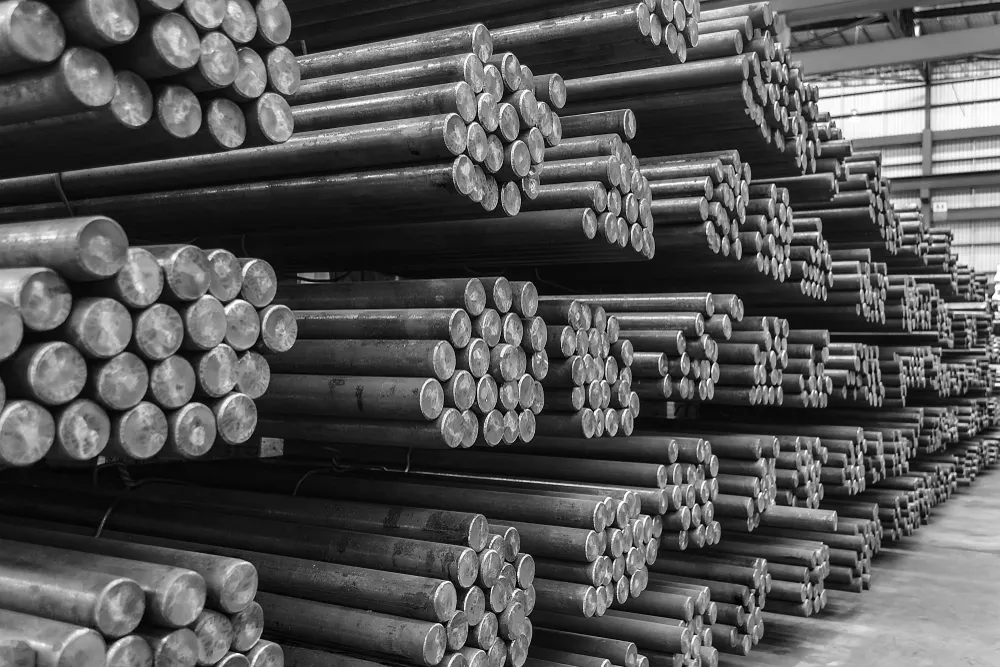
- Bars and Rods: 4140 alloy steel is commonly available in bars and rods, which are used in machining and manufacturing. These forms are ideal for producing shafts, bolts, and various round components that require high strength. Bars and rods are easily cut or shaped to specific sizes, making them versatile for different applications.
- Plates and Sheets: Plates: 4140 alloy steel is commonly available in plate form for structural and heavy-duty applications. These forms are preferred for creating large, flat components such as machine parts, bolster plates, and bases.
- Seamless Mechanical Tubing: 4140 alloy steel is available as seamless tubing, offering high strength-to-weight ratios and pressure resistance for hydraulic cylinders and automotive components.
- Forgings: 4140 alloy steel is frequently supplied in forged shapes, created by applying high pressure to hot steel. Forged components are used in applications where high strength, toughness, and reliability are required (gears, crankshafts, and connecting rods). Forging provides a directional grain flow that aligns with the shape of the component, significantly improving the material's fatigue and impact resistance.
- Billets and Blooms: Billets and blooms are semi-finished square or rectangular forms used as starting stock for rolling or forging large components. These forms allow for flexible customization of shape and size, offering versatility for machining and fabrication. Billets and blooms are required in the production of complex or large components that require specific dimensions.
- Pre-Hardened and Tempered (PHT) Forms: 4140 alloy steel is frequently supplied in a pre-hardened state, typically heat-treated to 28-32 HRC, to eliminate the need for further heat treatment after machining. These forms eliminate the need for additional heat treatment, making them convenient for applications requiring specific strength and durability. Pre-hardened 4140 steel is used in industries where ready-to-use, high-strength components are needed.
- Custom Shapes and Profiles: 4140 alloy steel is available in custom shapes and profiles tailored to meet unique design specifications. These specialized forms are commonly used in industries such as aerospace and automotive, where specific shapes and structural integrity are critical. Custom shapes allow for the production of complex components that would be difficult or costly to create with standard forms.
1. Bars and Rods
Bars and rods are long, cylindrical shapes of 4140 alloy steel. The forms are used in machining and manufacturing, where they are processed into shafts, bolts, and other cylindrical components that require high strength and precision. Bars and rods are preferred in applications where high tensile strength and toughness are needed to withstand mechanical stress. The forms are used in industries such as automotive, aerospace, and machinery, where strong and durable components are crucial for performance.
2. Plates and Sheets
Plates and sheets are flat, thick pieces of 4140 alloy steel, used in structural and heavy-duty applications. Plates and sheets are favored for the construction of machine parts, frames, bases, and other flat components that require strength and durability. The forms are versatile and are easily welded or machined, allowing for a wide range of applications in various industries. 4140 plates and sheets are used in the automotive, construction, and manufacturing sectors, where large, durable components are needed.
3. Tubes and Pipes
Seamless mechanical tubing made from 4140 alloy steel offers high strength and the ability to withstand internal pressure. The forms are used in industries like construction, automotive, and oil and gas, where pressure resistance and durability are key. 4140 tubes and pipes are used in hydraulic systems, pressure vessels, and structural applications, where the material needs to handle extreme stress and maintain performance. Their ability to resist wear and high-pressure stress makes them suitable for demanding environments.
4. Forgings
Forgings are shapes created by applying high pressure to hot 4140 alloy steel, resulting in strong, dense components with improved mechanical properties. The forging process helps achieve a directional grain flow, which enhances the material's fatigue strength and toughness. 4140 forged steel is commonly used in heavy-duty applications such as gears, crankshafts, and connecting rods, where high reliability and resistance to wear are crucial. Forgings are used across industries like automotive, aerospace, and energy, where high-performance parts are required for durability and safety.
5. Billets and Blooms
Billets and blooms are semi-finished forms of 4140 alloy steel that serve as starting materials for further processing into bars, rods, or forgings. The forms are used for custom machining, allowing manufacturers to shape the steel into specific components required for specialized applications. Billets and blooms are required in producing complex or large parts that require precise dimensions and tailored shapes. Billets and blooms are found in industries where flexibility in material processing is required, such as automotive, construction, and industrial manufacturing.
6. Machined or Pre-Hardened Forms
Pre-Hardened and Tempered (PHT) forms of 4140 alloy steel have undergone heat treatment to achieve specific hardness levels, typically 28–32 HRC. The forms are ideal for applications that require high strength and durability right out of the box. Machined are used in industries where fast production and minimal processing time are required, such as in manufacturing and automotive sectors. Pre-hardened 4140 steel is preferred for its convenience, as it eliminates the need for subsequent heat treatment or machining, streamlining the production process.
7. Custom Shapes and Profiles
Custom shapes and profiles of 4140 alloy steel are tailored to meet specific design requirements, offering flexibility for complex and unique component designs. The forms are used in industries like aerospace, automotive, and energy, where specific shapes and high structural integrity are critical. Custom profiles allow manufacturers to produce parts that cannot be achieved with standard forms, providing solutions for specialized applications. The ability to create custom shapes helps meet the precise demands of various sectors, including structures requiring components for heavy machinery, precision equipment, and specialized construction projects.
How is 4140 Alloy Steel Used in Industry?
4140 alloy steel is used in various industries due to its strength, toughness, and versatility. 4140 alloy steel is used in shafts in the automotive industry, where its high tensile strength and durability are required for components that experience rotational and axial loads. The steel is used in the manufacturing of gears, where its wear resistance and ability to withstand heavy loads make it ideal for transmitting mechanical power in machinery.
4140 alloy steel is used in the production of gun barrels in the defense and firearms industries. Its ability to resist deformation under high pressure and temperature makes it suitable for the demanding conditions that gun barrels face during firing. The steel's toughness and ability to handle high-pressure expansion without permanent deformation are key properties that make it suitable for the application.
Tooling components like die holders, mold bases, and bolster plates are frequently made from 4140 alloy steel. The material’s hardness, machinability, and ability to retain strength under heat make it ideal for producing tools that require high performance and precision. In industries like manufacturing, aerospace, and metalworking, tooling components made from 4140 steel ensure that operations like cutting, shaping, and forming are carried out efficiently and effectively.
How is 4140 Steel Used in Injection Molding?
4140 steel is used in the manufacturing of molds for injection molding due to its high strength, durability, and resistance to wear. 4140 steel's hardness and toughness make it ideal for producing molds that withstand the high pressure and repeated cycles involved in the injection molding process. The steel’s ability to maintain its structural integrity under stress ensures that molds made from 4140 steel handle the intense forces of molten plastic without warping or cracking.
The heat resistance of 4140 steel is another significant advantage. The molds must endure rapid temperature changes due to the cooling and heating of the injected material during injection molding. 4140 steel provides sufficient thermal stability for many injection molding applications, preventing premature mold wear and ensuring part quality. Its ability to retain its mechanical properties at elevated temperatures is particularly valuable in industries like automotive, aerospace, and consumer goods, where the molds are subjected to extreme conditions.
4140 steel is used for mold bases and occasionally for core and cavity components in low-to-medium volume production. It performs well at high temperatures, making it suitable for molds that need to be heated and cooled rapidly during production. The steel’s machinability allows for the creation of complex mold designs, providing manufacturers with the flexibility to produce intricate and high-precision components. The properties make 4140 steel a popular choice for injection molding applications in industries that require durable, high-performance molds.
Which Materials Are Equivalent to 4140 Alloy Steel?
Materials equivalent to 4140 alloy steel include 42CrMo4 from Europe and SCM440 from Japan, 42CrMo4 and SCM440 of which share similar chemical compositions and mechanical properties. 42CrMo4 is a chromium-molybdenum steel, similar to 4140, with properties that make it highly suitable for heavy-duty applications requiring strength and toughness. The steel is used in Europe for manufacturing components like crankshafts, gears, and shafts. Its excellent hardenability and impact resistance are critical in applications where parts are subjected to high stress and wear, much like 4140 steel. 42CrMo4 steel undergoes similar heat treatment processes to 4140, offering similar performance under extreme conditions.
SCM440, used in Japan, is another equivalent to 4140 alloy steel, offering similar mechanical properties such as tensile strength, hardness, and wear resistance. SCM440 is used in manufacturing high-strength automotive parts, industrial machinery, and components that need to endure high levels of stress and friction. SCM440 and 4140 have slight variations in chemical composition and sulfur limits, though they are functionally equivalent in most structural applications. 42CrMo4 and SCM440 steel are heat-treated to achieve hardness levels comparable to 4140, providing the necessary strength and toughness for demanding industries.
The equivalent materials are used interchangeably, depending on the region and application requirements. Their similar characteristics make the steels ideal for components that need to perform under harsh conditions, such as shafts, gears, bolts, and tooling components. It is for automotive manufacturing, heavy machinery, or high-performance tools, 42CrMo4 and SCM440 provide the same level of reliability and durability as 4140, making them viable alternatives in industries requiring high-strength, wear-resistant materials.
"While 4140 is celebrated for its versatility, the design engineer must remember that its performance is entirely dependent on the quality of its heat treatment. A poorly tempered 4140 component is either a brittle liability or a soft underperformer; success with this alloy requires as much attention to the furnace charts as to the CAD geometry."
How Does 4140 Compare to Aluminum and Titanium?
4140 alloy steel, aluminum, and titanium each have distinct properties that make them suitable for different applications based on factors like strength, weight, durability, and corrosion resistance. 4140 alloy steel is known for its excellent toughness, wear resistance, and high tensile strength. It is used in industries where strength and durability are paramount, such as in automotive, aerospace, and manufacturing, for components like gears, shafts, and crankshafts. 4140 alloy steel is relatively heavy, which is a disadvantage in applications where weight reduction is required. Despite its weight, its ability to withstand high stresses and resist wear makes it ideal for heavy-duty applications.
Aluminum is lighter than 4140 alloy steel and offers excellent corrosion resistance in harsh environments (marine or coastal applications). It is used in industries like aerospace, automotive, and construction, where reducing weight is critical for improving fuel efficiency and performance. Aluminum’s strength-to-weight ratio is favorable, but it lacks the hardness and toughness of 4140 steel, making it less suitable for high-stress applications or steels requiring high wear resistance. Aluminum is used for structural components, for instance, engine parts, and lightweight frames, but it is not used in heavy-duty industrial applications where high strength is needed.
Titanium, while more expensive than 4140 alloy steel and aluminum, offers superior strength and higher corrosion resistance than 4140 steel. Titanium’s strength-to-weight ratio is one of the best among metals, making it ideal for high-performance applications that require lightweight and high strength, such as in aerospace, military, and medical implants. Titanium alloys provide a superior strength-to-weight ratio and higher corrosion resistance than 4140 steel, though 4140 retains higher absolute hardness and wear resistance. Titanium is more difficult to machine than 4140 and is more expensive, which limits its use to high-end applications. 4140 alloy steel is preferred for heavy-duty, high-stress components. The Titanium metal excels in applications where weight reduction and corrosion resistance are critical, such as in aircraft, spacecraft, and marine environments.
Can 4140 Alloy Steel be Welded Safely?
Yes, 4140 alloy steel can be welded safely. 4140 alloy steel requires proper preheating and post-weld heat treatment to avoid cracking and ensure the weld’s integrity. Preheating the material before welding helps to reduce the risk of thermal shock and cracking, as it minimizes the temperature difference of the weld area and the rest of the material. Preheating temperatures typically range from 400°F to 600°F, depending on the thickness of the material and the welding process used.
Post-weld heat treatment (PWHT) is required to relieve stresses and reduce hardness in the heat-affected zone (HAZ) after welding. The treatment involves heating the weldment to a temperature range of 1,100°F to 1,250°F, ensuring it stays below the original tempering temperature, followed by controlled cooling. PWHT ensures that the welded joint retains the necessary toughness and strength while preventing brittleness or cracking that results from uneven cooling. Welding 4140 alloy steel is done safely without compromising the material's properties by following the procedures.
What Are the Advantages and Disadvantages of Using 4140 Alloy Steel?
The advantages of using 4140 alloy steel are listed below.
- Strength: 4140 alloy steel offers excellent tensile strength, making it ideal for high-stress applications. Its ability to withstand heavy loads and resist deformation is crucial in industries like automotive and aerospace. The strength makes it suitable for components such as shafts, gears, and crankshafts.
- Toughness: 4140 alloy steel is known for its toughness, which allows it to absorb energy without cracking. It makes it highly effective in situations where impact resistance is required, ensuring long-lasting performance in demanding environments.
- Wear Resistance: 4140 alloy steel offers good wear resistance when heat-treated, making it a reliable choice for components exposed to friction, though specialized surface treatments can further enhance this property. Its durability under tough conditions, such as in heavy machinery and tools, ensures reduced maintenance and longer service life.
The disadvantages of using 4140 alloy steel are listed below.
- Corrosion Susceptibility: 4140 alloy steel is susceptible to corrosion in environments with high moisture or chemical exposure. It still requires protective coatings or surface treatments to prevent rust and degradation over time, while it offers some resistance to oxidation.
- Cost: 4140 alloy steel is more expensive compared to other steels like carbon steel due to its alloying elements and processing requirements. It increases the cost of manufacturing components made from 4140, making it less ideal for low-budget or cost-sensitive applications.
Disclaimer
The content appearing on this webpage is for informational purposes only. Xometry makes no representation or warranty of any kind, be it expressed or implied, as to the accuracy, completeness, or validity of the information. Any performance parameters, geometric tolerances, specific design features, quality and types of materials, or processes should not be inferred to represent what will be delivered by third-party suppliers or manufacturers through Xometry’s network. Buyers seeking quotes for parts are responsible for defining the specific requirements for those parts. Please refer to our terms and conditions for more information.