
Fiberglass: History, Characteristics, Types, Forms, and Properties


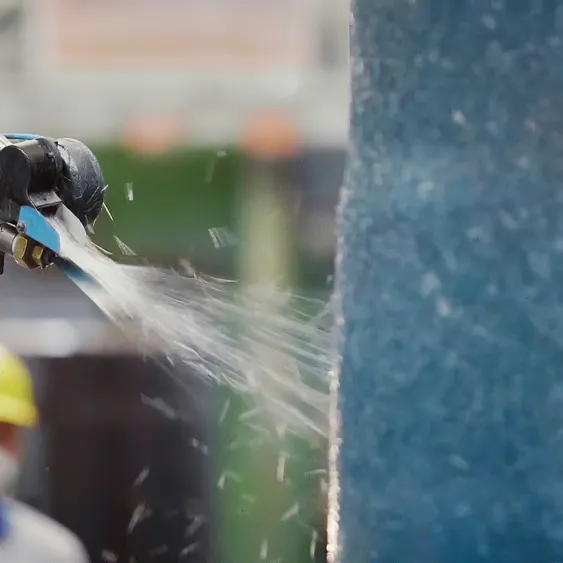
Fiberglass, also known as fibreglass, glass fiber, or fiber glass, is a versatile composite material made from fine glass fibers combined with a resin matrix. Fiberglass is widely used in industries such as construction, automotive, aerospace, marine, and consumer goods due to its high strength-to-weight ratio, corrosion resistance, and moldability. It is crucial in modern manufacturing because it provides a lightweight, durable, and cost-effective solution for producing a variety of parts and products that require both strength and resistance to environmental elements.
The material’s ability to be molded into complex shapes and its performance in harsh environments make it essential for industries that demand both structural integrity and ease of processing. Fiberglass is used in applications ranging from boat hulls and swimming pools to car bodies, aerospace components, and insulation materials.
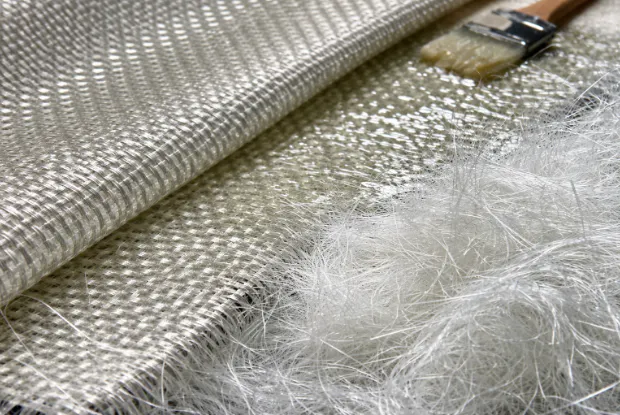
Below is an introductory visual showing the texture of fiberglass and its reinforcement material, often woven or layered to provide additional strength and flexibility. The characteristic structure makes fiberglass ideal for reinforcing materials like plastics or creating standalone products that require robust performance under stress.
What Is Fiberglass?
Fiberglass is a composite material made from fine glass fibers that are bonded together with a resin matrix. The fiberglass definition involves the process of weaving or orienting glass fibers, which are then impregnated with resin to create a durable, lightweight material. The resin, polyester or epoxy, serves as a binder that holds the glass fibers together, providing structure and making the composite material rigid. The combination of glass and resin results in a material with high strength, excellent durability, and resistance to environmental elements like moisture, corrosion, and temperature fluctuations.
The term "fiberglass" is used to describe the finished composite material, whereas "glass fiber" refers to the individual strands of glass before they are combined with resin. The fiberglass composition varies depending on the type of resin and the specific arrangement of glass fibers, allowing manufacturers to tailor the material for specific applications. Fiberglass is made with woven glass fabric, chopped fibers, or matting, and the resin is selected to enhance the material's properties, such as increasing its resistance to heat, chemicals, or UV rays.
The unique structure of fiberglass gives it significant advantages over other materials, its high strength-to-weight ratio. Fiberglass typically has a higher specific strength (strength-to-weight ratio) than steel, but its absolute strength and stiffness vary depending on fiber type, orientation, and resin system, making it ideal for use in applications where weight reduction is important, such as in the automotive and aerospace industries. Its resistance to corrosion and environmental degradation makes fiberglass a preferred material for use in marine applications, outdoor furniture, and pipes for chemical transport. The versatility of fiberglass allows it to be molded into various shapes and sizes, making it suitable for a wide range of industries, from construction to sporting goods.
How is Fiberglass Different From Aluminum Alloy?
Fiberglass and aluminium alloy are different materials with distinct properties, making them suited to different applications. Fiberglass is a composite material, consisting of glass fibers embedded in a resin matrix, which gives it an excellent strength-to-weight ratio and resistance to corrosion. It is a non-metallic material that is particularly useful in environments where exposure to moisture or chemicals is a concern (marine applications or outdoor buildings) Fiberglass’s lightweight nature makes it ideal for use in applications like automotive parts, boats, and storage tanks, where reducing weight without compromising strength is crucial.
Aluminium alloy, on the other hand, is a metal composed of aluminium and other alloying elements such as copper, magnesium, or zinc. It is known for its high strength, excellent electrical and thermal conductivity, and high ductility, which allows it to be easily shaped into various forms. Aluminium alloys are used in structural applications, such as in aerospace, automotive, and building materials, where both strength and the ability to withstand high loads are important. Aluminium alloy can still corrode under certain conditions, while it does have some corrosion resistance, in harsh environments like saltwater, which limits its durability compared to fiberglass.
Fiberglass excels in its ability to resist corrosion, making it ideal for marine environments and outdoor products exposed to harsh conditions. Fiberglass has low thermal conductivity, but it does not have zero heat conductivity, unlike aluminium alloy, which is an excellent heat conductor. The lack of heat conductivity in fiberglass makes it useful in applications where thermal insulation is important. Fiberglass is molded into complex shapes, making it ideal for intricate designs and customized products. The flexibility allows for more creativity in product design, particularly in industries that require unique shapes, such as the automotive or aerospace sectors.
Choosing between fiberglass and aluminium alloy depends on the specific demands of the application. Fiberglass is ideal when resistance to corrosion, lightweight properties, and the ability to form complex shapes are critical. The aluminum alloy is better suited for applications that require strength, heat conductivity, and ductility, when thin sections and structural integrity are essential.
Is Fiberglass a Composite Material?
Yes, fiberglass is a composite material made from glass fibers embedded in a resin matrix. The combination of glass fibers and resin provides a unique balance of strength and light weight, making fiberglass highly versatile. It is stronger than many plastics and lighter than metals, which makes it an attractive material for a variety of applications. Fiberglass outperforms some metals, particularly in terms of corrosion resistance, as it is highly resistant to environmental degradation, such as rust and oxidation. The material’s moldability allows it to be shaped into complex forms, making it ideal for products requiring detailed and intricate designs. The properties make fiberglass a popular choice in industries like automotive, aerospace, and construction.
Fiberglass generally offers superior corrosion resistance compared to carbon steel; however, aluminum naturally forms a protective oxide layer and is highly corrosion resistant in many environments. Fiberglass does not rust, but it can degrade through mechanisms such as resin hydrolysis, UV degradation, osmotic blistering, or chemical attack depending on resin type and environment. It makes it a preferred choice for marine environments, outdoor structures, and chemical storage tanks, where materials need to endure constant exposure to water or corrosive substances without degrading.
Fiberglass’s combination of light weight, corrosion resistance, and moldability gives it a competitive edge over many traditional materials. Its versatility and performance in challenging environments make it an excellent material choice for a variety of high-performance applications, while it does not offer the same level of structural strength as some metals.
Fiberglass is a composite material composed of fine glass fibers embedded within a polymer resin matrix, engineered to provide high strength, low weight, and excellent resistance to corrosion and environmental degradation. Its combination of mechanical performance, electrical insulation capability, and moldability enables use across construction, transportation, marine, aerospace, and industrial sectors. The material can be produced in multiple fiber architectures and resin systems, allowing properties to be tailored for structural, thermal, chemical, or electrical performance requirements. Compared with metals, fiberglass offers superior corrosion resistance and lower density, while maintaining sufficient stiffness and durability for many load-bearing applications. These attributes establish fiberglass as a critical material in modern manufacturing where performance, longevity, and design flexibility are essential.
What Is the History of Fiberglass?
Fiberglass is a lot older than you probably would think. It’s not a recent development nor did it come about in the Industrial Revolution — it goes much further back. Ancient civilizations, including the Ancient civilizations such as the Egyptians and Phoenicians produced decorative glass fibers and glass wool, but they did not create fiberglass as a structural composite material. This was much rougher and rudimental than what’s used today, but it was a similar material and used mostly for decoration.
Early commercial glass fiber production processes were developed in the late 19th and early 20th centuries, including work by companies such as Libbey Glass. The steam-blowing process is more commonly associated with industrial glass wool production; attribution specifically to “John Player” is not well-documented in major historical records of fiberglass development. Other developments were made with fiberglass fabrics. But it wasn’t until the 1930s that researcher Dale Kleist concocted the material that’s most familiar to us now.
Kleist accidentally created fiberglass when welding glass blocks together, which the company Corning Glass picked up on. From then on, fiberglass was continually improved, and eventually, it became an extremely popular choice for product manufacturing. Below is an image of what fiberglass looks like up close.
What Is the Other Term for Fiberglass?
GRP stands for glass-reinforced plastic (or glass-reinforced polymer), not polyester. Polyester is a type of resin commonly used in GRP but is not synonymous with GRP.
How Is Fiberglass Made?
There are a lot of interesting ingredients that go into the successful creation of fiberglass. It’s a fantastic example of a composite material. The blend usually features certain measurements of the following materials: limestone, silica sand, soda ash, borax, magnesite, nepheline syenite, feldspar, kaolin clay, and alumina. Resin is not added during glass melting. Glass fibers are first produced from molten glass; resin is added later during composite fabrication to form glass fiber–reinforced polymer (GFRP).
After you have the right weight and measurements of each ingredient, you’ll blend them and place them into the furnace for melting. This process creates molten glass that can be cut into fibers and wound up and lengthened into long filaments or chopped up and used in sheets, insulation, or coatings.
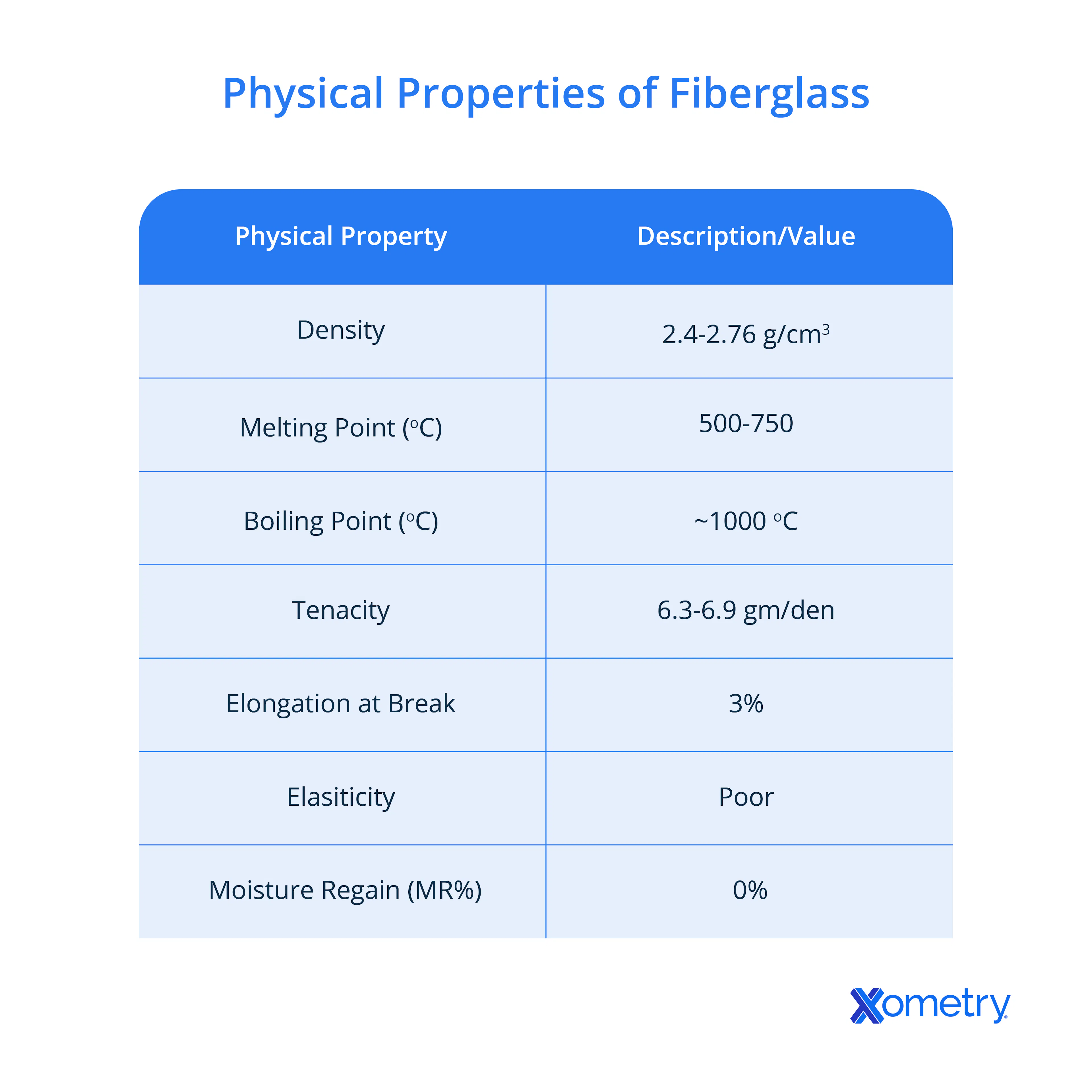
Once it’s created, fiberglass typically has a density of between 2.4 and 2.76 g/cm3. The time it takes to manufacture will depend on the type of fiberglass you’re using, what application it’s being used for, how long it takes to cure, and the quantity being made.
How Does Fiberglass Manufacturing Compare to Injection Molding?
Fiberglass manufacturing uses methods like hand lay-up or pultrusion, where glass fibers are layered or pulled through a resin to form a strong composite material. Injection molding, on the other hand, uses plastic melts that are injected into molds to create parts. The key difference lies in the production process, with fiberglass requiring more labor-intensive techniques that are ideal for larger, custom parts, while injection molding is suited for faster, high-volume production of smaller pieces.
Fiberglass manufacturing allows for the creation of large, custom components with complex shapes, making it perfect for industries that require intricate designs for structural applications. Injection molding is quicker and more cost-effective for producing small, in comparison, uniform parts in large quantities. Fiberglass is better suited for large, corrosion-resistant structures like boats, tanks, and construction materials, while injection molding is excellent for the rapid production of smaller plastic components. The ability of fiberglass to resist corrosion and perform in harsh environments makes it a preferred choice for products that will be exposed to the elements over extended periods. Many injection-moulded plastics (e.g., polypropylene, polyethylene, PVC, nylon) also offer strong corrosion and chemical resistance; environmental durability depends on polymer type, UV stabilization, and additives.
What Is the Typical Duration Required to Manufacture Fiberglass?
There is no exact duration required to manufacture fiberglass. The time it will take depends on different factors like: the desired fiberglass type, specific product or application, product complexity, the manufacturing process used, the scale of production, curing time, automation, and finishing operations. Some simple fiberglass products may be manufactured in a matter of hours or days, while more complex items may take several weeks or even months to complete. The specific timeline for a fiberglass manufacturing project should be discussed with a manufacturer, as it depends on the product's unique characteristics and the production facility's capabilities.
What Is the Importance of Fiberglass in the Manufacturing Industry?
You might be wondering why manufacturers would choose fiberglass over something else. There are a few reasons that make it a solid choice. Fiberglass (GFRP) is lighter than steel and aluminum and has high specific strength (strength-to-weight ratio), but it is not universally stronger than all materials; structural steel typically has higher absolute tensile strength and modulus. It is also completely fine when facing harsh conditions. Fibreglass composites can deform, creep, or buckle under compressive loads depending on laminate design and loading conditions. These helpful perks are why you could use it for both a pool and a circuit board.
Why Is Fiberglass Preferred Over Steel in Certain Manufacturing Applications?
Fiberglass is preferred over steel in certain manufacturing applications because it is lighter, corrosion-resistant, and electrically insulating. The properties make it an ideal material for industries where weight reduction and durability are crucial, such as in marine, chemical, and aerospace applications. In marine environments, fiberglass resists the corrosive effects of saltwater, unlike steel, which requires constant maintenance to prevent rust and degradation.
The lightweight nature of fiberglass is another key advantage over steel, particularly in aerospace and automotive industries, where reducing weight improves performance and efficiency. Steel increases the weight of components, negatively impacting fuel efficiency and adding unnecessary strain to structures. Fiberglass, being strong yet light, helps maintain structural integrity without the added weight, making it the go-to material for parts that need to withstand stress while remaining light and efficient.
What Are the Characteristics of Fiberglass?
Fiberglass has a variety of useful characteristics. For example, we offer fiberglass composite materials like garolite G-10 FR-4, which is known for its fire retardancy. Here are some of the most common characteristics of fiberglass materials.
- Durable
- Stiff
- Lightweight
- Fire-resistant
- Excellent insulator
- Great chemical resistance
- Highly corrosion resistant
- Dimensionally stable
- Temperature and humidity-resistant
- Resistance to warping
- Moisture resistant
What Is the Color of Fiberglass?
Fiberglass itself is typically whitish, almost colorless, or transparent in color. However, it can be manufactured and coated in various colors depending on the specific application and requirements. The color of fiberglass products can range from white or gray to black or other custom colors, depending on the additives, coatings, or dyes used during the manufacturing process. PTFE-coated fiberglass fabrics, tapes, and belts are commonly tan in color, often referred to as "natural" within the industry.
What Does Fiberglass Look Like?
Fiberglass typically appears as a fine, thread-like material made of glass. It can be in the form of filaments, mats, or woven fabrics, depending on its intended use. The color of fiberglass can vary but is often white or translucent. It may also be coated or treated with other materials, which can affect its appearance. Overall, fiberglass has a fibrous and somewhat translucent appearance.
What Is the Density of Fiberglass?
Individual glass fibers typically have densities in the range of ~2.5–2.6 g/cm³ (E-glass ≈2.54 g/cm³; S-glass ≈2.48 g/cm³; R-glass ≈2.55 g/cm³). However, finished fiberglass composites (GFRP) typically have densities around 1.5–2.0 g/cm³ depending on fiber volume fraction and resin system. E-glass, R-glass, and S-glass are some of the most common fiberglass varieties, with varying densities attributed to their unique characteristics. “E” stands for Electrical Applications. “S” stands for Strength (high tensile strength glass) Applications.
“R” stands for Reinforcement (European high-strength structural glass) Applications. These fiberglass types serve diverse purposes, including: insulation, enhancing the strength of plastics and various materials, and contributing to construction applications.
Is Fiberglass Lighter Than Steel?
Yes, fiberglass is lighter than steel, about one-third the density of steel, which makes it significantly lighter. The lower density gives fiberglass a clear advantage in applications where weight reduction is critical. In the automotive and aerospace industries, reducing weight directly improves fuel efficiency and overall performance. Fiberglass's lightweight nature helps manufacturers produce components that are strong, yet easy to handle and transport, offering significant savings in energy costs and improving operational efficiency.
Fiberglass offers advantages in terms of ease of handling and processing. Its reduced weight makes it easier to handle during manufacturing and installation, reducing the need for heavy lifting equipment and minimizing labor costs. The quality makes fiberglass particularly attractive for use in weight-sensitive designs, such as aircraft bodies, boat hulls, and even consumer products.
Steel Metal, despite its strength, adds significant weight to components. The increased mass requires more energy to move, transport, and install, and it limits fuel efficiency in industries like transportation or aerospace. The weight factor often makes fiberglass a better choice for applications where reducing weight is a priority, while steel metal provides excellent strength and durability, without sacrificing performance. Fiberglass offers a balance of strength, corrosion resistance, and lightness that steel cannot match in certain weight-sensitive applications.
What Are the Different Types of Fiberglass?
Your choice of fiberglass isn’t limited to one or two types. There are many different kinds, so we’ve broken down the basics of 12 of them below to help you choose which will serve you best.
1. E-Glass Fiber
E-Glass fiber is the most widely used type of fiberglass, known for its excellent electrical insulation properties. It is composed of a combination of silica and other elements, making it highly effective in preventing electrical conductivity. E-Glass is commonly used in the production of electrical components (circuit boards, transformers, capacitors, and insulating materials) for various electrical applications.
2. D-Glass Fiber
D-Glass fiber is a specialized fiberglass with superior dielectric properties, making it ideal for high-frequency applications. It has a low loss tangent, which helps minimize signal degradation, especially in radar and microwave equipment. Due to its excellent electrical performance, D-Glass is commonly used in high-frequency communication systems, satellite technology, and antennas. D-glass is less common than E-glass due to higher cost and lower mechanical strength.
3. R-glass and S-glass
R-Glass, also known as T-Glass or S-Glass, are related high-strength glass fibers but are not identical; S-glass is a U.S. designation, R-glass is a European designation, and T-glass is a Japanese variant. It is particularly valuable in industries where materials need to perform under extreme stress (aerospace, military, and defense applications). Components made from R-Glass are highly resistant to cracking and are ideal for use in rocket motor cases, structural parts, and other critical applications.
4. A-Glass Fiber
A-glass has higher alkali content (sodium oxide), not higher alumina; it is similar to window glass composition, which gives it superior A-glass has lower chemical resistance compared to E-glass and C-glass., particularly in acidic and alkaline environments. This makes it ideal for applications where materials are exposed to water, chemicals, and harsh conditions, in the construction of water treatment systems (pipes and tanks). A-Glass is also used in producing fiberglass for use in corrosive environments, including agriculture and chemical processing industries.
5. Advantex Glass Fiber
Advantex glass fiber is a special type of E-Glass that features improved resistance to corrosion, especially in acidic and alkaline environments. It offers superior durability compared to standard fiberglass and is widely used in industries (chemical processing, marine, and automotive) where resistance to harsh chemicals and environmental conditions is crucial. Advantex is especially effective in reinforcing composite materials that require both strength and longevity under challenging conditions.
6. ECR Glass Fiber
ECR Glass fiber, or Electrical Chemical Resistant glass, is an advanced version of E-Glass designed to offer exceptional corrosion resistance and improved electrical properties. It is widely used in industries like pultrusion, filament winding, and composite manufacturing for products exposed to both corrosive environments and electrical demands. ECR Glass is particularly effective in marine applications, wind turbine blades, and storage tanks where both strength and resistance to corrosion are required.
7. C-Glass Fiber
C-Glass fiber is specifically designed for environments where chemical resistance is critical, making it a popular choice in the production of chemical-resistant materials. It is widely used in applications like the construction of chemical storage tanks, pipes, and vessels, where durability against aggressive substances like acids, alkalis, and salts is essential. C-Glass offers superior chemical resistance, which makes it ideal for use in the chemical, pharmaceutical, and food processing industries.
8. Z-Glass Fiber
Z-Glass fiber is a high-performance fiberglass known for its outstanding mechanical properties and resistance to elevated temperatures. It can withstand temperatures higher than most other glass fibers, making it ideal for high-temperature applications such as rocket motor cases and components used in heat-resistant industrial processes. Z-Glass is used in critical applications where both strength and thermal stability are essential for maintaining performance under extreme conditions.
9. S2 Glass Fiber
S2 Glass fiber is a high-strength, high-performance fiberglass that offers superior tensile properties compared to traditional E-Glass. It is designed for use in applications that require both high strength and resistance to impact, such as in aerospace, military, and automotive components. S2 Glass is commonly used for structural parts, sporting goods, and industrial machinery that must endure high stress and wear without failing.
10. AR-Glass Fiber
AR-Glass fiber, or Alkali-Resistant Glass fiber, is specifically designed to reinforce concrete by improving its durability and resistance to corrosion. It is commonly used in the construction industry, where it is added to concrete to prevent cracking and degradation, especially in structures exposed to harsh environmental conditions, such as bridges, roads, and sewer systems. AR-Glass improves the longevity of concrete components and is particularly effective in environments with high levels of moisture or chemicals.
11. M-Glass Fiber
M-Glass fiber is a specialized fiberglass known for its high tensile and modulus (stiffness) strength and excellent resistance to impact and wear. It is commonly used in applications that require high mechanical strength, such as in the manufacturing of industrial equipment, aerospace components, and sporting goods. M-Glass offers better mechanical performance than standard E-Glass, making it suitable for products that need to withstand rigorous use and stress.
12. AE Glass Fiber
AE Glass fiber is designed for applications that require both high strength and resistance to environmental factors. It is commonly used in industries such as automotive, aerospace, and construction for making lightweight but strong components. AE Glass fiber provides a balance of high mechanical properties and resistance to heat and chemicals, making it ideal for producing durable and efficient products in industries with challenging conditions.
What Are the Different Forms of Fiberglass?
The different forms of fiberglass are listed below.
- Woven Fabrics: Woven fabrics are made by interlacing glass fibers in a regular pattern, providing strength and flexibility. The fabrics are used in applications where strength and durability are needed, such as in boat hulls, automotive parts, and construction materials. Woven fabrics are versatile and can be tailored to various thicknesses and fiber orientations for specific applications.
- Chopped Strand Mat: Chopped strand mat is a type of fiberglass made from randomly oriented chopped strand mat consists of randomly oriented chopped glass fibers held together with a binder. It is used in applications where high strength and impact resistance are required. Chopped strand mat is ideal for use in manufacturing products like boat parts, pipes, and tanks due to its ability to conform to complex shapes.
- Tow and Roving: Tow and roving consist of continuous glass fibers that are bundled together and used in a variety of composite manufacturing processes. Glass fiber roving typically consists of continuous, untwisted strands (assembled rovings may combine multiple strands). Tow generally refers to bundles of continuous filaments (more commonly used in carbon fiber terminology). Twisting is characteristic of yarn. Tow and roving are used in applications like filament winding, pultrusion, and other processes that require long continuous strands for high-strength components.
- Veil Mats: Veil mats are thin layers of glass fibers, used as a surface layer to provide a smooth finish or improve the chemical resistance of fiberglass composites. The mats are commonly used in applications like corrosion-resistant coatings or to prevent resin from bleeding through the surface of a finished product. Veil mats offer excellent surface protection and are used in the marine, automotive, and construction industries.
1. Woven Fabrics
Woven fabrics are made by interlacing glass fibers in a regular pattern, which gives them strength and flexibility. They are commonly used in applications requiring both durability and strength, such as in boat hulls, automotive parts, and construction materials. Woven fabrics are versatile and are available in different weights and fiber orientations to suit various structural needs.
2. Chopped Strand Mat
Chopped strand mat consists of randomly oriented, short glass fibers that are bonded together with a resin. This form is commonly used in industries where high strength, impact resistance, and conformity to complex shapes are essential. It is used in the production of boat parts, pipes, and tanks, providing good mechanical properties and ease of handling.
3. Tow and Roving
Tow and roving are continuous strands of glass fibers, bundled together for use in composite manufacturing processes. Glass fiber roving generally consists of continuous, untwisted strands; twisted bundles are classified as yarn. Both are commonly used in filament winding, pultrusion, and other processes requiring long continuous fibers, making them ideal for aerospace, automotive, and high-strength applications.
4. Veil Mats
Veil mats are thin layers of glass fibers used to provide a smooth surface finish or improve the chemical resistance of fiberglass composites. They are commonly used in the marine, automotive, and construction industries, particularly in applications where surface protection or corrosion resistance is required. Veil mats are often applied as the surface layer in composite materials to improve aesthetics and functionality.
What Are the Properties of Fiberglass?
The following charts depict the mechanical, physical, and chemical properties of fiberglass.
Table 1: Properties of Fiberglass
What Are the Physical Properties of Fiberglass?
The physical properties of some common fiberglass types are given in Table 2:
Table 2: Physical Properties of Fiberglass
What Are the Chemical Properties of Fiberglass?
The chemical properties of fiberglass are given in Table 3:
Table 3: Chemical Properties of Fiberglass
What Are the Applications of Fiberglass?
Think you can name all the ways that fiberglass can be used? Take a look at this long list of products and applications where fiberglass plays a part.
1. Swimming Pools
Fiberglass is used in swimming pools due to its durability, smooth surface, and resistance to corrosion. The material withstands exposure to water, chemicals, and UV rays, which helps maintain the pool's integrity over time. Its non-porous surface also prevents algae growth, making it easier to maintain.
2. Boats
Fiberglass is ideal for boat construction because it is lightweight, strong, and resistant to corrosion. The material’s ability to handle the stresses of water exposure without degrading makes it perfect for boat hulls and decks. Fiberglass also resists saltwater corrosion, which is crucial for marine environments.
3. Aircraft
Fiberglass is used in aircraft manufacturing because it offers a strong, lightweight alternative to traditional metals. The material’s low weight improves fuel efficiency and performance, while its strength ensures the structural integrity of the aircraft. Fiberglass is also resistant to corrosion, which is essential in the harsh conditions at high altitudes.
4. Surfboards
Fiberglass is commonly used in surfboard construction due to its lightweight and strong properties. The material helps surfboards maintain their shape and strength while offering flexibility. Fiberglass also resists water damage and is easily molded into the desired shapes for performance surfing.
5. Automobiles
Fiberglass is used in automobile parts, particularly body panels and bumpers, because it is lightweight and durable. The material’s strength-to-weight ratio allows for improved fuel efficiency and handling without compromising the vehicle's structural integrity. Fiberglass also resists corrosion, which prolongs the lifespan of automotive components.
6. Storage Tanks
Fiberglass is ideal for storage tanks due to its resistance to corrosion, especially when storing chemicals or other corrosive materials. The material’s non-reactive nature ensures that it won’t deteriorate or contaminate the contents. Fiberglass storage tanks are also durable and capable of handling the internal pressure from stored liquids.
7. Piping
Fiberglass piping is used in industries that require strong, corrosion-resistant pipes for transporting fluids or gases. The material’s lightweight properties make installation easier, while its resistance to corrosion ensures that the pipes will last longer without needing frequent maintenance. Fiberglass pipes are commonly used in water treatment, chemical, and oil industries.
What Are the Advantages of Fiberglass?
If you want to weigh up the advantages of fiberglass, first you’ll want to note that one of its main benefits is its strength. Fiberglass composites have high specific tensile strength (strength-to-weight ratio), but structural steel typically has higher absolute tensile strength and significantly higher modulus of elasticity (~200 GPa vs. ~20–50 GPa for GFRP), but it’s still lightweight. It’s a great material if you need something that’s resistant to weather, water, and corrosive chemicals. It’s not conductive or magnetic, which earns it points when it comes to insulation and using it around other kinds of materials. You’ll also find that fiberglass doesn’t rust, shrink, burn, or expand, making it durable and long-lasting.
What Are the Disadvantages of Fiberglass?
Any material will have its limits though, including fiberglass. One of the disadvantages you may find with using it is that it’s expensive, especially when compared to non-composite materials. Fiberglass is also hard to get rid of and doesn’t biodegrade, which isn’t ideal if you’re invested in sustainable practices. If you have employees working with fiberglass, it can be hazardous to touch and breath in if the right safety equipment isn’t worn. With too much sunlight, you may also find that fiberglass fades.
Copyright and Trademark Notice
- Advantex® is a registered trademark of Owens Corning
Disclaimer
The content appearing on this webpage is for informational purposes only. Xometry makes no representation or warranty of any kind, be it expressed or implied, as to the accuracy, completeness, or validity of the information. Any performance parameters, geometric tolerances, specific design features, quality and types of materials, or processes should not be inferred to represent what will be delivered by third-party suppliers or manufacturers through Xometry’s network. Buyers seeking quotes for parts are responsible for defining the specific requirements for those parts. Please refer to our terms and conditions for more information.