Sheet Metal Fabrication Cost Calculator: Factors That Affect Cost, and How to Reduce Cost


Sheet metal fabrication is a great way to produce strong, precise parts, but costs can quickly add up if you’re not careful. That’s where a sheet metal fabrication cost calculator comes in. It helps you estimate all the costs before you even start, plan your budget effectively, and avoid any surprises along the way. Let’s see how it works and what factors come into play that add to the overall cost.
What is a Sheet Metal Fabrication Calculator?
A sheet metal fabrication cost calculator is a tool that helps estimate the total cost of a project based on material (type, thickness, finish), design, labor, production methods, and other important factors. By entering these key details into the calculator, you’ll be provided with a cost breakdown and get a clearer picture of what to expect.
Why Use One
The biggest perk of using a sheet metal fabrication cost calculator is that it puts you in control of your project. Instead of just guessing, you can make an accurate estimate that can help you avoid unexpected expenses, choose the best material for the task that’s within budget, and tweak the design too if need be.
Factors that Affect Sheet Metal Fabrication Costs
Although the cost calculator will do most of the work for you, it’s good to know all the aspects of the sheet metal fabrication process that will impact the overall cost. We’ve listed them below.
Raw Material Cost
The choice of raw material, the type, and its thickness, grade, and finish will all affect the price. Some materials are much more expensive than others, as are those with a finer or more specialized finish.
Labor Costs
Your project’s budget should also factor in skilled labor costs, wages, and any ops that are particularly labor-intensive as these will increase expenses. While it might have a higher upfront cost, automation can provide speed and efficiency, and ultimately save you a lot in labor costs. Something to think about, especially for mass production.
Production Cost
The way parts are made also affects the total price. This includes setup time, machine operation, and how efficiently the process runs. More complicated designs, tight tolerances, and additional finishing steps all add up, so you’ll have to think long and hard about how necessary these are if you want to stick to a lower budget.
Machine Usage and Tooling
Proper machine usage and avoiding excessive and unnecessary wear can help keep costs down. Effective tooling, i.e., using the right laser lens and nozzle for the specific material you’re working on and keeping on top of maintenance—like regular cleaning and alignment—will ensure you won’t have any unexpected costs down the line.
Overhead Expenses
In addition to direct production costs, there are other expenses like facility costs, utilities, equipment maintenance, and quality control that you’ll need to keep in check to stay on budget.
Outsourcing and Subcontracting
Many times in sheet fabrication there will be jobs that need to be outsourced or subcontracted. While this can add to costs, it may still be more affordable than investing in specialized equipment or training in-house staff. The cost calculator can help you work this out.
"Raw material costs significantly impact sheet metal fabrication expenses because fluctuating prices for metals like steel or aluminum directly influence the overall production budget. Labor costs also play a crucial role, as the complexity of the fabrication process and the required skill level dictate the amount of time and expertise needed, thus affecting the final cost."
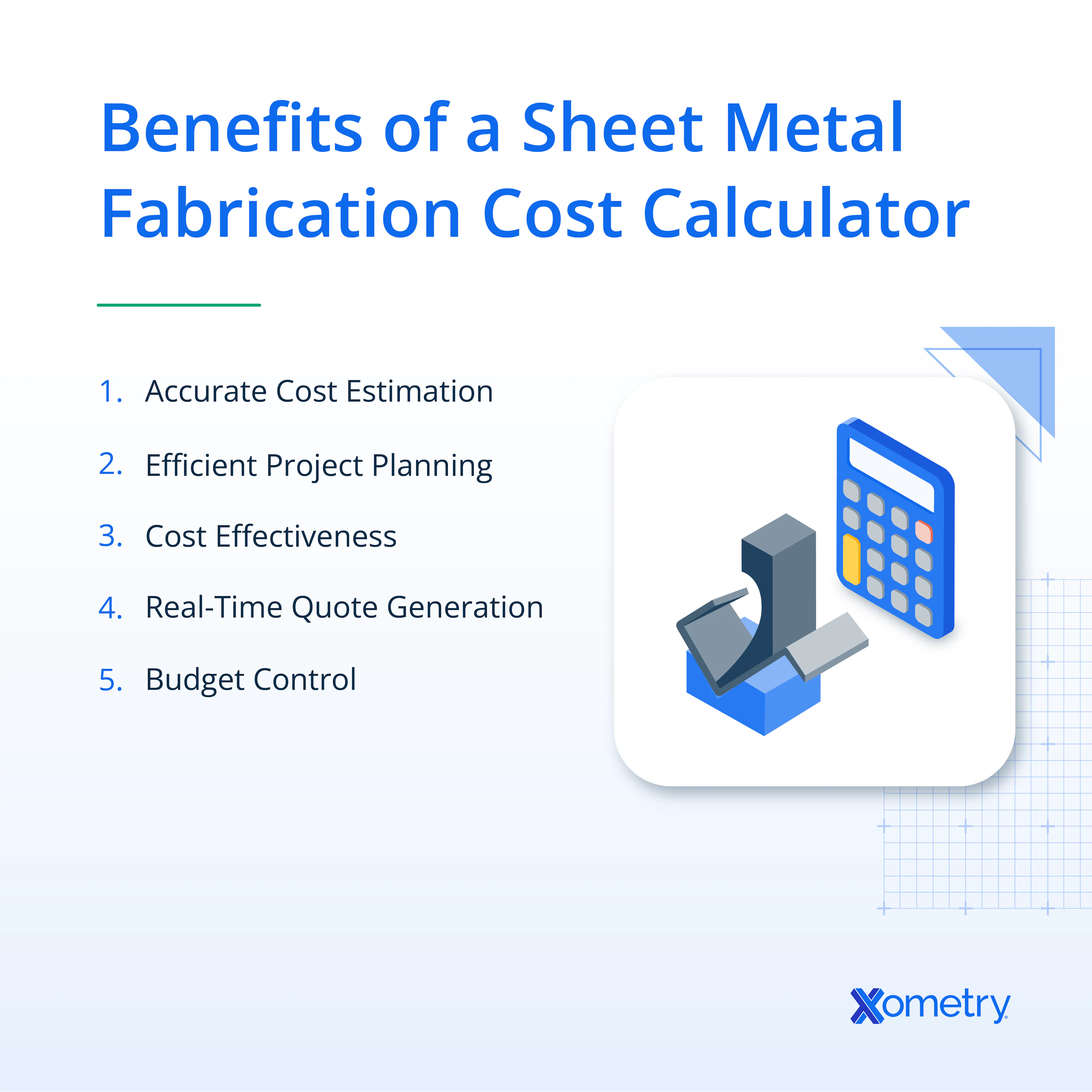
The Benefits of a Sheet Metal Fabrication Cost Calculator
Utilizing a sheet metal fabrication calculator offers numerous advantages, empowering manufacturers to make informed decisions and optimize their budgeting process. Let's explore the benefits of using a cost calculator:
Accurate Cost Estimation
A cost calculator provides precise estimates based on specific project requirements, considering various cost components. This accuracy enables better project planning and decision-making.
Efficient Project Planning
A cost calculator facilitates efficient project planning by providing detailed cost breakdowns. Manufacturers can evaluate different cost scenarios, allocate budgets effectively, and meet project deadlines.
Cost Effectiveness
A cost calculator identifies cost-saving opportunities by suggesting alternative materials, processes, or suppliers. These opportunities help manufacturers optimize their expenses while maintaining quality standards.
Real-Time Quote Generation
Manufacturers can generate instant quotes with a cost calculator, enabling faster response times to customer inquiries. This improves customer satisfaction and fosters stronger business relationships.
Budget Control
A cost calculator assists in budget control by tracking expenses and comparing actual costs to estimates. It highlights areas where costs can be reduced or controlled, ensuring financial stability.
Using a Sheet Metal Fabrication Cost Calculator: Best Practices
To make the most of a sheet metal fabrication cost calculator, manufacturers should follow these best practices:
Accurate Data Input
Provide precise data regarding material specifications, part complexity, quantity, and finishing requirements for accurate cost calculations.
Customization Options
Utilize customization features within the cost calculator to align cost estimation with specific project requirements and manufacturing capabilities.
Cost Analysis and Comparison
Leverage the cost calculator to perform in-depth cost analysis, comparing different scenarios, materials, or processes to identify the most cost-effective options.
Validation and Verification
Validate and verify cost estimates generated by the calculator through internal cost analysis or consulting with industry experts to ensure accuracy.
Continuous Improvement
Share feedback on the cost calculator's functionality to drive continuous improvements, enhancing its accuracy, usability, and effectiveness.
By adopting these best practices, manufacturers can maximize the benefits of utilizing a sheet metal fabrication cost calculator, enabling effective budgeting, cost optimization, and improved profitability.
Frequently Asked Questions on Sheet Metal Fabrication Costs
How Xometry Can Help
Want to get started on your sheet metal fabrication project? You can upload your designs to the Xometry Instant Quoting Engine®!
Disclaimer
The content appearing on this webpage is for informational purposes only. Xometry makes no representation or warranty of any kind, be it expressed or implied, as to the accuracy, completeness, or validity of the information. Any performance parameters, geometric tolerances, specific design features, quality and types of materials, or processes should not be inferred to represent what will be delivered by third-party suppliers or manufacturers through Xometry’s network. Buyers seeking quotes for parts are responsible for defining the specific requirements for those parts. Please refer to our terms and conditions for more information.