15 Different Types of Thread Taps


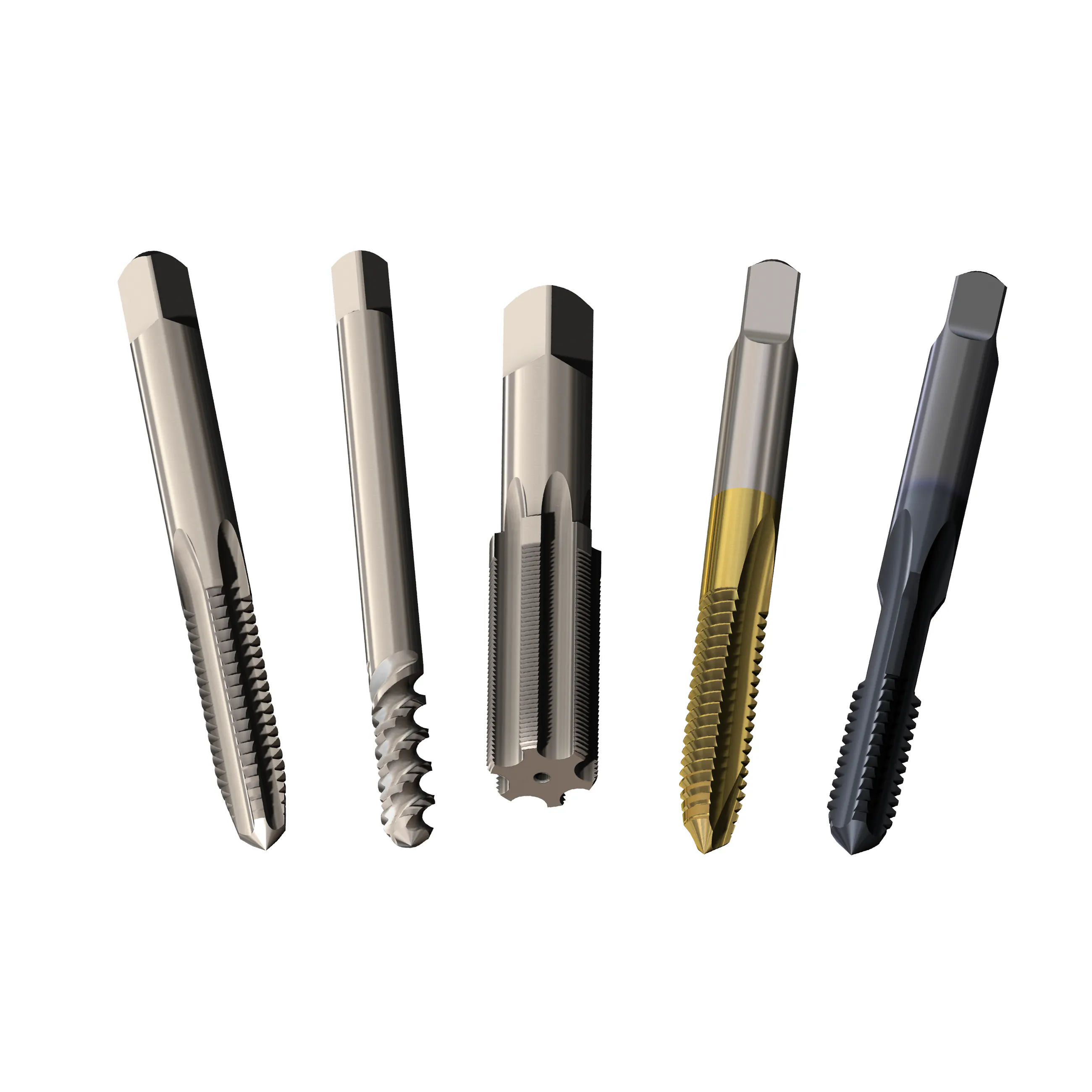
Taps make threaded holes so that they’re ready for fasteners like screws and bolts to be inserted or tightened with a drill or appropriate hand tool. Turning the tap by hand creates threads inside pre-drilled holes. They’re found in manufacturing parts, like vehicles and structures, and they’re also in flat-packed furniture—handy for those putting it together as they won’t have to manually make these holes.
There are tons of different types of thread taps with many varying endpoints, tapers, and flutings. Let’s look at 13 of them to help you decide on the right one for your needs—because, let’s face it, knowing which one to use is a total shot in the dark.
1. Hand Taps
Hand taps are multifunctional and work either by hand or with a power tool. They’re used for machine tapping in general and most materials with blind or through holes. These have straight flutes used in shallow blind or through holes. A standard hand tap set has three separate types, which we’ll discuss below.
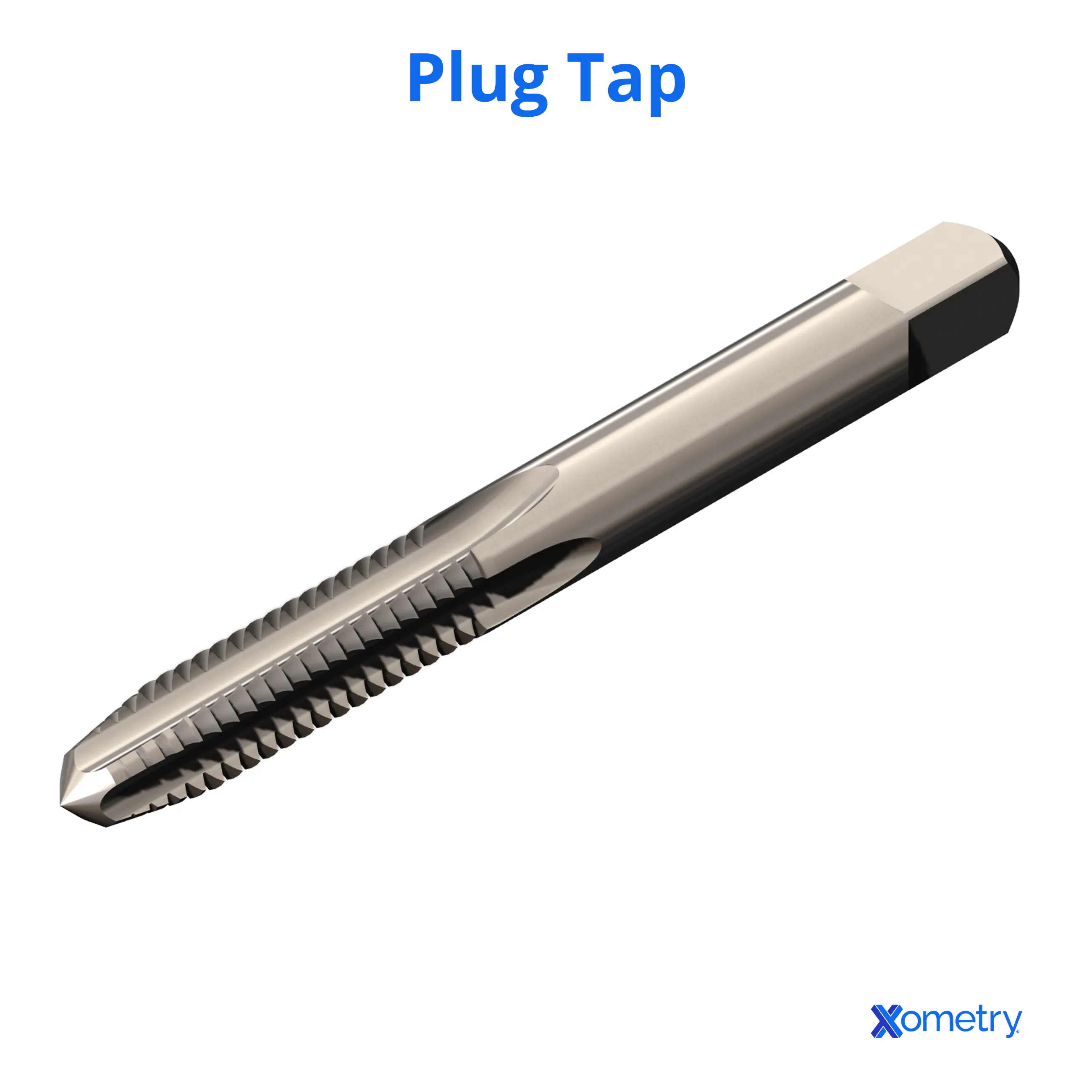
Plug Tap
A plug tap has a five-thread cutting chamfer that slowly cuts away material to create the thread, starting with the smaller diameter. They’re used when there is enough space at a blind hole’s bottom part, or to make through-holes. They make a more complete set of threads compared to taper taps, but aren’t as well suited to finishing threads in blind-holes as bottoming taps.
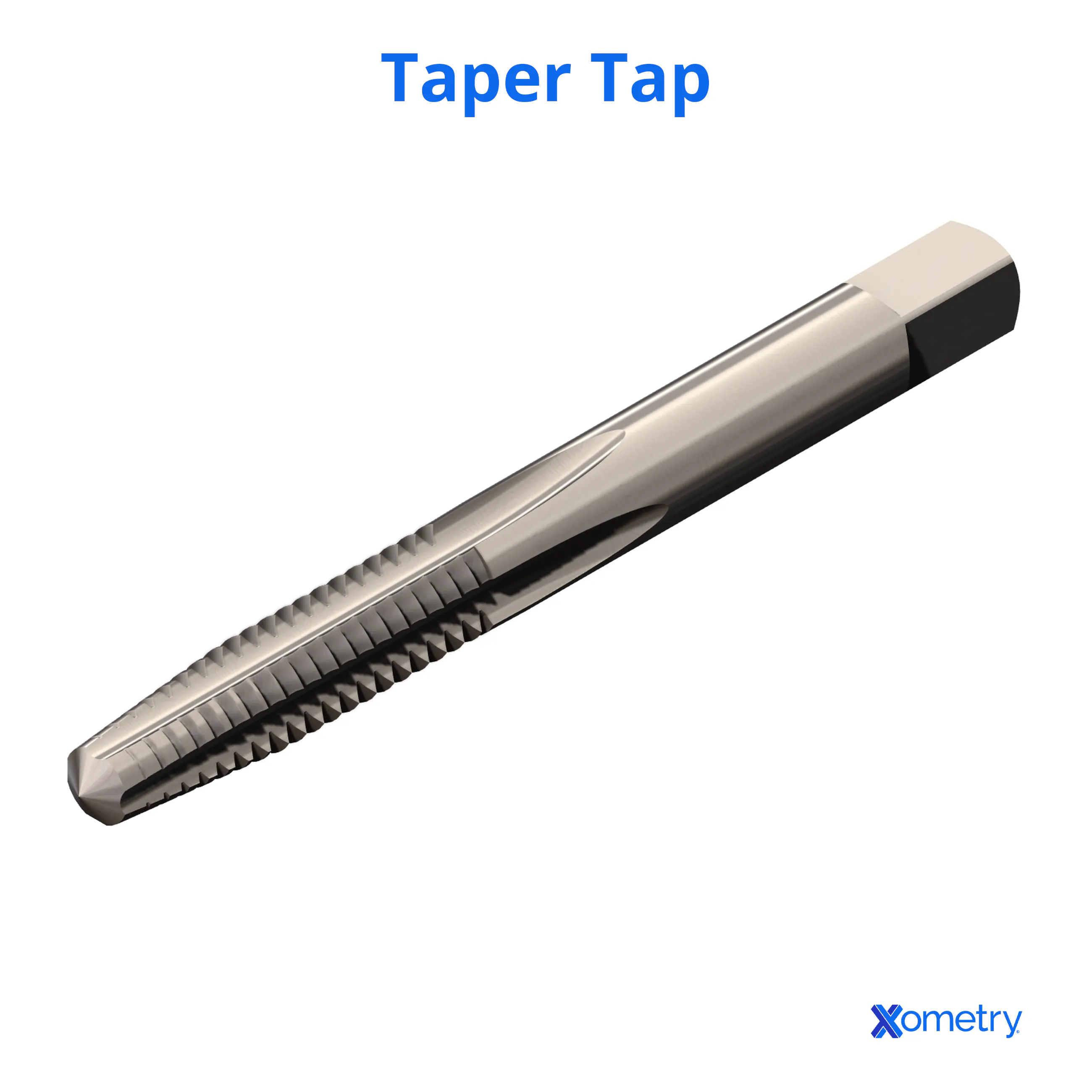
Taper Tap
These have nine-thread chamfers and the smallest diameter of any hand taps. Taper taps are typically the starting point for blind- or through-hole applications. One of their biggest advantages is they clear out most of the material early in the process. They shouldn’t be used for finishing the bottom of blind holes since they can leave incomplete threads.
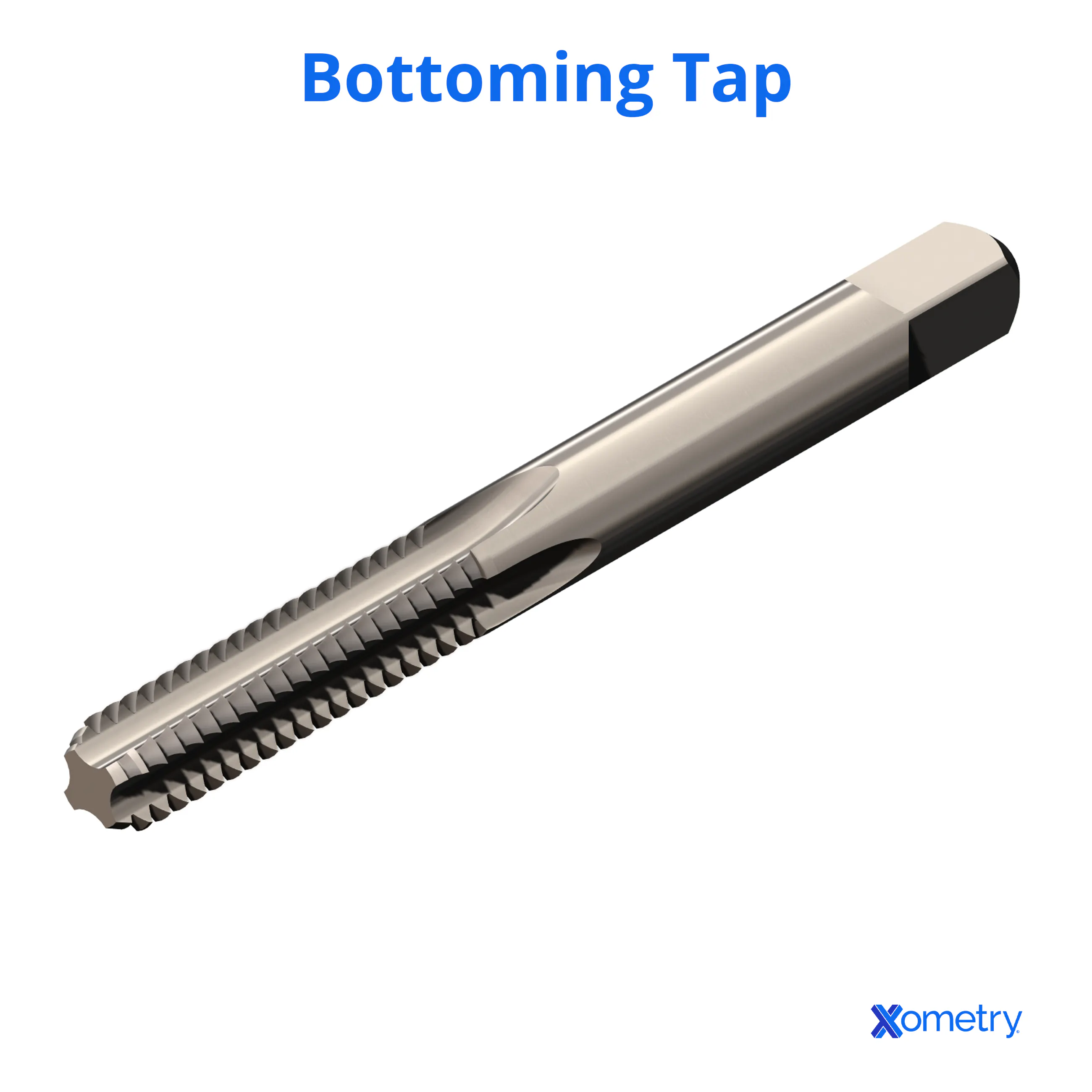
Bottoming Tap
A bottoming tap has the smallest thread chamfer (1.5 inches). It’s used to finish the end of a blind hole since it can get all the way to the bottom (unlike plug and taper), but isn’t good at removing most of the material from the hole (that’s what the other two are for).
2. Pipe Tap
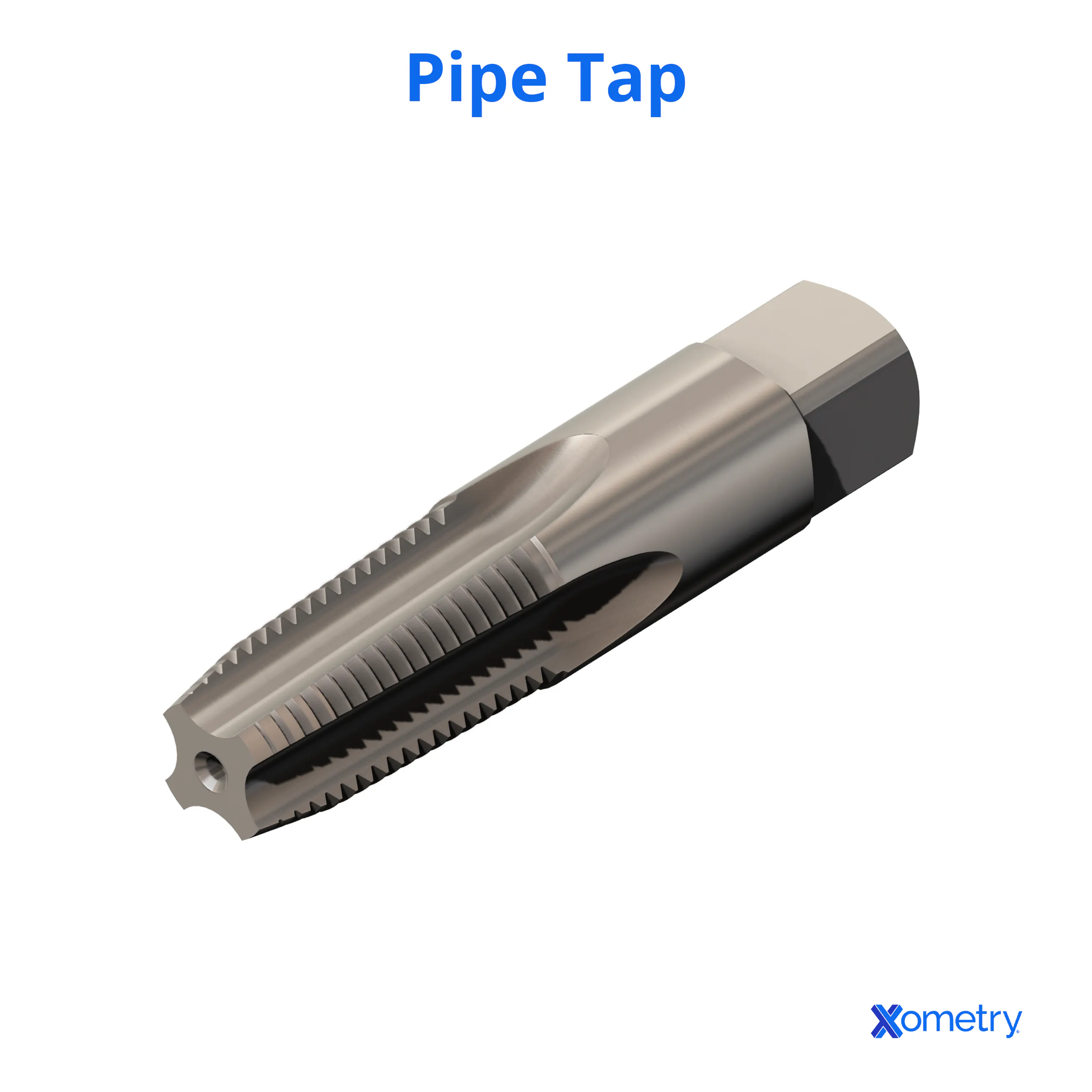
Pipe taps carve threads for pipes internally for pressure-tight joints. Some pipe taps are made for hydraulic and gas purposes, and others for mechanical joints and hose couplings. They have to be done more carefully than other types because they’re designed to mechanically seal a joint to add pressure and prevent leaks.
3. Spiral Flute Tap
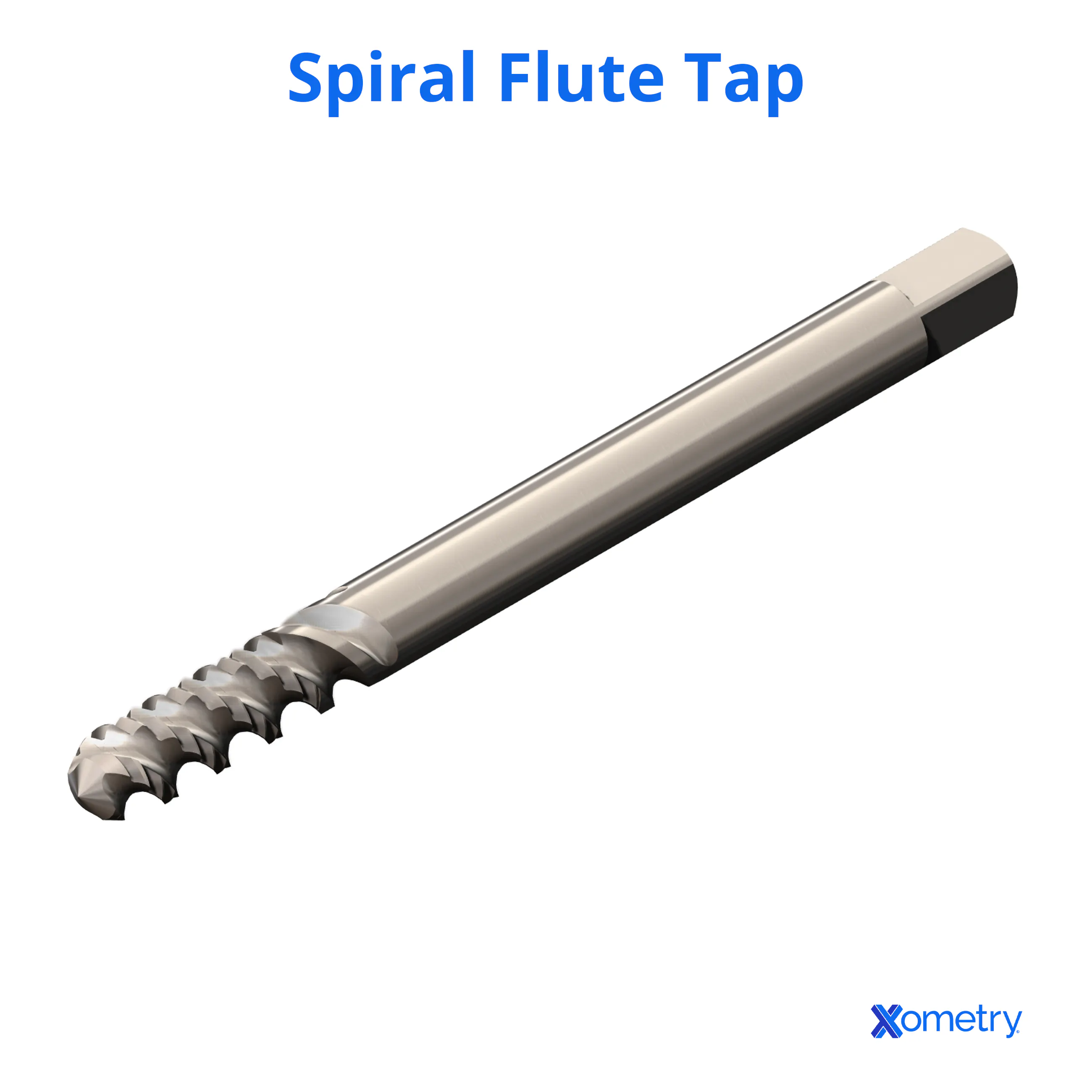
The spiral flute tap has flutes wrapped around the axis in a spiral (helical) formation, making their cutting edge weaker than a hand tap’s. They’re most often used to tap thread into blind-holes and then pull the chippings back out of the hole.

4. Gas Tap
Gas taps are compliant with specifications used in gas and hydraulic systems. They’re a form of pipe tap used for cutting deep threads, and either have one- or two-thread chamfers suitable for conical and cylindrical-shaped holes.

Get Custom CNC Machined Threaded Parts
5. Machine Tap
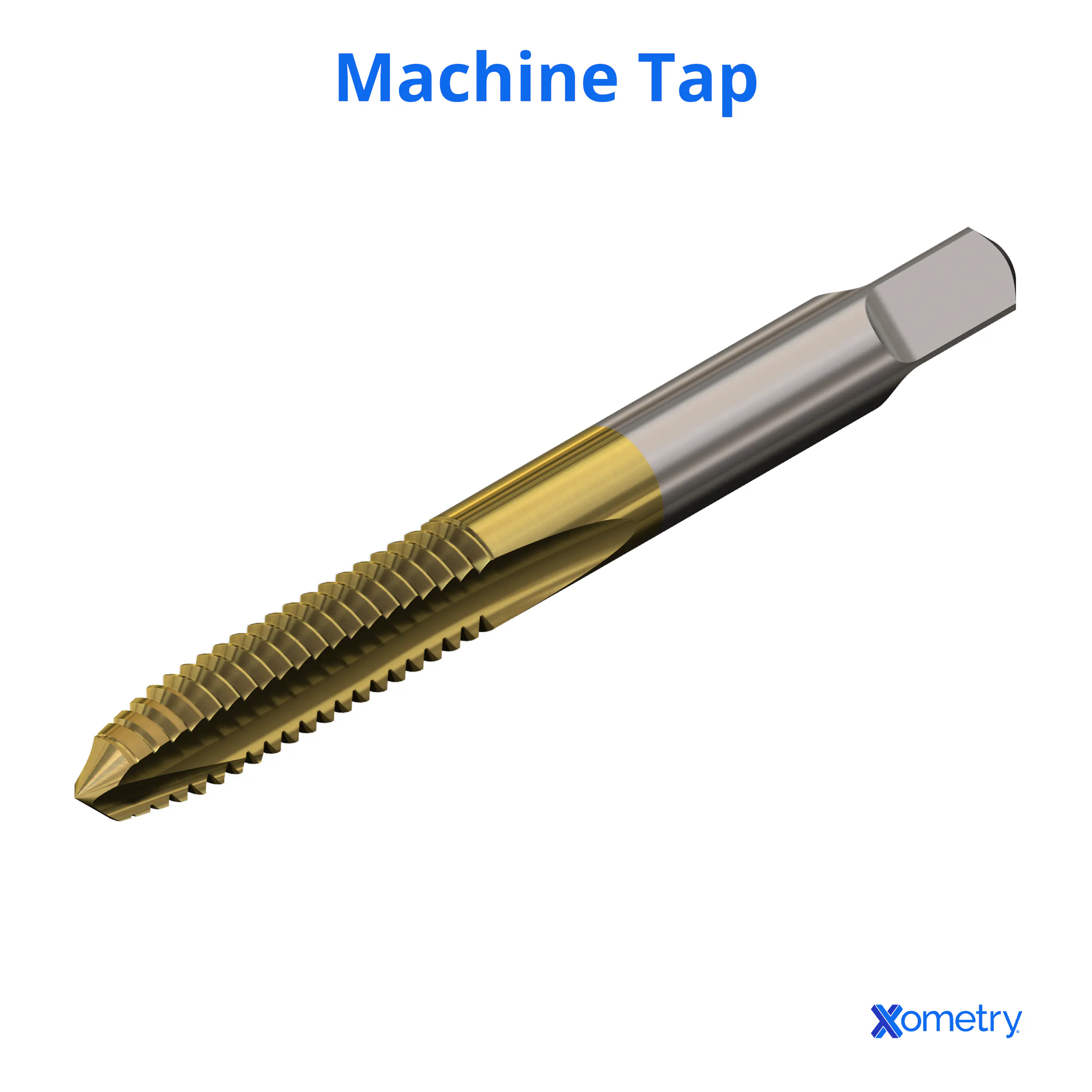
The growing use of machinery in manufacturing has meant an increase in machine taps, too. These have to be durable and particularly resistant to wear. Automated machining processes (like CNC) use these taps to create both blind holes and through holes on hard materials, where spiral flute taps won’t be strong enough. Sometimes their cutting end is coated with titanium nitride (shown in the below image) to give it more wear resistance and increase its lifespan.
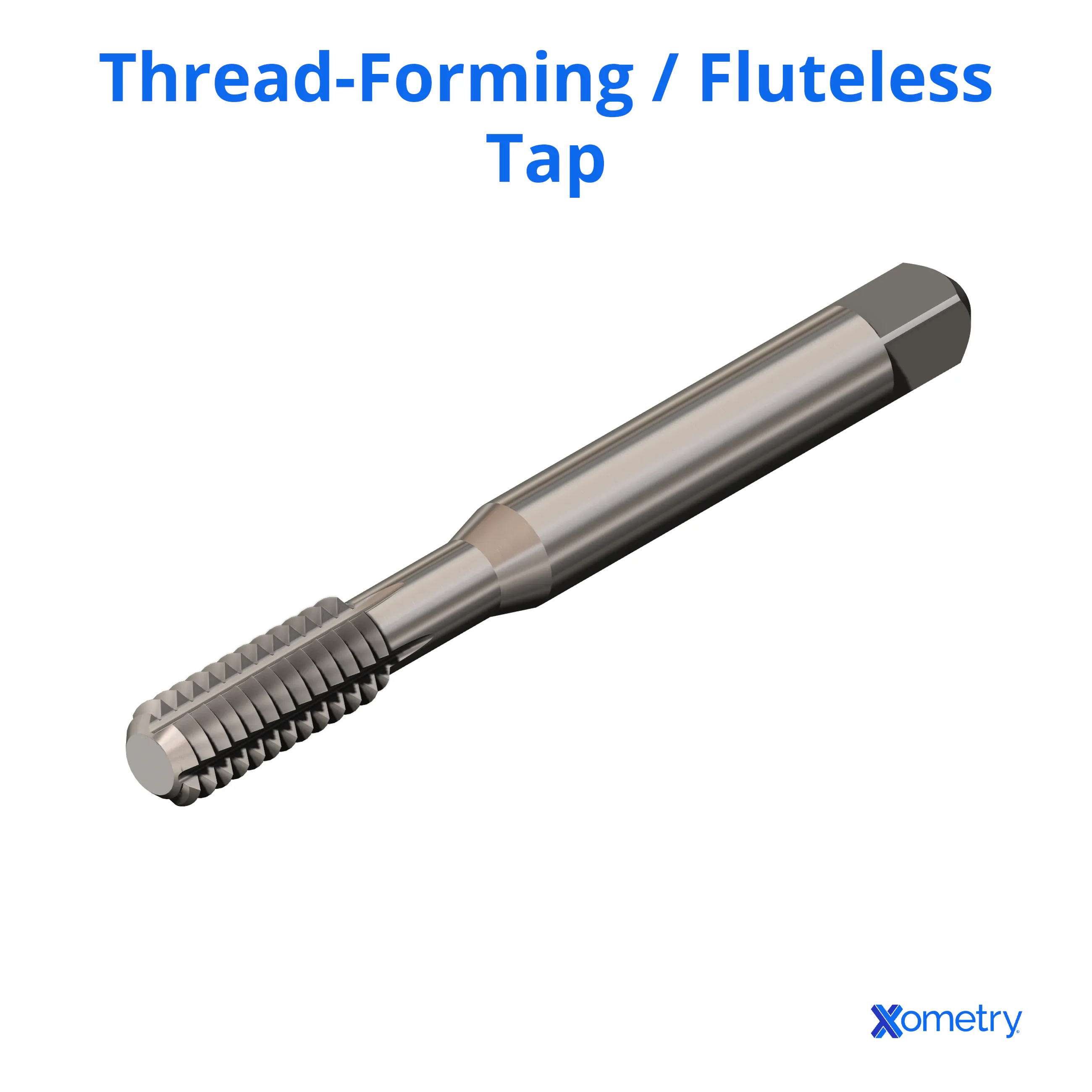
6. Thread-Forming Tap
Also known as fluteless taps or rolled threads, these taps don’t actually cut threads; they cold-form them instead, during which the metal isn’t cut, but moved away before being compressed into position. No chips are formed in the process, meaning you don’t have to remove any. These taps make stronger threads that are less likely to break.
We suggest using form taps instead of cutting taps whenever you can, as long as the material isn’t too hard. Lots of people think that these are only good for soft materials like aluminum, but they work with any material with a hardness of 36 HRC (or 340 BHN). That covers a bunch of materials, including a lot of steel types.
Pro tip: It’s important to know that form taps need different feeds and speeds, as well as different starting hole sizes. There’s another common hiccup among quite a few roll-forming taps: the oil can build up back pressure as the tap goes in, and eventually act like a plug that blocks the tap from getting further into the hole. There has to be a groove to let cutting oil escape, or room at the root or crest of the thread.
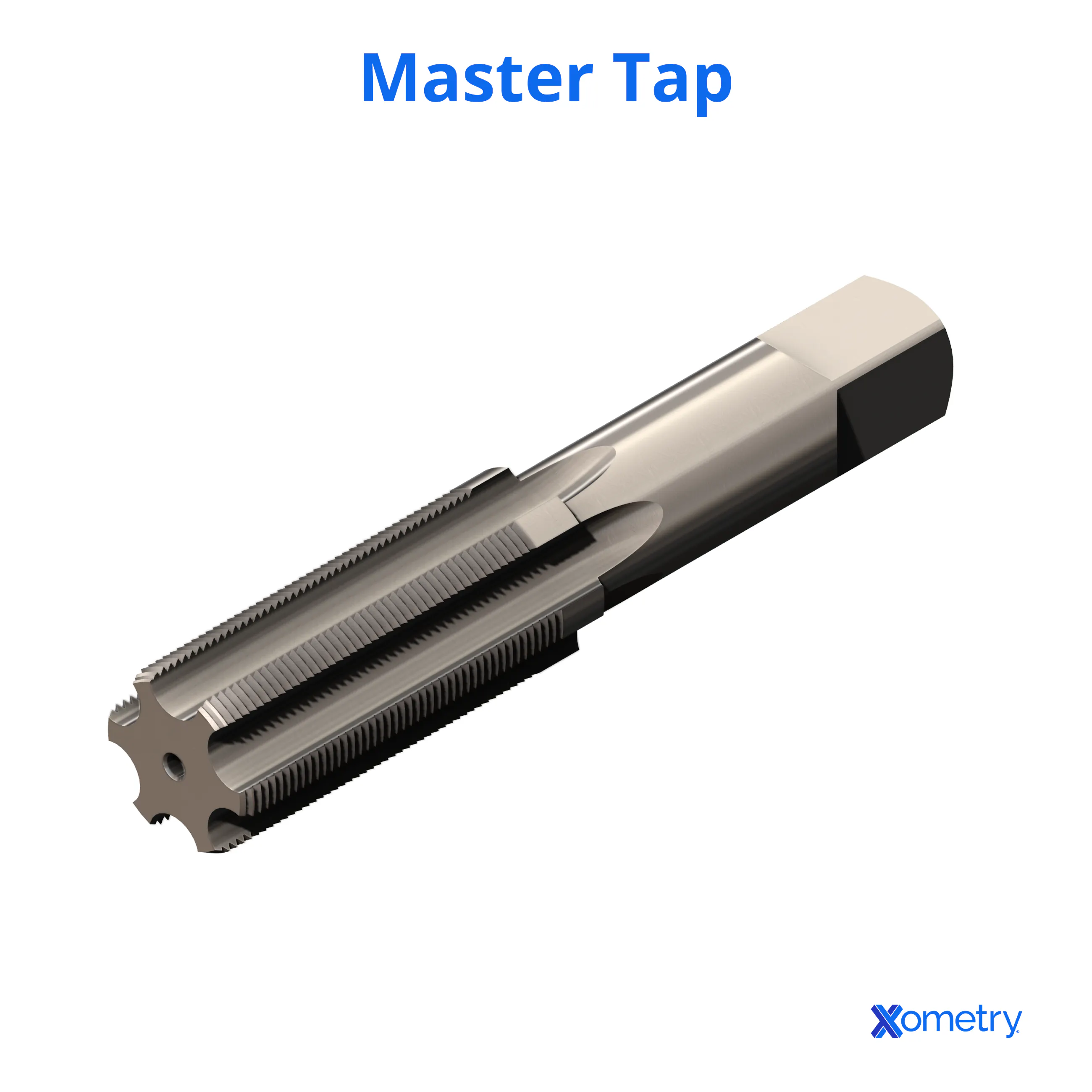
7. Master Tap
A master tap is used in many industries. They’re known for their universal ability and are typically used to cut clean threads in hard, strong materials. They’re not that dissimilar to taper taps but have 7–10 flutes (as opposed to a taper tap’s 3–7) and more cutting faces.
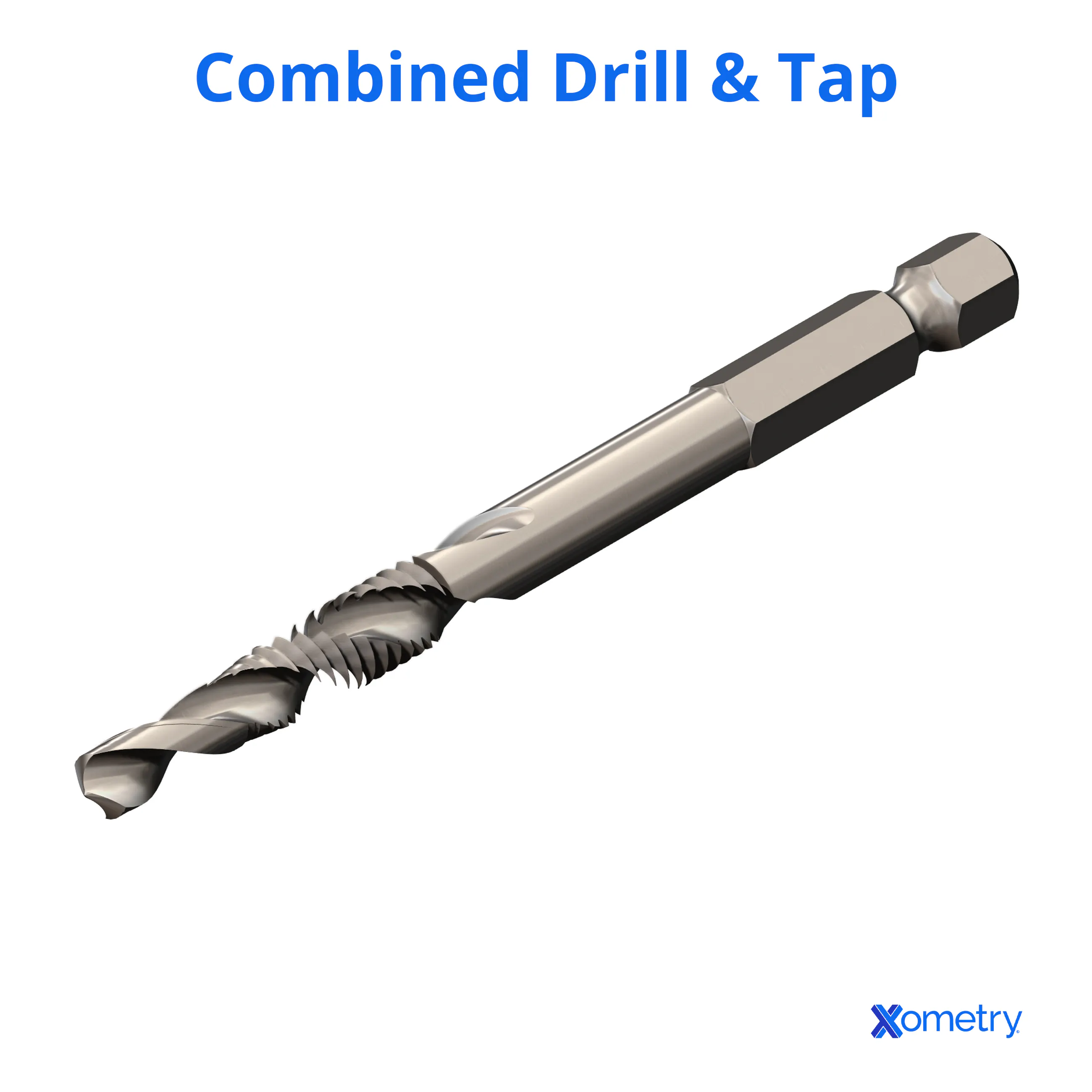
8. Combined Drill and Tap
A combined drill and tap lets the user drill the hole and tap threads all at once without having to switch tools. This saves both time and money on production drilling jobs. It’s helical flute-shaped and works on a host of materials and metals, like iron and brass.
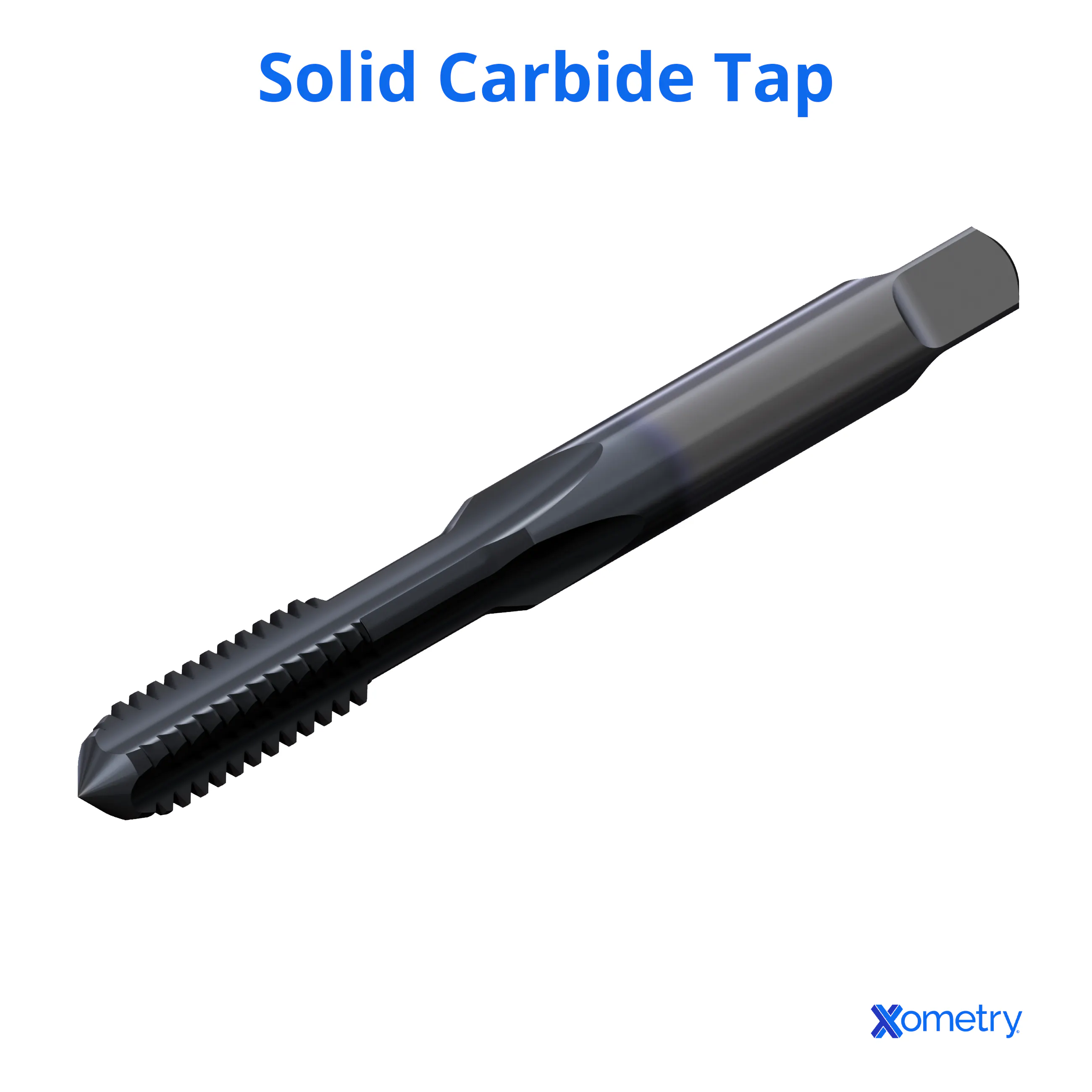
9. Solid Carbide Tap
Solid carbide taps are made of composite material and last a long time in all sorts of environments. They’re very hard and wear-resistant so are used on harder materials, including sintered, ultra-fine tungsten carbides.
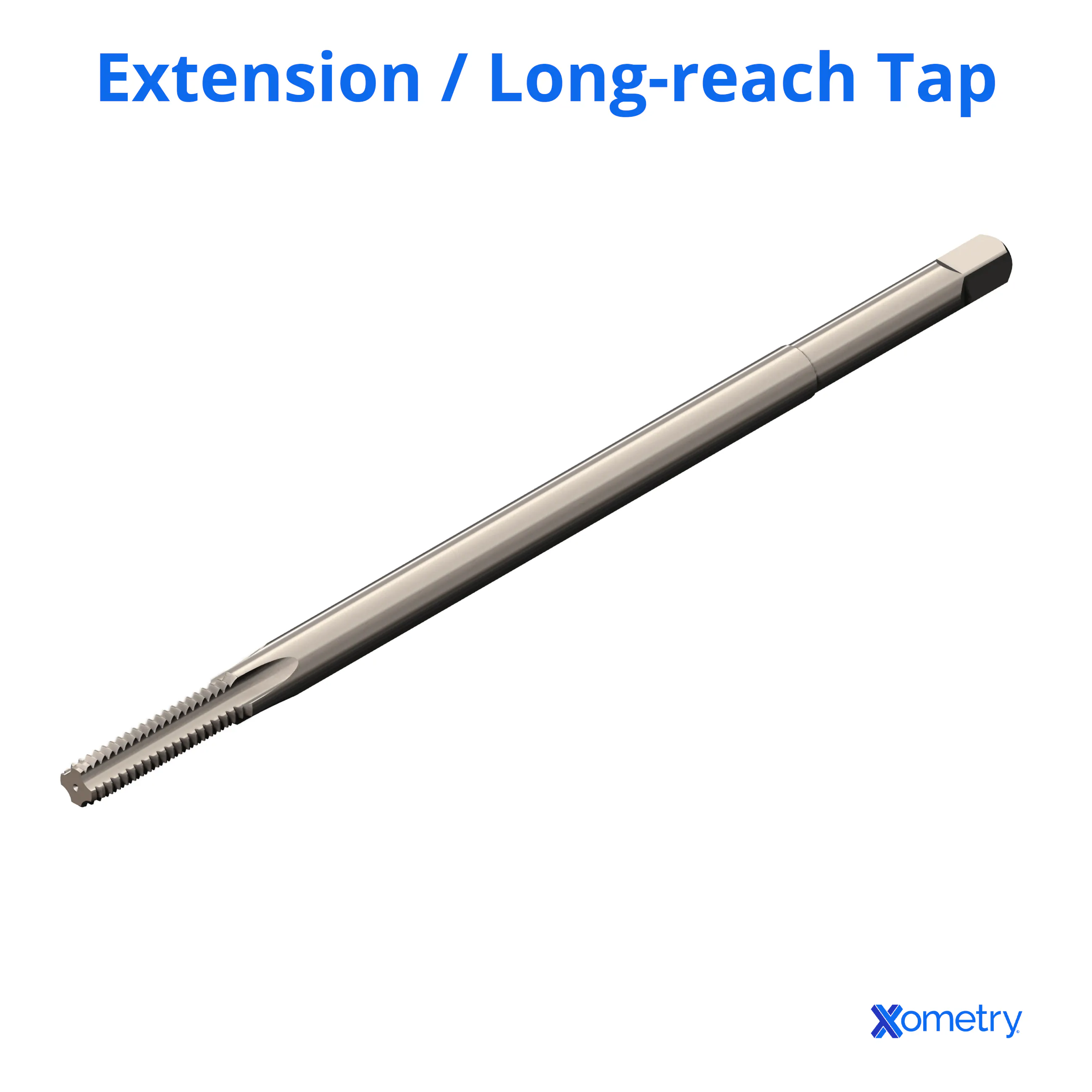
10. Extension Tap
Extension taps are similar to hand taps. Their long shanks make them useful for accessing hard-to-reach holes, like a pulley hub.
11. Fluteless Tap
A fluteless tap is a form of threading tap that utilizes a pressure deformation technique to cut threads into a material. Fluteless taps are used only on softer metals and, unlike other forms of threading taps, the threads through the body are without flutes. Similar to a thread-forming tap, there is no chip removal with this form of threading and this allows for high-quality threads with fast cutting speed.
12. Machine Screw Tap
Machine screw taps are used to carve threads into the material and have on average 2–4 threads tapering from the tip. By their design, machine screw taps are used to manually thread deep holes in a variety of material types. Manufacturers utilize the machine screw tap for routine maintenance, repairs, and rethreading in situations in which tight tolerance and accuracy are not necessary. Unlike machine taps, machine screw taps are not fully automated—they are used alongside a tap drill machine or a manual tap handle.
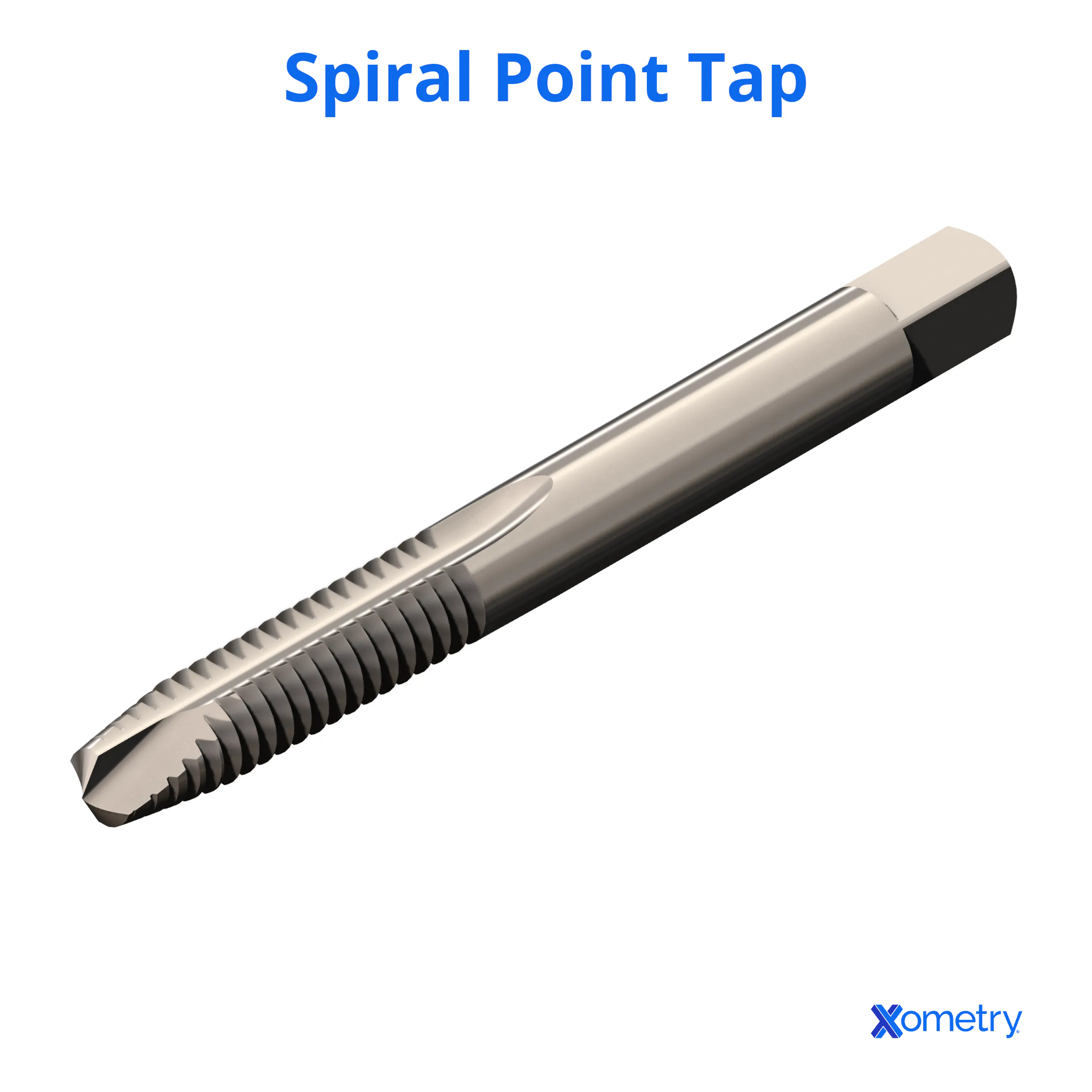
13. Spiral Point Tap
These taps are strong and made to work faster than regular taps on hard materials, and don’t need as much power, either. They make shallow grooves that can remove more metal in one go. Some feel they are similar to straight flute taps since they share the same general shape, but they have different cutting faces.
14. Stay Bolt Tap
A stay bolt tap is around 15-20 inches long. It’s designed to cut threads in drilled holes for threaded machine screws or threaded bolts to be screwed in, in the exact diameter of the stay bolt nut. They were commonly used in installing and repairing fireboxes in steam locomotives.
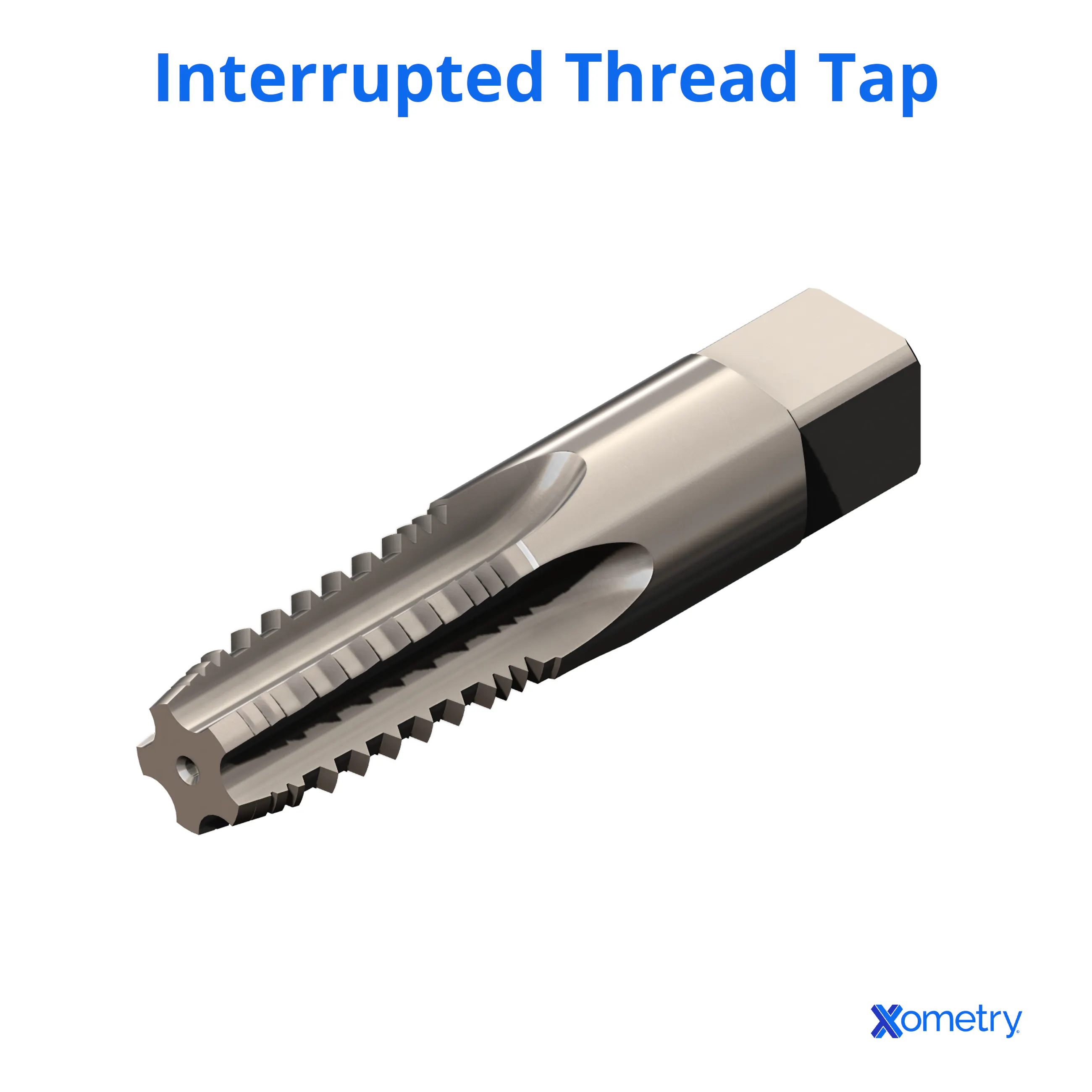
15. Interrupted Thread Tap
This type of tap only has a tooth for every other thread. It’s designed to provide better chip extraction. Removing every other tooth helps with breaking up the chips. It also gives more room, both for the chip to clear out and the lubricant to enter.
Why Does Machining Require Different Types of Thread Taps?
Machining requires different types of thread taps because different taps can cut different types of threads in the holes and have different associated features. Machinists must take into account the type of workpiece, tap material, type of hole, and cutting speed when selecting the type of thread tap. Manufacturers tend to employ taps from high-speed steel for softer metals (for example aluminum) as they can enable a slower and more controlled cutting action.
How To Choose a Thread Tap To Use?
When you’re choosing which thread tap to use, there are four main factors to think about so you can up your chances of success:
Workpiece material: Various materials have different levels of firmness and there will be a tap suitable for each level. Some will work better than others on different materials, i.e., a machine tap works well on harder materials, but a fluteless tap is best for soft materials.
Tap material: You’ll have to choose this according to the material of the piece you want to work on, e.g., carbide steel taps can cut threads quickly, and are strong enough to handle hard materials like cast iron.
Hole type: Depending on what hole you need to make, there will be a tap up to the task. Taps with 1–3 thread chamfers can create deeper holes, for instance.
Cutting speed: Some taps, i.e., spiral flute, are designed for high-speed work, while others not so much, so you’ll have to know the speed of cutting before choosing your taps.
Standard Tap Markings
Taps have marks on the shank, so you can tell with just a look what type of thread tap you’re working with. The markings include the nominal size, which is the thread size that the tap will take. There’s also the thread form symbol, which identifies the thread family. There’s also tap material, which is usually carbide or HSS. It also typically shows the pitch diameter limit, which tells what tolerance thread will be made.
Pitch Diameter Limits
Here is a quick guide for threads with a diameter of less than an inch:
- L1 = Basic (B) to B minus .0005
- H1 = B to B plus .0005
- H2 = B plus .0005 to B plus .0010
- H3 = B plus.0010 to B plus .0015
- H4 = B plus .0015 to B plus .0020
- H5 = B plus .0020 to B plus .0025
- H6 = B plus .0025 to B plus .0030
Note: You can find these limits in G-Wizard’s thread database as well.
How Can Xometry Help You Choose a Thread Tap?
Xometry can help you choose the right thread tap for your application by putting you in contact with engineering experts from start-up companies and Fortune 100 companies alike. You can use the Xometry quoting tool to search for a company that can help you find the engineering solution you need. These experts will be able to help you use the right thread-tapping tools in your project. Alternatively, Xometry has a team of customer-support agents and engineering experts who can help you choose the right thread tap for your application.
What Is the Standard Type of Thread Tap?
The standard type of thread tap is widely considered to be a hand tap as they are multifaceted and adaptable for use by hand and are also generally popular in machine tapping. They work efficiently with the vast majority of materials that have blind holes or through holes. Another commonly used type of thread tap is the taper tap. This type of tap has a lot of taper to help it ease gradually into cutting threads. It is commonly used as a starter tap for particularly difficult or blind holes.
What Is the Type of Thread Tap Used for Bronze?
A machine tap is an example of a type of thread tap used on bronze. Bronze is widely considered to be a hard metal, so it is important to select a thread tap that is capable of creating threads in harder substances, such as machine taps as they are fully automated. Other alternatives used for bronze include master taps or solid carbide taps as they are both ideally suited to hard material.
What Is the Type of Thread Tap Used for Metal?
One of the types of thread taps used on metal is the straight flute tap. This is due to the larger cross-section on the straight flute tap’s cutting edge that makes it ideally suited to cut threads into hardened metals. The straight flute tap is an extremely robust cutting tool, and unlike the spiral flute tap, the flutes run directly down the tap’s shaft.
What Is the Type of Thread Tap Used for Concrete?
When screwing into concrete a thread tap isn’t used, instead, self-tapping screws are used. These are screws with a coarse thread. The coarse thread is used because it is impossible to create a fine thread in concrete, unlike in metal. To use a self-tapping screw an undersized hole is drilled into the concrete and then the self-tapping screw is drilled into the concrete.
What Is the Type of Thread Tap Used for CAM Milling?
Machine taps can be used for CAM (computer-aided manufacturing) milling. Machine taps are fully automated and are therefore compatible with specialized software that automates the manufacturing process. Machine taps can be used on a wide variety of materials used in CAM milling and can be used to thread both through and blind holes.
Thread Tap Type—Summary
For ease of reference, we’ve made the below table so you can quickly see the main differences between these types of thread taps (in the hole size column, “M” is the outer diameter in mm).
Thread Taps Summary: *NPT and NPTF are the standardized thread forms for pipe fittings in the U.S. (NPT needs a sealing material, but NPTF is self-sealing)
How Xometry Can Help
At Xometry, our global manufacturing network has experience with a wide variety of taps and cutting tools to create threads in parts. We cover everything from standard unified national and metric threads to fine-pitch optical threads and even custom thread forms. If you have custom parts that need threading, we can make them! Get started by uploading your design files to the Xometry Instant Quoting Engine® and get an instant quote today!
Disclaimer
The content appearing on this webpage is for informational purposes only. Xometry makes no representation or warranty of any kind, be it expressed or implied, as to the accuracy, completeness, or validity of the information. Any performance parameters, geometric tolerances, specific design features, quality and types of materials, or processes should not be inferred to represent what will be delivered by third-party suppliers or manufacturers through Xometry’s network. Buyers seeking quotes for parts are responsible for defining the specific requirements for those parts. Please refer to our terms and conditions for more information.