
Iron (Fe): Element, Symbol, Atomic Number and Uses


Iron (Fe) is a naturally occurring chemical element classified as a transition metal, known for its strength, durability, and widespread availability in Earth's crust. Iron (Fe) serves as the foundation of modern industry, forming the backbone of steel production, construction, and manufacturing across nearly every engineering sector. The element holds a fixed position in Group 8 of the periodic table, with an atomic number of 26 and the chemical symbol Fe, derived from the Latin word ferrum, placing it firmly within the d-block of transition metals.
Iron (Fe) exhibits a density of approximately 7.87 g/cm³ and a melting point of 1,538°C, properties that make it exceptionally suited for high-temperature and heavy-load applications. The element is ferromagnetic at room temperature, reactive with oxygen and moisture, and capable of forming multiple oxidation states, primarily +2 and +3. Iron appears in a range of forms, from pig iron and cast iron to wrought iron and steel, each with distinct mechanical characteristics. Its applications span construction and infrastructure, transportation, tools, machinery, household items, and electrical systems, making it one of the most industrially significant metals on Earth.
What Is Iron (Fe)?
Iron (Fe) is a chemical element and a widely used metal in engineering and construction, recognized for its abundance, structural strength, and versatility across industrial sectors. Bearing the atomic number 26 and the symbol Fe, it ranks as the fourth most abundant element in Earth's crust and the most abundant by mass in the planet's core. The element is a silvery-gray solid at room temperature, exhibiting a density of 7.87 g/cm³ and a melting point of 1,538°C. Iron possesses ferromagnetic properties, meaning it is strongly attracted to magnets and retains magnetization under certain conditions. In its pure form, iron is relatively soft and malleable, but alloying it with carbon produces steel, a material with far greater strength and hardness. Iron reacts readily with oxygen and moisture, leading to the formation of iron oxide, commonly known as rust. It forms the basis of steel, which is the most produced metal globally, underpinning construction, transportation, and manufacturing.
How Is Iron Classified on the Periodic Table?
Iron is classified on the periodic table as a transition metal, positioned in Period 4 and Group 8, within the d-block of elements. The d-block spans Groups 3 through 12 and contains transition metals, which are generally characterized by atoms or common ions with partially filled d subshells. Iron's electron configuration is [Ar] 3d⁶ 4s², reflecting the presence of six electrons in the 3d orbital. The classification as a transition metal correlates with iron's ability to form multiple oxidation states, most commonly +2 and +3, enabling it to participate in a wide range of chemical reactions. Transition metals in the d-block, including iron, tend to exhibit high melting points, strong metallic bonding, and catalytic activity. The placement of iron at atomic number 26 in the d-block directly governs its physical strength, magnetic behavior, and reactivity patterns.
Is Iron a Metal?
Yes, iron is a metal, and its metallic properties are well-documented across materials science and engineering. Iron conducts both heat and electricity, two fundamental characteristics of metallic elements, due to the presence of delocalized electrons in its atomic structure. At room temperature, it maintains a solid crystalline form with a body-centered cubic (BCC) structure, transitioning to face-centered cubic (FCC) at temperatures above 912°C. Iron's tensile strength in its pure form reaches approximately 210 GPa modulus of elasticity, making it mechanically reliable under load-bearing conditions. The malleability of iron allows it to be shaped through forging, rolling, and casting without fracturing. Iron is widely applied in construction, from structural beams to reinforcement bars (rebar), underscoring its role as a foundational metal in engineering.
What Is the Symbol for Iron?
The symbol for iron is Fe, a two-letter abbreviation used universally in chemical formulas, periodic tables, and scientific documentation. The symbol Fe appears in chemical equations to represent iron's atomic identity, distinguishing it from other elements through standard international scientific notation. In chemical formulas, Fe is used to express compounds (Fe₂O₃ for iron(III) oxide), reaction equations, and phase diagrams in materials science. The symbol applies across disciplines, from chemistry and metallurgy to biology, where iron appears in biochemical contexts (hemoglobin, for example, contains an Fe²⁺ ion at its core). The International Union of Pure and Applied Chemistry (IUPAC) officially recognizes Fe as the standard symbol for iron, ensuring consistency across all scientific literature, engineering specifications, and academic research globally.
Why Is Iron Represented by the Symbol Fe?
Iron, represented by the symbol Fe, because it originates from ferrum, the Latin word for iron, a naming convention inherited from the Roman period when Latin historically served as the dominant scholarly language in Europe. Many elements discovered or named in ancient or medieval times carry symbols derived from their Latin, Greek, or Arabic names rather than their modern English designations. Gold (Au from aurum), silver (Ag from argentum), and copper (Cu from cuprum) follow the same convention. Latin-based symbols were standardized during the 18th and 19th centuries as chemistry evolved into a formalized discipline. The retention of ferrum-derived nomenclature in Fe preserves the historical continuity of the element's identity across centuries of scientific documentation, from Roman metallurgy to contemporary materials engineering.
Is Fe the Chemical Symbol for Iron?
Yes, Fe is the chemical symbol for iron, and it serves as the standard notation recognized by every major scientific and engineering authority worldwide. Fe appears in periodic tables, chemical databases, material specification sheets, and international standards (ASTM, ISO, DIN) wherever iron is referenced in a technical capacity. In chemistry, Fe is used to balance equations, denote oxidation states (Fe²⁺, Fe³⁺), and label compounds. In engineering, material grades referencing iron-based alloys consistently trace their composition back to Fe as the primary constituent. The symbol Fe is not interchangeable with any alternate notation; no other abbreviation exists for iron in peer-reviewed science or industrial practice, confirming Fe as the sole chemical symbol for iron.
What Is the Atomic Number of Iron?
The atomic number of iron is 26, a value that defines the element's identity by specifying the number of protons found in the nucleus of every iron atom. The atomic number is the most fundamental property of an element, as it determines the element's position on the periodic table, its electron configuration, and its chemical behavior. Iron's atomic number of 26 places it in Period 4, Group 8, within the d-block transition metals. A neutral iron atom contains 26 protons and 26 electrons, with the electron configuration [Ar] 3d⁶ 4s². The atomic number 26 distinguishes iron from adjacent elements, manganese (25) and cobalt (27), with each differing by a single proton. In nuclear and atomic physics, the atomic number 26 of iron is used to calculate nuclear binding energy and isotopic stability.
How Many Protons Does an Iron Atom Have?
An iron atom has 26 protons, a count that corresponds directly to its atomic number and serves as the defining feature of iron's elemental identity. Protons carry a positive charge and reside in the nucleus of an atom; their number determines which element the atom belongs to. In a neutral iron atom, the 26 protons are balanced by 26 electrons, distributed across the 1s, 2s, 2p, 3s, 3p, 3d, and 4s orbitals according to the configuration [Ar] 3d⁶ 4s². Altering the number of protons in an atom transforms it into a different element entirely, making the proton count of 26 an absolute and invariant property of iron. The mass contributed by 26 protons accounts for a substantial portion of iron's atomic mass of 55.845 u.
Is the Atomic Number of Iron 26?
Yes, the atomic number of iron is 26, and the value is a fixed, invariable property of the element. The atomic number 26 was established through experimental determination of iron's nuclear structure and remains constant across all isotopes of iron, including naturally occurring isotopes such as iron-54, iron-56, iron-57, and iron-58. Iron-56 is the most abundant naturally occurring isotope, comprising approximately 91.75% of all iron found in nature, yet its atomic number remains 26 regardless of neutron count. Scientific bodies, including IUPAC and the National Institute of Standards and Technology (NIST), confirm 26 as the official atomic number. The number 26 defines iron in every context, from nuclear physics to industrial metallurgy.
What Are the Key Physical Properties of Iron?
The key physical properties of Iron are listed below.
- Density: Iron has a density of 7.874 g/cm³ at room temperature, placing it among the denser structural metals. The density contributes to iron's high mass-to-volume ratio, making it effective for load-bearing structural applications where weight stability is a benefit.
- Melting Point: The melting point of iron is 1,538°C (2,800°F), among the highest melting points of common engineering metals. The elevated melting point makes iron and its alloys useful in high-temperature engineering applications, especially when alloyed, though strength still decreases as temperature rises.
- Boiling Point: Iron boils at 2,861°C (5,182°F), a temperature rarely reached outside of specialized metallurgical processes. The high boiling point reflects the strength of metallic bonds in iron's crystalline structure.
- Electrical Conductivity: Iron has an electrical conductivity of approximately 1.04 × 10⁷ S/m, lower than copper but sufficient for certain electromagnetic and industrial applications. Delocalized electrons in the metallic lattice carry electrical current through the material.
- Magnetic Properties: Iron is ferromagnetic at temperatures below its Curie point of 770°C, meaning it exhibits strong magnetic attraction and retains magnetization. Above 770°C, iron transitions to a paramagnetic state.
- Hardness: Pure iron registers approximately 4.0 on the Mohs hardness scale, a moderate value that increases substantially when carbon or other alloying elements are introduced.
What Is the Density and Melting Point of Iron?
Iron has a density of 7.874 g/cm³ and a melting point of 1,538°C, two physical constants that underpin its performance in structural and high-temperature engineering. The density of 7.874 g/cm³ reflects iron's atomic mass of 55.845 u and its body-centered cubic (BCC) crystal structure at room temperature, which packs atoms at a specific spatial arrangement. At 912°C, iron transitions to a face-centered cubic (FCC) structure (austenite), and at 1,394°C, it reverts to BCC (delta iron) before reaching the melting point at 1,538°C. The high melting point makes iron suitable for foundry operations, casting, and alloying with carbon and other elements at elevated temperatures. In structural engineering, the combination of moderate density, strength, and alloy versatility make iron-based alloys reliable for beams, columns, and heavy machinery components.
Does Iron Have a High Melting Point?
Yes, iron has a high melting point of 1,538°C (2,800°F), placing it well above the melting points of aluminum (660°C), copper (1,085°C), and many other common metals. The elevated melting point arises from strong metallic bonding within iron's crystalline lattice, requiring substantial energy input to break atomic bonds and transition the material to a liquid state. The high melting point makes iron and its alloys capable of withstanding extreme thermal environments in applications such as blast furnaces, engine components, and industrial kilns. The melting point of iron directly influences casting temperatures, in manufacturing, mold design, and cooling rate requirements, all of which affect the final microstructure and mechanical properties of iron-based parts.
What Are the Chemical Properties of Iron?
The chemical properties of Iron are listed below.
- Oxidation States: Iron exhibits multiple oxidation states, with +2 (ferrous, Fe²⁺) and +3 (ferric, Fe³⁺) being the most prevalent. The +2 state appears in compounds like ferrous sulfate (FeSO₄), and the +3 state is found in ferric chloride (FeCl₃) and iron oxide (Fe₂O₃).
- Reactivity With Oxygen: Iron reacts with oxygen and moisture to form hydrated iron oxides and oxyhydroxides, commonly called rust. The oxidation process degrades the metal's surface over time, reducing structural integrity.
- Reactivity With Water: Iron reacts slowly with water at room temperature, but the reaction accelerates with steam or at elevated temperatures, producing iron oxides and hydrogen gas (Fe + H₂O(g) → FeO + H₂ ).
- Reactivity With Acids: Iron dissolves readily in dilute hydrochloric acid (HCl) and sulfuric acid (H₂SO₄), producing iron(II) salts and releasing hydrogen gas. In concentrated nitric acid, iron becomes passivated due to the formation of a protective oxide layer.
- Alloy Formation: Iron reacts with carbon, chromium, nickel, manganese, and other elements to form alloys with significantly altered properties. Carbon contents ranging from 0.008% to 2.14% produce the range of steel grades used in engineering.
- Catalytic Activity: Iron acts as a catalyst in the Haber process for ammonia synthesis (N₂ + 3H₂ → 2NH₃), where finely divided iron accelerates the reaction at temperatures from 400°C to 500°C under pressures from 150 to 300 atmospheres.
How Does Iron React With Oxygen and Water?
Iron reacts with oxygen and water to form rust, a reddish-brown layer of hydrated iron(III) oxide (Fe₂O₃·nH₂O) that develops on exposed iron surfaces in humid environments. The oxidation process begins when iron atoms lose electrons to oxygen molecules, forming Fe²⁺ ions that subsequently oxidize further to Fe³⁺ in the presence of additional oxygen and water. The electrochemical nature of rusting means that areas with higher oxygen concentration act as cathodic sites, while iron-rich areas act as anodic sites, creating localized corrosion cells across the metal surface. The rate of oxidation depends on temperature, humidity, and the presence of electrolytes (salt water accelerates rusting significantly). The formation of rust is a non-protective process, as the porous oxide layer allows further oxygen and moisture to reach the underlying iron, perpetuating degradation.
Does Iron Rust Easily?
Yes, iron rusts easily when exposed to moisture and oxygen simultaneously, as reactants are required for the electrochemical oxidation process to proceed. Iron oxidizes slowly in dry air, forming a thin oxide layer that partially inhibits further reaction. In humid air, the presence of water as an electrolyte accelerates the corrosion rate substantially. Saltwater environments accelerate rusting further because dissolved ions increase the electrical conductivity of the moisture on the iron surface, intensifying the electrochemical corrosion cell. Iron generally corrodes much faster in coastal or marine environments than in dry inland conditions. Protective coatings (paint, galvanization, powder coating) and alloying with chromium are the primary methods of preventing rust on iron-based materials.
What Is the Atomic Mass of Iron?
The atomic mass of iron is 55.845 u (unified atomic mass units), a value representing the weighted average of the masses of all naturally occurring iron isotopes. Iron exists as four stable isotopes: iron-54 (5.85% natural abundance), iron-56 (91.75%), iron-57 (2.12%), and iron-58 (0.28%). Iron-56 dominates natural iron abundance and contributes most to the weighted average atomic mass. The value 55.845 u is used in stoichiometric calculations to determine molar mass, convert from grams to moles, and balance chemical equations involving iron compounds. One mole of iron has a molar mass of 55.845 g/mol, meaning 55.845 grams of iron contains approximately 6.022 × 10²³ atoms (Avogadro's number). IUPAC formally recognizes 55.845 as the standard atomic weight of iron.
How Is the Atomic Mass of Fe Used in Chemistry?
The atomic mass of Fe (55.845 u) is used in chemistry to calculate molar quantities, balance chemical equations, and determine the composition of iron-containing compounds. In stoichiometry, the atomic mass serves as the conversion factor from the atomic scale to the measurable gram scale, enabling chemists and engineers to calculate the exact mass of iron required or produced in a given reaction. Calculating the mass of iron needed to produce a specific quantity of iron oxide (Fe₂O₃) requires multiplying the moles of Fe by 55.845 g/mol. In analytical chemistry, the atomic mass supports gravimetric analysis, where the iron content in ore samples is determined by precipitating and weighing iron compounds. In metallurgy, the atomic mass of Fe helps compute alloy compositions and balance refining processes.
Is the Atomic Mass of Iron About 55.85 u?
Yes, the atomic mass of iron is 55.85 u, a value rounded from the IUPAC-accepted standard of 55.845 u. The rounding to 55.85 u is common in educational and applied chemistry contexts where four significant figures are sufficient for accurate calculation. The precise value of 55.845 u accounts for the weighted contributions of all four naturally occurring iron isotopes, with iron-56 carrying the dominant influence at 91.75% natural abundance. In engineering applications, the difference from rounding 55.845 to 55.85 is negligible for most calculations. Scientific databases, including NIST's Atomic Weights and Isotopic Compositions, record the atomic mass of iron at 55.845 u as the authoritative reference value.
How Does Iron (Fe) Relate to Metals in General?
Iron (Fe) relates to metals in general through sharing fundamental properties with the broader category of metals, including electrical conductivity, thermal conductivity, malleability, ductility, and a characteristic metallic luster. Iron stands out for its combination of abundance and mechanical strength among metals, properties that make it the most consumed metal globally by volume. Iron's behavior aligns with typical metallic characteristics: it forms cations in chemical reactions, bonds metallically through delocalized electrons, and responds to mechanical stress through plastic deformation rather than brittle fracture in its annealed state. Across the metals category, iron occupies a central role because steel accounts for the majority of global metal production by mass. The physical and chemical traits iron shares with metals collectively are what establish its dominance in construction, transportation, manufacturing, and infrastructure.
Iron’s engineering value comes from its unusually wide range of controllable behaviors across chemistry, microstructure, and processing. Its partially filled 3d orbitals explain the variable oxidation states, magnetic response, and catalytic usefulness, while its iron-carbon phase behavior explains why small carbon changes can shift the material from soft, ductile ferrite to harder pearlite, cementite, or martensite. That makes iron a rare industrial platform material: it can serve as a structural frame, magnetic core, corrosion-resistant stainless alloy, cast component, tool steel, or chemical catalyst depending on alloying, heat treatment, and environmental exposure. The same reactivity that makes iron vulnerable to rust also makes it chemically useful, so effective engineering depends on managing the tradeoff between strength, processability, corrosion control, and service environment.
What Defines Iron (Fe) as a Metal in Chemistry and Engineering?
Iron is defined as a metal in chemistry and engineering through its electron configuration, physical properties, and behavioral characteristics in both atomic and macroscopic contexts. Chemically, iron donates electrons readily, forming cations (Fe²⁺, Fe³⁺) and exhibiting the electropositive behavior typical of metals. Its electrical conductivity of approximately 1.04 × 10⁷ S/m and thermal conductivity of 80.4 W/(m·K) confirm its metallic nature. Mechanically, iron's malleability allows it to be rolled into sheets, drawn into wire, and forged into complex shapes. In engineering, iron forms alloys (steel, cast iron, wrought iron) that are classified under metal grades in standards from ASTM and ISO. Iron's capacity to form alloys like steel, combining with carbon and chromium, further cements its identity as a metal with broad engineering utility.
How Well Do Metals Such as Iron (Fe) Conduct Electricity?
Metals such as Iron (Fe) conduct electricity well through the movement of free (delocalized) electrons within the metallic lattice, a mechanism that distinguishes metals from non-metals and semiconductors. Iron's electrical conductivity measures approximately 1.04 × 10⁷ S/m (siemens per meter) at room temperature, a value lower than copper (5.96 × 10⁷ S/m) and aluminum (3.77 × 10⁷ S/m), but adequate for applications in electromagnetic cores and certain industrial equipment. Conductivity in iron decreases as temperature rises because lattice vibrations (phonons) scatter free electrons more aggressively at higher temperatures. Iron's electrical conductivity makes it useful in transformer cores, electric motors, and generator components, where magnetic permeability and moderate electrical conductivity work together. The free electron model of metallic bonding explains conductivity across iron and other transition metals in the d-block.
Why Is Iron (Fe) Classified as a Transition Metal?
Iron is classified as a transition metal due to its electron configuration, specifically the presence of partially filled 3d orbitals. Steel accounts for the majority of global metal production by mass. The electron configuration of iron is [Ar] 3d⁶ 4s², where six electrons occupy the 3d subshell out of a maximum of ten, leaving it partially filled. Partially filled d-orbitals give iron the ability to form multiple oxidation states, exhibit catalytic activity, form colored compounds (iron(III) chloride appears yellow-brown), and engage in complex ion formation. The IUPAC definition of a transition metal specifies an element that forms at least one stable ion with a partially filled d-subshell, a criterion iron satisfies with its Fe²⁺ ([Ar] 3d⁶) and Fe³⁺ ([Ar] 3d⁵) ions. The classification as a transition metal directly explains iron's chemical versatility and magnetic behavior.
What Makes Iron (Fe) a Transition Metal in the Periodic Table?
Iron (Fe) is a transition metal in the periodic table due to its ability to form multiple oxidation states and its location in the d-block. The d-block of the periodic table, combined with its electron configuration featuring partially filled 3d orbitals, establishes it as a transition metal within Group 8, Period 4. The d-block spans Groups 3 through 12, and iron occupies Group 8 alongside ruthenium (Ru) and osmium (Os) in the same column. The ability to form stable ions in multiple oxidation states (+2 and +3 being most common) is a direct consequence of the 3d⁶ electron arrangement, which allows varying numbers of d-electrons to be removed during ionization. Transition metals like iron also form coordination compounds, where ligands (water molecules, cyanide ions, or ammonia) attach to the central iron ion, altering its chemical behavior. The d-block position and partially filled 3d subshell together define iron as a transition metal in both position and function.
Does Iron (Fe) Exhibit Variable Oxidation States Like Other Transition Metals?
Yes, iron exhibits variable oxidation states like other transition metals, with +2 and +3 being the most common and well-documented in chemistry and industrial processes. The +2 oxidation state (ferrous, Fe²⁺) appears in compounds like ferrous sulfate (FeSO₄) and ferrous chloride (FeCl₂), often encountered in water treatment and pharmaceutical applications. The +3 oxidation state (ferric, Fe³⁺) is found in ferric chloride (FeCl₃), ferric oxide (Fe₂O₃), and ferric nitrate. Iron also exhibits rarer oxidation states of +4, +5, and +6 in specialized chemical environments. The variability arises from the 3d⁶ electron configuration, which permits multiple electron-removal pathways during ionization. The presence of variable oxidation states in iron is a hallmark property shared across transition metals in the d-block.
What Is the Iron (Fe) Carbon Phase Diagram in Materials Engineering?
The iron-carbon phase diagram in materials engineering is a graphical representation showing the phases and microstructures that iron-carbon alloys adopt at varying temperatures and carbon compositions, from pure iron to 6.67 wt% carbon. The diagram serves as a foundational tool in metallurgy and materials engineering for predicting the behavior of steel and cast iron during heating, cooling, and heat treatment processes. Key regions in the diagram include the austenite field (FCC γ-iron, stable over specific temperature and carbon ranges above the eutectoid temperature), the ferrite region (BCC iron, low carbon solubility), and the cementite phase (Fe₃C, an iron carbide compound). Critical points on the diagram include the eutectoid point at 0.76% carbon and 727°C, where austenite transforms into pearlite (a lamellar mixture of ferrite and cementite) upon cooling. The iron-carbon phase diagram directly guides heat treatment operations like annealing, quenching, and tempering in steel manufacturing.
How Does Carbon Content Change the Microstructure of Iron (Fe) Alloys?
Carbon content changes the microstructure of iron alloys by determining the proportions and types of phases (ferrite, austenite, pearlite, bainite, martensite, and cementite) that form at given temperatures. Iron exists as nearly pure ferrite (alpha iron) at carbon levels below 0.008%, a soft and ductile BCC phase with minimal carbon in solid solution. From 0.008% to 0.76% carbon, the alloy forms a hypoeutectoid steel microstructure containing ferrite and pearlite, with pearlite content increasing proportionally with carbon. The fully pearlitic eutectoid composition produces the highest strength-to-ductility balance in plain carbon steel at 0.76% carbon. Hypereutectoid steel forms pearlite and cementite networks above 0.76%, increasing hardness but reducing toughness. Carbon content directly controls grain boundary chemistry, precipitation of carbide phases, and the response to heat treatment, making it the primary variable in microstructure engineering of iron alloys.
Does Carbon Directly Increase the Hardness of Iron (Fe) Based Alloys?
Yes, carbon directly increases the hardness of iron-based alloys by forming interstitial solid solutions and carbide precipitates that impede dislocation movement in the metal lattice. In steels with carbon contents from 0.2% to 1.0%, hardness increases measurably with each incremental rise in carbon, as more carbon atoms occupy interstitial sites and more cementite (Fe₃C) forms within the microstructure. Quenching high-carbon steel from the austenite phase traps carbon in a supersaturated solid solution, forming martensite, a body-centered tetragonal (BCT) structure with very high hardness values (up to 65 HRC on the Rockwell scale for high-carbon martensite). The relationship between carbon content and hardness is well-established in materials science, referenced in standards like ASTM A370 for mechanical testing of steel. Iron-carbon alloys exploit the carbon-hardness relationship across tool steels, bearing steels, and wear-resistant grades.
What Are the Main Types of Iron?
The main types of iron are shown in the table below.
The four main types of iron differ primarily by carbon content, with higher carbon generally increasing hardness and brittleness while reducing ductility. Pig iron, produced in blast furnaces from iron ore and coke, serves as the raw material from which cast iron and steel are derived through further refining. Wrought iron, historically produced by puddling or hammering, contains the lowest carbon among the four and behaves more like a pure metal. Steel, with carbon content from 0.008% to 2.14%, represents the most widely produced and applied form of iron worldwide.
1. Pig Iron
Pig iron is the intermediate product of iron ore smelting in a blast furnace, containing carbon concentrations from 3.5% to 4.5% by weight, along with residual amounts of silicon (0.5% to 1%), manganese (0.25% to 2.5%), sulfur (below 0.05%), and phosphorus (below 0.12%). The high carbon content makes pig iron extremely brittle and unsuitable for direct use as a structural material, limiting its mechanical applications. The name "pig iron" derives from the traditional casting process, where molten iron was poured into a central channel (the "sow") feeding smaller lateral molds ("pigs"), resembling a sow nursing piglets. Pig iron serves primarily as a raw feedstock for steelmaking in basic oxygen furnaces (BOF) and BOF steelmaking reduces carbon and impurities; EAF steelmaking is often scrap-based and may use pig iron/hot metal as an input. It is also remelted to produce cast iron by adjusting the composition and adding alloying elements. Xometry's manufacturing network processes iron-based raw materials, including sourcing from pig iron feedstocks, for casting and machining production runs.
2. Cast Iron
Cast iron is an iron-carbon alloy with carbon content from 2% to 4% by weight, a range that exceeds the maximum carbon solubility in austenite (2.14%) and results in the presence of graphite or cementite in the microstructure. The high carbon content gives cast iron excellent fluidity in the molten state, making it highly castable into complex geometries with fine surface detail. Cast iron's compressive strength is high, ranging from 570 MPa to 1,380 MPa depending on grade, but tensile strength is significantly lower due to the brittle nature of graphite or carbide inclusions. The four primary grades are gray iron (graphite flakes), white iron (cementite), ductile iron (nodular graphite), and malleable iron (tempered carbon clusters), each with distinct mechanical behavior. Engine blocks, machine tool bases, pipe fittings, and cookware are frequent applications due to the material's wear resistance and damping capacity. Xometry's custom casting services cover cast iron components across gray iron, ductile iron, and white iron grades.
3. Wrought Iron
Wrought iron is a nearly pure iron material with a carbon content below 0.08% by weight, distinguished by the presence of slag inclusions (iron silicate fibers) distributed throughout the metal matrix in a fibrous pattern. The slag content, from 1% to 3% by weight, is not a contaminant but rather a structural component that improves wrought iron's resistance to fatigue and corrosion relative to pure iron. Wrought iron exhibits high ductility (elongation up to 35%), excellent malleability, and a tensile strength from 310 MPa to 500 MPa. The material is produced historically through the puddling process or, more recently, through direct reduction methods. Wrought iron's low carbon content makes it easy to weld, forge, and shape at temperatures below its melting point, a property exploited in historical architectural ironwork, anchor chains, and decorative gates. Modern use of wrought iron is limited due to steel's superior mechanical properties and cost efficiency, but it remains relevant in restoration and decorative metalwork.
4. Steel
Steel is an iron-carbon alloy with carbon content from 0.008% to 2.14% by weight, a range that encompasses thousands of grades differentiated by carbon level, alloying elements, and heat treatment condition. The combination of iron's abundance with carbon's ability to strengthen the lattice makes steel the most produced metal globally, with annual production exceeding 1.8 billion metric tons. Steel's mechanical properties span a wide range: tensile strength from 400 MPa in low-carbon mild steel to over 2,000 MPa in high-strength alloy steels. Alloying elements (chromium, nickel, molybdenum, vanadium, and manganese) expand steel's capability by improving corrosion resistance, toughness, wear resistance, and heat resistance. Carbon steel, alloy steel, stainless steel, and tool steel represent the major categories, each serving distinct industrial functions. Xometry provides CNC machining, fabrication, and custom parts production across a broad range of steel grades and specifications.
What Is Mild Steel in Terms of Iron (Fe) Composition?
Mild steel, in terms of iron composition, is a low-carbon iron alloy with a carbon content from 0.05% to 0.25% by weight, placing it at the lower end of the carbon steel spectrum. The low carbon concentration limits the formation of carbide phases, resulting in a predominantly ferritic and pearlitic microstructure that is soft, ductile, and highly workable. Mild steel exhibits a tensile strength from 400 MPa to 550 MPa, a yield strength from 250 MPa to 350 MPa, and an elongation at fracture of approximately 20% to 25%, reflecting its plastic deformation capacity. The material is easily welded using standard arc, MIG, and TIG welding processes often without requiring pre-heat in most applications, making it a preferred choice for structural frames, automotive body panels, pipes, and general fabrication. Xometry's manufacturing platform supports mild steel fabrication across laser cutting, CNC machining, and sheet metal forming, with mild steel being one of the most frequently ordered material categories.
Why Is Mild Steel Considered a low-carbon iron (Fe) Alloy?
Mild steel is considered a low-carbon iron alloy because its carbon content falls from 0.05% to 0.25% by weight, a range that keeps the microstructure predominantly ferritic without forming the extensive carbide networks characteristic of medium and high-carbon steels. The quantity of cementite (Fe₃C) precipitated during cooling is insufficient to significantly impair ductility or weldability at carbon levels below 0.25%. The ferritic matrix dominates the microstructure, contributing to mild steel's characteristic softness and formability. Low carbon content also reduces hardenability, meaning mild steel does not harden significantly through quenching, a limitation that simultaneously makes it predictable and easy to process. The "low carbon" designation aligns with classifications in ASTM A108 (standard specification for steel bar), where grades with below 0.25% carbon qualify as low-carbon steel.
Does Mild Steel Contain Less Than 0.25% Carbon in Iron (Fe) Structure?
Yes, mild steel contains less than 0.25% carbon in its iron structure, a compositional limit that distinguishes it from medium-carbon steel (0.25% to 0.60%) and high-carbon steel (0.60% to 1.4%). The carbon ceiling of 0.25% is not arbitrary; it marks the threshold above which weldability begins to decline due to increased hardenability and susceptibility to heat-affected zone (HAZ) cracking during welding. Below 0.25% carbon, mild steel maintains adequate ductility for cold forming operations and sufficient toughness for structural use at ambient temperatures. Grades such as ASTM A36 (structural steel, carbon up to 0.26%) and SAE 1018 (carbon 0.15% to 0.20%) are representative examples of mild steel with carbon content below 0.25%.
What Is 430 Stainless Steel in Relation to Iron (Fe)?
430 stainless steel in relation to iron is an iron-based alloy belonging to the ferritic stainless steel family, characterized by a chromium content from 16% to 18% by weight and a carbon content below 0.12%. The iron matrix of 430 stainless steel constitutes the majority of the alloy's composition, with chromium as the primary alloying element responsible for corrosion resistance. Chromium at concentrations above 10.5% forms a passive chromium oxide (Cr₂O₃) layer on the steel surface, protecting the underlying iron from oxidation and atmospheric corrosion. Grade 430 is non-hardenable by heat treatment due to its ferritic crystal structure, which remains BCC across all temperatures up to the melting range. It offers moderate corrosion resistance, good formability, and resistance to oxidation at elevated temperatures up to 870°C. Xometry's material catalog includes 430 stainless steel for parts requiring corrosion resistance without the cost of austenitic grades like 304 or 316.
Why Is 430 Stainless Steel Classified as an Iron-Based Ferritic Stainless Steel?
430 stainless steel is classified as an iron-base ferritic stainless steel due to its BCC crystal structure, maintained across all temperatures from ambient to near-melting, and its composition of iron, chromium (16% to 18%), and low carbon (below 0.12%) without sufficient nickel to stabilize the austenitic (FCC) phase. Ferritic stainless steels form when the chromium-equivalent exceeds the nickel-equivalent in the alloy's composition, a balance quantified by the Schaeffler diagram used in welding metallurgy. Grade 430 contains no significant nickel addition, distinguishing it from austenitic grades (304, 316) that require 8% to 12% nickel to maintain FCC structure. The ferritic classification means 430 stainless steel is weakly ferromagnetic, not hardenable through quenching, and limited in toughness at sub-zero temperatures. The iron-chromium base and BCC structure define ferritic stainless steels, including grade 430.
Does 430 Stainless Steel Rely on Chromium Instead of High Carbon in Its Iron Matrix?
Yes, 430 stainless steel relies on chromium from 16% to 18% instead of high carbon content to achieve its defining properties of corrosion resistance and oxidation resistance. Carbon in 430 stainless steel is kept below 0.12% intentionally, because higher carbon levels would promote the formation of chromium carbides (Cr₂₃C₆) at grain boundaries during welding or slow cooling, a phenomenon called sensitization, which depletes chromium from the matrix and reduces corrosion resistance. The chromium content provides the passive oxide layer that prevents iron oxidation without requiring the carbon strengthening mechanism used in tool steels or high-carbon grades. The low-carbon, high-chromium composition of grade 430 makes it weldable (with limitations), formable, and resistant to oxidizing environments, with chromium as the primary functional alloying element.
What Are the Main Uses of Iron?
The main uses of Iron are listed below.
- Construction and Infrastructure: Iron, primarily in the form of steel, is the dominant structural material in buildings, bridges, dams, and roads. Reinforcement bars (rebar) embedded in concrete are typically made from carbon steel with iron as the base, providing tensile strength to otherwise compression-limited concrete structures.
- Steel Production: Iron ore processed in blast furnaces produces pig iron, which is refined into steel through oxygen steelmaking or electric arc furnace processes. Steel production accounts for the largest single consumption of iron globally, at over 1.8 billion metric tons annually.
- Transportation (Vehicles, Trains, Ships): Iron-based alloys form the structural frames, engine components, axles, and body panels of automobiles, locomotives, freight railcars, and marine vessels. High-strength low-alloy (HSLA) steels derived from iron reduce vehicle weight while maintaining structural integrity.
- Tools and Machinery: Iron alloys are used in cutting tools, dies, molds, gears, shafts, and machine frames where hardness, wear resistance, and strength are required. Tool steels and cast-iron machine bases are standard in precision manufacturing equipment.
- Household and Everyday Items: Cast iron cookware, wrought iron furniture, steel appliances, and iron-containing consumer goods are direct domestic applications. Cast iron cookware retains heat effectively due to its high volumetric heat capacity and mass.
- Magnets and Electrical Applications: Iron's ferromagnetic properties make it the core material in electromagnets, transformers, electric motors, and generators. Silicon-iron alloys (electrical steel) with silicon content from 2% to 4% reduce core losses in transformers.
- Chemical and Industrial Uses: Iron catalyzes the Haber process for ammonia synthesis, a feedstock for iron-based pigments (Fe₂O₃ for red pigment), and a raw material in chemical manufacturing. Iron compounds are used in water treatment to precipitate phosphates and clarify drinking water.
1. Iron for Construction and Infrastructure
Iron, in the form of structural steel, reinforcement bar (rebar), and cast iron pipe, forms the foundational material layer of modern construction and civil infrastructure. Structural steel sections (I-beams, H-piles, wide-flange sections) carry compressive and tensile loads in building frames, with yield strengths from 250 MPa to 690 MPa depending on grade. Rebar embedded in reinforced concrete supplies tensile capacity to concrete slabs, columns, and beams, addressing concrete's inherent weakness in tension. Grade 60 rebar (ASTM A615), one of the most widely used construction iron products, has a minimum yield strength of 414 MPa. Cast iron and ductile iron pipes transport water, sewage, and gas in municipal infrastructure systems; ductile iron pipes carry internal pressures from 1,380 kPa to 2,400 kPa without failure. Iron's cost efficiency relative to its mechanical performance makes it the default structural material for projects ranging from residential framing to high-rise towers and suspension bridges.
2. Iron for Steel Production
Steel production represents the largest downstream application of iron globally, consuming approximately 70% to 75% of all iron ore mined each year. Blast furnaces reduce iron ore (Fe₂O₃ or Fe₃O₄) using coke (carbon) and limestone at temperatures exceeding 1,600°C, producing liquid pig iron with 3.5% to 4.5% carbon. The liquid pig iron feeds into basic oxygen furnaces (BOF), where high-pressure oxygen is blown into the melt to oxidize excess carbon, reducing it to levels from 0.008% to 2.14% depending on the target steel grade. Electric arc furnaces (EAF) recycle steel scrap using electrical energy, producing steel without requiring pig iron as the primary feedstock. Alloying elements (chromium, manganese, nickel, molybdenum, vanadium) are added during secondary metallurgy to achieve specific mechanical and corrosion-resistant properties. The annual global steel output of over 1.8 billion metric tons reflects the scale at which iron ore is converted into engineering materials for every major industry.
3. Iron for Transportation (Vehicles, Trains, Ships)
Iron-based alloys are central to the transportation sector, supplying structural strength, wear resistance, and crash energy absorption in automotive, rail, and marine applications. Automotive body panels, chassis rails, subframes, and engine blocks are produced from steel grades and cast iron, with high-strength low-alloy (HSLA) steels enabling tensile strengths from 315 MPa to 700 MPa at reduced thickness. Engine cylinder blocks and heads in passenger vehicles and heavy trucks are commonly gray cast iron or compacted graphite iron (CGI), materials that combine thermal stability with damping capacity. Rail tracks are rolled from carbon steel with carbon content from 0.6% to 0.85%, providing hardness from 260 HB to 400 HB for resistance to wheel wear. Ship hulls are fabricated from marine-grade structural steel (AH36, DH36, EH36), iron-based alloys with impact toughness requirements met at temperatures as low as -40°C. Iron's role in transportation spans from the rails beneath freight trains to the hull plates of ocean-going vessels.
4. Iron for Tools and Machinery
Iron-based materials, particularly tool steels and cast iron, are the foundational materials for industrial tools, machine components, and manufacturing equipment requiring hardness, wear resistance, and dimensional stability. Tool steels (D2, H13, M2, O1) are high-alloy steels derived from iron, with compositions including carbon from 0.8% to 2.0% and alloying elements like chromium, molybdenum, vanadium, and tungsten that form hard carbide particles resisting abrasion. D2 tool steel achieves hardness values from 58 HRC to 62 HRC after heat treatment, making it suitable for cutting dies, punches, and wear plates. Cast iron machine bases and columns in CNC machining centers provide vibration damping due to graphite inclusions in the microstructure, reducing tool chatter and improving surface finish. Gray iron's damping capacity is approximately 10 times greater than that of structural steel, a property exploited in precision grinding machines and lathes. Iron-based tool and machine materials support manufacturing processes across metalworking, plastics, woodworking, and stone fabrication industries.
5. Iron for Household and Everyday Items
Iron appears in household environments through cast iron cookware, wrought iron decorative elements, and steel appliances, each exploiting distinct properties of iron-based materials. Cast iron cookware (skillets, Dutch ovens, griddles) retains heat effectively due to iron's volumetric heat capacity of approximately 3.5 MJ/(m³·K), allowing even temperature distribution during cooking. Cast iron cookware, when properly seasoned with polymerized oil, develops a semi-nonstick protective layer that improves corrosion resistance. Wrought iron is found in furniture frames, garden gates, railings, and decorative brackets, valued for its workability and traditional aesthetic. Appliances, including refrigerators, washing machines, ovens, and dishwashers, use steel (galvanized or coated) for outer panels and structural frames, relying on iron's strength and formability. Everyday items like scissors, knives, nails, screws, and hinges are produced from various steel grades. The widespread presence of iron in household goods reflects its combination of low cost, strength, and processability.
6. Iron for Magnets and Electrical Applications
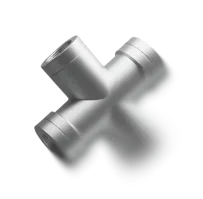
Iron's ferromagnetic properties make it the primary core material in electromagnetic devices, including transformers, electric motors, generators, and electromagnets, where the ability to concentrate and channel magnetic flux is essential. Pure iron has a high magnetic permeability (relative permeability up to 5,000 in annealed form), meaning it responds strongly to applied magnetic fields and amplifies flux density within magnetic circuits. Electrical steel, an iron-silicon alloy with silicon content from 2% to 4%, is the engineered variant of iron used in transformer cores and motor laminations. The silicon addition increases electrical resistivity, which reduces eddy current losses when the core operates under alternating current at 50 Hz or 60 Hz. Grain-oriented electrical steel (GOES) achieves the lowest core losses through controlled rolling and annealing processes that align grain boundaries with the magnetic flux direction. Iron's magnetic properties directly enable the energy conversion efficiency of electric power infrastructure globally.
7. Iron for Chemical and Industrial Uses
Iron's chemical reactivity and catalytic properties create roles for the element and its compounds across a range of industrial processes, extending well beyond structural applications. Iron serves as the heterogeneous catalyst in the Haber-Bosch process for ammonia synthesis, where promoted iron (with potassium and aluminum oxide as promoters) accelerates the reaction N₂ + 3H₂ → 2NH₃ at temperatures from 400°C to 500°C and pressures from 150 to 300 atmospheres. Iron oxide (Fe₂O₃) pigments provide the red, yellow, and brown colorants used in paints, coatings, ceramics, and concrete tinting, with global production of synthetic iron oxide pigments exceeding 600,000 metric tons annually. Ferric chloride (FeCl₃) is used in printed circuit board manufacturing as an etchant to selectively remove copper from boards and in water treatment as a coagulant to precipitate phosphates and suspended solids. Iron powder is used in powder metallurgy to press and sinter near-net-shape components for automotive and industrial applications. Iron's diverse chemical interactions support its industrial utility far beyond construction and manufacturing.
Is Iron Safe to Handle During Manufacturing and Welding Processes?
Iron handling in manufacturing and welding environments presents occupational health and safety considerations related to particulate exposure, thermal hazards, and fume generation instead of acute chemical toxicity. Iron itself is not classified as a carcinogen or acutely toxic material; however, inhalation of iron oxide fumes or iron dust during grinding, welding, or cutting operations poses respiratory risks. Prolonged exposure to iron oxide fumes causes siderosis, a benign pneumoconiosis (lung deposition of iron particles) that is distinct from silicosis and generally non-progressive. The Occupational Safety and Health Administration (OSHA) sets permissible exposure limits (PEL) for iron oxide fume at 10 mg/m³ (as Fe₂O₃) as an 8-hour time-weighted average. Welding iron-based alloys generates fumes containing iron, manganese, and other alloying elements; excessive manganese fume exposure is associated with neurological effects, and occupational exposure limits are set at low concentrations. Proper ventilation, respiratory protection (P100 or supplied-air respirators), and engineering controls mitigate occupational exposure risks during iron fabrication.
What Is the Safety Aspect of Using Iron (Fe) in Engineering Applications?
The safety aspect of using Iron in engineering applications is listed below.
- Respiratory Hazards from Iron Dust and Fume: Iron dust and iron oxide fume generated during grinding, welding, and flame cutting require control measures. Prolonged inhalation of iron oxide fume above occupational exposure limits can contribute to siderosis. Local exhaust ventilation (LEV) systems and respiratory protective equipment (RPE) rated P100 or higher are standard controls.
- Thermal Burns and Fire Hazards: Iron and steel in welding and casting operations involve materials at temperatures from 800°C to over 1,600°C. Contact with molten iron or hot metal surfaces causes severe thermal burns. Fire-resistant personal protective equipment (PPE), including welding gloves, leather aprons, and face shields, is required.
- Ergonomic Hazards from Weight: Iron components, particularly cast iron parts and structural steel sections, are heavy. Lifting and handling large iron parts without mechanical assistance (cranes, forklifts, hoists) risks musculoskeletal injury. OSHA recommends mechanical handling for loads exceeding 50 lb in repetitive tasks.
- Corrosion Products (Rust) Hazard: Iron oxide (rust) on cut or abraded iron surfaces creates fine particulate that irritates skin and eyes upon contact. Tetanus risk is associated with contaminated puncture wounds, including injuries involving rusted metal objects.
- Electrical Hazards in Welding: Iron's electrical conductivity means welding equipment using iron workpieces operates under high-current, low-voltage conditions. Electrical shock risk requires insulated welding leads, dry working environments, and grounded workpieces in compliance with NFPA 70E standards for electrical safety in the workplace.
Disclaimer
The content appearing on this webpage is for informational purposes only. Xometry makes no representation or warranty of any kind, be it expressed or implied, as to the accuracy, completeness, or validity of the information. Any performance parameters, geometric tolerances, specific design features, quality and types of materials, or processes should not be inferred to represent what will be delivered by third-party suppliers or manufacturers through Xometry’s network. Buyers seeking quotes for parts are responsible for defining the specific requirements for those parts. Please refer to our terms and conditions for more information.