Laser Welding: Definition, How it Works, Process, Types, and Advantages


Laser welding is an important technique in high-tech manufacturing and engineering, and its popularity is only growing by the day. It offers lots of advantages over traditional welding techniques, such as the ability to weld all sorts of materials, and can create clean, strong welds quickly and precisely. The process has been adopted in aerospace, automotive, and medical, and it’s widely used to make electronics, too. This article will discuss all the ways in which laser welding can be used, its pros and cons, and the different types.
What is Laser Welding?
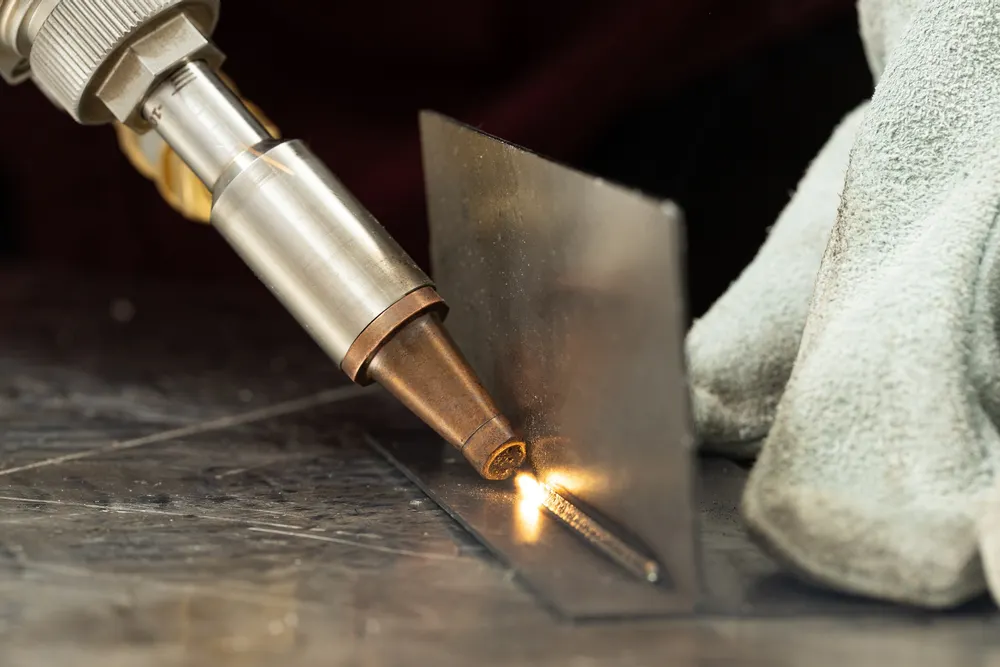
Laser welding is an efficient and quite gentle method that joins metal parts with a high-intensity light beam that causes the materials to melt and fuse together when cool and dry. The equipment used is either a large stationary machine or a hand-held torch, similar to stick welding. The process is easy to automate and delivers high-volume production and consistent quality that you could only really achieve with spot welding via other methods. Sometimes a metal filler is used for extra bonding power, but this isn’t always necessary. The laser welding beam is typically generated by a solid-state, fiber, or CO2 laser, each of which has its own advantages over the other (we’ll talk more about this a little further down).
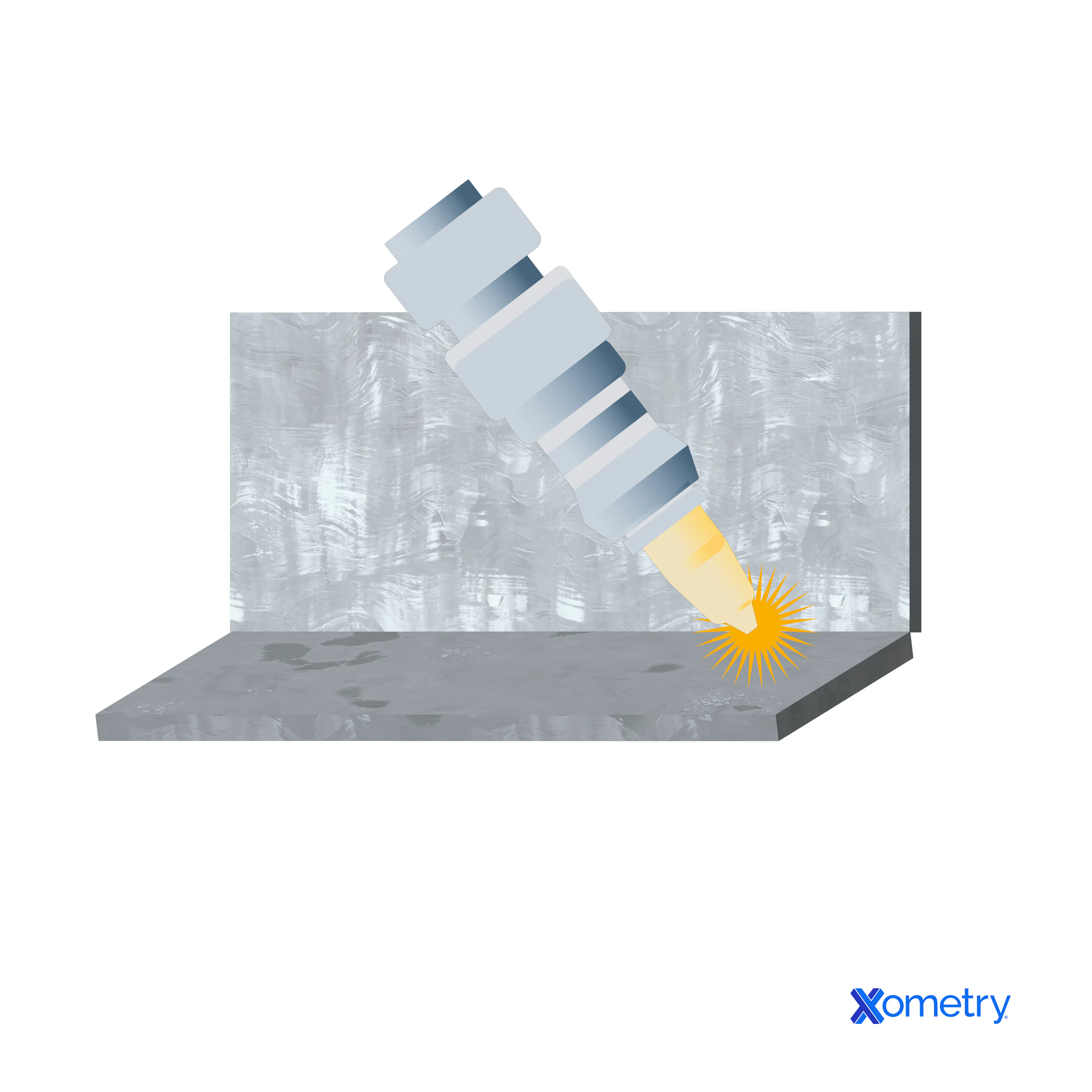
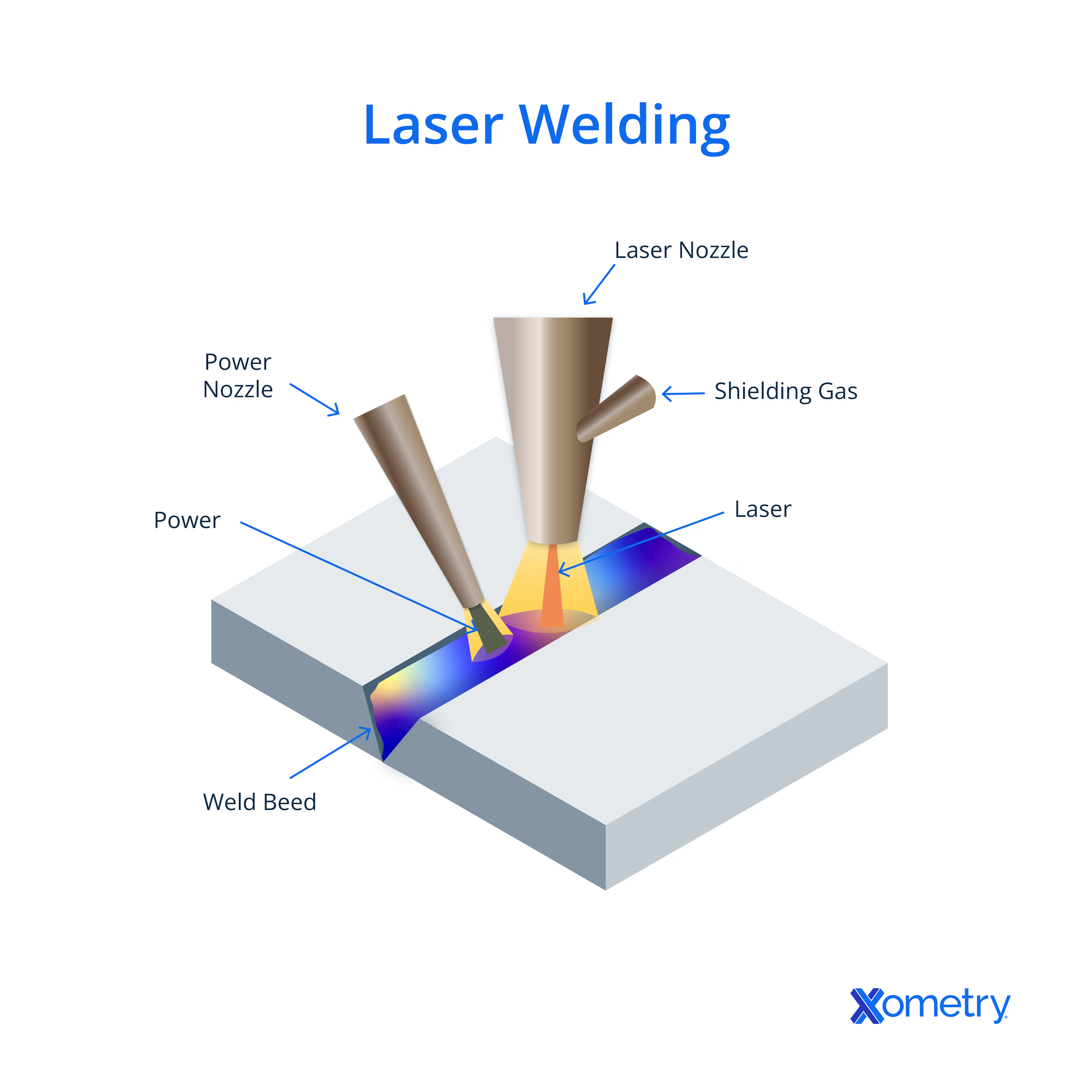
At the beam’s focus point, the metal reaches its melting point and forms a localized pool, into which the filler rod can be melted as required. The laser beam is then moved along the surface of the joint. This melts a leading edge and leaves the molten, fused trailing edge of the pool to cool and solidify. In a successful weld, the cooled metal attaches to both parts to a roughly equal degree and remains free of oxidation. The process’s standout feature is by far its accuracy. If you have a tiny spot to weld, you can get to it easily without affecting the surrounding material, or causing any damage to the workpiece.
What Is the Origin of Laser Welding?
The laser welding process came out in the 1960s, around the same time lasers did. Bell Telephone Laboratories researchers were the first to try them out. They used a ruby laser with short and intense bursts of energy that were focused right where the metals connected. The desired outcome was achieved: the metals would melt and then merge. Even in these early experiments, this resulted in very narrow and detailed welds, with minimal heat-affected zones, and distortion. It even demonstrated some ability to join dissimilar materials.
How Does Laser Welding Work?
Laser welding works on a wide range of materials, including metals (i.e., aluminum, copper, brass, steel, titanium, and nickel), plastics (like polycarbonate, nylon, and ABS), and even some ceramics (particularly alumina and zirconia). Carbon fiber-reinforced plastics are amenable to this technique, and there’s some advanced research and early success in laser welding metal parts to carbon fiber composites. It can even weld materials with differing thicknesses and properties together—something that can’t be said of most other welding techniques.
Whether or not you can weld something with this method will depend on the material’s physical properties; for instance, its melting temperature, albedo, thermal conductivity, and the point at which it melts just before it starts to char. The operator will need quite a bit of experience to use it properly, efficiently, and safely, especially for highly reflective materials, but practice makes perfect! (Some training wouldn’t go amiss, either).
The equipment for this welding method, however, is rather expensive and costs more than electrical or traditional thermal welding machinery. Some laser welding machines are also high maintenance, further increasing the cost. Though laser welding is effective on a vast range of materials, many plastics and ceramics cannot be welded for thermal and chemical reasons. Also, if you’re not very careful and don’t wear all the correct safety gear, laser welding can be dangerous (we’re talking burns and eye injuries … not nice).
How Important Is Laser Welding?
Laser welding is an increasingly important technique in high-tech manufacturing and engineering. It offers many advantages over traditional welding techniques. Laser welding can create clean, strong welds quickly and precisely.
What Is the Purpose of Laser Welding?
Laser welding is used to fuse parts together by forming a liquified pool of metal at the junction point. This technique is better than most for joining dissimilar metals and those that are typically hard to weld. It even functions with certain nonmetals including some ceramics.
What is Laser Welding Good For?
The laser welding process is best suited to thin and light applications with very close-fitting parts that the optical parts can easily access. It is not currently well adapted to heavy-duty roles such as shipbuilding. It’s also less forgiving of contaminants, surface oxidation, and gaps between parts than traditional processes. In addition, the material edges must be close-fitting and smooth for good results.
What Is the Process of Laser Welding?
These are the generic steps in the laser welding process:
- Clean the parts you need to weld and position them as accurately as possible. The line where they meet should be totally closed without any gaps.
- Use manual clamps or automated fixtures to hold parts in place and keep them stable during the welding process.
- Adjust the beam’s focal point onto the welding area. The optical gear in the welding torch usually provides for easy adjustment of focus.
- Adjust the power of the beam and test it on some scrap material. Before moving to the workpiece, make sure it is putting out sufficient energy to melt the material but not enough to excessively heat parts.
- Aim the beam at the start of your weld area and once you’ve got a good melt going, traverse it along the connection steadily. Traditional welding techniques such as hot point rotation will encourage good fusion and improve weld quality.
- Cool the part naturally once the welding is complete. You can also quench it in water or use other cooling methods.

What Kinds of Materials Can be Welded Using Laser Welding?
The most common materials that can be laser welded are listed below:
- Metals: Examples are: aluminum, copper, brass, steel, titanium, and nickel. The process can be used to join pieces of significantly divergent thicknesses, increasing its applications to a wider selection of tasks than traditional thermal or electrical welding methods.
- Plastics. Lasers can be used to weld some thermoplastics, including: polycarbonate, nylon, and ABS. Low heating and highly localized melting result in quality welds.
- Ceramics. Some ceramics (particularly alumina and zirconia) can be laser welded. These and some other ceramics can be melted and fused via laser in a way that is much harder to achieve by normal thermal means.
- Composites. Carbon fiber-reinforced plastics (CFRPs) are amenable to this technique. There is also advanced research and early success in laser welding metal parts to carbon fiber composites
The suitability of a material for laser welding depends on its physical properties, such as melting temperature, albedo, thermal conductivity, and its propensity to melt without charring. Significant experience and careful laser frequency selection may be needed for highly reflective materials.
What Are Some of the Challenges Associated with Laser Welding Thin Materials?
These are the common challenges seen in laser welding:
- Material Selection: Some materials, such as highly reflective metals, are difficult to weld with lasers because light naturally reflects away from their surfaces. Similarly, some plastics and composites are also difficult to weld due to their low thermal conductivity.
- Joint Preparation: Proper joint preparation is critical for a successful laser weld. The joint surfaces must be free from contaminants and properly aligned. Any misalignment or gaps in the joint can result in incomplete welds or weak joints.
- Process Control: Laser welding is a highly automated process and maintaining tight process control is essential for producing consistent, high-quality welds. The laser power, speed, and focus must be carefully controlled to achieve the desired weld characteristics.
- Safety: Laser welding can pose safety risks if not properly controlled. The intense light and heat generated by the laser can cause eye and skin damage. Safety measures such as proper eye protection must be in place to protect the operator and any nearby personnel.
- Cost: The initial cost of equipment for laser welding can be high, making it less accessible to smaller businesses or operations. Additionally, maintenance and repair costs can also be significant, which can add to the overall cost of laser welding.
What Are the Different Types of Laser Welding?
There are several different laser welding options to choose from. You’ll find them listed below.
- Conduction: This method fuses the materials together with only capillary action (no filler) and has a low power rating. It’s great for thin metals and fitted edges.
- Deep penetration: This is suitable for welding thick parts and uses high laser power to heat a deep and wide portion of the material. In general, the laser is first used to cut a keyhole that penetrates through the material (ensuring full-thickness welding). The resulting hole is then closed with a molten filler rod at its trailing edge, as the laser progresses along the weld.
- Laser spot: Best for small and more complex parts, this type makes smaller, localized welds that can make point joints between edges or melt through one part so that it can merge with the one under it.
- Laser seam: This approach makes long, continuous seams. It often uses a filler rod to create a filet at the joint using similar pool control motions to those seen in electrical and traditional thermal methods.
- Hybrid laser: This mixes laser and other welding processes such as MIG and TIG. Combining processes in this way can give you the advantages of both systems.
What Types of Lasers Are Used in Laser Welding?
The types of lasers used in laser welding are listed below:
1. CO2 (Carbon Dioxide) Lasers
These powerful lasers can focus on an extremely small point and work by exciting carbon dioxide gas molecules, which then makes them emit radiation. It’s good for most materials, but some, like stainless steel and titanium, could initially reflect the laser and slow you down a bit
2. Nd:YAG (Neodymium-doped Yttrium Aluminum Garnet) Lasers
These lasers produce a powerful infrared light at a 1.064 micrometer wavelength, which is effortlessly absorbed by materials like stainless steel, aluminum, and titanium. They’re easy to focus and don’t need a lot of maintenance either.
3. Fiber Lasers
These are also highly powerful and are energy efficient too. The beam in this laser is transmitted via a fiber optic cable straight to the weld spot. They’re often used in robotic welding and other automated systems, and have impressive longevity.
4. Disk Lasers
These are some of the newer lasers around, and they use a thin disk made from a semiconductive material that has been liquid-cooled for laser generation. The beam can be emitted in two ways: in a reflector path, or via a light pipe straight to the torch. These are powerful, cool quickly, have excellent beam quality, and are easy to maintain.
How Does Laser Power Affect the Welding Process?
Power settings must be tightly controlled for good results. More power is needed for larger, deeper welds. Very low and tightly controlled power is an advantage of some laser welders, allowing the welding of delicate and small parts without wide HAZ spread and distortion, even in very thin materials.
How Does Laser Speed Affect the Quality of Laser Welding?
In combination with focus and laser power, the laser’s movement speed defines the weld quality. It must dwell long enough to properly melt the material but not so long that it fails to fuse properly. Feed speed must be set to allow the weld to progress through the entire seam. Once the melt pool is achieved, the feed must commence, or the initiation zone of the weld will generate a larger HAZ. Feed (and beam oscillation) must be adjusted such that the leading edge of the melt zone travels along the seam and the trailing edge cools properly to form the joint.
Too high a feed rate will prevent consistent melting and make the weld weak and prone to gaps. If the feed rate is too slow, the HAZ will expand and you’ll risk creating runoff from the melt pool or blowing holes in the parts.
What Are the Key Parameters That Affect the Quality of a Laser Weld?
Parameters defining laser weld quality and efficiency are:
- Laser Power: This is the amount of energy delivered by the laser to the workpiece. Higher laser power allows faster welding and greater penetration, but good control of power levels is critical in achieving good welds.
- Spot Size: A higher-quality beam, better collimation, and better-quality focus optics will result in a smaller laser point at the weld. This delivers higher effective power and more controlled melt/weld progression.
- Feed/Traverse Speed: The rate (and motion pattern) of the laser as it passes along the seam defines the weld quality, the size of the HAZ, and the level of distortion in parts.
- Shielding Gas: Inert gasses are used to prevent weld oxidation. The type and flow rate of shield gas must be suitable for the weld and materials.
- Material Thickness: This is a critical parameter in that there are limitations to what any particular laser welder can deliver. As part thicknesses increase, laser power must rise and feed rates usually drop. Eventually, you reach the limits of the welder’s capabilities.
- Joint Design: Joint design affects weld quality significantly. Close conformance/fit between parts and accessible weld positions are very beneficial in weld quality.
What Are the Applications of Laser Welding?
Laser welding is used in a wide range of industries:
- Automotive. Body panels, engine components, suspension parts, fuel injectors, and sensors can all be joined or constructed using laser welders.
- Aerospace. Laser precision is helpful in aircraft engines, landing gear, and other components. It is also valuable in the manufacture of rockets and spacecraft.
- Medical. Medical devices such as pacemakers, dental implants, surgical instruments, surgical implants, and prosthetics all need detailed welds.
- Electronics. Small, precise welders are important to the manufacture of circuit boards, complex component packages, sensors, smartphones, laptops, and more.
- Jewelry. Both manual and automated laser welding is used in the manufacture of jewelry to create intricate designs.
- Mold Tools and Dies: The tools and dies used in manufacturing processes can be difficult to repair. The minimal excess heat created by a laser weld means there’s less finishing work to be done after a repair.
What are the Advantages of Laser Welding?
The advantages of laser welding are listed below:
- Precision: Laser welding is a precise welding technique that can create small, intricate welds with high accuracy. The beam energy can be controlled very precisely, minimizing the heat-affected zone and keeping distortion and material waste to a minimum.
- Speed: The technique is fast. Since the energy is very concentrated, it heats a melt pool quickly. Heat doesn’t have time to spread as far as it does under other welding methods. The pool’s leading edge can be advanced quickly using otherwise standard welding practices.
- Versatility: Laser welding can be used to join a wide range of materials, including metals, plastics, and even some ceramics. The process can also be used to weld dissimilar materials together, which is generally impossible with other welding techniques.
- Quality: Laser welding results in high-quality welds with consistent mechanical properties. If no filler rod is required, welds will generally match the properties of the joined materials in terms of strength, durability, and corrosion resistance. The welds tend to be free from defects such as porosity, inclusions, and fractures.
- Automation: Laser welding is easy to automate, delivering high-volume production and consistent quality in ways that previously could only be approached by spot welding. This is particularly important in the automotive, aerospace, and electronics industries, where precision and repeatability are key.
What Are the Limitations of Laser Welding?
The key limitations of laser welding are:
- Equipment Cost: Laser welding equipment costs more than that for electrical or traditional thermal welding.
- Safety: Lasers can be hazardous, so they require careful management and good safety practices to prevent burns or eye injuries.
- Material Limitations: Though laser welding is effective on a vast range of materials, many plastics and ceramics cannot be welded for thermal and chemical reasons.
- Weld Geometry: Laser welding is best suited to thin, light, and precise applications with very close-fitting parts which the optical parts can easily access. It is not currently well adapted to heavy-duty roles such as shipbuilding.
- Joint Preparation: The process is less forgiving of contaminants, surface oxidation, and gaps between parts than traditional processes.
- Edge Preparation: Material edges must be close-fitting and smooth for good results.
- Maintenance: Some types of laser welding equipment require intensive maintenance and setup, increasing operational costs.
Does Laser Welding Cost More Than Laser Cutting?
It depends. Factors like material type, thickness, and production throughput can affect the cost and suitability of both laser welding and laser cutting systems. Simple comparisons are unreliable and each situation must be assessed on its own merits. It must be noted, however, that smaller laser cutters typically have lower power outputs and simpler control systems than laser welders, making them less expensive to buy. Not all laser cutting requires gas assist systems, so that eliminates another expensive system. However, larger and more powerful laser cutters have similar or even higher purchase costs than comparable-capacity laser welders.
Can Laser Welding Be Performed Without Any Additional Shielding Gas?
It depends. For most ceramics and plastics, the atmospheric oxidation effects are small, and shielding gas can be neglected. Metals require shielding gas to prevent oxidation and badly degraded welds. A few more specifics about shielding are listed below:
- Nitrogen is not suitable as a shielding gas for aluminum, carbon steel, and titanium. It causes them to become brittle.
- Helium makes an excellent universal shielding gas, but cost renders it impractical for many applications.
- Argon offers a good compromise that works in most applications.
What Are the Safety Precautions When Doing A A Laser Welding?
Typical welding safety precautions apply, with additional eye protection issues to be considered:
- Eye Protection: High-intensity light beams can rapidly destroy the human retina, so suitable eye protection is a must.
- Hot Process PPE: Like all welding processes, laser welders generate hot material that can burn the skin. Suitable protective gear is required.
- Ventilation: All welding processes produce fumes that can be harmful, so extraction and ventilation when laser welding are important precautions.
- Training: Safe operation requires skills and equipment knowledge, so proper training is indispensable.
- Area Control: Laser light and hot work can affect not only operators but bystanders as well. Take precautions to shield others from risk.
- Fire Protection. Keep the work area free from combustible materials, wear fire-retardant PPE, and keep fire suppression equipment on hand. Fire extinguishers must be tested, within date, and accessible.
Is Laser Welding a Relatively Fast Process Compared to Other Types of Welding?
Yes, laser welding is fast compared to other types of welding when properly set up and operated. In particular, on the small and intricate tasks it is best suited to, laser welding is considerably faster than alternatives. In part, this is because the welds themselves require less post-processing and cleanup than other types of welds.
Is Laser Welding a Contact-Based Process?
No, laser welding is non-contact. The beam must cross a small amount of space between the optics head and the workpiece. That gap is a controllable feature.
What Is the Difference Between a Laser Welding and a Traditional Laser Welding?
The main differences between laser welding and traditional welding methods such as MIG, TIG, and arc welding are listed below:
- Heat Source: Traditional welding methods use an electric arc, plasma arc, or gas flame to melt materials. Laser welding uses a coherent light beam to apply heat and create welds.
- Weld Quality: Laser welding is more precise, controllable, and repeatable than traditional techniques and will deliver cleaner, stronger welds when correctly performed.
- Processing Speed: When correctly applied and set up, laser welding is faster than any traditional method for making comparable welds.
- Material Compatibility: Traditional welding is limited to metals whereas laser welding has been shown to also work on many types of plastics, ceramics, and composites.
- Cost: It costs more to set up a laser welding operation than comparable traditional methods. Operational costs are similar, and laser welding is best suited to automated tasks or those that demand greater precision and larger production volumes.
How Xometry Can Help
Xometry provides a wide range of manufacturing capabilities including CNC machining, 3D printing, injection molding, laser cutting, and sheet metal fabrication. We provide welding services on your parts, too, if needed. You can get started today by uploading your designs to the Xometry Instant Quoting Engine®!
Disclaimer
The content appearing on this webpage is for informational purposes only. Xometry makes no representation or warranty of any kind, be it expressed or implied, as to the accuracy, completeness, or validity of the information. Any performance parameters, geometric tolerances, specific design features, quality and types of materials, or processes should not be inferred to represent what will be delivered by third-party suppliers or manufacturers through Xometry’s network. Buyers seeking quotes for parts are responsible for defining the specific requirements for those parts. Please refer to our terms and conditions for more information.