MIG Welding: Definition, Importance, How it Works, and Advantages


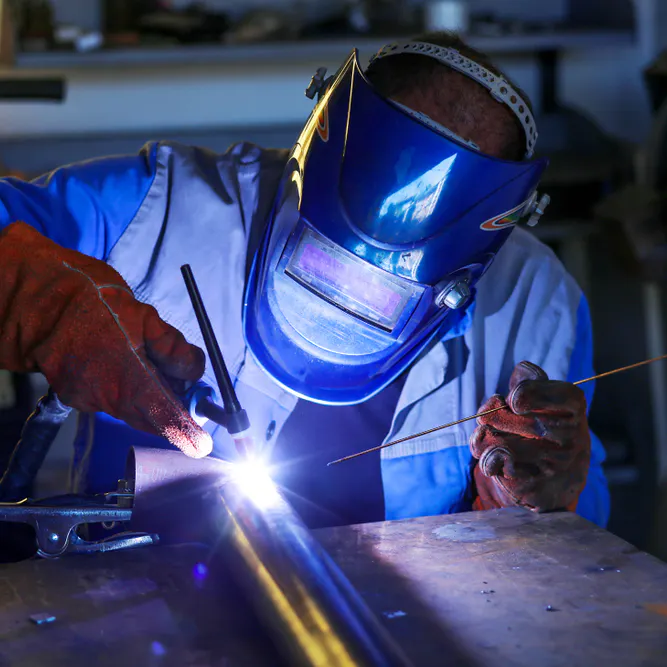
MIG (metal inert gas) welding is a manufacturing and fabrication process known for its speed, low cost, and teeny tiny learning curve (there basically isn’t one). Like other welding methods, MIG is used to join metal parts together — our customers choose it a lot for their steel, aluminum, and cast iron parts. For more on how the process works, a little on its history, and a how-to guide for the best welds with this process, keep on reading.
What is MIG Welding?
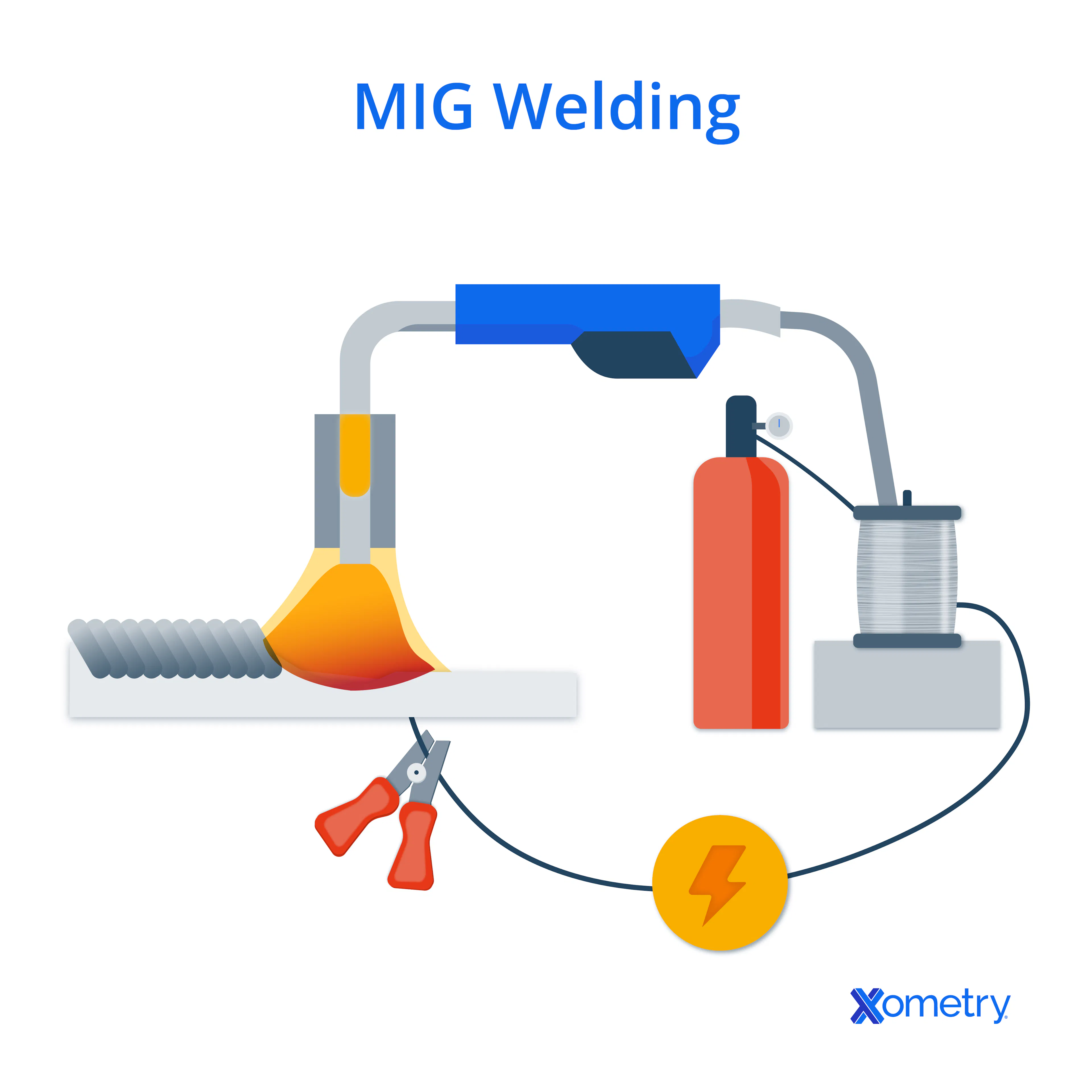
MIG welding is a gas metal arc welding (GMAW) type that uses electricity via an arc that creates a massive amount of heat (up to 5,432°F!), which melts metal parts and permanently fuses them together. You might sometimes see it called flux-core arc or short-circuit welding, but these just mean the same thing. The main piece of equipment in MIG welding is the welding gun which holds the filler metal. When you pull the trigger, the electric arc is activated and starts to melt the filler metal and the workpiece. At the same time, the gun will release what’s referred to as “shielding gas”—an inert gas, like argon or a mix with CO2—that will prevent the hot metal from reacting with the air (this could make it weak or rust).
Though there have been MIG welding equipment upgrades over the years, the process hasn’t changed since its invention in 1948 in the USA—and neither has its mass use. This new (at the time) method was different from other welding methods that manufacturers and fabricators were using as its arc-creating electrode was a filler rod, instead of the ones they were used to, which needed frequent replacement due to deterioration. MIG welding has been used for decades to make car parts, pipes, steel structures, and many other things. It’s quick to do and a breeze to get the hang of, even without copious training or particular skills.
MIG welded joints might not be as strong or precise as those done with other methods, but you can MIG weld on thick and thin materials, and the finished welds don’t need much (if any) cleaning or finishing (unless you need to make it more aesthetically pleasing). It’s also cost-effective — the machinery isn’t all that expensive, and since welding is a fairly short process, your electricity bill won’t be sky high either. You will need to buy replacement shielding gas cylinders, though, and the machine isn’t as portable as a gas welder.
Who Is the Inventor of MIG Welding?
H.E. Kennedy invented MIG welding in 1948 in the USA. The invention of MIG welding improved upon other welding techniques as it uses a filler rod as an electrode to create an arc. This differed from previous techniques in which the electrode would deteriorate over time and require replacement.
How Does MIG Welding Differ From Laser Welding?
MIG welding uses a constantly fed metal wire and a high-voltage circuit to create electrical arcing which heats and welds metal pieces together. In MIG welding, the arc is shielded by an inert gas. The laser welding process instead uses a laser to heat and melt the metal to create a joint. The laser welding technique creates a stronger and more precise weld but MIG welding can join thicker metal together and can weld at a faster rate.
What Is the Importance of MIG Welding in Manufacturing?
MIG welding is valuable because it is fast, creates a strong joint, and can weld thick metal pieces together. MIG welding is also simple. Since it’s easy for first-time and experienced welders alike, there’s usually no shortage of MIG operators in the workforce.
What Is the Primary Purpose of MIG Welding?
MIG welding is used to join metal parts together. It functions to join steel, stainless steel, cast iron, and aluminum. MIG welding is used on sheet metal, pressure vessels, steel structures, pipelines, and automotive parts.
How Does MIG Welding Work?
MIG welding works by feeding a metal wire through a gun which conducts electricity from the welding machine. It generates an arc with the target material in order to melt both the metal wire and part of the joint and form a metal bond. As the wire is fed through and a molten weld pool is created, the weld is protected by a shielding gas. The shielding gas protects the weld from contaminants in the atmosphere.
How To Weld Using MIG Welding
As mentioned, MIG welding is an easy process but, for strong and reliable joints, there are a few steps to follow:
Getting ready: Make sure the area around you and the workpiece is clean and that you’ve donned all your PPE. Then connect the ground wire to your workpiece or welding table.
Parameters: These need to be set up on the machine according to the material you want to weld and will include the current, speed, arc length, angle, manipulation, and gas flow and wire feed rates. None of these have a standard setting and will all vary based on what metal you’re welding and the thickness of the weld. However, you can refer to standard charts that’ll give you a good idea of the normal parameter settings for different welds, which are generally as follows:
- Current: Higher currents are usually used for thicker metals.
- Arc length: A shorter arc will make a hotter weld.
- Angle: You’ll want to hold the gun in one hand and rest it on the index finger of the other open hand for stability. When welding two metals butted together, the gun should not angle toward one or the other.
- Manipulation: This describes whether the welder pushes (the electrode trails the gun) or pulls (the electrodes lead the movement) the weld pool and should be angled at 10 degrees.
- Speed: This must be steady so that you don’t end up with either an oversized weld bead and holes because you went too slow, or a poorly welded joint due to going too fast.
Clamp and tack: Clamp the pieces to be welded together in place, then create tack welds at either end of the joint (a tack weld is a quick spot weld meant to hold the two workpieces together for the full welding process that will follow).
Weld away: Weld along the joint either by pushing or pulling the weld, with the gun at half of the angle between the parts to be joined. For instance, angle it 90 degrees to a butt joint and 45 degrees to a T-joint.
Cooling: You don’t need to do anything for this part! Just leave it alone and give the material enough time to cool and harden before touching or lifting it. This happens quite quickly anyway.
And that’s all there is to it. Although some welding technique will come in handy for a good weld, the most important things are a steady hand and a good gun position with the tip no more than 3⁄4-inch from the metal so that the gas can cover the whole weld pool.

What Are Some MIG Welding Techniques?
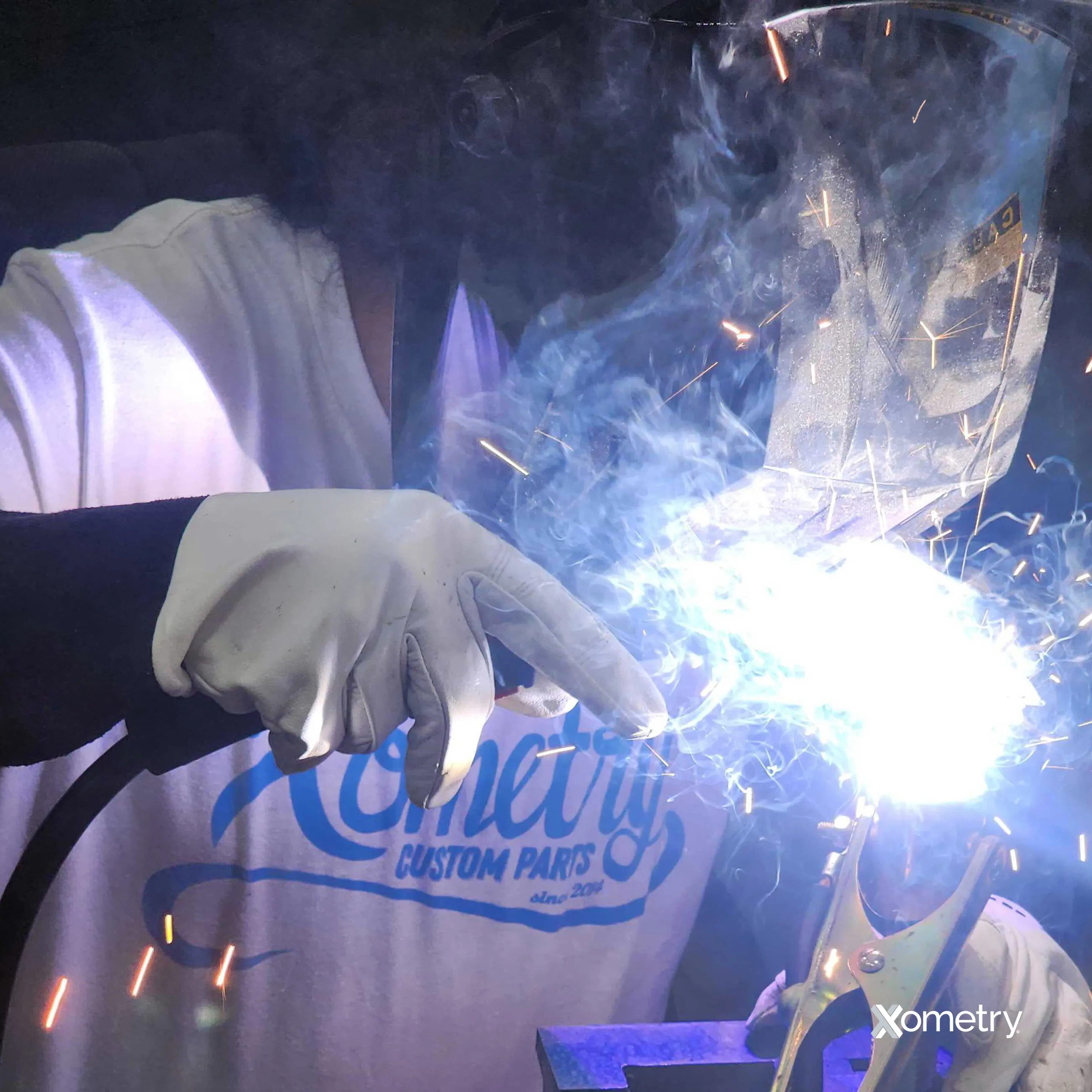
To create a good weld, the most important thing is to maintain a steady hand with a good gun position. The tip of the gun should be no more than 3 ⁄ 4'' from the metal when welding so that the gas sufficiently covers the weld pool. The gun should be held in one hand and, where possible, rested on the index finger of the other open hand for stability. When welding two metals butted together, the gun should not angle toward one or the other. When the two metals are perpendicular, the gun should be at 45 degrees to the metal faces. Lastly, it is helpful to first rehearse running the weld without actually welding to gain a feel for the right movement.
Is MIG Welding for Beginners?
Yes, MIG welding can be done by beginners. The process is simple, the equipment is cheap, and it is relatively safe when compared to some other welding techniques. MIG welding is one of the more forgiving methods of welding.
What Are the Factors That May Affect the Quality of MIG Welding?
The most important variable that will affect the quality is the weld technique. While the setup does matter, as long as the current, gas flow, and wire feed rate are roughly correct, it shouldn't affect the final weld too much. Some of the most important variables are:
- Distance from the gun to the weld.
- Angle between the gun and the weld.
- Speed of the gun movement.
- Weld current.
- Wire feed rate.
- Gas flow rate.
- The removal of contaminants from the workpiece prior to welding.
What Type of Gas Does MIG Welding Use?
Most MIG welding machines use helium and argon because they do not react with oxygen and nitrogen. Argon is the most common shielding gas. Helium is a more expensive gas and is used for welds which require more heat.
Can You MIG Weld Without Gas?
Yes, MIG welding can technically be done without a gas tank. However, the weld still needs a shielding source to prevent oxygen in the air from reacting with the weld. To achieve this, a metal wire with a flux core is used. When the flux core is heated, it produces a gas that shields the weld. “Gasless” MIG welding requires a specialized gasless MIG welder.
What Is the Correct Parameter Setting for MIG Welding?
There are five main parameters for MIG welding: current, length of arc, angle, manipulation, and speed. None of these parameters have a standard setting and will all vary based on what metal you’re welding and the thickness of the weld. There are, however, standard charts that indicate the normal parameter settings for different welds. Generally, high current is used for welding thick metals. The shorter the arc, the hotter the weld. The gun should be held at half of the angle between the parts to be joined (i.e. the gun should be held at 90 degrees to a butt joint, 45 degrees to a T-joint, etc.). Manipulation describes whether the welder pushes or pulls the weld pool. Finally, the speed must be steady. Moving too slow will result in an oversized weld bead and possible holes in the weld joint; moving too fast may result in a lack of weld penetration.
What Are the Common Materials Used in MIG Welding?
Many metals can be MIG welded, but it’s especially efficient for copper, aluminum, nickel alloys, and steel.
Copper
To weld copper, MIG welding is typically the first method you’d go for because the material needs a very high heat in order to melt; something that MIG welding is very capable of.
Aluminum
Aluminum welding can be done, but it’s a little difficult as the melt pool can quickly burn through the part and drip out of the other side. When welding aluminum, you’ll need to use a 100% pure argon gas.
Steels
With steel, it’s best to use a mix of 75% argon and 25% carbon dioxide for the shielding gas, as pure argon gas will make the weld less ductile.
Nickel Alloys
When welding nickel alloys, you’ll need to use a 100% pure argon gas; if you need more energy, you can use up to 40% helium.
What Is the Hardest Material to MIG Weld?
The hardest material to MIG weld is aluminum as it has a very low melting point paired with high thermal conductivity. Poor heat conductivity means that aluminum does not absorb the heat from the electrical arc well and so it is hard to keep a stable temperature throughout the process without either burning through or failing to penetrate the joint at all.
What Is the Easiest Material to MIG Weld?
The easiest material to MIG weld is mild steel. This is because of its high melting temperature, which makes mild steel very forgiving to changes in welding parameters. The lower the carbon content of mild steel, the easier it is to weld.
What Is the Material That Cannot Be MIG Weld?
Materials such as wood, composites, and plastics cannot be MIG welded. Additionally, dissimilar metals cannot be welded together — aluminum, for instance, cannot be welded to steel or copper.
Can Stainless Steel Be Used in MIG Welding?
Yes, stainless steel can be MIG welded. Some of its alloying elements can make the process difficult. However, stainless steel is poor at dispersing heat which helps the heating of the metal during the welding process.
What Are the Industries That Apply the Use of MIG Welding?
MIG welding is the most common technique for repairing vehicles such as motorbikes, cars, vans, etc. Other industries that make extensive use of MIG Welding include:
- Construction
- Aerospace
- High-production manufacturing
- Shipping
- Rail
What Are Examples of MIG Welding Products?
MIG welding can cover a huge range of tasks. Examples of applications include: sheet metal welding, welding of pipelines, automotive repairs, steel structures, and heavy constructions such as bridges and building materials
What Are the Advantages of MIG Welding?
The main advantage of MIG welding is the speed of the process. Compared to other welding styles, it can contribute to shorter production times and, as a result, lower costs. Other advantages include:
- It is easy to learn.
- The process doesn't require highly skilled operators.
- Finished welds do not need much (if any) cleaning or finishing.
- It’s suitable for thin materials.
What Are the Disadvantages of MIG Welding?
The main disadvantage of MIG welding is that the finished welds are not as strong and accurate as those of other welding styles. Other disadvantages include:
- The finished welds are not as aesthetically pleasing unless they receive extra cleaning and finishing.
- MIG is less precise than other forms of welding
- The use of shielding gas means that gas has to be regularly ordered. Machine downtime is incurred as the gas cylinders must be regularly changed
- A MIG welder less portable than a gas welder due to its power requirements
Is MIG Welding Expensive?
No, MIG welding is not considered expensive. The necessary supplies and machines are cheaper when compared to other forms of welding. Additionally, MIG welding does not require highly skilled operators, nor does it need much prep work. The overall production time for MIG welds is relatively short, so it’s cheaper than most similar processes.
Is MIG Welding As Strong as Stick Welding?
Stick welding produces stronger welds than MIG welding because it can penetrate thicker surfaces and dirty surfaces. If a deeply welded joint is the goal, the stick welder will be more efficient and easier to use.
What Is the Difference Between MIG Welding and TIG Welding and Laser Welding?
The main thing that makes MIG welding different from other types is that its consumable electrode doubles as the weld filler. TIG welding’s electrode is just for the arc generation and a separate hand-held filler rod is needed. Laser welding is a whole other process entirely and uses a laser to both heat and melt the metal. We’re obviously not ruling out laser and TIG welding; they’re excellent for making strong, accurate, and pretty welds (better than MIG’s offerings, anyway). But when it comes to speediness, low cost, and ability to weld thick materials, these processes can’t compare to MIG welding.
Disclaimer
The content appearing on this webpage is for informational purposes only. Xometry makes no representation or warranty of any kind, be it expressed or implied, as to the accuracy, completeness, or validity of the information. Any performance parameters, geometric tolerances, specific design features, quality and types of materials, or processes should not be inferred to represent what will be delivered by third-party suppliers or manufacturers through Xometry’s network. Buyers seeking quotes for parts are responsible for defining the specific requirements for those parts. Please refer to our terms and conditions for more information.