Polyamide: Definition, Composition, Types, Properties, and Applications


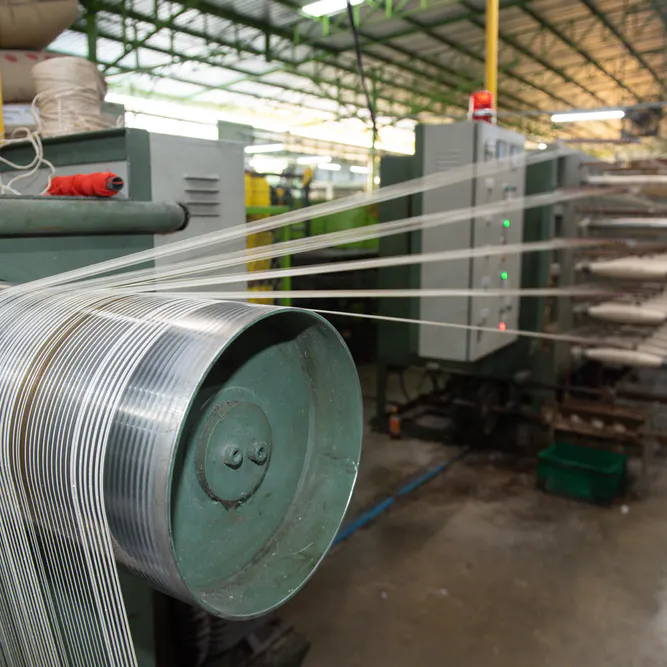
Polyamide has had its place in the manufacturing world for almost a century, which all comes down to a handful of characteristics that make it hard to replace in all kinds of engineering and product design scenarios. You can feed these synthetic plastics through plastic extrusion machines or cut them with lasers to get exactly the product you need. If polyamides show up often in your industry, we’ve broken down how they’re made, what types exist, and the applications in which you can expect to use them.
What Is Polyamide?
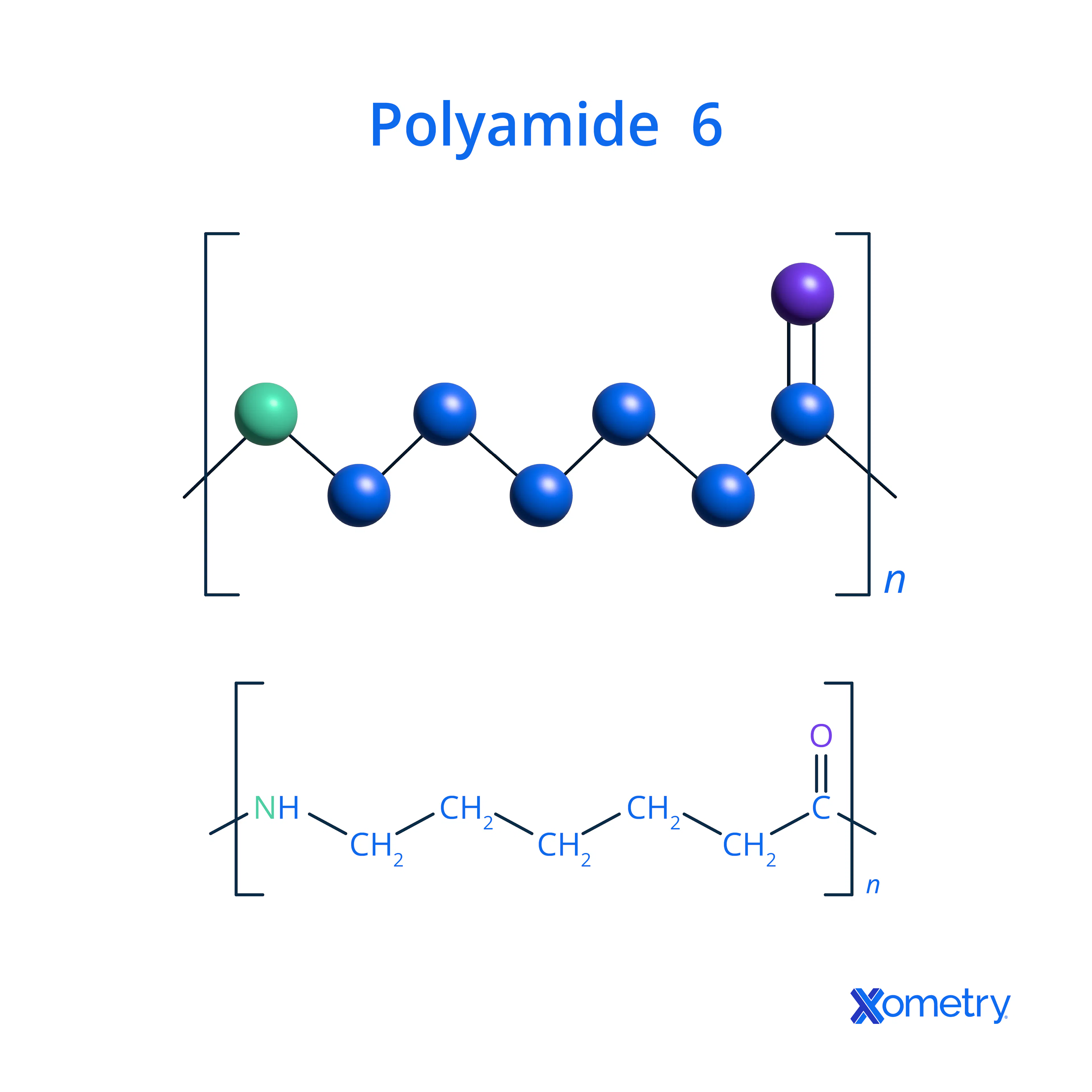
This type of plastic was made more than 90 years ago by a DuPont researcher, and it’s still a major category of material used in today’s factories. To create it, you start with crude oil and mix the monomer diamine (hexamethylenediamine, to be exact) with adipic acid, which appears in the form of a salt. It’s then melted down, cooled, and then extruded into fibers that can be turned into everything from clothing fabrics to spark plug tubes. In the image below, you’ll see an illustration of the molecular structure of polyamide 6.
The types of polyamides you might be most familiar with are nylon and aramid, but there are plenty more types and forms out there, including all of nylon’s subcategories. Lookswise, polyamide tends to naturally take on a yellow, light brown, or whitish hue, but it’s easy to dye it any color.
What Is the History of Polyamide?
Polyamide is a synthetic material that was first produced in the 1930s. It was discovered by Wallace H. Carothers and his research team in 1931 while working for DuPont in America. However, it wasn't until 1938 that polyamide was commercially produced. By 1941, nylon (a specific form of polyamide) was used to produce stockings, an application which it still holds today. The plant used to produce nylon for various applications, including stockings, is located in Seaford, Delaware.
What Is Polyamide Made Of?
Natural polyamides are formed of amino acids, but polyamides are also synthetically produced using petroleum, which is much cheaper. The definition of polyamide is plastic with long, repeating molecular chains which are bound together by the use of amide bonds.
How Are Polyamides Made?
Although polyamides do occur naturally, they are produced synthetically with the use of crude oil. The monomer diamine (hexamethylenediamine) is mixed with adipic acid in the production of the most popular polyamide, nylon 6,6. When these two chemicals react, the diamine produces a repeating monomer chain referred to as a polymer. This newly formed polymer is produced in the form of salt, which is then heated to a molten state. The now molten polymer is extruded through a spinneret that cools the molten polymer as it passes through, producing a fiber. This fiber is then wound onto a bobbin prior to being woven into a fabric.
What Are the Characteristics of Polyamide?
This category of plastic is beloved by manufacturers because of its durability and wear resistance. These are a few other characteristics that have led it to become such a common material, as well as reasons why it may not be used for specific applications:
- Great chemical resistance
- High tensile strength
- Good flexibility
- Low creep
- High impact resistance
- Hygroscopic
As far as benefits go, polyamides are renowned for being low-cost, especially with all of the traits they provide, whether it’s chemical resistance or stability. That being said, they’re limited by their ability to absorb a lot of water and how quickly many types degrade when exposed to UV radiation or light.
What Is the Color of Polyamide?
Polyamides can come in various colors including: yellow, white, and light brown. However, polyamide fibers can be dyed to any color, and solid polyamides can be surface finished with a wide variety of paint colors.
What Does a Polyamide Look Like?
Polyamide’s appearance will vary greatly depending on how it is dyed or painted and whether it comes in woven fabric or solid form. You’ll see Xometry’s “X” printed in a white polyamide material in the image below.

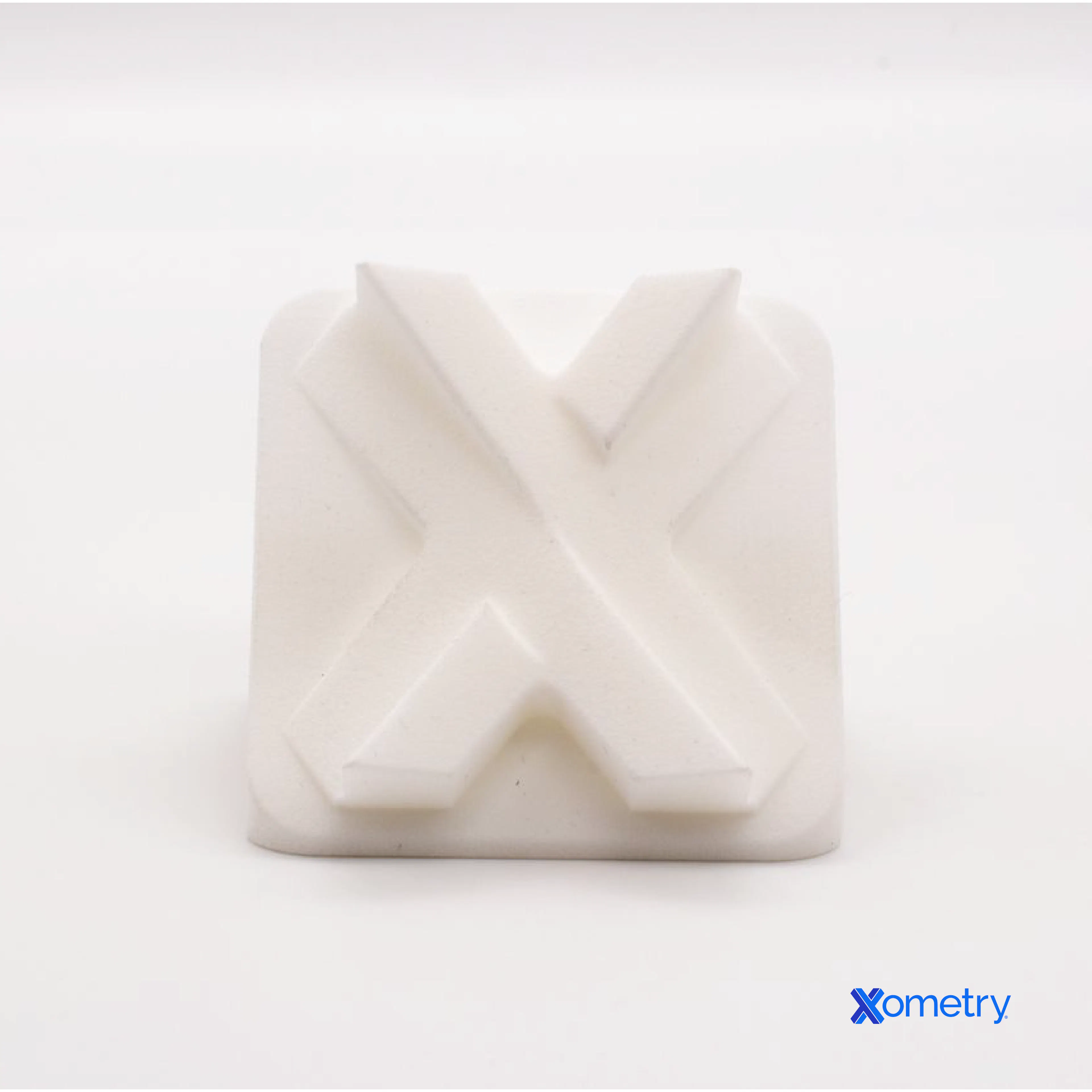
The rough surface finish is a product of the 3D printing process. If a polyamide is extruded into a solid it will be a lot smoother and could be a different color.
While nylon stockings are also black, the material may also appear a lot weaker and more flexible. This is due to its thickness even though the stockings may have the same material properties as the 3D-printed polyamide.
What Are the Different Types of Polyamide?
Whether you’re working with nylon or another polyamide, you can usually separate each type into one of these three categories:
1. Aliphatic Polyamide
These are very common polyamides, and they stand out from others when you examine them from a chemical level, as they don’t have double or triple carbon bonds like other types. You’d use them in situations where high strength, flexibility, and chemical resistance are necessary. They also have less friction and low creep. An example of an aliphatic polyamide is nylon 6, which is a popular choice for everything from seat belts to carpets to nylon tights.
2. Aromatic Polyamide
This is another name for aramid polyamides, and when you compare them to aliphatic options, you’ll find that they’re much stronger and better resistant to chemicals and high heat. One type of aromatic polyamide — and probably the most familiar — is Kevlar and it’s used for items such as bulletproof vests and jet engine inlets.
3. Semi-Aromatic Polyamide
These plastics have a semi-crystalline structure, and they’re made by combining aliphatic and aromatic polyamides. When you mix them together, you get a plastic that’s super stable, very resistant to chemicals, and has low creep, making it popular for aircraft engines and headlights for cars.
What Are the Properties of Polyamide?
There are many types of polyamides, and we’ve created a table, below, that lists several of the most well-known versions, along with some of their properties and uses.
Table 1: Properties and Application of Polyamides
What Are the Physical Properties of Polyamide?
The most notable physical property of polyamide is its excellent wear resistance due to its low coefficient of friction created by its self-lubricating properties. Below is a list of other physical polyamide properties:
- Low density.
- Temperature resistance.
- Good impact resistance.
- High strength.
- Flexibility.
What Are the Chemical Properties of Polyamide?
The chemical property that makes polyamides stand out from other plastics is its excellent chemical resistance. Other chemical properties of polyamides are listed below:
- Very susceptible to osmosis.
- Nontoxic.
- Chemically stable.
- Nonflammable.
What Are the Applications of Polyamide?
The uses for polyamides are about as wide and varied as the material itself. Here are just a few examples:
1. Textiles and Fibers
Textiles and fibers are one of the first applications of polyamides. Fibers are long, thin extrusions of polyamide which can then be woven into a textile for clothing, bedding, upholstery, curtains, and carpets. The main benefits and reasons for using polyamides in textiles are they are cheap, wear-resistant, flexible, and strong.
2. Engineering Plastics
Engineering plastics are broadly defined as plastics that have better-performing properties than more widely used plastics. In the case of polyamides, these properties are good wear resistance, high strength, chemical resistance, and impact resistance. These better properties mean polyamides are used for helmets, bearings, supports, piping, and protective equipment.
3. Automotive Industry
Polyamides are used in the automotive industry for their light weight, low cost, and good mechanical properties. Specific automotive applications include engine air intakes, engine covers, pulley tensioners, fuel lines, fuel pumps, lights, and vehicle trim.
4. Electrical and Electronics
For a long time, polyamides have been the material of choice for electrical connectors. This is because electrical connectors, as well as other non-conductive electrical parts, require high heat resistance which polyamide can offer. Polyamide is also chosen due to its low cost, easy formability, high strength, and electrical insulation properties.
5. Filaments for 3D Printing
A polyamide 3D printing filament takes the form of a spooled wire which is fed into a 3D printer to be processed into a part. The polyamide filament then melts and turns into a liquid state which is then extruded out of the printhead and solidified on the print bed. As with other applications, polyamide is used as it is cost-effective and has mechanical properties that stand out compared to other polymers used in 3D printing.
What Are the Benefits of Polyamide?
The main benefits of using polyamide are its low cost combined with its desirable mechanical and chemical properties. The beneficial properties are listed below:
- Chemical resistance
- High strength
- Elasticity
- Durability
- Abrasion resistance
- Temperature resistance
What Are the Limitations of Polyamide?
There are limitations to using polyamide for certain applications which are listed below:
- Susceptible to water absorption
- Susceptible to UV degradation
- High shrinkage when cooling during manufacture
- Electrically insulative
- Unsustainable
Why Use Polyamide?
The reason behind choosing polyamide over other materials will vary for different applications. When using polyamide for electrical cable protection, it offers better performance, flexibility, and impact resistance than PVC protection. In the automotive industry, it is used because it is cheaper and lighter than metal. In machines, it is used over other materials due to its high flexibility and durability.
Frequently Asked Questions About Polyamide
How Xometry Can Help
Xometry has several services that incorporate polyamides, so it’s just a matter of finding exactly what’s fit for your business. You can get a free quote on our website, and explore options such as plastic 3D printing and custom plastic fabrication.
Copyright and Trademark Notices
- KEVLAR® is a trademark of E. I. DuPont de Nemours and Company
Disclaimer
The content appearing on this webpage is for informational purposes only. Xometry makes no representation or warranty of any kind, be it expressed or implied, as to the accuracy, completeness, or validity of the information. Any performance parameters, geometric tolerances, specific design features, quality and types of materials, or processes should not be inferred to represent what will be delivered by third-party suppliers or manufacturers through Xometry’s network. Buyers seeking quotes for parts are responsible for defining the specific requirements for those parts. Please refer to our terms and conditions for more information.