Wire EDM Manufacturing: Works, Principle and Process


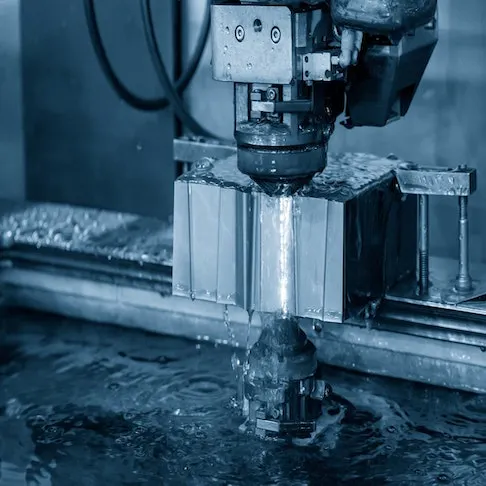
Wire Electrical Discharge Machining (EDM) is applied in precision manufacturing to shape complex components from conductive metals. The method relies on rapid electrical pulses that generate a discharge between the wire electrode and the workpiece. A dielectric fluid cools the cutting zone while removing debris, maintaining stability during the process. The wire does not physically touch the material, which keeps mechanical stress low, though thermal effects can still influence the workpiece. Wire EDM can produce very small internal radii, limited by the wire diameter (typically 0.1–0.3 mm) rather than perfectly sharp corners.
Very high-end wire EDM can approach about ±0.0025 mm (±0.0001 in) under tightly controlled conditions, but a blanket claim of 0.002 mm as a general application tolerance is too aggressive without machine, material, thickness, and pass-count qualifiers. CNC machining removes bulk material faster, and EDM excels in precision and in handling harder alloys. EDM pulse frequencies vary widely but are generally tens of thousands to hundreds of thousands of pulses per second, depending on power settings. Deionized water serves as the dielectric fluid, filtered to maintain performance. The workpiece remains submerged during operation, producing narrow kerfs that reduce material waste while achieving micron-level accuracy through finely controlled electrical parameters.
What is Wire EDM?
Wire Electrical Discharge Machining (EDM) is a precision machining process that uses a thin electrically charged wire to cut conductive materials through controlled electrical discharges. The process ensures high accuracy for intricate components, with dielectric fluid providing insulation and cooling. The wire is the electrode and moves along a programmed path, avoiding mechanical force and preventing distortion in delicate parts.
EDM cutting speed is largely independent of material hardness; instead it depends on electrical conductivity, melting point, and thermal properties. The small kerf, due to the thin wire, reduces material waste and improves precision. Engineers specify EDM for parts requiring tight tolerances and smooth surface finishes. The process is ideal for micro-machining and applications in industries such as electronics and mold making, producing precise cavities and connectors.
How is Wire EDM Different From a Conventional EDM System?
Wire Electrical Discharge Machining (EDM) is different from a conventional EDM system. Wire EDM uses a moving wire electrode, while conventional EDM (sinker EDM) uses shaped electrodes to create cavities. Wire EDM excels in through-hole geometries and complex 2D profiles, while sinker EDM handles blind cavities. The wire in Wire EDM is continuously fed from a spool, while sinker EDM electrodes experience wear and need periodic replacement.
Wire EDM commonly uses deionized water, while sinker EDM often uses hydrocarbon oil-based dielectrics, though variations exist depending on machine design. Wire EDM provides a smaller kerf width, while sinker EDM creates 3D shapes matching the electrode design. The processes rely on electrical discharges to shape the workpiece. Wire EDM generally reduces the need for custom electrodes, though tooling cost advantages depend on part complexity, production volume, and setup requirements.
Is Wire EDM Different From Conventional EDM Machining?
Yes, Wire Electrical Discharge Machining (EDM) uses a thin wire electrode to cut through parts, while conventional EDM (Sinker EDM) uses solid electrodes to shape 3D cavities. Wire EDM primarily produces through-cut profiles that may include complex 2D contours, but advanced systems can also perform tapered or limited 3D contouring using multi-axis motion. Sinker EDM sinks solid electrodes into the material for deeper cuts. Wire EDM is continuously fed from a spool, while conventional EDM requires custom-made electrodes, typically graphite.
Wire EDM is used to cut plates or blocks of conductive material of various thicknesses, though it requires through-cuts or start holes, complex extrusions, and intricate shapes, while Sinker EDM is better for mold making and blind holes. The methods use electrical discharges to erode material with high precision. Wire EDM commonly uses deionized water, while sinker EDM often uses hydrocarbon-based oil dielectrics, though variations exist depending on machine design.
The processes eliminate physical contact, reducing mechanical stress. Precision levels are comparable in high-end machines, and the choice of process depends on part geometry, material, and tolerances. Engineers select the best method based on part design and requirements in EDM Machining.
How Does Wire EDM Work?
Wire Electrical Discharge Machining (EDM) works by generating electrical sparks between a wire electrode and the workpiece, eroding material without physical contact. CNC control guides the wire along a programmed path. The power supply creates a voltage difference, and the dielectric fluid insulates, cools, and flushes away debris. The dielectric fluid initially acts as an insulator, and when the voltage exceeds the breakdown level of the spark gap, a plasma channel forms that melts and partially vaporizes material. The cycle repeats thousands of times per second with precise movements along multiple axes.
The wire remains in constant motion to prevent breakage, with tension systems ensuring accuracy. Deionized water is the most common dielectric fluid, cooling the cutting zone. The material must be conductive for the process to work. Wire EDM produces localized heat-affected zones and recast layers, though they are typically small compared to many thermal machining processes and achieves micron-level precision, making it ideal for intricate profiles and sharp corners.
Wire EDM is best understood as a highly specialized precision process rather than a general replacement for conventional machining. Its greatest strength lies in cutting hardened conductive materials and producing intricate contours, narrow slots, and sharp internal features with minimal mechanical distortion. The process is especially valuable when part geometry is too delicate or too complex for milling or Swiss machining to achieve efficiently. Its main tradeoff is speed, since material removal is slower than with conventional cutting methods. In high-precision industries such as aerospace, medical, and toolmaking, Wire EDM remains one of the most reliable methods for manufacturing difficult profiles with tight tolerances.
What Happens During the Wire EDM Machining Process?
The result that happens during wire EDM, controlled electrical discharges occur between the wire electrode and the conductive workpiece, causing localized melting and ejection of material along a CNC-programmed path. The process takes place in a dielectric fluid, which cools the cutting zone and clears debris. Temperatures at the spark site reach thousands of degrees Celsius, eroding microscopic particles that are carried away to a filtration system. The wire is continuously fed from a spool and moves through the workpiece at a controlled rate while CNC motion controls the cutting path. Constant tension prevents sagging, while feed rates adjust according to material thickness. Thicker sections require slower speeds, and multiple passes refine accuracy and surface finish. Brass wire is commonly used, though other wire materials such as zinc-coated brass, copper, or coated wires are also used depending on performance requirements.
Does Wire EDM Use Electrical Sparks to Cut Meta
Yes, Wire Electrical Discharge Machining (EDM) uses electrical sparks to cut material without mechanical force, making it ideal for fragile and intricate parts. EDM can machine hard or hardened conductive materials without mechanical cutting forces, because material removal occurs through thermal erosion rather than tool pressure. The spark vaporizes the metal, and the dielectric fluid cools the cutting zone and flushes away debris. The wire does not contact the workpiece, mechanical wear is minimal, but wire breakage can still occur due to thermal stress, electrical overload, or improper tension. High-frequency sparks occur, and CNC systems guide the wire precisely. Thin materials are cut without bending, and hardened tool steel is shaped easily. Wire EDM is ideal for difficult-to-machine parts, especially in aerospace, and requires conductive materials for the process. Electrical discharges provide the cutting action.
What is Wire Cut EDM?
Wire Cut Electrical Discharge Machining (EDM)uses a thin wire and electrical discharges to cut precise shapes, producing narrow kerf widths ideal for detailed and intricate profiles. The wire moves along a path controlled by a CNC system, with dielectric fluid surrounding the wire and workpiece to cool the process and flush away debris. Sparks form between the wire and the conductive material, eroding metal through thermal energy.
The method excels at high precision, achieving complex geometries (internal radii and sharp corners). Brass wire is common, and zinc-coated brass or other coated wires are also widely used depending on cutting requirements and the dielectric fluid flushes away eroded particles without affecting the workpiece. EDM cutting speed is influenced more by electrical conductivity, melting temperature, and thermal properties than by material hardness. Engineers select Wire EDM for parts requiring high accuracy and intricate details, with smooth, uniform surface finishes. The method remains a standard in the tool and die industry for tiny, precise details.
How Does Wire Cut EDM Produce Complex Contours?
Wire Cut Electrical Discharge Machining (EDM) produces complex contours using a thin wire and electrical discharges to shape precise 2D and 3D profiles. Movement occurs along multiple axes (X, Y, Z, U, V), guided by CNC control for accuracy. The wire maintains a constant gap from the workpiece, enabling fine details and sharp internal corners. The process suits hard metals, though slower speeds apply to tougher materials. Shapes with intricate features are achieved where milling falls short. High-end wire EDM machines typically achieve micron-level precision (around ±0.002–0.01 mm) under controlled conditions. Applications include intricate designs such as medical tools, where accuracy and detail are critical.
Is Wire Cut EDM Used for Precision Profiles?
Yes, wire-cut electrical discharge machining (EDM) creates precision profiles with micron-level accuracy, guided by computer numerical control systems. The method is widely used in mold and die manufacturing to produce intricate shapes (internal gears), with tolerances of 0.005 mm in high-performance applications. EDM can machine conductive materials including titanium alloys, though accuracy depends on machine setup, thermal effects, and finishing passes.
The thin wire diameter enables the creation of tiny details, and the dielectric fluid maintains thermal stability during the cutting cycle. Spark erosion vaporizes metal at a microscopic level for exact dimensions, while the absence of physical force allows machining delicate features, such as thin walls. Computer programs control the wire along mathematically defined paths, and skim passes improve surface quality. Wire EDM is ideal for aerospace components requiring great detail, with mechanical stress eliminated during production. Material hardness has minimal influence on EDM removal capability, but precision still depends on process stability, flushing, and machine accuracy.
What is EDM Wire?
Electrical Discharge Machining (EDM)wire is a thin conductive wire used as an electrode in Wire EDM, feeding continuously during cutting. Common materials include brass, zinc-coated wires, and sometimes copper. The wire carries electrical current to create sparks, Typical EDM wire diameters range from ~0.05 mm to 0.30 mm, depending on the application and machine capability, while coated wires offer higher cutting speeds for specific applications.
The wire has high tensile strength to avoid breakage and is wound on a spool. A tensioning system keeps it taut, while electrical pulses travel through the wire to the workpiece. Spent wire is collected, and its quality affects the cut’s precision. Wire selection is based on required cutting speed, surface finish, part thickness, and machine capability, rather than solely the workpiece material. High-speed wires reduce production time, and specific wires are needed for precise finishes. The wire remains a key consumable in EDM, wire spool costs vary widely depending on wire type, diameter, coating, and spool weight, and may fall outside this range.
What Types of EDM Wire are Used in Precision Cutting?
The types of Electrical Discharge Machining (EDM)Wire used in precision cutting are listed below.
- Brass Wire: Brass wire is the standard plus economical choice for multiple EDM applications. It provides a good balance of electrical conductivity plus tensile strength. The material is suitable for general-purpose cutting in most metals.
- Coated Wire: Coated wire features a core material having a specialized outer layer. Zinc coatings can improve cutting efficiency and spark stability, and may contribute to better surface finish under certain conditions. The wires are preferred for high-performance machining tasks.
- Zinc Coated Wire: Zinc coatings improve EDM performance by enhancing spark initiation and heat dissipation, which can increase cutting efficiency and stability. The zinc layer vaporizes easily to protect the core wire. The type of wire allows faster feed rates in thick workpieces.
Is Brass Wire Commonly Used in Wire EDM?
Yes, brass wire is commonly used in Wire Electrical Discharge Machining (EDM) due to its stable electrical conductivity, cost-effectiveness, and performance. An alloy of copper and zinc generates sparks efficiently and remains soft enough to be drawn into thin diameters. The material possesses sufficient strength to withstand machine tension. Brass wire is widely used in workshops for standard jobs, being easy to find and inexpensive. Wire EDM can machine any electrically conductive material, including steels, aluminum alloys, titanium alloys, and carbides. Brass wire produces a decent surface finish but requires advanced coatings for high-speed tasks. Its versatility makes it the go-to wire for tool and die makers, and it remains the most commonly used consumable in the industry.
What is EDM Cutting?
Electrical Discharge Machining (EDM) cutting removes material through controlled electrical discharges on conductive workpieces, allowing precise shaping. EDM removes material primarily through localized melting and partial vaporization, with molten particles expelled by plasma pressure and dielectric flushing. Dielectric fluid surrounds the cutting zone, managing discharges, cooling, and clearing debris. The technique applies to conductive materials regardless of hardness, delivering high precision.
Electrical pulses from the power supply create controlled discharges between the electrode and the workpiece, while CNC motion moves the electrode along the programmed path. Narrow kerf width and stress-free cutting prevent warping, particularly in thin sections. Complex internal features are achieved with accuracy beyond traditional tools. Wire EDM often reduces the need for complex cutting tools, though tooling costs depend on machine operation, setup, and production volume. Aerospace and medical industries rely on EDM for intricate components, while dielectric fluid ensures waste removal and high-quality finishes.
What Level of Accuracy can EDM Cutting Achieve?
The level of accuracy that Electrical Discharge Machining (EDM) cutting achieve tolerances around ±0.002–0.01 mm, depending on machine capability, part size, and machining conditions. EDM machines may have sub-micron positioning resolution, but practical machining accuracy remains in the micron range. A temperature-controlled environment is required to maintain precision. Small wire diameters allow tight internal radii, and CNC systems provide exact control over the wire path.
Multiple skim cuts improve dimensional accuracy, and the surface finish becomes smoother with each pass. Material hardness does not affect final tolerance, while calibration ensures the correct movement of machine axes. Proper wire tension prevents errors, and dielectric fluid temperature is monitored to avoid thermal expansion. EDM is widely used in aerospace and high-precision industries, though specific satellite components depend on design and manufacturing requirements.
Does EDM Cutting Provide Tight Tolerances?
Yes, Electrical Discharge Machining (EDM) cutting provides tight tolerances, with Computer Numerical Control (CNC) control ensuring consistency. EDM can achieve tight tolerances typically in the range of ±0.002–0.01 mm depending on machine capability, setup, and part size. The non-contact process eliminates tool deflection, ensuring the cut stays on the programmed path. EDM produces no mechanical cutting forces, which reduces deformation, though thermal stresses and recast layers may still occur.
The consistency is ideal for mass production, with tooling remaining identical as the wire remains constant. Wear on the wire does not affect part dimensions, and thermal stability in the machine improves results. Engineers trust EDM for critical components in medical devices and aerospace parts, where precision and reliability are crucial. Tight tolerances are a hallmark of the technology.
What is Wire EDM Machining Used For?
Wire EDM machining is used for precise contour cutting in molds, dies, and aerospace parts. The process handles hardened and complex materials, making it ideal for intricate internal shapes. Tool and die makers use it for extrusion dies, while aerospace engineers rely on it for turbine components. Medical professionals use it to manufacture surgical instruments.
Wire EDM can machine any electrically conductive material, (tool steels, carbides, titanium alloys, superalloys, and aluminum alloys). Because wire EDM produces no mechanical cutting forces, it can reduce deformation in thin or delicate parts, though thermal effects may still influence the workpiece. Wire EDM is used for cutting keyways, narrow slots, and high-accuracy gears. The non-contact nature makes it ideal for fragile workpieces. Prototype development benefits from quick setup, and the technology allows the creation of parts with sharp corners. Small hole drilling is another application, offering a solution for materials too hard to machine otherwise.
Which Industries Rely on Wire EDM Machining for Precision Parts?
The industries that rely on wire Electrical Discharge Machining (EDM)for precision parts are aerospace, medical, automotive, and tool making industries, requiring tight tolerances. Wire EDM is commonly used for precision aerospace components and tooling, though many engine components are primarily produced by casting, forging, or conventional machining before EDM finishing when necessary, medical uses cover implants and surgical tools, automotive applications involve specialized gears, and toolmaking relies on precision dies. Electronics production benefits from micro components, while Wire EDM may be used in aerospace and defense manufacturing for precision components and tooling, though satellite components depend on specific design and manufacturing requirements. Tough materials are cut with accuracy, ensuring reliability in safety‑critical applications. Each sector gains from burr‑free finishes and complex geometries achieved without extra tooling. EDM provides high repeatability for precision components, though the process is generally slower than many conventional machining methods and not always used for very high-volume production.
Is Wire EDM Used for Tool and Die Manufacturing?
Yes, Wire Electrical Discharge Machining (EDM)is used in tool and die manufacturing to produce precise die profiles for machining hardened tool steel. Tool makers rely on its high accuracy to create complex internal shapes, such as those in extrusion dies, after the steel is hardened, preventing distortion from heat treatment. Wire EDM can maintain high dimensional accuracy when machines are properly calibrated and process parameters are controlled. With stamping dies benefiting from its ability to create a perfect fit between the punch and die.
Clearance angles are easily programmed, and surface finishes are smooth enough to reduce polishing. Wire EDM often reduces the need for complex cutting tools, though tooling costs depend on machine operation, setup, and production volume. and hard materials like carbide are shaped with ease. Wire EDM is a staple in tool shops, with its reliability ensuring high-quality die production.
How Does Wire EDM Compare to Other Types of Machining Processes?
Wire Electrical Discharge Machining (EDM) is compared to other types of machining processes through the use of electrical erosion instead of mechanical cutting, making it better for handling hard materials. Traditional machining (milling) is faster for softer materials and uses rotating tools to apply physical force to the part. Wire EDM is a non-contact method that prevents damage to delicate features and works on materials of varying hardness. EDM is slower for bulk material removal, but it can achieve very high precision and tight tolerances comparable to or better than many conventional machining processes in complex geometries. Milling leaves tool marks, EDM produces a matte finish. EDM has shorter setup times, and its consumable wire is inexpensive compared to the costly tooling for milling. Engineers select the best method based on part design.
What Are the Differences Between Wire EDM and CNC Machining?
The difference between Wire Electrical Discharge Machining (EDM) and Computer Numerical Control (CNC). Machining is that Wire EDM removes material through controlled electrical sparks, while CNC machining relies on rotating cutting tools. Wire EDM is a non‑contact process, whereas CNC machining applies mechanical force. CNC achieves faster material removal, and Wire EDM can machine hardened steels efficiently, while CNC machining can also machine hardened materials but often requires special tooling and slower cutting speeds. CNC requires the workpiece to be softer than the tool, introducing physical stress, while EDM eliminates mechanical cutting forces, though thermal effects can still introduce localized stress or a recast layer. Intricate details are easier to achieve with a thin wire in EDM, whereas CNC tools have minimum size limits that restrict fine features. EDM operates in dielectric fluid, while CNC machining uses coolant or runs dry. Both EDM and CNC machining can achieve very high precision, and the achievable accuracy depends on machine type, setup, and application. while CNC machining provides versatility for 3D shapes. The technologies are used in modern manufacturing, with the choice depending on material hardness and part complexity. High precision is the focus of EDM and CNC machining.
How Does Wire EDM Differ From CNC Milling?
Wire Electrical Discharge Machining (EDM) differs from Computer Numerical Control (CNC) milling by using electrical sparks to remove material, while rotating cutters are used in CNC milling. EDM is ideal for hardened metals, whereas milling is faster for general shaping. The mechanical force in milling causes part deflection, but EDM eliminates this risk with its non-contact spark. Wire EDM is primarily used for 2D profiles with optional tapers, though complex contours can be produced through multi-axis wire control (X, Y, U, V axes), while 3D contours are created in milling with multi-axis movement. EDM easily cuts through hardened tool steel, CNC milling can machine hardened tool steels, though cutting becomes more difficult and tool wear increases. EDM produces fine particles flushed by fluid, whereas milling generates large chips of waste. Wire EDM setup may include workpiece alignment, start-hole drilling, wire threading, and CNC programming, which can be comparable in complexity to milling setup depending on the job. EDM achieves micron-level accuracy, while CNC Milling is the preferred method for soft materials (aluminum). The methods are commonly used together in shops to produce precise parts.
When Should You Choose Wire Electrical Discharge Machining Over CNC Milling?
Choose Wire Electrical Discharge Machining (EDM) over Computer Numerical Control (CNC) Milling when machining hardened materials or intricate contours, offering superior precision. Swiss machining is preferred for mold and die applications requiring hard metals such as tungsten carbide, which quickly wear out CNC milling tools. Intricate internal corners are possible with a thin wire, while milling cutters leave a radius equal to the tool size. Wire EDM can produce very small internal radii determined by the wire diameter, often around 0.05–0.15 mm depending on wire size. Delicate parts that might bend under milling forces are safe in EDM, making it ideal for high-dimensional accuracy. Extrusion dies and stamping tools rely on the process, which provides surface finishes that meet requirements without extra grinding. Small slots and keyways are easily cut, and the method is perfect for low-volume precision work, handling materials that are otherwise unmachinable.
Can Wire EDM Replace CNC Milling for Complex Parts?
No, Wire Electrical Discharge Machining (EDM) cannot fully replace Computer Numerical Control (CNC) milling for complex parts due to its limitations. Wire EDM works on conductive materials and specific geometries, while CNC milling is better for 3D shapes and bulk material removal. Wire EDM is limited to metals that conduct electricity, while CNC milling handles plastics and composites. Wire EDM is not capable of creating 3D shapes (engine heads), as the wire must pass through the part from top to bottom, Wire EDM is primarily used for 2D profiles and tapered cuts, though some limited 3D contouring can be achieved using multi-axis wire control (U/V axes). Material removal rates are slower in EDM, while milling is efficient for removing large amounts of metal. The processes complement each other in a machine shop. Engineers select the best tool based on part design, with milling preferred for volume and 3D complexity, and EDM for precision and hardness.
How Does Wire EDM Compare to Swiss Machining?
Wire Electrical Discharge Machining (EDM) is compared to Swiss Machining by using spark erosion, ideal for flat, intricate shapes, while Swiss machining uses precision turning, best suited for small cylindrical parts. Swiss machines excel in producing long, thin parts, removing material with stationary tools as the part rotates. Wire EDM removes material using sparks while the part stays still. The methods offer high accuracy, with Swiss machining being faster for high-volume production, while Wire EDM is slower but excels with harder metals. Swiss machines are limited by bar stock diameter. EDM cuts through larger blocks of metal. Both processes provide excellent surface finishes, with Swiss Machining used for screws and pins, and EDM for dies and gears. Both methods result in high-quality components.
What Are the Advantages of Wire EDM Over Swiss Machining?
The advantages of Wire Electrical Discharge Machining (EDM) over swiss machining are listed below:
- No Cutting Force: The absence of cutting force reduces the risk of part distortion. Delicate plus thin-walled components remain stable during the process. The feature is critical pertaining to machining fragile materials.
- High Precision: Micron-level accuracy is achievable using the wire EDM process. The system provides consistent results across complex geometries. Wire EDM can achieve very tight tolerances, though Swiss Machining can also achieve high precision depending on machine capability and setup.
- Hard Materials: The process cuts hardened metals that are difficult to machine using Swiss lathes. Material hardness has minimal influence on EDM cutting performance, though other properties (thermal conductivity and melting point) affect machining efficient. Tool steel plus carbide is handled easily.
- Complex Profiles: Intricate contours are produced using the multi-axis control of the wire. The method allows sharp internal corners plus complex 2D shapes. Swiss machining is limited to cylindrical plus turned features.
Is Wire EDM Better for Complex Contours Than Swiss Machining?
Yes, Wire Electrical Discharge Machining (EDM) is better for complex contours, following precise CNC paths to cut intricate shapes like internal splines and complex gear teeth. Swiss machining focuses on round components, Swiss machining produces precision cylindrical parts by rotating the workpiece while cutting tools remove material, but it is limited to what the tool can reach, making it unsuitable for intricate 2D profiles or flat parts with complex cutouts. Wire EDM handles the process with ease, offering unmatched precision and the ability to create sharp internal corners using a thin wire. Swiss machining excels in producing small turned parts, while Wire EDM proves ideal for complex flat or tapered shapes. Engineers select EDM for the most difficult profiles, achieving precision in geometries that challenge conventional machining.
How Xometry Can Help
Machining your parts is more than possible at Xometry, and we have a long list of manufacturing services you can get instant quotes for depending on your needs, including CNC machining, laser cutting, 3D printing, and other related customized services. You can get your project off the ground today by requesting a free, no-obligation quote.
Disclaimer
The content appearing on this webpage is for informational purposes only. Xometry makes no representation or warranty of any kind, be it expressed or implied, as to the accuracy, completeness, or validity of the information. Any performance parameters, geometric tolerances, specific design features, quality and types of materials, or processes should not be inferred to represent what will be delivered by third-party suppliers or manufacturers through Xometry’s network. Buyers seeking quotes for parts are responsible for defining the specific requirements for those parts. Please refer to our terms and conditions for more information.