
18/10 Stainless Steel: Uses, Composition, Properties


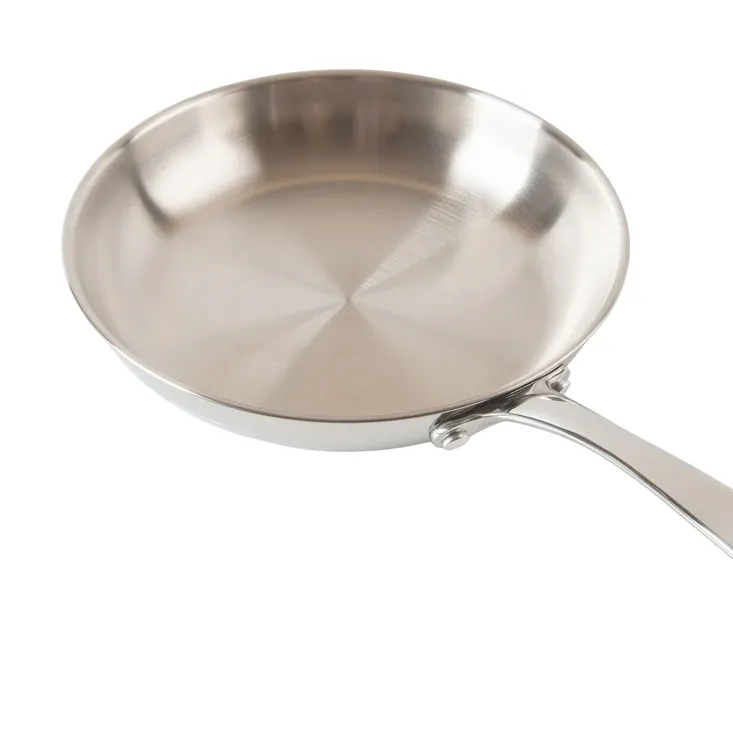
As far as the most common everyday materials go, stainless steel would rank pretty highly on the list. From the water bottle you carry to work to the pipes lining the house or building you live in, this material’s superb features make it abundant in our day to day lives. It also spans a wide array of sectors and is popular in air fields and engineering hubs as well as medical settings and can be used in all kinds of manufacturing scenarios, like 3D printing and sheet metal cutting.
There are many types of stainless steel grades out there and we’re putting the spotlight on 18/10—a steel that won’t let you down when it comes to rusting and maintaining its sleek appearance.
What is 18/10 Stainless Steel?
The numbers in its name come from its chemical composition, which usually consists of roughly 18% chromium and 10% nickel. There are, of course, other elements in the mix, including a hefty portion of iron (anywhere between 66% and 71%) and smaller amounts of things like manganese, silicon, and carbon.
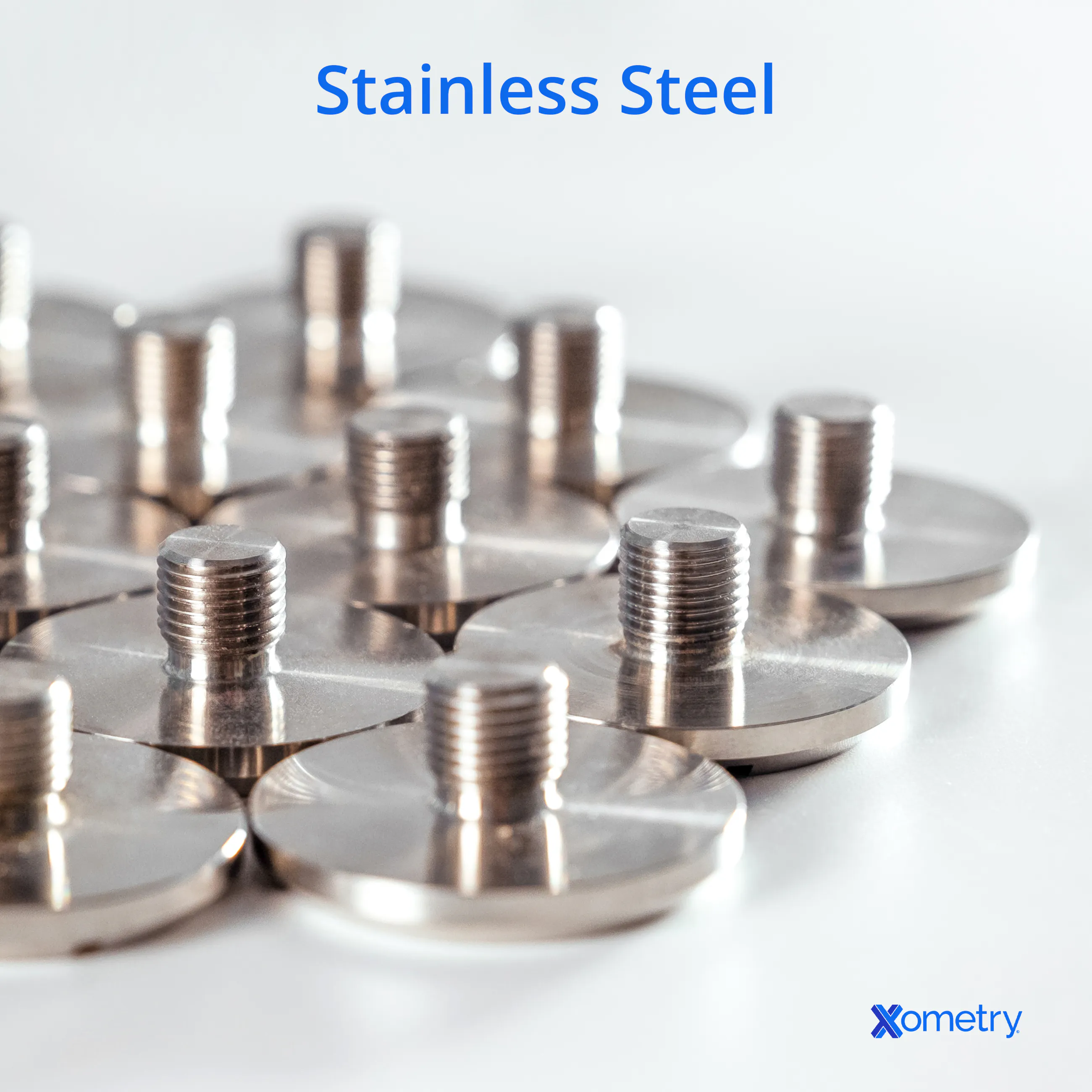
It’s often compared to 18/0 and 18/8 stainless steels, and out of all three, 18/10 is normally viewed as the highest quality because of its level of corrosion resistance, although it does come at a higher price. In the image below, you can see an example of stainless steel machined parts that we’ve made here at Xometry.
How Is 18/10 Stainless Steel Made?
Creating this specific type of stainless steel isn’t too dissimilar from any other type and involves mixing large quantities of scrap steel in an electric arc furnace until it melts down into a molten substance. Then the steel gets processed to remove impurities and create its low carbon content. Following this, it’ll get cast and molded into different shapes, then cooled and readied for processing and shipping out to other manufacturers where it can take its final form.
How Does 18/10 Stainless Steel Differ From 316 Stainless Steel?
Where 18/10 stainless steel has 18% chromium and 10% nickel, 316 stainless steel has 16–18% chromium and 10–14% nickel and 2–3% molybdenum. It is molybdenum that makes 316 more resistant to pitting and general corrosion than 18/10 steel. While both have good and equal heat resistance, 316 stainless steel is slightly more expensive due to the higher alloying content. 316 is only used for applications in which corrosion resistance is absolutely key.
What Are the Uses of 18/10 Stainless Steel?
There are so many different products that use 18/10 stainless steel—here are just a few:
- Pots and pans
- Eating utensils
- Bottles, bowls, and food storage containers
- Tubes
- Nuts, bolts, and washers
- Brewery equipment like fermentors
Does 18/10 Stainless Steel Leach Into Food?
No, 18/10 stainless steel does not leach into food. 18/10 stainless steel is highly corrosion-resistant due to its alloying elements. This allows 18/10 to be used even with the most corrosive of food, such as vinegar.
What Is the Chemical Composition of 18/10 Stainless Steel?
These are the specific percentages of alloying elements that make up 18/10 stainless steel:
Table 1: Chemical Composition of 18/10 Stainless Steel
What Is the Carbon Content of 18/10 Stainless Steel?
18/10 Stainless steel is a low-carbon steel, meaning its carbon content is below 0.3%. 18/10 stainless steel has a carbon content of 0.07%. This low carbon content, as well as high levels of chromium and nickel, allow the steel to be highly corrosion resistant.
What Are the Properties of 18/10 Stainless Steel?
In the following table, you’ll see the different physical properties this grade of steel has:
Table 2: Physical Properties of 18/10 Stainless Steel
What Is the Machinability Rating of 18/10 Stainless Steel?
18/10 has the ability to be easily molded and machined. 18/10 steel has a fair machinability rating of 48%.
What Are the Characteristics of 18/10 Stainless Steel?
To give you a good idea of how 18/10 stainless steel functions, what it consists of, and how it reacts to certain environments, pressures, and conditions, we’ve outlined its chemical and physical characteristics. Knowing these factors will help you choose between the different types of stainless steels out there and help you better understand how they compare to one another.
As a quick refresher, 18/10 is one type of steel that’s easy to mold and it has one of the best corrosion resistance levels compared to 18/8 and 18/0. It also has great heat resistance and, because it’s nonporous, it’s a piece of cake to clean and ideal for environments that require sterile conditions—like hospitals, doctors’ offices, and restaurants. Lastly, it’s a nonmagnetic steel and can only have this property if it’s blended with other metals and alloys like aluminum.
Is 18/10 Stainless Steel Magnetic?
No, 18/10 is not considered magnetic. Although most steel is ferromagnetic, 18/10 is part of the austenitic family of steel and is therefore non-magnetic. Any cookware made of 18/10 stainless steel is only magnetic because it is made of a ply construction of aluminum sandwiched by two layers of 18/10. This allows 18/10 steel cookware to be used on induction hobs.
Does 18/10 Stainless Steel Rust?
No, 18/10 steel does not rust. The low carbon content, and high chromium and nickel content mean that 18/10 stainless steel is highly corrosion resistant.
What Are the Thermal Properties of 18/10 Stainless Steel?
It’s also worth knowing about this steel’s thermal properties, which you can see below:
Table 3: Thermal Properties of 18/10 Stainless Steel
What Are the Common Forms of 18/10 Stainless Steel Material?
After stainless steel is gooey and molten, it has a few different options when it comes to taking its hardened form.
Sheet or Plate
These are flat sections of stainless steel that you can bend, shape, laser, and cut into different objects like worktops, panels, or kitchen countertops.
Bar
These can take a few different shapes, like squares, rounds, rectangles, or hexagons, and they’re a great option for turning into fasteners and hardware like bolts and screws.
Forged
This type of stainless steel normally gets turned into pipes or bars, but it’s processed in such a way that makes it even stronger and more durable.
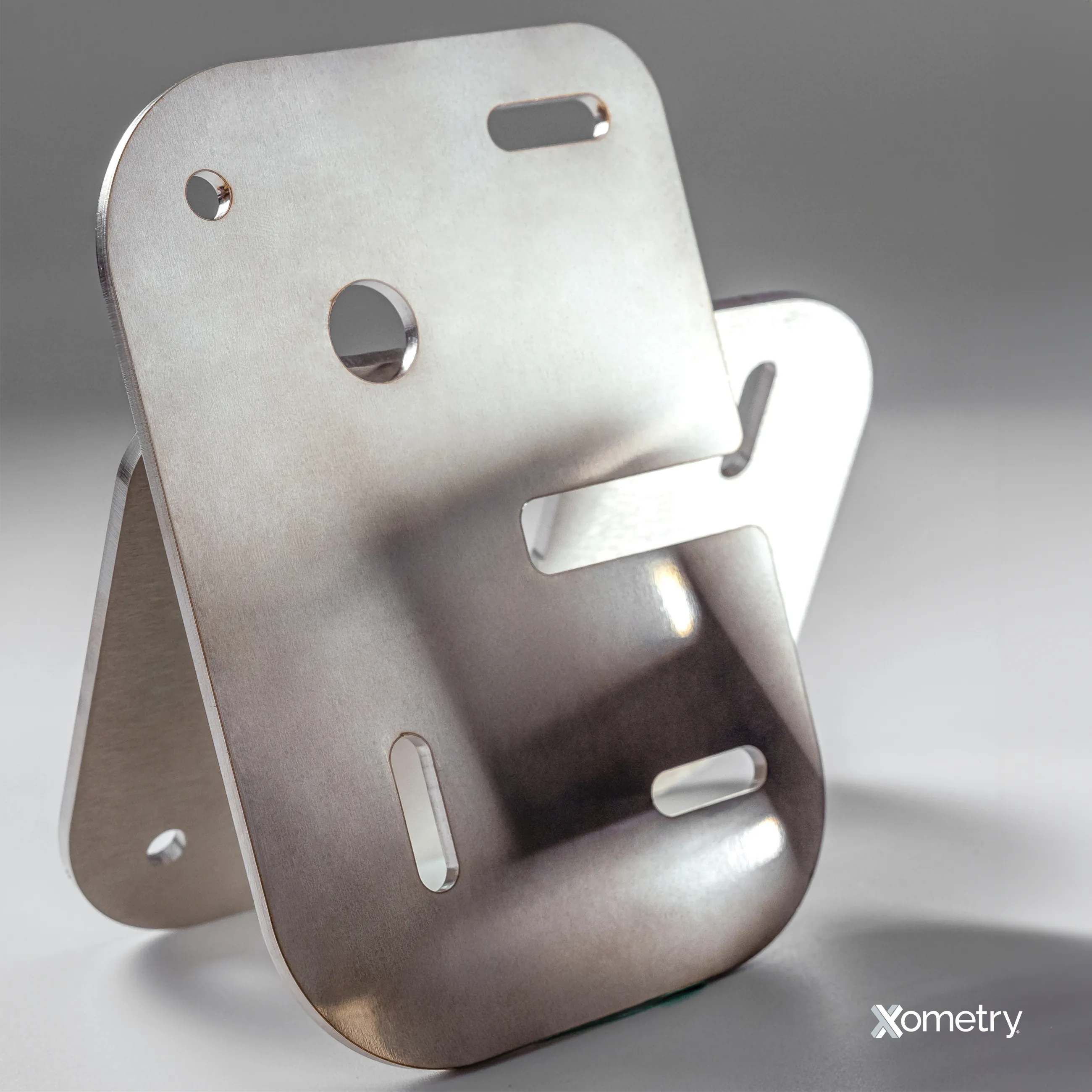
You can see a picture of another style of stainless steel part made at Xometry below.
What Are the Equivalents of 18/10 Stainless Steel?
In the U.S., this steel goes by 18/10 or 304, but it has different names in other countries, which you can explore in this table.
Table 4: Equivalent Names for 18/10 Stainless Steel
What Are the Advantages of Using 18/10 Stainless Steel?
Working with 18/10 stainless steel has its benefits, especially compared to other types of steel or metal:
- It has top-notch corrosion resistance in comparison to other stainless steels
- The surface finish is much shinier and nicer to look at when up against other metals
- It’s not difficult to maintain and keep in good shape
- It provides decent heat resistance
- It also has a good level of resistance against pitting
What Are the Disadvantages of Using 18/10 Stainless Steel?
Equally, there are a few downsides you’ll want to know about if you opt for this specific grade of steel:
- When you compare this style to 18/0 and 18/8, you’ll find it’s the most expensive
- It’s prone to scratching
- It’s not magnetic, which can be a limitation in some scenarios
- You need special tools to machine and process it
- It’s not great in saltwater environments and will corrode much faster
What Is the Difference Between 18/10 Stainless Steel and 18/8 Stainless Steel?
The difference between 18/10 and 18/8 stainless steel is that 18/10 stainless steel has 10% nickel and 18/8 has 8% nickel. The reduction in nickel means that 18/8 is both cheaper but also less corrosion-resistant. In addition, 18/10 stainless steel holds a better surface finish and so is used in more high-end applications than 18/8.
What Is the Difference Between 18/10 Stainless Steel and 18/0 Stainless Steel?
The main difference between 18/10 stainless steel and 18/0 stainless steel is the differing degrees of nickel composition. 18/10 stainless steel contains 10% nickel while 18/0 stainless steel contains 0% nickel. The differing amounts of nickel and chrome affect the strength of the stainless steel and its anti-corrosive properties. Another difference between the two stainless steels is that 18/10 stainless steel is highly anti-corrosive, whilst 18/0 stainless steel is more vulnerable to corrosion. However, 18/10 stainless steel is a lot more expensive than 18/0 stainless steel.
Frequently Asked Questions About 18/10 Stainless Steel
How Xometry Can Help
At Xometry, we offer our clients a list of services specific to stainless steels and other metals, including sheet metal fabrication, laser tube cutting, metal stamping, and metal extrusion. We also have a wide range of other manufacturing capabilities you can get a free quote for, like 3D printing, plastic injection molding, and powder coating.
Disclaimer
The content appearing on this webpage is for informational purposes only. Xometry makes no representation or warranty of any kind, be it expressed or implied, as to the accuracy, completeness, or validity of the information. Any performance parameters, geometric tolerances, specific design features, quality and types of materials, or processes should not be inferred to represent what will be delivered by third-party suppliers or manufacturers through Xometry’s network. Buyers seeking quotes for parts are responsible for defining the specific requirements for those parts. Please refer to our terms and conditions for more information.