
Electrical Steel: Definition, Composition, Properties, and Uses


When it comes to electromagnetic applications and electrical equipment, electrical steel is the real MVP thanks to its unbeatable magnetic properties. If you’re thinking of using it, there are a lot of technical details to know (type, forms, properties, etc.), so we’ve broken it all down for you below.
What Is Meant by Electrical Steel?
With iron as its main ingredient and up to 6.5% silicon, electrical steel is classed as an iron-silicon alloy. Its standout feature is its magnetism thanks to the silicon content (and why it’s also known as silicon steel—one of its several monikers). It’s a type of low-carbon alloy (typically under 0.05%) to minimize magnetic losses. The amount of silicon added plays a big role in what it’s used for. For example, silicon levels around 2–3.5% are ideal for non-oriented electrical steel used for electric motors and generators. If it has 3–4.5% silicon, it’s used for grain-oriented electrical steel, which is specially processed for transformer cores, where reducing energy loss is important.
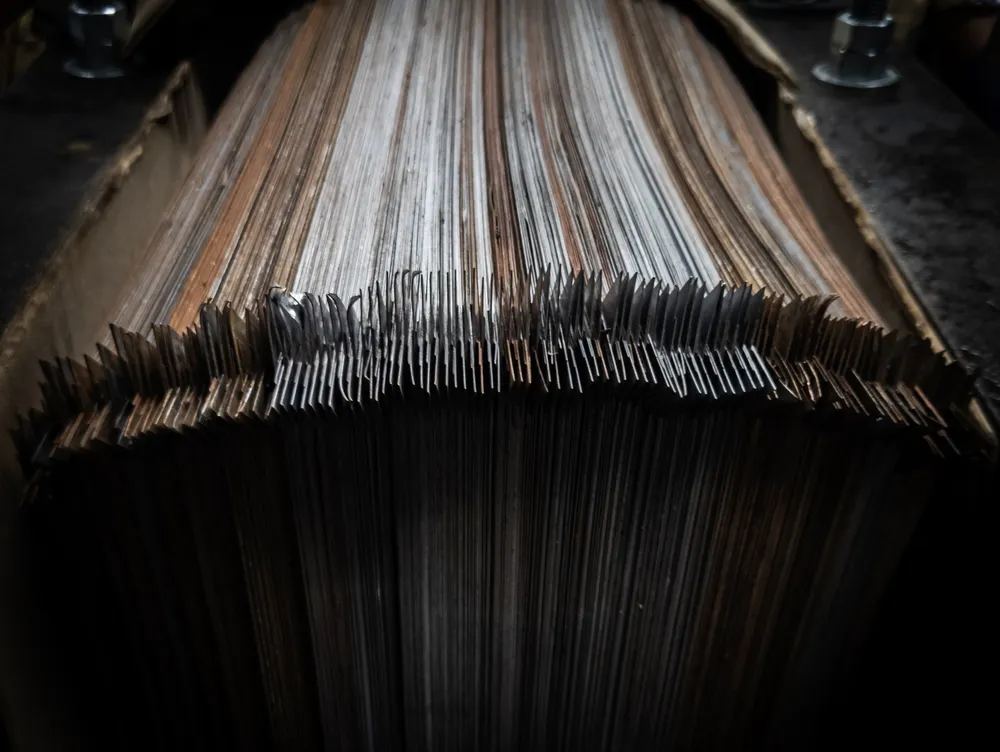
The most common form it comes in is thin sheets, which are usually coated with an insulator for lamination—which is the reason for another of its aliases, “lamination steel.” This involves stacking several sheets together, while keeping them protected from each other to cut down on energy losses caused by eddy currents. The magic is all in the combination of iron, which helps guide magnetic flux, and silicon, which increases electrical resistance and reduces energy waste. To top it off, its crystal structure is aligned in a way that allows for fast magnetization and demagnetization—something that also adds to its usefulness in motor and transformer cores.
What Is the Origin of Electrical Steel?
Silicon steel was first used for electrical applications in the late 1800s, when English metallurgist Sir Robert Hadfield, who discovered manganese, found that silicon increased the magnetic permeability of iron. The correlation between magnetic permeability and crystallographic orientations in iron single crystals was discovered in 1926 by Honda and Kaya, which led to subsequent developments to silicon steel. It wasn’t until 2008 that Baosteel—after inventing the technologies and machinery for high-grade, effective non-oriented silicon steel production—managed to accomplish a rapid, all-encompassing product upgrade.
How Is Electrical Steel Made?
To make electrical steel, the raw materials (i.e., iron ore, scrap steel) are melted together in an electric arc furnace, and then the appropriate amount of silicon is added. The mixture is hot-rolled into thin sheets and refined. This entails deoxidization (removing the oxygen from the molten mix) and vacuum degassing to up the purity and give it better electrical properties. After that, it’s annealed to boost the magnetism.
What Are the Different Types of Electrical Steel?
There are two main electrical steel types, non-grain-oriented (NGOES) and grain-oriented (GOES). They both have high permeability and low core loss, but where they differ is in their grain structure and magnetic properties.
1. Non-Oriented Electrical Steel
NGOES has randomly oriented crystal grains, making its magnetism uniform in all directions (isotropic), allowing it to adapt well to changing magnetic fields.
2. Grain-Oriented Electrical Steel
GOES, though, has a deliberately aligned crystal structure (anisotropic) for magnetization in a specific direction. This makes it good for fixed-field applications but not so much for constantly changing magnetic fields.
How Is Electrical Steel Different From Regular Steel?
Unlike conventional steel, electrical steel is created specifically for superior magnetic characteristics. It has silicon in it, which lessens eddy current energy loss by increasing electrical resistivity. Electrical steel is suited for electromagnetic applications like transformers and motors because silicon changes the magnetic behavior of the material.
Is Electrical Steel Better Than D2 Tool Steel?
No, electrical steel is not inherently better than D2 tool steel. They serve different purposes. Electrical steel excels in electromagnetic applications due to its magnetic properties. On the other hand, D2 tool steel is renowned for its high hardness and wear resistance, making it suitable for cutting tools, dies, and industrial machinery components.
Is Electrical Steel a High-Grade Alloy Steel?
No, electrical steel is not a high-grade alloy steel. It typically falls into the category of low alloy steels, as it contains relatively low levels of alloying elements, usually less than 8%. Whereas high alloy steels consist of more than 8% alloying elements.
To learn more, see our full article on Alloy Steel.
What Are the Chemical Compositions of Electrical Steels?
Non-grain-oriented electrical steels typically have low carbon content (0.01% or less ) and silicon content (about 3.5%). This helps in reducing core loss and improving magnetic properties. These steels may also contain small amounts of aluminum and manganese. Table 1 below is a simplified table of common chemical compositions found in non-oriented electrical steels:
What Is the Carbon Content of Electrical Steel?
Non-oriented electrical steel usually has a carbon percentage of 0.05% or less. For minimizing magnetic losses and guaranteeing peak performance in electrical applications, this low carbon content is important. Non-oriented electrical steel must have a low carbon content since carbon can affect the material's magnetic characteristics. Extra carbon messes with the magnetic domains' alignment, increasing eddy current losses and lowering transformer and motor efficiency.
What Are the Properties of Electrical Steel?
In the below table, you’ll find the specific properties of NGOES and GOES. Their slight variations make them each best suited for different uses within the electrical sector.
NGOES and GOES Properties
How Thick Is Electrical Steel?
Electrical steel is available in various thicknesses, commonly ranging from 0.23 to 0.35 millimeters. Thinner sheets help minimize energy wastage by limiting the circulation of induced currents, thus enhancing the efficiency of transformers and motors.
What Are the Characteristics of Electrical Steel?
Electrical steel possesses specific characteristics ideal for electrical applications. It exhibits low electrical conductivity, high magnetic permeability, and reduced core loss compared to conventional steel due to its silicon content. This composition enhances energy efficiency and minimizes heat generation in devices like transformers and motors, making it a vital material in electrical engineering.
"Electrical steel has excellent magnetic properties due to its high silicon content, which reduces electrical conductivity and minimizes energy loss through eddy currents, while grain-oriented processing enhances magnetic permeability in a preferred direction. When working with electrical steel, it is important to minimize mechanical stress to avoid degrading its magnetic properties, properly handle coatings to maintain insulation between laminations, and use precise cutting techniques to prevent excessive burrs, which can increase energy loss."
What Are the Uses of Electrical Steel?
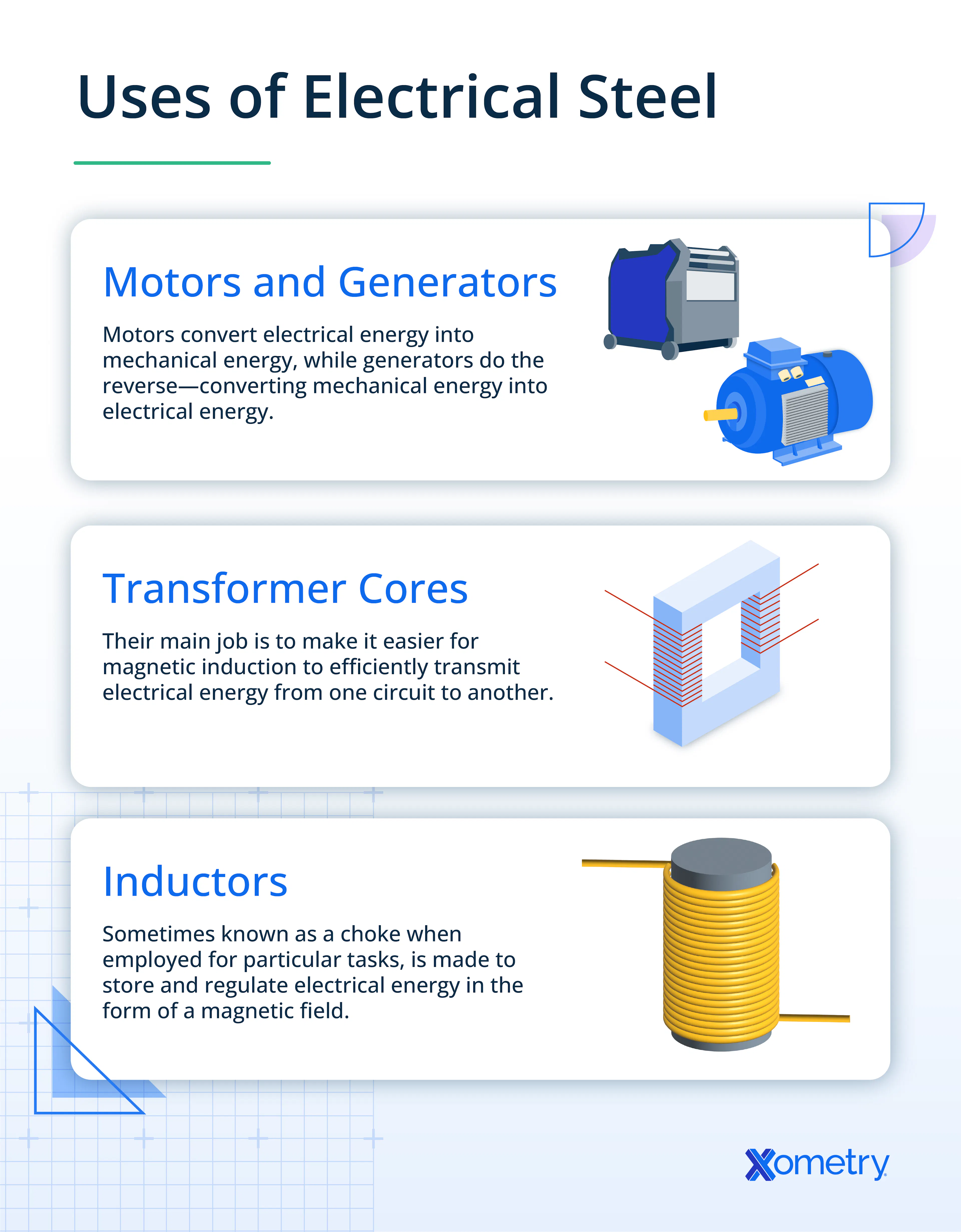
Electrical steel is used in various electrical applications due to its magnetic properties. Its main uses include:
- Transformer Cores: Efficiently directs magnetic flux, reducing energy loss. The main parts of electrical transformers are transformer cores. Their main job is to make it easier for magnetic induction to efficiently transmit electrical energy from one circuit to another. The transformer's primary winding generates magnetic flux, which the core focuses and directs onto the secondary winding to transform voltage. This makes it possible to distribute electricity at various voltage levels, which is necessary for power transmission and distribution.
- Motors and Generators: Minimizes eddy current losses, enhancing efficiency. Motors and generators are devices that rely on the principles of electromagnetism. Motors convert electrical energy into mechanical energy, while generators do the reverse—converting mechanical energy into electrical energy. Both devices utilize magnetic fields generated by electrical currents to achieve their respective functions. In motors, this magnetic interaction produces motion, whereas, in generators, it induces electrical voltage.
- Inductors: Provides controlled magnetic fields for electronic components. An electrical component called an inductor, which is sometimes known as a choke when employed for particular tasks, is made to store and regulate electrical energy in the form of a magnetic field. Its main job is to thwart variations in electrical current flow. Inductors can provide energy storage, smooth out current variations, and filter out high-frequency noise in circuits. In particular, chokes are used to block high-frequency alternating current (AC) while allowing direct current (DC) and lower-frequency AC to pass through, thereby "choking" off undesired signals or interference.
How Long Will Electrical Steel Last?
The lifespan of a component made of electrical steel largely depends on factors such as: operating conditions, maintenance, and protective coatings. Properly designed and maintained, electrical steel can have a long operational life, often exceeding several decades in applications like transformers, where durability and efficiency are important.
How Much Does Electrical Steel Cost?
Electrical steel has a range of prices, especially for non-grain oriented electrical steel (NGOES) and grain-oriented electrical steel (GOES). NGOES can cost between $950 and $1000 per ton on average, whereas GOES is typically more expensive, costing between $2000-$2100 per ton. To put things in perspective, 1020 carbon steel, a standard commodity, is normally more affordable for comparison, costing between $300 and $550 per Ton.
What Is the Common Form of Electrical Steel?
The most common form of electrical steel is in the shape of thin sheets, typically coated with insulating materials. They are used as laminations stacked to form cores for transformers, motors, and generators. The lamination process reduces eddy current losses and enhances the efficiency of electrical devices.
Can Electrical Steel Be Used in Electric Wires?
No, electrical steel is not used in electrical wires. Electrical steel is better suited for applications like transformers, motors, and generators where its magnetic properties are crucial for energy efficiency and performance.
What Are the Advantages of Electrical Steel?
- Durable, can handle mechanical stresses without deforming at low-silicon levels
- Low core loss that minimizes energy waste
- More cost-effective than some advanced magnetic materials (i.e., neodymium iron boron)
- Higher magnetic permeability than plain carbon steel, allowing magnetic fields to pass through easily
- Low electrical conductivity
- Minimal heat generation keeps devices cooler
What Are the Disadvantages of Electrical Steel?
- High cost ($1,000–2,000/ton) compared to 1020 carbon steel ($300–550/ton)
- Could rust, so protective coating (i.e., varnish, oxide) needs to be applied everywhere (even in small crevices)
- Brittle at high silicon levels
- Limited to electrical and magnetic purposes, can’t be used for structural or general-purpose applications
Frequently Asked Questions on Electrical Steel
How Xometry Can Help
To learn more about electrical steel, and how you might be able to use it in your projects, contact us and one of our representatives will guide you in the right direction. We also offer a whole bunch of manufacturing services, from CNC machining and laser cutting to our forte, 3D printing. Your free, no-obligation quote is just a click away.
Disclaimer
The content appearing on this webpage is for informational purposes only. Xometry makes no representation or warranty of any kind, be it expressed or implied, as to the accuracy, completeness, or validity of the information. Any performance parameters, geometric tolerances, specific design features, quality and types of materials, or processes should not be inferred to represent what will be delivered by third-party suppliers or manufacturers through Xometry’s network. Buyers seeking quotes for parts are responsible for defining the specific requirements for those parts. Please refer to our terms and conditions for more information.