High-Density Polyethylene (HDPE): Definition, Properties, and Uses



High-Density Polyethylene (HDPE) is a thermoplastic polymer derived from ethylene, which is obtained from petroleum. HDPE is characterized by a dense molecular structure, contributing to its exceptional strength and durability. HDPE is commonly used in applications that require tough, long-lasting materials (plastic bottles, pipes, and containers). Its high resistance to impact, chemicals, and low moisture absorption makes it ideal for outdoor and industrial environments. HDPE is known for its ability to withstand various environmental conditions (Ultraviolet exposure and temperature fluctuations) without cracking or losing strength. Common HDPE plastic products include packaging materials, construction items, and medical supplies. The versatility and reliability of high-density polyethylene uses make it a preferred choice in many industries where durability is essential. HDPE continues to be a key material in manufacturing due to its robustness and cost-effectiveness.
What is High-Density Polyethylene?
High-Density Polyethylene (HDPE) is a thermoplastic polymer made by polymerizing ethylene monomers. It features a dense, linear molecular structure, contributing to its high strength and resistance to chemicals and impacts. HDPE is widely used in various applications, including packaging materials, pipes, and consumer goods. Its high strength-to-density ratio makes it ideal for products requiring durability without added weight. The combination of the properties has made HDPE material a go-to choice in industries (packaging, construction, and automotive). Understanding HDPE meaning helps highlight its versatility in household and industrial applications.
How is HDPE Material Made?
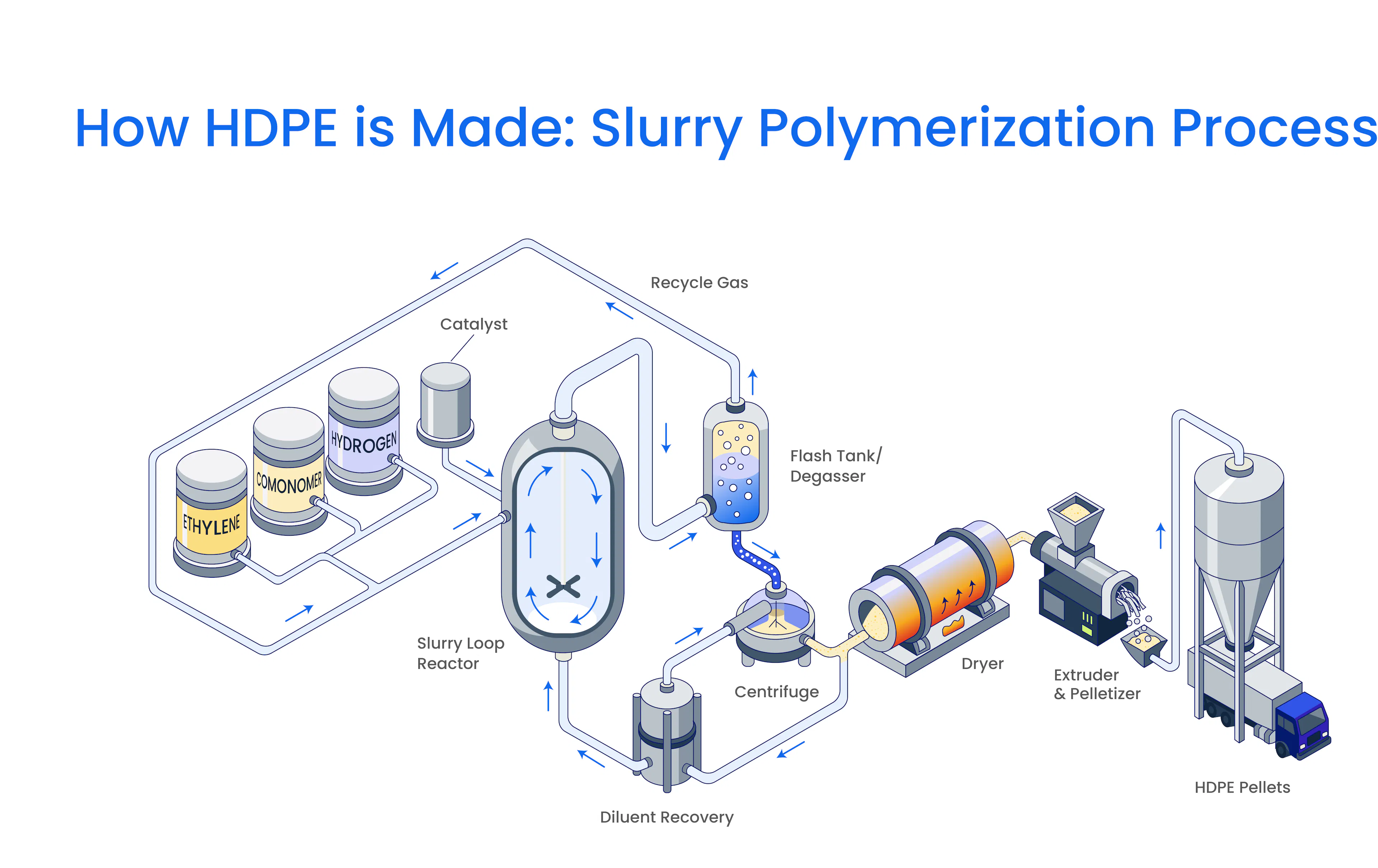
HDPE (High-Density Polyethylene) is made by polymerizing ethylene gas under low pressure, or using low-pressure techniques with Ziegler-Natta or chromium catalysts. The ethylene molecules are linked together to form long polymer chains during the process. HDPE is produced using Ziegler-Natta or chromium catalysts, which help control the polymer structure and properties (density and crystallinity). The catalysts allow manufacturers to fine-tune the material’s characteristics, resulting in HDPE's strength, rigidity, and chemical resistance. The controlled polymerization process ensures that HDPE is durable and suitable for a wide range of applications (packaging, pipes, and containers).
What is the HDPE Full Form?
The full form of High-Density Polyethylene (HDPE) is a thermoplastic polymer. High-Density Polyethylene has high strength, chemical resistance, and durability, making it suitable for a broad range of applications (in packaging, construction, and industrial products). The material's excellent resistance to impacts and chemicals contributes to its widespread use in harsh environments. Understanding the HDPE full form reveals its versatility and importance in various sectors.
How does HDPE Material Affect the Quality of Products?
HDPE material enhances product quality by offering exceptional strength, chemical resistance, and impact resistance. HDPE’s exceptional strength, chemical resistance, and impact resistance make it suitable for applications where durability and longevity are critical. HDPE ensures that the packaging in food containers remains intact and resistant to damage, preserving the contents over time. HDPE's strength and resistance to chemicals make it ideal for transporting water and other substances without degrading, even under pressure in pipes. High-Density Polyethylene is commonly used in toys, where its impact resistance ensures safety and durability during play. Its ability to withstand harsh conditions without deteriorating makes HDPE a preferred material in products that require high performance and long-term functionality.
What are the Properties of High-Density Polyethylene?
The properties of High-Density Polyethylene are listed below.
- High Tensile Strength: HDPE has excellent tensile strength, allowing it to resist stretching or breaking under tension. High Tensile Strength makes it suitable for heavy-duty applications (in pipes and containers).
- Impact Resistance: HDPE offers high impact resistance, even in cold environments, making it a durable material for products that endure physical stress (toys and industrial equipment).
- Chemical Resistance: HDPE is highly resistant to a variety of chemicals, including acids and alkalis. It is used for containers and equipment that store or transport hazardous substances.
- Low Moisture Absorption: HDPE has low moisture absorption, helping maintain its strength and stability even when exposed to water or humid conditions.
- Flexibility in Applications: It is flexible enough for specific applications (packaging) that need to be molded or bent, while HDPE is rigid.
- Resistance to Environmental Stress Cracking: HDPE performs well in resisting environmental stress cracking, which occurs when materials weaken due to long-term exposure to stress. The HDPE properties make it an ideal material for a wide range of industries, from construction to packaging.
What is the Density of High-Density Polyethylene?
The density of High-Density Polyethylene (HDPE) ranges from 0.93 to 0.97 g/cm³. The higher density compared to other types of Polyethylene (Low-Density Polyethylene (LDPE) and Linear Low-Density Polyethylene (LLDPE)) contributes to HDPE's chemical and impact. The closely packed molecular structure of HDPE improves its rigidity, making it highly durable. Its durability allows HDPE to withstand mechanical stress, maintaining its integrity in demanding environments. The material's increased density improves its performance in applications (systems, containers, and automotive parts), where long-term reliability and resistance to harsh conditions are essential. For instance, HDPE is commonly used for water pipes, fuel tanks, and industrial containers, where it must endure high pressure and resist chemical corrosion.
What is the Melting Point of High-Density Polyethylene?
The melting point of High-Density Polyethylene (HDPE) ranges between 130°C and 135°C (266°F to 275°F), depending on its molecular structure and crystallinity. The temperature range allows HDPE to endure moderate heat without cracking. Its material's relatively high melting point makes it suitable for applications that require heat resistance (piping systems, containers, and automotive parts). Heat-resistant and durable, the material is ideal for industries that require moderate-heat-resistant components. For example, the material HDPE is commonly used for high-temperature pipes and industrial containers.
What is the Chemical Formula of High-Density Polyethylene?
The chemical formula of High-Density Polyethylene (HDPE) is (C2H4)n. The formula represents the polymerization of ethylene monomers, where each ethylene unit (C2H4) links to form long chains. The "n" in the formula indicates the number of repeating units in the polymer chain, which determines the material's molecular weight and properties. The polymerization process results in a crystalline structure, which contributes to HDPE’s strength, rigidity, and resistance to deformation. Its structure contributes to its durability and performance in applications requiring toughness (in pipes and containers).
What is the Structure of High-Density Polyethylene?
The structure of High-Density Polyethylene (HDPE) is a highly crystalline arrangement of ethylene monomers. The molecular configuration allows for tight packing of polymer chains, making the material strong and rigid. HDPE has high tensile strength and is resistant to physical stress due to its crystalline structure. Ultraviolet stabilizers are used to improve HDPE's natural resistance to environmental factors (UV radiation and chemical exposure) in prolonged outdoor applications. HDPE is ideal for applications that require durability (pipes, containers, and automotive parts).
What is HDPE Used for?
HDPE is used in a wide range of applications (packaging, including plastic bottles and containers) due to its durability, strength, and resistance to chemicals. High-Density Polyethylene is commonly used in packaging (plastic bottles and containers) because of its ability to withstand impact and moisture. HDPE is employed in the manufacturing of pipes, geomembranes, and other infrastructure materials due to its resistance to corrosion and environmental factors (temperature variations, exposure to UV light, moisture, and chemical resistance). HDPE uses extend to consumer products (toys, containers, and various household items). Medical tubing and prosthetics use HDPE for its strength and biocompatibility, ensuring safety and performance. The versatile uses of HDPE highlight its broad applicability across industries (packaging, construction, consumer goods, and medical devices).
What is HDPE Material Used for in Medical Applications?
HDPE is used in various medical applications (medical tubing, prosthetic components, and disposable syringes). Its biocompatibility allows it to be safely used in direct contact with the human body. The material’s strength and chemical resistance make it ideal for withstanding the harsh conditions of medical environments (exposure to sterilizing agents and bodily fluids). Its properties ensure that HDPE maintains its structural integrity and performance over time. HDPE is widely preferred for medical devices that require durability, reliability, and safety due to its properties.
Can HDPE be Used in Medical Implants?
Yes, HDPE can be used in medical implants. HDPE is used in medical devices (prosthetic components and dental devices) for non-load-bearing applications. HDPE strength and biocompatibility make it suitable for applications where long-term durability and safety are essential. The material’s resistance to chemicals and its ability to withstand sterilization processes improve its potential for use in medical devices. Specialized materials are preferred for load-bearing implants. HDPE remains a reliable choice for many medical applications requiring resilience and compatibility with the human body.
What are the Applications of High-Density Polyethylene in Construction?
The applications of High-Density Polyethylene in construction are listed below.
- Pipes and Plumbing Systems: HDPE is commonly used in water and sewage pipes due to its ability to withstand high pressures and resist corrosion. Its flexibility allows it to be installed in various environments, including underground systems.
- Liners and Containment Systems: HDPE is ideal for use as liners in landfills and containment systems. Liners and containment systems prevent leakage of hazardous materials and offer resistance to chemical exposure, making High-Density Polyethylene effective for environmental protection.
- Vapor Barriers: HDPE is used as a vapor barrier in buildings to prevent moisture penetration. The barriers, water resistance, and ability to maintain structural integrity in damp environments make it a reliable choice for insulation and foundation protection.
- Geogrids and Reinforcement: HDPE is used in geogrids to reinforce soil in road construction and embankments. Its strength and resistance to environmental stress help stabilize structures in areas prone to shifting or erosion.
- Construction Films and Sheets: HDPE is used in construction films and sheets due to its toughness and resistance to tearing. It is used in applications (temporary coverings or protective sheeting) during construction projects.
What Role Does HDPE Plastic Play in Automotive Safety Features?
The role HDPE plastic plays in automotive safety features is to provide strength, durability, and impact resistance in critical vehicle components. High-Density Polyethylene Plastic is used in the production of interior parts, fuel tanks, and protective shield panels. The material’s great impact resistance helps protect essential vehicle systems and passengers during collisions, reducing injury and damage. HDPE’s ability to withstand stress, chemical exposure, and extreme temperatures improves its suitability for automotive applications. HDPE contributes to vehicle safety and longevity by providing reliable protection and resistance in high-impact environments.
What Are the Advantages of High-Density Polyethylene?
The advantages of High-Density Polyethylene are listed below.
- Superior Tensile Strength: HDPE is capable of withstanding heavy loads and resisting deformation under pressure. The material is commonly used in heavy-duty applications (pipes, containers, and industrial equipment).
- High chemical resistance: HDPE is highly resistant to acids, alkalis, and solvents. Resistance to chemicals makes it suitable for use in chemical storage, packaging, and environments where exposure to harsh substances occurs.
- Low moisture absorption: HDPE has a low moisture absorption rate, which prevents water from weakening its structure. It is ideal for use in wet environments and outdoor applications (drainage systems and outdoor storage containers).
- Durability: HDPE is durable and resistant to wear, impact, and environmental stress cracking. The material's durability makes it suitable for long-term applications (construction materials and medical products).
- Versatility in Applications: The strength, rigidity, and environmental resistance of HDPE make it a reliable choice for packaging, construction, and medical applications, among other industries.
What Are the Benefits of HDPE Plastic in Food Packaging?
The benefits of HDPE Plastic in food packaging are listed below.
- Moisture and Contaminant Barrier: HDPE effectively blocks moisture, chemicals, and contaminants, ensuring food products remain safe and fresh. It is commonly used for packaging liquids (milk and juices).
- Impact Resistance: HDPE’s ability to resist physical damage (cracking or puncturing) makes it suitable for protecting food during handling and transport. Its structural integrity is maintained even under stress, ensuring food remains secure.
- Freshness Preservation: HDPE prevents moisture and odors from infiltrating the package, helping to keep perishable items fresh for longer periods. It is ideal for items (dairy, meat, and produce) when used with additives or coatings that improve their barrier properties (moisture, gases, odors, or chemicals).
- Lightweight and Efficient: HDPE's light weight makes it easier and more cost-effective to transport, while its durability reduces the need for extra packaging. Efficiency leads to cost savings and environmental benefits.
- Recyclability: HDPE is highly recyclable, offering an eco-friendly option for food packaging. It is reused in the production of new packaging or other products, contributing to sustainability.
What Are the Disadvantages of High-Density Polyethylene?
The disadvantages of High-Density Polyethylene are listed below.
- Ultraviolet (UV) Degradation: HDPE is susceptible to UV degradation. The material becomes brittle and loses its strength without UV stabilizers, making it unsuitable for long-term outdoor use unless treated with additives.
- Difficulty in Recycling: HDPE, while recyclable, poses challenges in certain forms. Some products made from HDPE (colored or mixed-material items) are harder to recycle, limiting the material’s sustainability.
- Environmental Impact: HDPE contributes to plastic waste, as with many plastics. Improper disposal or a lack of proper recycling infrastructure leads to long-lasting ecological concerns due to their persistence in landfills and oceans.
- Limited Chemical Resistance in Certain Environments: HDPE degrades when exposed to certain solvents, oxidizing agents, or hydrocarbons, despite its resistance to many chemicals (acids, alkalis, and mild solvents), limiting its use in more aggressive chemical environments.
What are the Main Challenges in Manufacturing HDPE Plastic?
The main challenges in Manufacturing HDPE Plastic are listed below.
- High Energy Consumption: The polymerization process for HDPE requires significant energy during the heating and cooling stages, contributing to higher production costs and energy demand compared to other plastics (low-density polyethylene). High energy consumption increases production costs and contributes to environmental concerns due to the high energy demand.
- Environmental Impact: Producing HDPE requires the use of fossil fuels, resulting in carbon emissions. Plastic production generates harmful byproducts that must be managed to minimize environmental harm.
- Complexity of Molecular Structure Control: Achieving the desired properties of HDPE (strength and flexibility) requires precise control over its molecular structure. Variations in the polymerization process affect the material's final characteristics, making quality control challenging.
- Recyclability Issues: Some forms of HDPE (additives or mixed materials) are hard to process, although HDPE is recyclable. Additives limit the recyclability of HDPE and complicate efforts to reduce plastic waste.
- Environmental Impact of Mismanaged Waste: Improper disposal of HDPE products (plastic bags and packaging) leads to long-lasting environmental harm. HDPE is not biodegradable and persists in landfills or water bodies for hundreds of years.
What is the Cost of High-Density Polyethylene?
The cost of high-density polyethylene (HDPE) ranges from US $1.00 to US $1.30 per kilogram, though pricing varies depending on market conditions, supplier, and location. The affordability of High-Density Polyethylene is attributed to its simpler manufacturing process and abundant raw materials. HDPE’s price point makes it an attractive option for industries looking to balance performance with cost efficiency. The material is commonly used in packaging, construction, and automotive applications where durability is important but cost control is necessary. HDPE's widespread use across various sectors (packaging, construction, automotive, and consumer goods) highlights its cost-effectiveness and versatility in manufacturing.
What Are the Different Types of HDPE Products Available in the Market?
The different types of HDPE Products available in the market are listed below.
- HDPE Pipes: HDPE pipes offer resistance to corrosion and high pressure used in water, gas, and sewage systems. HDPE pipes are commonly found in plumbing, irrigation, and drainage systems.
- HDPE Sheets: Flat sheets used in applications requiring impact resistance and durability (industrial linings, packaging, and signs). The sheets provide a strong surface for various uses (construction and manufacturing).
- HDPE Film: Film used for packaging, agriculture, and as protective covers. HDPE film is lightweight and resistant to moisture. It is used for grocery bags, shrink wraps, and agricultural films.
- HDPE Bottles: Commonly used for packaging beverages, cleaners, and personal care products, HDPE bottles are sturdy and resistant to chemicals. Bottles are found in food and non-food product packaging.
- HDPE Containers: The containers are for the storage and transportation of goods, including chemicals and food products. Their ability to resist moisture and chemicals makes them ideal for various industrial and commercial applications.
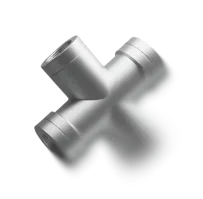
- HDPE Fittings and Flanges: HDPE fittings and flanges are components used in piping systems to connect, secure, and control the flow of fluids. HDPE fittings and flanges are used in construction, plumbing, and chemical industries.
- HDPE Geomembranes: Used for containment in environmental applications (landfills, mining, and water reservoirs), HDPE geomembranes provide an effective barrier to prevent leakage.
What is the Difference between HDPE and other Types of Plastic?
The differences between HDPE and other Types of Plastic are shown in the table below.
Difference between HDPE and other Types of Plastic
High-Density Polyethylene (HDPE) is known for its strength, durability, and chemical resistance, making it ideal for heavy-duty applications (pipes and containers). Low-Density Polyethylene (LDPE) is more flexible and has lower strength, commonly used for plastic bags and wraps. Polyethylene Terephthalate (PET) offers high transparency and excellent recyclability, used in beverage bottles. Polyvinyl Chloride (PVC) shares similar strength and durability with HDPE, but provides more flexibility and is used in plumbing, flooring, and construction applications. The key distinctions in High-Density Polyethylene (HDPE) compared to other plastics lie in its superior strength, chemical resistance, and cost-effectiveness for certain applications.
Is HDPE Easier to Mold than Acrylonitrile Butadiene Styrene (ABS)?
No, HDPE is not easier to mold than Acrylonitrile Butadiene Styrene (ABS). ABS is easier to mold than HDPE due to its lower melting point and better flow characteristics. ABS flows more smoothly during the molding process, making it suitable for more intricate and detailed mold designs. HDPE has a higher viscosity and requires higher temperatures and pressure to achieve similar moldability as ABS, which makes it more challenging to mold compared to ABS in processes. Its differences in molding properties make ABS the preferred material for precise applications. The ability of Acrylonitrile Butadiene Styrene (ABS) to retain its shape and achieve finer details makes it more efficient for certain molding processes compared to HDPE.
Does HDPE have Higher Abrasion Resistance than Polyamide (PA)?
Yes, HDPE has higher abrasion resistance than Polyamide (PA). The molecular structure of HDPE consists of long chains that are highly resistant to wear, providing durability against friction. HDPE performs better under stress due to its crystalline structure, which improves its resistance to scratching and surface damage. Polyamide (PA) is more prone to wear and tear, as its molecular chains are more flexible and less aligned compared to HDPE. Its abrasion resistance does not match that of HDPE, making it unsuitable for applications requiring high wear resistance, while Polyamide (PA) is known for its toughness and strength. For example, HDPE is commonly used in conveyor belts and industrial flooring, where high abrasion resistance is essential, whereas Polyamide (PA) is used in gears and bearings.
Is HDPE More Impact-Resistant than Polyethylene (PE) in Flexible Forms?
Yes, HDPE is more impact-resistant than Polyethylene (PE) in rigid forms. PE, being more flexible, is more likely to deform or crack when impacted, whereas HDPE maintains its structural integrity better under stress. HDPE has a higher molecular density, providing it with greater strength and resistance to deformation under impact. The rigidity of HDPE allows it to absorb more energy, making it more durable when exposed to sudden forces. Polyethylene (PE) is less dense and more flexible, which leads to a greater likelihood of deformation or cracking when impacted compared to HDPE. HDPE is preferred for tasks where impact resistance is necessary (in storage tanks and pipes), while PE is useful in applications requiring flexibility. The impact resistance of HDPE is superior to that of Polyethylene (PE) in flexible forms.
Does HDPE have Superior Thermal Insulation Properties Compared to High-Impact Polystyrene (HIPS)?
Yes, HDPE does have superior thermal insulation properties compared to High Impact Polystyrene (HIPS). HDPE has a more crystalline structure, which provides better resistance to heat flow. Its molecular composition allows it to maintain lower thermal conductivity, making it a more effective insulator. High Impact Polystyrene (HIPS) has a more amorphous structure, which results in higher thermal conductivity and less efficient thermal insulation in comparison to HDPE. HIPS is used in applications where rigidity and impact resistance are more important than thermal performance (in packaging materials). The superior thermal insulation properties of HDPE make it more suitable for use in applications requiring temperature control in storage tanks and pipes, compared to High Impact Polystyrene (HIPS).
Is HDPE More Biodegradable Than Polylactic Acid (PLA)?
No, HDPE is not more biodegradable than Polylactic Acid (PLA). PLA is derived from renewable plant sources (corn starch), making it more susceptible to microbial degradation in composting environments. The molecular structure of PLA, an aliphatic polyester, allows microorganisms to break it down more easily than HDPE. HDPE, on the other hand, is a highly durable plastic with a non-biodegradable molecular structure, making it resistant to decomposition in natural environments. PLA decomposes relatively quickly in industrial composting conditions, while HDPE persists for hundreds of years without breaking down. The biodegradability of Polylactic Acid (PLA) surpasses that of HDPE in industrial composting environments, where it decomposes faster due to its composition and decomposition rates. PLA does not degrade as efficiently in natural environments (landfills) compared to HDPE.
Does HDPE Perform Better in Low-Temperature Environments than Polystyrene (PS)?
Yes, HDPE performs better in low-temperature environments than Polystyrene (PS). HDPE retains its flexibility even in freezing conditions, making it less likely to crack or become brittle. The molecular structure of HDPE allows it to maintain durability and strength in cold temperatures. Polystyrene (PS) becomes brittle at low temperatures, leading to increased susceptibility to cracking and breaking under stress. For example, HDPE is used in outdoor applications (pipes and containers) that are exposed to cold climates, while PS is avoided in such settings due to its fragility in freezing conditions. The performance of HDPE in low temperatures is superior to Polystyrene (PS) due to its resilience, flexibility, and resistance to brittleness, allowing it to withstand stress in cold environments.
Is HDPE More Easily Recycled Than Polypropylene (PP)?
Yes, HDPE is more easily recycled than Polypropylene (PP). HDPE is widely accepted in recycling programs due to its straightforward and well-established recycling process. The material is highly compatible with existing recycling technologies and has a high recycling rate, making it more economically viable for reuse. Polypropylene (PP), on the other hand, presents more challenges in the recycling process. It has a higher melting point and is less commonly accepted by recycling facilities, making it harder to process. HDPE is more readily accepted, with better industry infrastructure for its recycling, although High-Density Polyethylene and Polypropylene materials are also recycled. The recycling of Polypropylene (PP) remains limited due to technical and economic challenges, making it more difficult to process and reducing its environmental impact compared to HDPE, which has better industry infrastructure and higher recycling rates.
Does HDPE Offer More Structural Stability than Polybutylene Terephthalate (PBT) in High-Performance Settings?
No, HDPE does not offer more structural stability than Polybutylene Terephthalate (PBT) in high-performance settings. PBT has superior dimensional stability and strength at higher temperatures compared to HDPE, which allows it to perform better in applications requiring resistance to heat and stress. The molecular structure of Polybutylene Terephthalate (PBT) provides better resistance to deformation, even under prolonged stress, making it ideal for demanding mechanical applications. HDPE, while durable and impact-resistant, lacks the high-temperature stability and rigidity that PBT offers. For example, PBT is used in automotive and electrical applications where structural stability is critical, while HDPE is better suited for packaging and outdoor applications. The higher performance of Polybutylene Terephthalate (PBT) in high-stress settings is due to its superior strength and resistance.
Is HDPE More Resistant to Fatigue Than Acetal (POM)?
No, HDPE is not more resistant to fatigue than Acetal (POM). Acetal (POM) excels in high-cycle, repetitive motion applications due to its superior fatigue resistance. The crystalline structure of Acetal (POM) provides it with exceptional dimensional stability and low wear under repetitive stress. HDPE, while durable and resistant to impact, does not perform as well in fatigue testing due to its relatively lower resistance to deformation under repeated cycles. For instance, Acetal (POM) is commonly used in applications (gears and bearings), where high fatigue resistance is critical, whereas HDPE is more suitable for applications that do not involve continuous motion or high-stress cycles. The fatigue resistance of Acetal (POM) surpasses that of HDPE in demanding mechanical applications due to its crystalline structure and exceptional dimensional stability, which enable it to withstand repetitive stress and high-cycle loads more effectively.
How is HDPE Plastic Recycled?
Recycle HDPE plastic by following the five steps listed below.
- Collect and Sort. Begin by collecting HDPE waste and sorting it from other plastics. Proper sorting ensures that only HDPE plastic is processed, minimizing contamination.
- Clean the Plastic. Clean the collected HDPE plastic to remove dirt, labels, and contaminants. The step is important to prevent impurities from affecting the quality of the recycled material.
- Shred the Plastic. Shred the cleaned HDPE plastic into small pieces or pellets. It reduces the material's size, making it easier to handle and process during reprocessing.
- Melt and Reprocess. Melt the shredded HDPE and reprocess it into new shapes or products. The melted material is formed into items (pipes, containers, or plastic products) for use in various industries.
- Repurpose into New Products. Use the reprocessed HDPE to create new products (recycling bins, toys, or construction materials). The items maintain the material’s durability and strength, making them suitable for a wide range of applications.
Summary
This article presented what high density polyethylene plastic (HDPE) is and how it is used throughout industry as a versatile engineering material.
Xometry provides 3D printing services and plastic injection molding services for all of your production needs. Visit our website to explore the full range of our capabilities or to request a free, no-obligation quote.
Disclaimer
The content appearing on this webpage is for informational purposes only. Xometry makes no representation or warranty of any kind, be it expressed or implied, as to the accuracy, completeness, or validity of the information. Any performance parameters, geometric tolerances, specific design features, quality and types of materials, or processes should not be inferred to represent what will be delivered by third-party suppliers or manufacturers through Xometry’s network. Buyers seeking quotes for parts are responsible for defining the specific requirements for those parts. Please refer to our terms and conditions for more information.