
20 Properties of Nylon


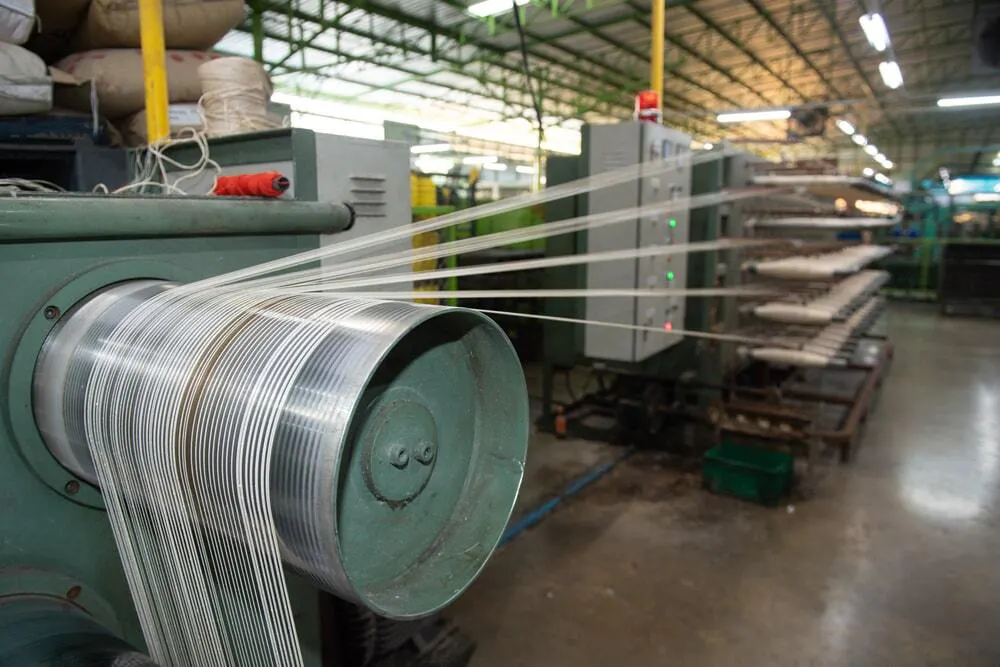
Nylon exhibits properties such as luster, elasticity, abrasion resistance, and moisture absorption; drying behavior depends on conditions. Nylon is a synthetic polymer classified as a polyamide, produced through polymerization reactions that form repeating amide linkages (-CONH-) between monomer units. The material is derived from petroleum-based raw compounds and processed into fibers, films, and molded parts. Nylon is used in textiles, automotive parts, electrical housings, and packaging because of its strength and versatility. It resists hydrocarbons and oils, stays stable under moderate temperatures, and absorbs moisture due to its polar amide groups. Nylon has high tensile strength, impact resistance, moderate stiffness, abrasion resistance, and durability.
Nylon fibers possess a relatively smooth surface, moderate-to-low friction, and good wear resistance, making them suitable for demanding applications. Each type differs in monomer composition, mechanical strength, and moisture absorption characteristics. Nylon 6 and Nylon 6,6 are the most common forms used in engineering and textiles, while Nylon 11 and Nylon 12 provide improved chemical resistance and flexibility. High strength-to-weight ratio, resistance to wear, and adaptability in manufacturing processes are the advantages of nylon, while moisture absorption that lessens dimensional stability, susceptibility to ultraviolet degradation, and lower resistance to strong acids are the disadvantages.
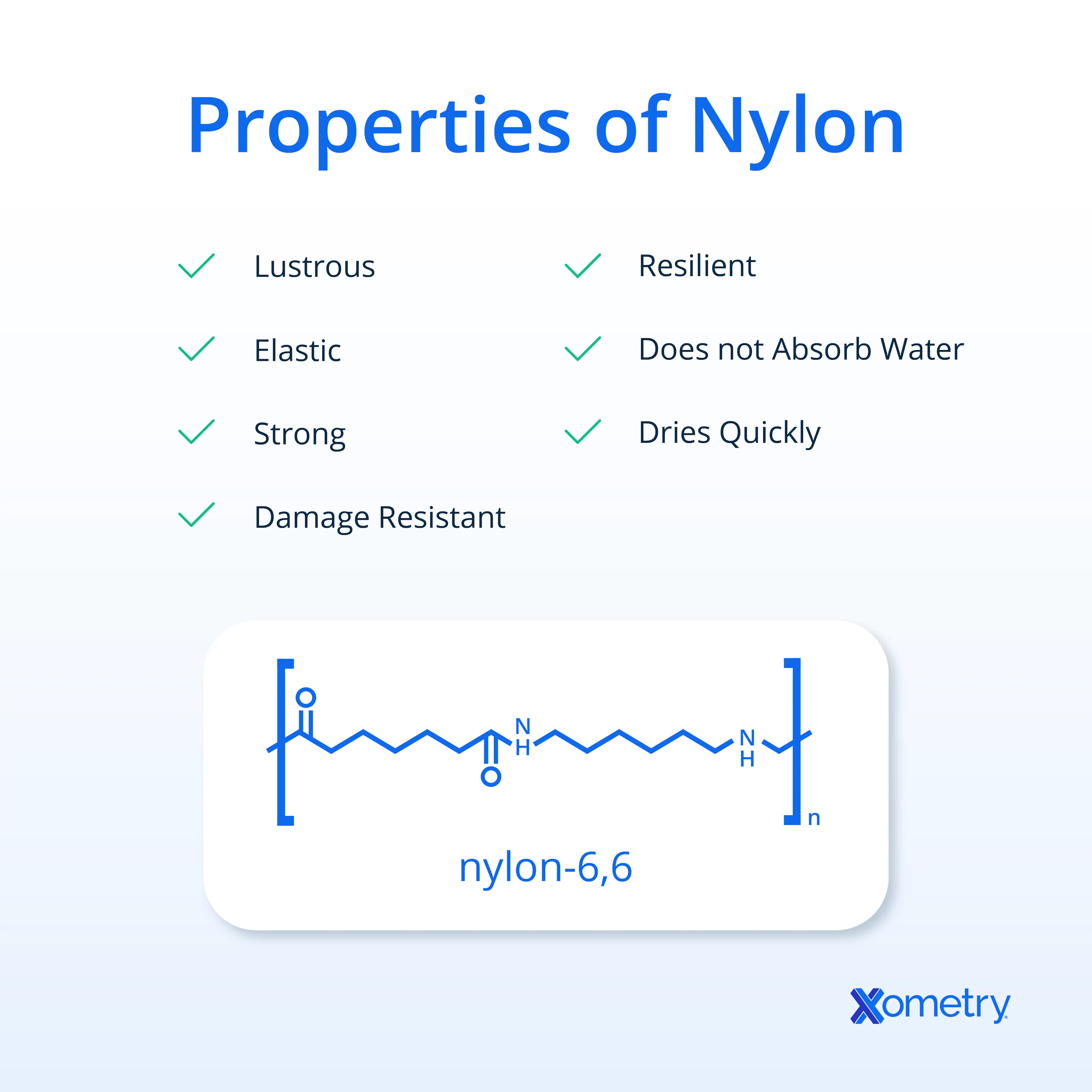
1. Nylon Is Lustrous
Nylon exhibits a natural sheen depending on its surface finish, degree of crystallinity, and fiber processing conditions. The lustrous quality results from light reflection at the surface, although the degree of gloss depends on processing methods and the presence of additives or fillers. The property improves the visual appeal of fabrics and molded parts when processed for a glossy finish. Optical appearance is influenced by surface smoothness, crystallinity, and microstructural uniformity, which affect light reflection and scattering. The lustrous appearance of nylon remains stable under normal indoor conditions but changes under prolonged ultraviolet exposure or environmental aging unless stabilized.
2. Nylon Is Elastic
Nylon demonstrates elastic and viscoelastic behavior, allowing it to partially or fully return toward its original shape after stretching within its elastic limit. The polymer chains possess flexibility that allows reversible deformation under applied stress within the material’s elastic region. Elasticity contributes to performance in applications involving repeated movement, although long-term durability depends on fatigue resistance, creep behavior, and environmental conditions. Energy is stored through chain alignment and intermolecular interactions (hydrogen bonding) and is partially released upon unloading during stretching. Elastic recovery ensures long-term performance in textiles and engineered components.
3. Nylon Is Very Strong
Nylon exhibits relatively high mechanical strength due to its semi-crystalline structure and hydrogen bonding between polymer chains, although strength depends on grade, crystallinity, and environmental conditions. The material withstands substantial mechanical loads within its design limits, although performance is affected by temperature, moisture absorption, and long-term creep. The semi-crystalline molecular arrangement and intermolecular bonding contribute to resistance against tearing and deformation in properly processed or reinforced grades. Strong intermolecular forces (hydrogen bonding) contribute to stability under mechanical stress, although time-dependent deformation (creep) occurs under sustained loading. The mechanical properties support its use in demanding industrial and consumer applications (gears, bearings, fasteners, textiles, and molded structural components).
4. Nylon Is Damage-Resistant
Nylon demonstrates good abrasion and impact resistance due to its semi-crystalline structure and hydrogen bonding; environmental resistance varies (e.g., UV sensitivity, moisture absorption). The toughness of the polymer network helps absorb mechanical energy, reducing the chance of crack initiation and surface wear under repeated stress. The resistance to mechanical damage contributes to extended service life in components subject to friction or impact. Nylon maintains performance under moderate conditions but is affected by moisture absorption, UV exposure, and certain chemicals. The properties are affected by moisture absorption and prolonged UV exposure. The balance of toughness, wear resistance, and structural integrity supports reliable use in demanding structural and functional applications.
5. Nylon Is Resilient
Nylon demonstrates resilience by absorbing energy and recovering after deformation. Polymer chains undergo elastic and viscoelastic deformation under stress and partially recover their original configuration when the stress is removed. Resilience contributes to shock absorption and impact resistance, with performance influenced by the polymer’s molecular weight, crystallinity, and environmental conditions. The property supports performance in dynamic environments where repeated stress occurs. Nylon maintains structural stability under repeated loading within its elastic limits, although long-term stability can be affected by creep, moisture absorption, and temperature.
6. Nylon Can Absorb Water
Nylon absorbs water because of its polar amide groups, with the degree of absorption influenced by crystallinity, material grade, and environmental humidity. Moisture uptake affects dimensional stability, tensile strength, stiffness, and creep resistance. Water absorption generally increases flexibility while reducing tensile strength and stiffness. The effects are partially reversible upon drying. The moisture sensitivity influences performance in humid or wet environments and must be considered in component design and material selection.
7. Nylon Is Quick-Drying
Nylon releases absorbed moisture under ambient conditions; drying rate depends on geometry, crystallinity, humidity, temperature, and airflow. Water is hydrogen-bonded to the polar amide groups, but much of it is loosely bound and evaporates, allowing gradual drying. The material’s ability to release moisture reduces drying-related delays in textile and industrial applications. The moisture-release behavior contributes to comfort and usability in textile-based and wearable consumer products. Nylon maintains functionality by gradually releasing absorbed moisture, helping restore dimensional stability and performance after exposure to humidity.
8. Nylon Has High Tensile Strength
Nylon exhibits high tensile strength due to strong intermolecular bonding and crystalline regions. The material resists elongation under applied loads. Tensile strength ensures stability in applications requiring load-bearing capacity. The property supports structural integrity in fibers and molded parts. Nylon maintains performance under continuous mechanical stress.
9. Nylon Has Excellent Abrasion Resistance
Nylon resists surface wear caused by friction and contact with other materials. The polymer chains maintain integrity under repeated rubbing. Abrasion resistance extends the lifespan of nylon products in high-contact environments. The property supports durability in textiles and mechanical components. Nylon generally maintains good surface integrity under wear, though surface roughness can increase depending on load, environment, and counterface material.
10. Nylon Has Good Impact Resistance
Nylon absorbs and dissipates energy during sudden mechanical shocks. The polymer structure prevents brittle fracture under impact. Impact resistance supports safety and reliability in engineering applications. The property allows nylon to withstand accidental drops and collisions. Nylon maintains performance under dynamic loading conditions.
11. Nylon Has High Wear Resistance
Nylon resists gradual material loss under mechanical stress. Thickness and strength remain despite continuous use. Wear resistance ensures long-term durability in industrial applications. Maintenance requirements are reduced due to this property. Consistent performance is achieved under demanding conditions.
12. Nylon Has a Low Coefficient of Friction
Nylon exhibits smooth sliding behavior against surfaces. The low coefficient of friction reduces energy loss during movement. The property minimizes wear and heat generation in systems. Efficient operation is supported in applications involving motion. Stability is maintained under continuous sliding contact.
13. Nylon Has Good Fatigue Resistance
Nylon withstands repeated cyclic loading without failure. Polymer chains maintain integrity under continuous stress cycles. Fatigue resistance supports reliability in mechanical applications. Ratigue resistance delays crack initiation and growth under cyclic loading. Durability is maintained in dynamic environments.
14. Nylon Has a High Melting Point
Nylon exhibits a high melting point due to strong hydrogen bonding. Stability is maintained under elevated temperatures. High melting point supports performance in thermal processing. Shape and strength remain before reaching critical heat levels. Deformation is resisted under moderate thermal exposure.
15. Nylon Has Good Chemical Resistance
Nylon has good resistance to many oils, fuels, and some solvents, but is vulnerable to strong acids, bases, and certain solvents (e.g., phenols). The polymer structure maintains stability under chemical exposure. Chemical resistance supports use in industrial environments. Reliability is ensured in contact with oils and fuels. Mechanical properties remain despite chemical interaction.
16. Nylon Is Lightweight
Nylon exhibits low density compared to metals. Lightweight nature reduces handling effort. Efficiency is supported in transportation and manufacturing. Strength is provided without excessive mass. Nylon provides a good strength-to-weight ratio, though durability depends on loading conditions, environment, and design.
17. Nylon Has Good Electrical Insulation Properties
Nylon resists electrical conduction due to non-polar regions. Safety is supported in electrical housings and components. Insulation prevents short circuits and leakage currents. Dielectric strength is maintained under operating conditions. Reliable performance is achieved in electronic applications.
18. Nylon Has Good Machinability
Nylon processes efficiently through cutting and shaping operations. Nylon machining results in low tool wear compared to metals, but tool wear is not eliminated. Machinability supports customization in industrial applications. Dimensional accuracy is ensured in fabricated parts. Integrity is maintained during mechanical processing.
19. Nylon Has Good Moldability
Nylon adapts well to molding processes due to its thermoplastic nature. The polymer flows under heat and pressure, filling complex molds. Moldability supports the production of intricate designs. Consistency is ensured in mass manufacturing. Structural stability is maintained after cooling.
20. Nylon Has Good Thermal Stability
Nylon maintains properties under moderate thermal exposure. Deformation and degradation are resisted at elevated temperatures. Thermal stability supports performance in industrial environments. Reliability is ensured under fluctuating heat conditions. Strength and durability are maintained despite thermal stress.
Which of Nylon's Properties Should be Considered When Using Nylon?
The properties that should be considered when using nylon are listed below.
- Strength and Toughness: Nylon demonstrates high mechanical strength and toughness due to hydrogen bonding and crystalline regions within its polymer chains. The characteristics allow nylon to withstand stress and maintain durability in structural applications.
- Wear Resistance: Nylon resists gradual material loss under friction and mechanical contact. The wear resistance property supports long-term performance in components subjected to continuous motion.
- Moisture Absorption: Nylon absorbs water through its polar amide groups, which alters dimensional stability and reduces mechanical strength. Moisture interaction influences the reliability of nylon in humid environments.
- Heat Resistance: Nylon maintains performance within its service temperature range; mechanical properties degrade progressively with increasing temperature. The melting point provides a threshold beyond which deformation and degradation occur.
- Chemical Resistance: Nylon resists many oils and fuels but is susceptible to strong acids, bases, and some solvents. The chemical resistance property ensures reliability in industrial and mechanical environments where exposure to reactive substances occurs.
What Is Nylon Made Of?
Nylon is made of petroleum-derived diamines and dicarboxylic acids (or lactams), which are the monomeric building blocks for the polymer. Nylon consists of repeating polyamide linkages (-CONH-) that form long polymer chains. Condensation polymerization reactions connect diamines and dicarboxylic acids (or lactams) to form a durable polyamide solid. Chemical and structural analysis confirm that Nylon is a synthetic polyamide. The monomer units are carbon-based and contain functional groups (amine and carboxyl) that form polyamide linkages. Nylon can be produced by either condensation polymerization (e.g., Nylon 6,6) or ring-opening polymerization (e.g., Nylon 6).
Which Polymers Form the Structure of Nylon?
Nylon itself is a polymer composed of polyamide chains with repeating amide linkages formed through polymerization. The groups allow strong hydrogen bonding between chains, giving nylon strength and durability. The structure makes it a tough, wear-resistant synthetic polymer suitable for many industries. The amide linkages are key to nylon’s molecular framework. Common nylons include Nylon 6 and Nylon 66, differing in monomer sources and structure. Nylon 6, from caprolactam, offers toughness and impact resistance but lower heat resistance. Nylon 66, from hexamethylenediamine and adipic acid, has a higher melting point and thermal stability due to its symmetrical chain. The differences lead to varied mechanical and thermal properties. The chain structure influences strength and melting point through crystallinity and hydrogen bonding. Higher crystallinity boosts tensile strength and melting temperature. Nylon 66 has greater thermal stability because of its balanced chain, while Nylon 6 is tougher but less heat-resistant. The molecular structure affects flexibility and rigidity, with variations in polyamide chains shaping nylon's performance in engineering and manufacturing.
Is Nylon Derived from Petrochemicals?
Yes, Nylon is derived from petrochemicals, petroleum-based raw materials, through complex refining and chemical synthesis. Benzene and other hydrocarbons provide the necessary building blocks for the monomers. Global production depends on fossil fuel feedstocks.
What Are the Uses of Nylon?
The uses of nylon are listed below.
- Textile Fibers: Nylon fibers are used in textiles due to their strength, elasticity, and resistance to abrasion. The material provides durability and comfort in fabrics for clothing and industrial applications.
- Gears and Bearings: Nylon is applied in gears and bearings because of its low friction and high wear resistance. The polymer maintains smooth operation and reduces noise in mechanical systems.
- Electrical Components: Nylon is an insulation in electrical components due to its dielectric strength and resistance to current leakage. The property ensures safety and reliability in electronic assemblies.
- Packaging Films: Nylon films are used in packaging because of their toughness and resistance to puncture. The material preserves product integrity by providing a protective barrier.
- Industrial and Consumer Products: Nylon is utilized across industrial and consumer products due to its balance of strength, flexibility, and chemical resistance. The versatility of the polymer supports applications ranging from engineering parts to everyday goods.
- Automotive Components: Nylon is used in automotive components, such as engine covers and intake manifolds, because of its lightweight nature and strength. These parts benefit from nylon’s durability, heat resistance, and ability to withstand mechanical stress in the automotive environment.
- Medical Devices: Nylon is used in medical applications, including sutures, implants, and devices. It is favored for its biocompatibility, strength, and ability to perform reliably in the human body. Nylon is commonly used in surgical sutures and medical implants that require strength, flexibility, and resistance to wear.
- Ropes, Fishing Lines, and Parachutes: Nylon’s strength and durability make it ideal for manufacturing ropes, fishing lines, and parachutes. Its ability to resist abrasion and tensile strength ensures reliability and performance in critical applications, especially in outdoor, military, and recreational use.
- 3D Printing: Nylon is widely used in 3D printing, specifically as nylon filament, due to its strength, flexibility, and resistance to impact. It is a popular material in additive manufacturing for creating durable, functional parts that require precision and toughness.
What Industries Commonly Use Nylon?
The industries that are commonly used in nylon are listed below.
- Automotive: Nylon is used in the automotive industry for components such as gears, bushings, and under-the-hood parts due to its strength and resistance to wear. The material provides durability under mechanical stress and maintains performance in demanding environments.
- Textile: Nylon is widely applied in textiles because of its elasticity, abrasion resistance, and smooth finish. The fibers deliver long-lasting fabrics that retain strength and comfort during extended use.
- Electronics: Nylon is utilized in electronics for housings, connectors, and insulating parts due to its dielectric properties and chemical stability. The polymer ensures safety and reliability in electrical assemblies.
- Consumer Goods: Nylon is incorporated into consumer goods (packaging, household items, and sporting equipment) due to its toughness and lightweight nature. The material supports functionality and durability across everyday applications.
- Aerospace: Nylon is used in aerospace for lightweight structural components. Its strength-to-weight ratio is highly valued in this industry, where minimizing weight without sacrificing strength is crucial for efficient performance in aircraft and spacecraft.
- Medical: In the medical industry, nylon is commonly used for sutures, implants, and medical devices. Its biocompatibility and strength make it an ideal material for internal use in the body, offering reliability in sensitive environments.
- Industrial Manufacturing: Nylon is used in industrial manufacturing for components like gears, bearings, and conveyor parts. Its wear resistance and strength ensure longevity and efficient performance in industrial machinery.
- Packaging: Nylon is used extensively in packaging due to its durability and flexibility. It is used for food packaging, bags, and films, where its barrier properties, strength, and lightweight nature are key advantages in preserving products while maintaining packaging integrity.
Is Nylon Used in Automotive Components?
Yes, nylon is used in automotive components. Nylon is a material for under-the-hood and structural automotive parts. High melting points and resistance to fuels make the polymer ideal for harsh engine environments. Replacing metal components with plastic reduces vehicle weight and improves fuel efficiency. Parts are used in engine covers, gears, and bushings. The result is lightweight and durable.
What Are the Physical Properties of Nylon?
The physical properties of nylon are listed below.
- Strength: Nylon exhibits high mechanical strength due to hydrogen bonding and crystalline regions within its polymer chains. The property allows nylon to withstand significant stress without breaking.
- Elasticity: Nylon demonstrates elasticity by returning to its original shape after stretching. The flexible molecular structure supports durability under repeated mechanical loads.
- Wear Resistance: Nylon resists gradual material loss under continuous stress. The wear resistance contributes to long-term durability in industrial and consumer applications.
- Melting Point: Nylon has a relatively high melting point due to strong hydrogen bonding. The property supports stability under moderate thermal exposure.
- Density: Nylon exhibits low density compared to metals and many polymers. The lightweight nature supports efficiency in manufacturing and transportation.
- Dimensional Stability: Nylon maintains shape under mechanical stress when moisture absorption is controlled. The property supports precision in engineering applications.
- Machinability: Nylon processes efficiently through cutting and shaping operations. The property supports customization and precision in fabricated parts.
- Moldability: Nylon adapts well to molding processes due to its thermoplastic nature. The property supports the production of complex shapes with consistent quality.
- Chemical Resistance: Nylon resists oils and fuels but is susceptible to strong acids, bases, and some solvents. The property ensures stability and reliability in chemically reactive environments.
How Does Nylon Respond to Heat and Moisture?
Nylon responds to heat and moisture by becoming more flexible and less rigid. Increased temperatures cause the polymer chains to move more freely and soften the structure. Environmental exposure in applications such as connectors and outdoor components demonstrates how heat and moisture affect nylon properties. Absorbed water molecules act as a plasticizer to increase impact resistance while decreasing tensile strength.
Does Nylon Absorb Water?
Yes, Nylon absorbs water because the polar amide groups in the polymer attract and hold moisture. Saturation leads to a measurable increase in the size and weight of the component. This trait improves the flexibility of the material but reduces its overall stiffness. Nylon components such as gears and bushings are used in applications where moisture effects must be considered. The assembly remains lightweight and durable.
What Are the Chemical Properties of Nylon?
The chemical properties of nylon are listed below.
- Hydrogen Bonding: Nylon contains amide groups that form strong hydrogen bonds between polymer chains. The bonds increase strength and stability while influencing crystallinity.
- Moisture Interaction: Nylon absorbs water due to its polar amide groups, which affects mechanical properties and dimensional stability. The absorption alters stiffness and strength in humid environments.
- Solvent Resistance: Nylon resists organic solvents, maintaining structural integrity under chemical exposure. The property supports reliability in industrial and laboratory conditions.
- Acid Sensitivity: Nylon degrades when exposed to strong acids because the amide linkages break down under harsh chemical attack. The sensitivity limits its use in highly acidic environments.
- Alkali Resistance: Nylon maintains stability against weak alkalis, preserving mechanical properties under mild chemical exposure. Strong alkalis reduce durability by attacking the polymer chains.
- Oxidation Behavior: Nylon undergoes oxidative degradation; UV degradation is a related but distinct photochemical process. Stabilizers are added to reduce oxidation effects.
- Thermal Decomposition: Nylon begins to decompose chemically at elevated temperatures beyond its melting point. The decomposition releases volatile compounds and reduces material performance.
- Fuel and Oil Resistance: Nylon resists swelling and degradation when exposed to oils and fuels. The property ensures reliability in mechanical and automotive applications.
How Does Nylon React to Chemicals?
Nylon reacts to chemicals by reflecting its polyamide structure and hydrogen bonding. The amide groups provide stability against many organic solvents, oils, and fuels, which allows nylon to maintain mechanical strength in chemically active environments. Strong acids break down the amide linkages, leading to degradation and reduced durability, while weak acids have less impact. Mild alkalis do not affect nylon, but strong alkalis attack the polymer chains and reduce performance. Exposure to oxidizing agents and ultraviolet radiation accelerates chemical aging, which decreases toughness and flexibility over time.
How does Nylon react to Solvents? Nylon shows good resistance to many hydrocarbons, oils, and fuels, but can swell, soften, or degrade in certain solvents (e.g., phenols, strong polar solvents, acids). Nylon remains reliable in applications involving compatible chemicals, but performance depends on the type of solvent, temperature, and exposure duration.
Is Nylon Resistant to Oils?
Yes, Nylon is resistant to oils due to its chemical structure, which prevents swelling or degradation when exposed to hydrocarbons. The polymer chains maintain dimensional stability and mechanical strength under contact with lubricants and fuels. Resistance to oils supports reliability in automotive, industrial, and mechanical applications where exposure to petroleum-based substances occurs. The property ensures that nylon parts retain durability and performance in environments with continuous oil contact. Stability against oils is one of the defining chemical advantages of nylon in engineering use.
Is nylon resistant to solvents? Yes, Nylon is resistant to many oils, fuels, and some solvents, but can be affected by certain solvents (e.g., phenols, strong polar solvents), leading to swelling or degradation. Nylon remains stable in environments involving compatible chemicals, but stability depends on solvent type, temperature, and exposure duration.
What Are the Different Types of Nylon?
Different types of nylon are listed below.
- Nylon 6: Nylon 6 demonstrates strong mechanical properties due to hydrogen bonding within its polymer chains. The material has a lower melting point compared to Nylon 66, which reduces thermal stability under high heat exposure.
- Nylon 66: Nylon 66 generally has higher stiffness and melting point, while strength and toughness depend on grade and conditions. The material is one of the different types of nylon that maintains a higher melting point, which provides improved thermal resistance in demanding environments.
- Nylon 12: Nylon 12 offers moderate strength compared to Nylon 6 and Nylon 66, with flexibility that supports impact resistance. The polymer has a lower melting point, which limits its performance under elevated temperatures but provides stability in cold conditions.
- Glass-Filled Nylon: Glass-filled nylon achieves higher strength due to reinforcement with glass fibers. The addition of glass increases thermal stability, allowing the material to maintain performance under higher operating temperatures.
How Do Nylon 6 and Nylon 66 Differ in Structure and Performance?
Nylon 6 and Nylon 66 differ in structure and performance by engine blocks, and textile fibers demonstrate the varied performance of the two grades. Nylon 6 consists of a single monomer while Nylon 66 uses a combination of two different molecules. The difference leads to varied crystalline packing and physical durability. Molecular studies show Nylon 66 has a more rigid molecular structure. Testing reveals Nylon 66 offers higher melting point and strength than nylon 6.
Is Nylon 66 Stronger Than Nylon 6?
Yes, Nylon 66 is stronger than Nylon 6 due to its more complex and dense molecular arrangement. Higher levels of hydrogen bonding between the chains increase the resistance to mechanical stress. Engineers choose the nylon 66 variant for parts requiring maximum rigidity. Measurements show Nylon 66 typically has higher melting point and stiffness; tensile strength differences depend on grade and conditions. Nylon 66 is preferred for higher-temperature and higher-load applications compared to Nylon 6.
Nylon is a highly versatile engineering material whose value lies in its balance of strength, durability, and manufacturability. Its high tensile strength, wear resistance, and low friction make it well suited for mechanical components such as gears and bearings. The material’s lightweight nature provides a clear advantage over metals in applications where weight reduction is critical. However, its performance is strongly influenced by moisture absorption, which can reduce stiffness and affect dimensional stability. Thermal limitations also restrict its use in high-temperature environments where mechanical properties begin to degrade. Despite these constraints, nylon remains widely used because it offers an efficient combination of mechanical performance and processing flexibility.
What Are the Advantages of Nylon?
The advantages of nylon are listed below.
- High strength: The material supports heavy loads without fracturing or failing.
- Cost-efficiency: High-volume production methods reduce the cost per individual part.
- Water absorption: Water absorption is a disadvantage, as it causes dimensional instability and reduces stiffness.
- Thermal limits: Thermal limitations are a disadvantage, as mechanical performance decreases at elevated temperatures.
What Benefits Make Nylon Popular in Manufacturing?
The benefits that make nylon popular in manufacturing are strength and heat resistance. Gears and automotive housings demonstrate the utility of the material in modern production. Manufacturing popularity stems from the high strength-to-weight ratio and ease of processing. Injection molding creates complex geometries rapidly and reliably. Nylon offers good tensile strength and moderate heat resistance compared to many engineering plastics. Nylon (especially reinforced grades) is used in moderately elevated temperature applications within its service limits.
Is Nylon Lightweight Compared to Metal?
Yes, Nylon is lighter compared to metal (aluminum or steel). Low density allows for substantial weight savings in automotive and aerospace applications. Strength remains high enough to replace metal in structural roles. Comparison shows a much lower density than steel or aluminum. The material choice reduces product weight.
What Limitations Should Be Considered When Using Nylon?
The limitations that should be considered when using nylon are listed below:
- Moisture absorption: Changes in environmental water levels affect the size of the part. Engineers monitor moisture absorption.
- Limited high-temperature resistance: The material loses structural integrity in extreme heat. Nylon grades have limited continuous service temperatures depending on formulation.
- Sensitivity to strong chemicals: Acids and certain solvents cause the material to fail. Parts show sensitivity to strong chemicals.
Does Nylon Lose Strength at High Temperatures?
Yes, Nylon loses strength at high temperatures as thermal energy weakens the intermolecular bonds. The polymer chains slide past each other more easily as the material softens. Structural failure occurs well before the actual melting temperature is reached. The material softens and weakens near the melting point. Extreme environments are not ideal for prolonged high-heat exposure.
How Xometry Can Help
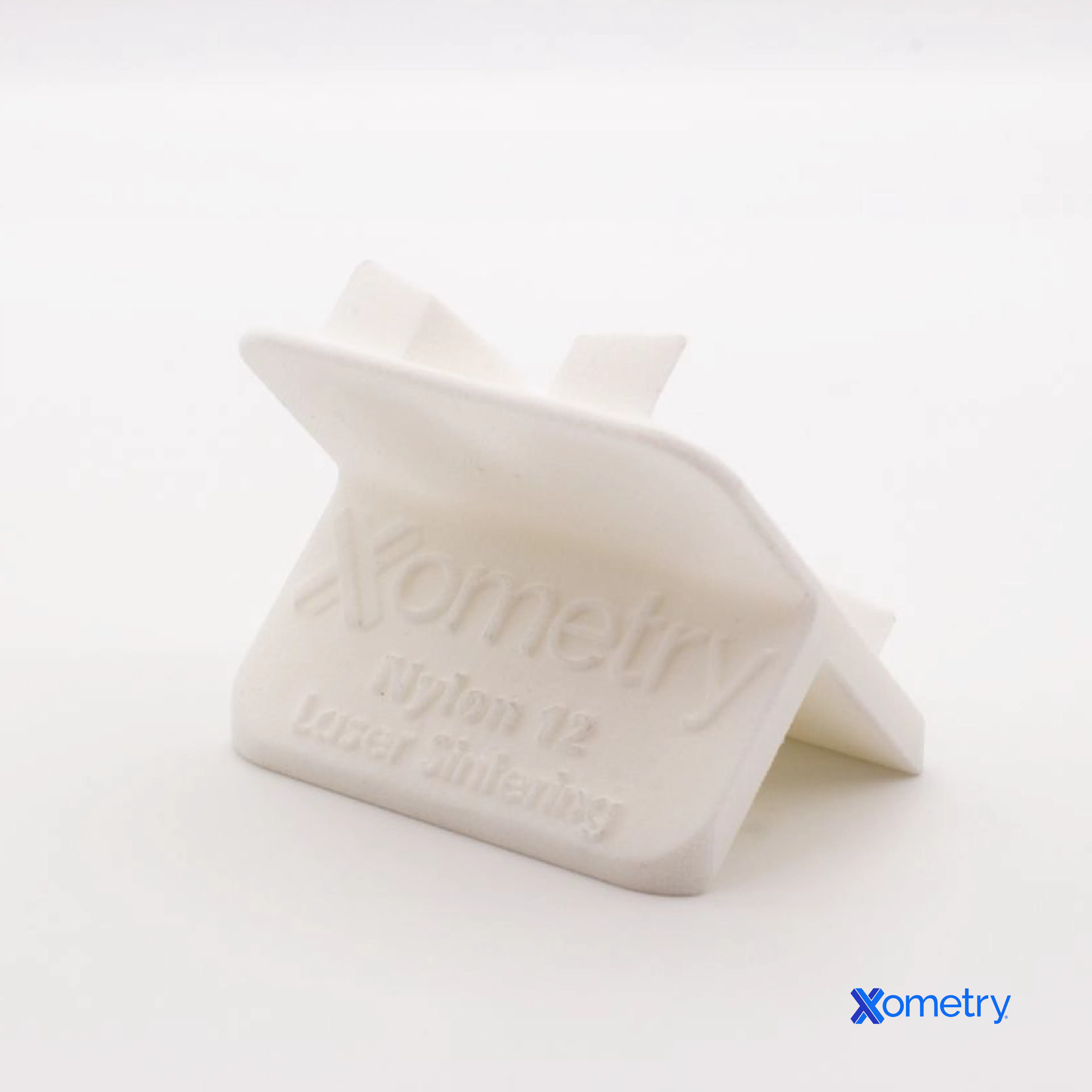
We hope you have a clearer idea of what nylon is and how it can be used in your projects. If you want to start utilizing nylon, Xometry offers multiple manufacturing options to help you get started. For example, we can 3D print prototypes from nylon powders or filaments, we can cut and machine components from it, or injection mold with it for mass-produced products. You can get started today by uploading your designs to the Xometry Instant Quoting Engine®!
Disclaimer
The content appearing on this webpage is for informational purposes only. Xometry makes no representation or warranty of any kind, be it expressed or implied, as to the accuracy, completeness, or validity of the information. Any performance parameters, geometric tolerances, specific design features, quality and types of materials, or processes should not be inferred to represent what will be delivered by third-party suppliers or manufacturers through Xometry’s network. Buyers seeking quotes for parts are responsible for defining the specific requirements for those parts. Please refer to our terms and conditions for more information.