
10 Applications of 3D Printing: Uses and Examples


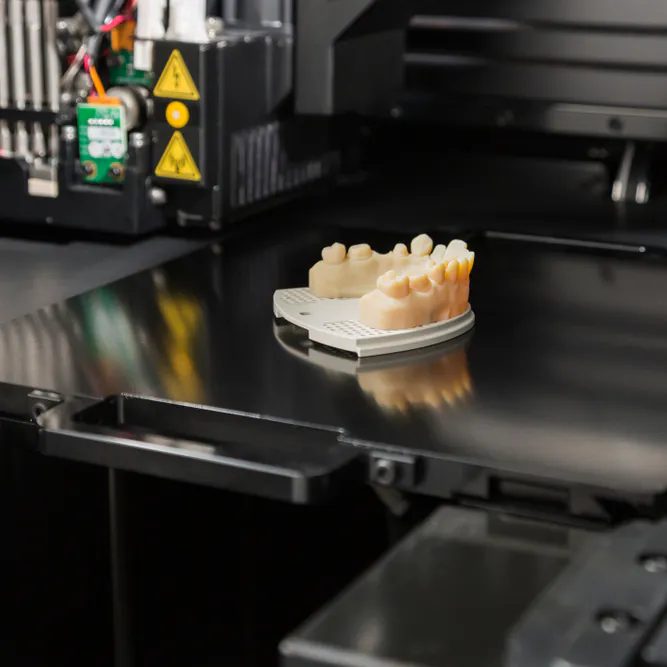
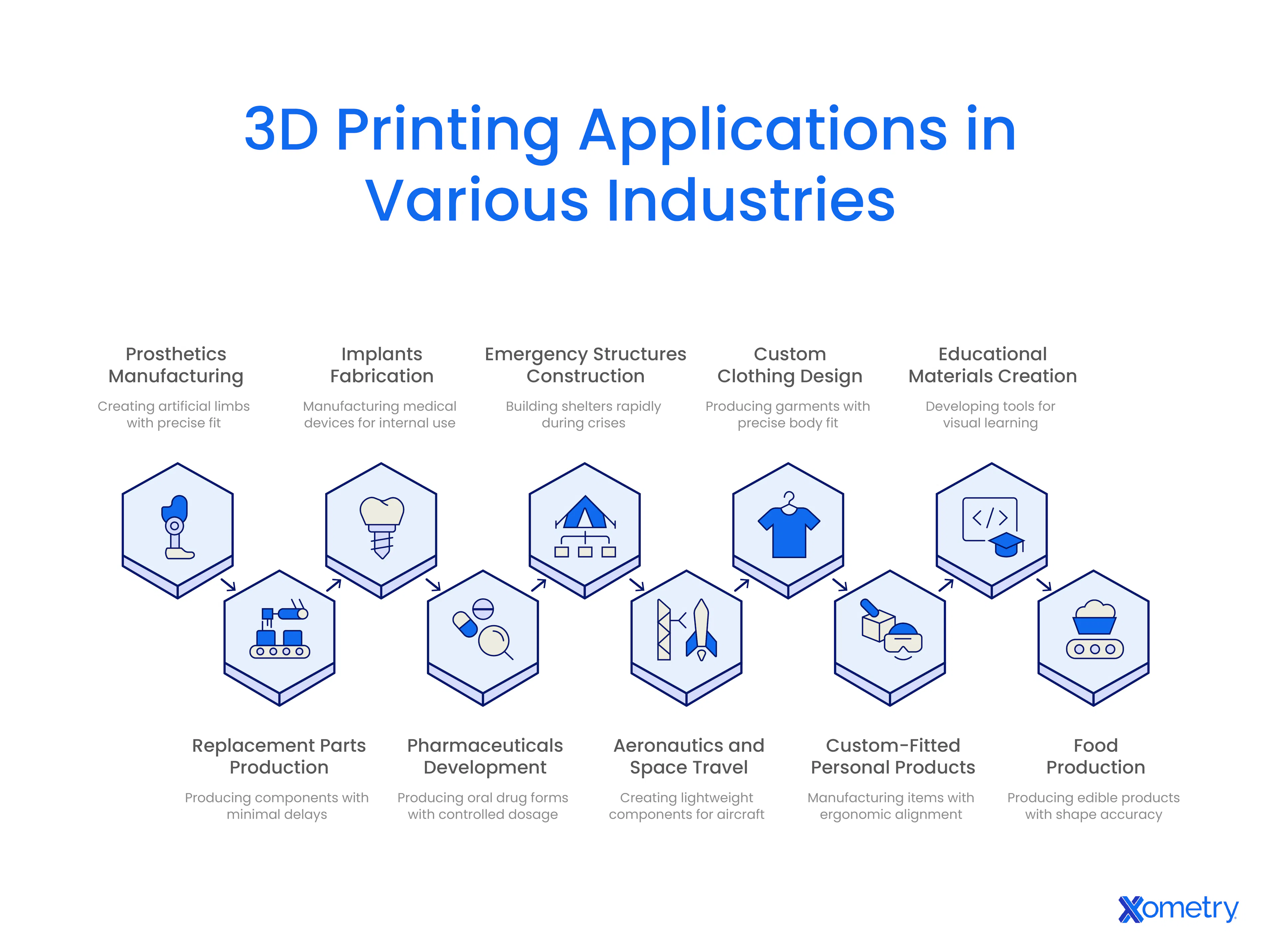
10 Applications of 3D Printing are prosthetics, automotive parts, and aerospace components, highlighting its transformative impact across industries (aerospace) with applications like GE Aviation’s jet engine parts and NASA’s spare parts production. 3D printing is making strides in many other sectors (healthcare, consumer goods, and fashion). 3D printing in manufacturing reduces material waste, eliminates long setup times, and improves production efficiency in low-volume, custom, and complex production applications. Prototyping with 3D printing speeds up the conversion of concepts into models, reducing development cycles, testing costs, and time to market, while facilitating faster validation and design revisions based on feedback. Prosthetics, jewelry, and fashion accessories are personalized and customized with 3D printing, transforming manufacturing by providing features that traditional methods lack, such as mass customization, which increases functionality and flexibility. The 3D printing uses reshapes product design, production, and consumption, offering improved efficiency, customization, and cost savings that apply mainly to low-volume or high-complexity parts. For large-scale production, traditional methods may still be cheaper, with precision and customization varying based on material choice, printing technology, and post-processing steps.
1. Prosthetics
Prosthetics refer to artificial limbs produced through multiple manufacturing methods, with 3D printing serving as one method that supports precise anatomical fit, mechanical stability, and functional movement. Prosthetics created through digital limb scanning and computer-aided design rely on high-resolution surface mapping, joint alignment control, and load distribution planning to match patient-specific anatomy. The tensile strength of prosthetics manufactured by layered polymer and composite deposition is verified through standardized ISO and ASTM mechanical testing for daily walking, gripping, and rotational use. Prosthetics fabricated through additive manufacturing reduce production time, limit material waste through optimized build strategies, and support rapid design correction through direct file modification. Prosthetics applied in medical care follow regulated medical device testing for mechanical stress resistance, biocompatibility, and long-term surface safety under formal device classification and clearance frameworks before clinical deployment.
2. Replacement Parts
Replacement Parts rely on 3D printing for the direct production of components with minimal tooling delays and reduced dependence on bulk manufacturing workflows. Replacement Parts created through additive manufacturing use digital part modeling and reverse engineering to reproduce discontinued, damaged, or low-volume components with controlled dimensional accuracy based on scan resolution, printer tolerance, and post-processing calibration. Layered material deposition produces replacement parts that reduce downtime for household equipment, industrial machinery, and commercial systems due to localized production and qualified material performance. Replacement Parts fabricated through digital workflows support cost control through material efficiency and reduce physical storage dependency for rarely used components through digital inventory systems. Replacement Parts verified through dimensional inspection and mechanical load evaluation demonstrate functional reliability for operational use based on material properties, fatigue behavior, thermal exposure, and application-specific loading.
3. Implants
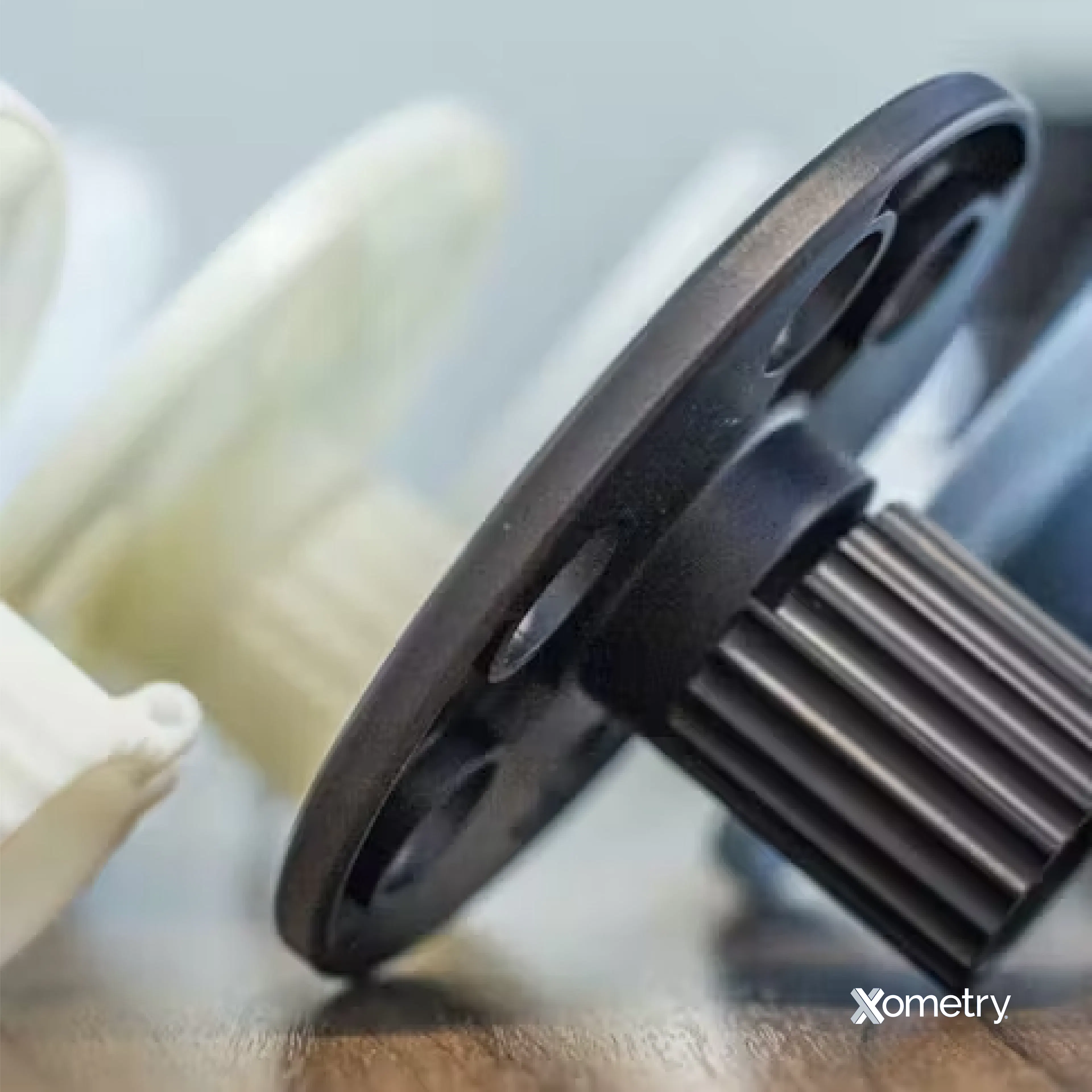
Implants refer to medical devices produced through multiple manufacturing methods, with 3D printing serving as one method for permanent or long-term placement inside the human body to restore structure or function. Implants manufactured through additive manufacturing rely on medical imaging data, digital modeling, and layer-controlled deposition to achieve precise anatomical conformity and internal lattice geometry that supports osseointegration. Titanium alloy implants and biocompatible polymers undergo standardized ISO and ASTM testing to verify strength, corrosion resistance, and fatigue performance under continuous physiological load. Implants created through 3D printing support patient-specific geometry for cranial reconstruction, spinal stabilization, and joint surface repair under qualified surgical planning and regulatory clearance. Implants used in clinical treatment follow material safety and device performance evaluation under regulatory clearance and classification enforced by the U.S. Food and Drug Administration for implantable medical devices.
4. Pharmaceuticals
Pharmaceuticals refer to medicinal products produced through multiple manufacturing methods, with 3D printing serving as one method for the controlled production of solid oral drug forms with structured dosage and programmed release behavior. Pharmaceuticals produced through additive manufacturing rely on digital formulation modeling, layer-based drug deposition, and thermal or binder activation to control tablet density, dissolution rate, and multi-drug separation within one unit. 3D-printed pharmaceuticals support individualized dose calibration for patient-specific treatment protocols in specialized applications without the need for mass tablet compression. Pharmaceuticals manufactured through digitally controlled extrusion achieve controlled dose uniformity and structural consistency for complex medication designs through formulation rheology control, extrusion stability, and in-process quality verification. Pharmaceuticals intended for clinical distribution follow quality, safety, and manufacturing oversight under regulatory frameworks and good manufacturing practices enforced by the U.S. Food and Drug Administration for drug production systems.
5. Emergency Structures
Emergency structures refer to buildings produced through large-scale 3D printing as an emerging method for rapid shelter deployment during natural disasters and humanitarian crises. Emergency structures rely on automated concrete extrusion systems guided by digital architectural models to form walls and structural supports in continuous layers, while foundations rely on hybrid or conventionally prepared concrete systems. Construction time and material efficiency are reduced when emergency structures are produced through additive manufacturing, and skilled labor is limited by automated deposition under site-specific operational conditions. Emergency structures carry verified load-bearing capacity through controlled layer bonding, standardized compressive strength testing, reinforcement validation, and compliance with local structural safety requirements for short-term and transitional occupancy.
6. Aeronautics and Space Travel
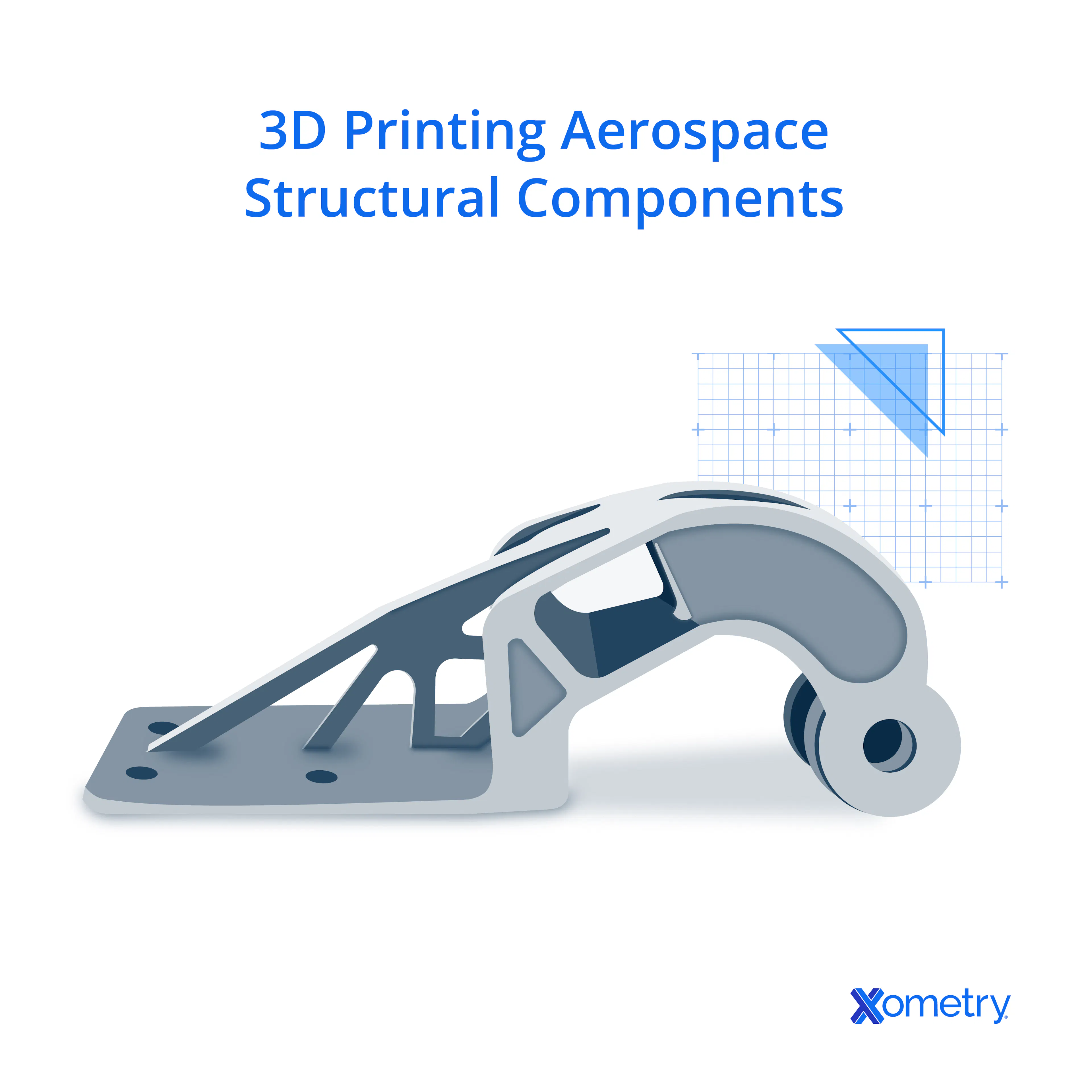
Aeronautics and space travel represent the use of 3D printing as one manufacturing method for the production of lightweight structural components, engine parts, and mission hardware for aircraft and spacecraft. Aeronautics and space travel rely on additive manufacturing to form complex internal channels, lattice reinforced structures, and heat-resistant geometries with higher material efficiency than traditional multi-axis machining and assembled fabrication. Component mass in aerospace and space travel applications is reduced, production cycles are shortened, and material waste is limited during fabrication in qualified production environments. Aeronautics and space travel systems manufactured through 3D printing undergo mechanical load testing, vibration analysis, thermal endurance verification, nondestructive inspection, and certification under aerospace regulatory qualification frameworks before operational deployment.
7. Custom Clothing
Custom clothing refers to garments produced through multiple manufacturing methods, with 3D printing serving as a specialized method for precise body fit, geometric accuracy, and digital pattern control. Custom clothing relies on body scanning data and computer-aided design to generate wearable structures through layered polymer extrusion with controlled dimensional precision rather than traditional textile fabric construction. Additive manufacturing allows for personalized sizing, controlled surface textures, and complex structural forms without the need for traditional cutting or stitching under qualified material and resolution conditions. Custom clothing fabrication through digital workflows reduces material waste through targeted deposition and controlled wall thickness distribution, subject to support structure requirements and post-processing removal.
8. Custom-Fitted Personal Products
Custom-fitted personal products refer to consumer items produced through multiple manufacturing methods, with 3D printing serving as one method for precise ergonomic alignment and individualized surface geometry. Custom-fitted personal products rely on digital body scanning, biometric measurement data, and computer-aided design to generate high-precision contours for comfort and functional stability. Additive manufacturing enables custom-fitted personal products to improve pressure distribution, contact accuracy, and long-term wear performance based on material selection, mechanical properties, and surface finish quality. Custom-fitted personal products fabricated through controlled material deposition reduce post-processing adjustment requirements and minimize size standard limitations through digitally defined geometry.
9. Educational Materials
Educational materials refer to physical teaching tools produced through multiple manufacturing methods, with 3D printing serving as one method for visual learning, hands-on instruction, and concept demonstration. Educational materials rely on digital modeling to convert abstract concepts into tangible objects with controlled scale, geometry, and functional relationships based on model design quality and printer calibration. Additive manufacturing materials are used for teaching in science, engineering, mathematics, architecture, and medicine by incorporating reproducible physical representations into structured lessons. Educational materials fabricated through digital workflows reduce production cost for classrooms under suitable printer access, material selection, and production volume while supporting rapid design updates for evolving programs.
10. Food
Food refers to edible products produced through multiple preparation and manufacturing methods, with 3D printing serving as a specialized method using digitally controlled extrusion of food-grade pastes and gels for shape accuracy and portion control. Food production through additive manufacturing relies on ingredient formulation modeling, layer-regulated deposition, rheology control, and temperature-governed setting to define structure and texture consistency. The nutritional composition of food created through digital fabrication is controlled by calibrated ingredient distribution and extrusion accuracy within each printed portion. Food produced through automated printing systems reduces manual handling, improves repeatability through validated process control, and supports customized meal design for dietary planning.
3D printing is most valuable where geometry complexity, customization, and short lead times matter more than unit cost at scale. In healthcare, it enables patient-matched prosthetics, surgical guides, and implant geometries with performance governed by material certification, mechanical testing, and regulatory controls. In aerospace and automotive, additive manufacturing supports lightweight brackets, ducting, and consolidated assemblies with internal channels that are impractical to the machine, but deployment requires qualification (fatigue, vibration, thermal exposure, NDT). In manufacturing operations, it accelerates prototyping and produces jigs, fixtures, gauges, and on-demand replacement parts, reducing tooling lead time and physical inventory by shifting toward digital spares. Emerging domains depend heavily on process control, material rheology, and post-processing, and remain more specialized than mainstream production. Across all applications, the limiting variables are consistent: material behavior, anisotropy from layer bonding, surface finish requirements, and the economics of throughput versus complexity.
What Are the Industrial Applications of 3D Printing?
The industrial applications of 3D printing are listed below.
- Automotive Manufacturing: Automotive manufacturing applies 3D printing for rapid tooling, functional prototypes, jigs, fixtures, and limited-run end-use parts with controlled dimensional accuracy and material-dependent thermal stability.
- Aerospace Production: Aerospace production relies on additive manufacturing for lightweight engine components, internal ducting, and structural brackets qualified through vibration testing, thermal exposure analysis, nondestructive inspection, and aerospace certification frameworks.
- Medical Device Manufacturing: Medical device manufacturing uses 3D printing for patient-matched surgical tools, implants, and sterilizable guides regulated under classification and clearance frameworks enforced by the U.S. Food and Drug Administration.
- Industrial Tooling and Molds: Industrial tooling and molds use 3D printing to form injection mold inserts, die casting cores, and conformal cooling channels that support faster thermal cycling and reduced tooling lead times through optimized thermal design.
- Electronics Manufacturing: Electronics manufacturing applies 3D printing for custom enclosures, thermal management housings, and circuit layout formers used during product development and low-volume production alongside conventional electronics fabrication methods.
- Energy and Power Systems: Energy and power systems rely on additive manufacturing for turbine components, heat exchangers, and pressure-resistant housings qualified through fatigue testing, creep analysis, pressure validation, and regulatory conformance for continuous mechanical and thermal loading.
- Construction and Infrastructure: Construction and infrastructure apply large-format 3D printing as an emerging method for structural panels, formwork, and modular building components engineered for compressive strength and dimensional stability.
- Manufacturing Automation: Manufacturing automation uses 3D printing for robotic end effectors, sensor mounts, alignment fixtures, and conveyor accessories produced through rapid digital iteration, with performance determined by material selection and reinforcement design.
- Marine Engineering: Marine engineering relies on additive manufacturing for brackets, fluid handling parts, and propulsion support components fabricated from reinforced polymer and metal alloys with corrosion resistance determined by alloy chemistry, surface treatment, and environmental exposure.
- Defense Manufacturing: Defense manufacturing applies 3D printing for mission-specific equipment, field replacement parts, and load-bearing mechanical assemblies qualified through military specification compliance, nondestructive inspection, and environmental qualification testing.
What is the Application of 3D Printing in Manufacturing?
Applications of 3D Printing in Manufacturing is defined as the use of additive manufacturing as one method for prototyping, tooling, and end-use part production within industrial production systems. Manufacturing plants apply 3D printing for rapid prototyping to validate geometry and mechanical fit before full-scale production, which shortens development cycles and reduces failed tooling costs, while thermal behavior validation remains material dependent. Manufacturing operations use 3D printing for jigs, fixtures, and custom tooling that improve assembly accuracy while supporting material efficiency through targeted material deposition. Manufacturing use cases include turbine fuel nozzles produced by General Electric for jet engines, where additive manufacturing reduced part count and improved combustion efficiency through optimized internal channels, which contributed to increased fuel efficiency. General Electric documented material savings through lattice-based metal structures that lowered raw material consumption for qualified geometries compared with subtractive machining.
What Are the Examples of 3D Printing Technology?
The examples of 3D printing technology are listed below.
- Fused Deposition Modeling (FDM): Fused Deposition Modeling builds parts through heated thermoplastic filament extrusion through a nozzle deposited in successive layers for structural form generation. Fused Deposition Modeling supports rapid prototyping, tooling fixtures, and low-volume functional components for manufacturing operations based on material selection and layer bonding strength.
- Stereolithography (SLA): Stereolithography forms parts through ultraviolet laser curing of liquid photopolymer resin with high dimensional resolution and smooth surface finish determined by optical system accuracy, resin chemistry, and layer thickness. Stereolithography supports dental models, medical guides, microfluidic devices, and precision visual prototypes produced from certified photopolymer resin systems.
- Selective Laser Sintering (SLS): Selective Laser Sintering fuses powdered polymer materials through high-energy laser scanning to create near fully dense mechanical components with controlled porosity. Selective Laser Sintering supports aerospace ducting, automotive housings, snap fit assemblies, and structural enclosures without tooling for non-critical and secondary structural applications.
- PolyJet Printing: PolyJet Printing deposits photopolymer droplets through inkjet-style nozzles, followed by ultraviolet curing for multi-material and multi-color fabrication using photopolymer-based material systems. PolyJet Printing supports medical training models, product design verification, and complex texture simulation through multi-material photopolymer blending for full color anatomical modeling and multi-hardness prototype validation.
- Direct Metal Laser Sintering (DMLS): Direct Metal Laser Sintering produces near fully dense metal parts through laser fusion of powdered alloys under inert atmosphere control, with density dependent on parameter optimization and post-processing heat treatment. Direct Metal Laser Sintering supports aerospace engine components, medical implants, and high-load bearing industrial parts under qualified manufacturing and regulatory clearance conditions.
What Are the Types of 3D Printing Technology that Exist?
The types of 3D printing technology that exist are listed below.
- Fused Deposition Modeling (FDM): Fused Deposition Modeling forms parts through heated thermoplastic filament extrusion through a nozzle, layered in controlled toolpaths for structural shape creation. Fused Deposition Modeling supports rapid prototyping, manufacturing tools, production fixtures, replacement parts, and low-volume functional components based on material grade and print orientation.
- Stereolithography (SLA): Stereolithography produces solid parts through laser curing of liquid photopolymer resin with fine surface resolution determined by optical accuracy, resin chemistry, and layer thickness. Stereolithography supports dental models, surgical guides, fluidic components, casting patterns, and precision visual prototypes produced from certified photopolymer resin systems.
- Selective Laser Sintering (SLS): Selective Laser Sintering fuses powdered polymer materials through high-power laser scanning to form mechanically strong, near fully dense parts without external support structures due to surrounding powder bed support. Selective Laser Sintering supports aerospace ducting, snap-fit housings, mechanical enclosures, and lightweight structural assemblies for non-critical and secondary structural applications.
- Direct Metal Laser Sintering (DMLS): Direct Metal Laser Sintering builds near fully dense metal parts through laser fusion of powdered alloys under inert gas control with density dependent on parameter optimization and post-processing heat treatment. Direct Metal Laser Sintering supports medical implants, turbine components, structural brackets, and heat-resistant industrial hardware under qualified manufacturing and regulatory clearance conditions.
- Electron Beam Melting (EBM): Electron Beam Melting uses an electron beam under vacuum conditions to melt conductive metal powder layers for high-strength parts. Electron Beam Melting supports orthopedic implants, aerospace structural frames, and load-bearing titanium components based on controlled alloy composition and build parameter regulation.
- Binder Jetting: Binder Jetting deposits liquid binder into powdered material beds to form solid shapes that undergo post-sintering or infiltration for density development, depending on the material system. Binder Jetting supports sand casting molds, metal tooling blanks, ceramic components, and architectural manufacturing forms following secondary densification processes.
- Material Jetting (PolyJet): Material Jetting ejects photopolymer droplets through precision print heads, followed by ultraviolet curing for multi-material and multi-color output using photopolymer-based material systems. Material Jetting supports medical training models, texture simulation parts, consumer product visualization, and ergonomic prototype validation produced from certified photopolymer materials.
- Directed Energy Deposition (DED): Directed Energy Deposition feeds metal wire or powder into a focused energy source under inert atmosphere protection for direct deposition onto existing surfaces. Directed Energy Deposition supports part repair, mold reinforcement, structural weld replacement, and component refurbishment for applications tolerant of lower dimensional precision.
- Sheet Lamination (LOM): Sheet Lamination bonds thin material sheets through heat, pressure, or adhesive bonding, followed by contour cutting for layered shape production. Sheet Lamination supports full-scale concept models, packaging prototypes, and architectural development forms with limited structural strength.
- Multi Jet Fusion (MJF): Multi Jet Fusion uses thermal agents and infrared energy to fuse polymer powder layers for rapid production of near fully dense parts. Multi Jet Fusion supports production-grade housings, connectors, clips, and functional assemblies with consistent surface uniformity distinct from injection-molded finishes.
- Vat Photopolymerization: Vat Photopolymerization solidifies liquid resin through controlled light exposure across each layer for high-dimensional accuracy influenced by resin shrinkage and post-curing behavior. Vat Photopolymerization supports micro components, optical parts, precision tooling inserts, and medical modeling systems with material durability constrained by photopolymer chemistry.
What Are the Main Parts of the 3D Printer?
The main parts of the 3D printer are listed below.
- Motherboard or Controller Board: The Motherboard or Controller Board acts as the primary motion and process controller that interprets G-code instructions, regulates temperature feedback, and directs motor movement across each axis. Motherboard or Controller Board architecture follows real-time motion control logic aligned with additive manufacturing process standards rather than formal firmware frameworks issued by ASTM International.
- Power Supply Unit (PSU): The Power Supply Unit converts alternating current into stable direct current required for heaters, motors, sensors, and control electronics based on regulated voltage and current capacity. Power Supply Unit performance determines voltage stability and thermal safety under continuous load operation through internal protection circuitry and heat dissipation design.
- Frame: Frame forms the rigid structural skeleton that supports linear rails, motors, and mechanical assemblies based on material stiffness and joint integrity. Frame rigidity governs print accuracy through vibration control and dimensional stability during high-speed motion influenced by mass distribution.
- User Interface: User Interface provides direct operational control through display panels, rotary encoders, or touchscreens for job selection, temperature input, and system calibration routed through the controller board. User Interface design controls interaction reliability during setup and live printing based on firmware responsiveness and input signal processing.
- Connectivity: Connectivity enables data transmission between the slicing software output and the printer through wired or wireless communication channels using machine instruction files. The connectivity function governs file transfer integrity and remote command execution stability based on communication protocol reliability.
- Extruder: Extruder drives solid feedstock toward a heated hotend through controlled mechanical pressure for downstream nozzle extrusion. Extruder precision governs layer width consistency, bonding strength, and surface finish quality through calibrated flow rate control.
- Motion Controllers: Motion Controllers regulate stepper motor movement across Cartesian or delta axis systems through stepper driver pulse timing commands executed by firmware. Motion Controllers determine positioning accuracy through pulse timing, acceleration curves, and directional coordination influenced by mechanical backlash.
- Print Material: Print Material serves as the raw feedstock for layer deposition in filament, resin, powder, or wire form based on process compatibility. Print Material chemical structure defines thermal behavior, mechanical strength, and surface bonding during solidification, influenced by polymer additives and fillers.
- Print Bed: Print Bed provides the flat build surface that anchors the first layer during deposition based on surface treatment and leveling calibration. Print Bed thermal regulation stabilizes adhesion through controlled surface temperature distribution based on heater uniformity.
- Feeder System: Feeder System transports print material from storage to the extrusion zone under controlled tension and feed rate based on mechanical drive architecture. Feeder System stability prevents underextrusion, overextrusion, and material grinding during long production cycles, influenced by nozzle cleanliness and filament consistency under the Parts of the 3D Printer.
How Precise is 3D Printing?
3D printing is considered precise by achieving dimensional control that ranges from ±0.05 mm to ±0.3 mm, depending on the process type, machine calibration, build orientation, and material system. Fused deposition modeling operates near ±0.2 mm to ±0.3 mm due to nozzle diameter, thermal shrinkage, and layer height variation, with achievable tolerance influenced by extrusion tuning and dimensional compensation. Stereolithography and digital light processing reach ±0.05 mm to ±0.1 mm through laser or projected light curing of liquid resin, with final tolerance influenced by resin shrinkage during post-curing. Selective laser sintering maintains ±0.1 mm to ±0.2 mm dimensional precision through powder fusion under controlled thermal conditions, with secondary finishing required for tight tolerance features. Dimensional performance definitions and tolerance benchmarks for additive manufacturing follow standardized test and measurement methods published by organizations, including the American Society for Testing and Materials (ASTM)International. ASTM International tolerance standards guide end-use reliability design for press fits, gear meshing accuracy, airflow channel alignment, and medical device conformity through engineering specification control.
What are the Filaments used for Different Types of 3D Printers?
The filaments used for different types of 3D printers are listed below.
- PLA Filament: Polylactic Acid (PLA) filament features low printing temperature, reduced warping tendency, and smooth surface finish derived from plant-based polymers under controlled cooling conditions. PLA Filament supports visual prototypes, educational models, display parts, and low-stress mechanical components in low-heat service conditions.
- ABS Filament: Acrylonitrile Butadiene Styrene (ABS) filament exhibits high impact resistance, elevated heat tolerance, and structural durability under mechanical load based on material grade and print orientation. ABS Filament supports automotive housings, appliance components, tool enclosures, and functional mechanical assemblies when printed under controlled thermal and ventilation conditions.
- PETG Filament: Polyethylene Terephthalate Glycol (PETG) filament combines chemical stability, moisture resistance, and moderate flexibility with strong layer adhesion influenced by extrusion temperature and cooling rate. PETG Filament supports food packaging prototypes, protective covers, fluid containers, and outdoor exposed components when produced from certified food-safe grades.
- Nylon Filament: Polyamide (Nylon) filament provides high tensile strength, abrasion resistance, and fatigue endurance under repeated mechanical motion, with mechanical performance influenced by moisture absorption. Nylon Filament supports gears, bearings, hinges, clips, and industrial wear components with wear behavior influenced by lubrication and surface finishing.
- FLEX Filament / TPU / TPE: Thermoplastic Polyurethane and Thermoplastic Elastomer filament exhibits elastic deformation, tear resistance, and vibration-damping properties based on the TPU and TPE formulation range. FLEX Filament supports gaskets, seals, shock-absorbing components, medical braces, and wearable devices when produced from certified biocompatible grades.
- Carbon fiber–filled filaments: Carbon fiber–filled filaments increase stiffness and dimensional stability but can also reduce elongation at break and impact resistance compared with the unfilled base polymer.
- PC Filament: Polycarbonate (PC) filament demonstrates high impact resistance, transparent polymer by chemistry, but 3D‑printed parts are not influenced by print settings and post-processing, and have elevated thermal performance under continuous heat exposure. PC Filament supports protective shields, lighting components, electrical housings, and industrial safety covers based on the flame performance of the resin grade.
- ASA Filament: Acrylonitrile Styrene Acrylate (ASA) filament provides ultraviolet resistance, weather stability, and long-term color retention under outdoor exposure influenced by pigment formulation. ASA Filament supports exterior signage, vehicle trim parts, outdoor enclosures, and infrastructure components with mechanical strength lower than that of fiber-reinforced engineering polymers.
- PEEK Filament: Polyether Ether Ketone (PEEK) filament delivers exceptional chemical resistance, short-term thermal stability approaching 300 degrees Celsius, and very high mechanical strength. PEEK Filament supports aerospace brackets, medical implants, oil and gas components, and high-temperature industrial parts under qualified manufacturing and regulatory certification.
- PEI / ULTEM Filament: Polyetherimide (PEI) filament maintains flame resistance, high strength-to-weight ratio, and long-term dimensional stability under thermal stress based on resin grade and print orientation. PEI Filament supports aerospace ducting, electrical insulation parts, medical device housings, and structural aircraft interiors under qualified manufacturing and regulatory approval under Filaments for Different types of 3D Printers.
What are the Benefits of Using 3D Printers?
The Benefits of using 3D Printers are rapid prototyping, cost efficiency, mass customization capability, and material waste reduction across manufacturing, medical, aerospace, and construction applications based on process and material selection. Manufacturing operations use 3D printing to convert digital designs into physical prototypes within short production windows, which shortens development cycles and reduces tooling delay dependency. Automotive and aerospace production achieves cost savings through qualified part consolidation, where selected multi-component assemblies convert into single printed structures that reduce labor demand and inventory volume. Medical production applies 3D printing for patient-specific implants and prosthetic devices that match anatomical geometry with high-dimensional accuracy under certified material systems and regulatory clearance for clinical use. Construction operations apply large-format 3D printing as an emerging shelter fabrication method that limits raw material waste through precise layer deposition compared with subtractive cutting practices under the Benefits of Using 3D Printers.
Why 3D Printers is the Future when it Comes to Building Anything?
Additive manufacturing is a complementary production method, not a universal replacement; it is best suited for low‑to‑medium volume, complex, customized, or high‑value parts rather than all manufactured goods. Industrial fabrication scales from micro medical components to full-scale construction structures through direct layer deposition without retooling or mold fabrication in qualified and emerging large-format construction applications. Sustainability performance advances through precise material placement that reduces scrap volume and lowers raw material demand when supported by controlled material sourcing and recycled polymer or concrete feedstocks. Structural design capability expands through complex internal lattice geometries and organic load paths that increase strength-to-weight ratios across aerospace, automotive, medical, and construction sectors when guided by topology optimization and material selection. Global manufacturing standards published by ASTM International define test methods, material properties, and process qualification requirements for additive manufacturing used in load-bearing and safety-critical applications under 3D Printers is the Future.
What can 3D Printers Make?
The things 3D printers can make are listed below.
- Prosthetics: Prosthetics include custom-fit artificial limbs produced through digital limb scanning and layered polymer or composite deposition under certified material systems and regulated clinical testing for mobility restoration.
- Car Parts: Car parts include brackets, vents, housings, clips, and interior trim components fabricated for functional testing and low-volume production use under non-safety-critical qualification.
- Jewelry: Jewelry includes rings, pendants, bracelets, and mold masters produced through high-resolution resin printing for casting and direct wear applications under skin-safe post-cured resin systems.
- Consumer Goods: Consumer goods include phone cases, kitchen tools, eyewear frames, storage organizers, and lifestyle accessories formed through thermoplastic deposition using certified food-safe materials when applicable.
- Architectural Models: Architectural models include scaled buildings, terrain layouts, structural concepts, and urban planning displays produced for design validation and presentation based on printer resolution and surface finishing quality.
- Medical Implants: Medical implants include cranial plates, spinal cages, dental posts, and orthopedic components produced through metal powder fusion under certified implant-grade alloys, fatigue testing, and regulatory clearance for long-term anatomical placement.
- Electronic Enclosures: Electronic enclosures include protective housings for sensors, circuit boards, control units, and testing equipment fabricated for impact resistance and thermal stability based on flame-rated polymer selection.
- Industrial Tooling: Industrial tooling includes jigs, fixtures, gauges, molds, and alignment aids produced for assembly accuracy and workflow efficiency, with secondary heat treatment applied for mold insert durability.
- Aerospace Components: Aerospace components include ducts, brackets, engine mounts, and lightweight structural parts produced through metal additive manufacturing under aerospace qualification, nondestructive inspection, and certification for flight systems.
- Construction Elements: Construction elements include formwork panels, structural blocks, modular walls, and emergency shelters produced through large-scale cement-based 3D printing under emerging construction standards and structural code compliance.
What is the Uses of 3D Printers in Everyday Life?
The uses of 3D printers in everyday life are home prototyping, hobby-based creation, educational modeling, and small-scale product manufacturing for personal and commercial purposes, based on printer capability and material selection. Households use 3D printers to produce replacement parts, custom organizers, mechanical adapters, and household tools through direct digital fabrication, with functional performance dependent on fit accuracy and material strength. Educational institutions apply 3D printing for classroom models, engineering kits, biological structures, and physics demonstrations that improve hands-on learning accuracy and spatial comprehension when produced from certified safe materials. Hobby-based projects rely on 3D printing for figurines, mechanical kits, custom board game pieces, camera mounts, and wearable accessories produced through low-cost thermoplastic extrusion, with detail quality dependent on process resolution. Small businesses apply 3D printing for custom product orders, packaging prototypes, branded display items, and low-volume retail goods without investing in large manufacturing infrastructure, with durability determined by selected material systems. Consumer‑level 3D printers do not typically operate under formal ASTM International compliance; ASTM standards exist, but their application is mainly in industrial and professional settings. ASTM International testing classifications support measurement consistency and end-use reliability across daily-use printed products when testing procedures are correctly implemented.
What are the 3D Printing Use Cases Across Industries?
The 3D printing use cases across industries are listed below.
- Aerospace: Aerospace uses 3D printing for non-critical and selected critical components, including certified flight-critical parts like GE’s fuel nozzles in jet engines. The ability to create intricate geometries reduces material waste and improves performance in flight systems when supported by qualified materials.
- Automotive: Automotive companies use 3D printing for rapid prototyping, custom tooling, and low-volume production of parts like dashboards, engine components, and brackets, with structural material qualification for high-stress applications.
- Healthcare: Healthcare benefits from 3D printing for creating customized implants, prosthetics, and surgical guides, with patient-specific solutions improving treatment outcomes when supported by regulatory compliance and precision material systems.
- Education: Education leverages 3D printing to create interactive models for teaching subjects (biology, engineering, and mathematics), with material selection ensuring safety in classroom environments.
- Food: Food industries use 3D printing to create intricate edible designs, customized food portions, and textures, with technology used mainly for specialized, luxury dining and personalized nutrition rather than mass production.
- Construction: Construction applies 3D printing to create building components, formwork, and even entire structures using materials like concrete, with large-scale applications still emerging for non-load-bearing and prototype construction.
- Fashion: Fashion industries use 3D printing to design and produce custom clothing, footwear, and accessories, with a focus on reducing material waste and creating customized designs based on individual sizing.
- Electronics: Electronics manufacturers use 3D printing to produce custom enclosures, circuit board holders, and prototype components, with final production requiring certified materials for electrical performance.
- Consumer Goods: Consumer goods companies use 3D printing to create personalized products, ranging from custom phone cases to household items, with a focus on low-volume, bespoke production.
- Jewelry: Jewelry makers use 3D printing to create detailed models, molds for casting, and even final jewelry pieces, with casting using 3D printed molds or direct printing based on material and process choice.
How is 3D Printing Used in Healthcare?
3D printing is used in healthcare by following the five steps. First, capture detailed information about the patient's body part or affected area using medical imaging techniques (CT or MRI scans), which require post-processing before conversion into a 3D model. The data is then converted into a 3D digital model using specialized software, requiring segmentation to isolate specific anatomical structures. Second, design custom prosthetics based on the 3D model to ensure a better fit, improving comfort and functionality tailored to the patient's specific medical and lifestyle needs. Third, print patient-specific implants (joint replacements or cranial plates) that integrate well with the body, catering to the patient's unique needs, while adhering to regulatory approval and biocompatibility standards. Fourth, create surgical models through 3D printing to provide surgeons with a physical replica of the area the surgeons need to operate on, improving planning and reducing intraoperative complications. Lastly, produce personalized medicine by 3D printing custom dosage forms or medical devices, such as drug delivery systems, tailored to a patient's specific medical needs, improving treatment effectiveness.
How is 3D Printing Used in Education?
3D printing is used in education by following the five steps. First, capture student interest by using 3D printing to create tangible models of abstract concepts, ensuring that models are aligned with student grade level and subject complexity. For example, printing models of molecules or historical artifacts helps students visualize and understand complex ideas, with model accuracy affecting the educational value. Second, integrate 3D printing into STEM projects by having students design and build their own prototypes, with guidance and supervision for technical aspects (design software and printer operation). The step encourages problem-solving, creativity, and technical skills in engineering and design courses, when projects are aligned with real-world scenarios and challenges. Third, use 3D printing for hands-on experimentation, ensuring that controlled objectives for testing and validation guide students. Students in subjects like physics or architecture print and test models of bridges or mechanical systems to better understand how they function, with testing outcomes influenced by material strength and functional design. Fourth, facilitate personalized learning by allowing students to print custom projects that reflect their interests and learning goals, provided that adequate resources and time are available. The process enables them to apply theory to real-world applications, depending on project complexity and available resources. Lastly, evaluate student understanding through 3D printed models created for specific assignments or research, considering the models and students' explanations of their design and function. Students use 3D printing to present their work more interactively and dynamically, complemented with explanations and discussions of their designs. Each steps highlight the benefits of 3D Printing Used in Education, increasing the educational experience and promoting deeper learning and engagement.
How is 3D Printing Used in Aerospace?
3D printing is used in Aerospace by following the four steps below.
- Use 3D printing for lightweight components. Produce complex, lightweight parts (brackets, engine components, and structural elements) with a focus on non-critical parts unless certified for high-stress aerospace applications. 3D printing reduces the overall weight of components, improving fuel efficiency and performance, depending on material selection and design optimization. For example, the aerospace industry uses 3D printing for fuel nozzles in jet engines to reduce weight and increase performance, though the parts undergo extensive testing and certification before use.
- Apply 3D printing for rapid prototyping. Prototype parts and components for testing and design validation, enabling engineers to reduce costs and accelerate testing cycles. Test multiple designs in parallel without waiting for traditional manufacturing processes during iterative design phases. Boeing uses 3D printing for a range of prototyping purposes (interior cabin components), which speeds up development and iteration.
- Manufacture spare parts on demand. Produce spare parts as needed, reducing inventory costs and storage space, applicable in emergency or remote situations where lead times are critical. Support remote locations (space missions, or on-demand part production) where traditional supply chains are unavailable. NASA has demonstrated experimental use of 3D printing aboard the ISS, but printed parts are primarily used for evaluation, training, or emergency backup, not for mission-critical hardware.
- Integrate 3D printing for custom tools and fixtures. Create custom tools and fixtures used in the manufacturing process, helping streamline and optimize production. Design tools to be lightweight, efficient, and tailored to specific tasks, reducing assembly time and improving accuracy. Airbus uses 3D printed jigs and tools to improve assembly processes, increasing precision, reducing lead times, and lowering costs for low-volume tool production.
How is 3D Printing Used in Automotive Product Development?
3D printing is used in Automotive product development by following the four steps below.
- Use 3D printing for custom parts. Create customized components (brackets, mounts, and specialized engine parts) tailored to specific vehicle models. Optimization of designs allows for reduced weight, improved performance, and increased fuel efficiency. For example, automotive manufacturers use 3D printing to produce lightweight interior parts and specialized components for improved performance.
- Implement 3D printing for rapid prototyping. Develop prototypes quickly for testing and design validation. Using the method accelerates the product development cycle, which allows for quicker iterations and adjustments to the design concepts. Automotive companies use 3D printing to create prototypes for parts (dashboards and fenders), streamlining design evaluations before production.
- Manufacture tooling and fixtures using 3D printing. Produce custom tools and fixtures that assist in the production and assembly of parts. The tools are lighter and less expensive than traditional methods, reducing lead times and costs. Automotive manufacturers use 3D printing to create tooling components for low-volume production, improving efficiency and reducing manufacturing time.
- Conduct performance testing with 3D printed components. Print parts for real-world performance testing to evaluate durability, strength, and fit before large-scale production. The risk of defects is reduced, and parts are guaranteed to meet performance standards. For example, 3D printed parts are used in testing for aerodynamics and structural integrity in wind tunnels and stress tests.
What are the Common Maintenance Tasks for 3D Printers?
The common maintenance tasks for a 3D printer are listed below.
- Cleaning the print bed: Regular cleaning of the print bed is essential to remove leftover material and ensure proper adhesion of the first layer for new prints. Cleaning frequency varies based on material type and print volume. The task prevents print failures caused by poor bed adhesion, which result from uneven surfaces or incorrect print settings.
- Lubricating moving parts: Lubricating rails, rods, and other moving parts ensures smooth motion and reduces wear, which prolongs the printer's lifespan and ensures consistent quality during prints. The type of lubricant used must be suitable for the printer's parts and materials.
- Calibrating the printer: Printer calibration involves adjusting the bed level, extrusion rate, and alignment to maintain precision and ensure optimal print quality. Calibration must be done regularly, as settings drift over time, affecting print quality.
- Replacing the nozzle: Nozzles wear out over time due to continuous exposure to heat and material buildup. Nozzle wear is affected by the type of filament used, abrasive or high-temperature materials. Replacing or cleaning the nozzle ensures proper filament extrusion and avoids clogs that disrupt the printing process, which includes regular maintenance and monitoring of filament type.
- Checking filament feed and extruder: Ensuring the filament is feeding properly through the extruder without jams or inconsistencies helps maintain a steady flow and prevents print failures due to material feed problems, which result from the extruder and the filament spool.
- Upgrading software and firmware: Updating slicing software and printer firmware is necessary for improved functionality, bug fixes, compatibility with new features or materials, and increased printer performance and stability. The update ensures that the printer runs efficiently with the latest capabilities, though not all updates are immediately necessary depending on the printer's use.
- Monitoring and cleaning the cooling fan: Cooling fans are critical to maintain proper temperature control during printing for printers working with high-temperature filaments. Cleaning and inspecting the cooling fan ensures the printer's electronics remain cool and function properly, preventing overheating or hardware damage when using high-temperature materials.
What are the Typical Repair Costs for a 3D Printer?
The typical repair costs for a 3D printer are listed below.
- Nozzle replacement: Replacing a clogged or damaged nozzle costs between [$10 and $30], with costs varying based on nozzle material and quality. Nozzle wear is primarily caused by abrasive filament additives (carbon fiber, metal‑filled) rather than temperature alone; high temperature without abrasive particles does not significantly accelerate wear.
- Extruder motor replacement: Replacing a faulty extruder motor costs between [$30 and $100], with costs varying depending on motor size, brand, and quality. Extruder motors are essential for pushing filament through the nozzle, and repairs are needed if the motor fails to function correctly due to wear and tear or electrical issues.
- Print bed replacement: Print bed replacements range from [$50 to $200], depending on the size, model, and whether it is a heated bed or uses specialized materials. A replacement is necessary if the print bed becomes damaged or loses adhesion, though issues with bed adhesion are resolved with cleaning or recalibration.
- Hotend replacement: A hotend replacement, which includes the heater block, thermistor, and nozzle, costs between [$50 and $150], with prices varying depending on whether it's an all-in-one or modular replacement. The hotend is essential for maintaining proper temperature control, which ensures consistent extrusion and print quality.
- Power supply replacement: Power supply repairs or replacements cost between [$50 and $200], depending on the printer's model and power requirements. Power supply failure results from electrical surges, prolonged use, faulty wiring, or overheating.
- Cooling fan replacement: Cooling fan replacements cost between [$10 and $50], with costs varying based on fan size, design, and material quality. Cooling fans are essential for maintaining proper temperature during printing, and failure to replace them leads to overheating, thermal instability, and damage to other components, affecting print quality and machine longevity.
- Controller board replacement: Replacing the controller board costs between [$100 and $300], depending on features (the number of extruders and supported functions). The controller board is the brain of the 3D printer and handles all the commands and processes. Failure results from electrical issues or software malfunctions, requiring a complete replacement.
Do 3D Printers Have Expensive Repair Costs?
No, 3D printer repairs are not expensive for common issues, but the cost varies depending on the printer type, complexity of the problem, and whether professional repair services are needed. Common maintenance issues involve routine tasks (cleaning print heads, recalibrating the print bed, and replacing worn parts), like extruder nozzles or belts, which require specific tools or skills. Parts (heated beds, stepper motors, and control boards) need replacing over time, with costs ranging from [$20 to $200], but specific high-end components or more complex repairs cost more, depending on the printer's model. Repairs involve replacing low-cost parts that are available, making the maintenance cost manageable, although fees increase with professional repair services or hard-to-find parts. Professional repair services are optional, as users with technical expertise handle basic repairs themselves, though complex issues require professional intervention. Repairs are covered depending on the warranty terms and the nature of the repair if the printer is under warranty, which reduces out-of-pocket expenses.
How does 3D Printing Speed Impact Material Quality?
3D printing speed impacts material quality by influencing the relationship between deposition rate, layer bonding, and cooling time, with the effect varying depending on the material used and printing technology. Faster speeds can reduce layer adhesion because material cools too quickly or doesn’t bond properly before cooling, depending on the process. The issue is not insufficient time to cool, but insufficient bonding time before cooling. Rapid deposition leads to poor surface finishes and warping (for materials with high shrinkage rates or internal stress). Slower print speeds allow for better cooling, more precise material deposition, and stronger bonding between layers, improving the quality and mechanical properties of the final product. Slower print speeds increase layer alignment consistency, affecting final print accuracy. For example, printing high-strength materials (Nylon or ABS) requires slower speeds to ensure optimal thermal control, better manage thermal expansion and contraction, and prevent defects. Printing intricate details at high speeds causes loss of fine details and incomplete layer adhesion, affecting the accuracy and durability of the object, which is critical in applications (medical devices or aerospace components). Balancing speed with material quality is essential for achieving high-performance 3D prints in sectors (aerospace and healthcare), where precision, material integrity, and regulatory compliance are paramount.
Is the 3D Printer Slow?
Yes, 3D printers are slow, but their speed depends on several factors (the complexity of the object, the chosen material, resolution settings, layer height, print orientation, and printer calibration). High-resolution prints, intricate designs, or large objects require more time to complete, with time influenced by printer specifications and slicing software settings. For example, a detailed print using Fused Deposition Modeling (FDM) or resin-based technologies takes hours or even days, depending on the size, complexity, material used, and print settings. 3D printing lags behind traditional manufacturing methods in terms of large-scale production speed, Selective Laser Sintering (SLS) and Multi Jet Fusion (MJF) are faster per part in batch production but not necessarily faster per part in all cases. Their advantage lies in parallel part production efficiency, not raw speed per unit. 3D printing remains efficient for rapid prototyping and low-volume production where customization and flexibility are essential factors, and speed is less of a concern compared to traditional methods.
SLS and MJF are faster per part in batch production but not necessarily faster per part in all cases. Their advantage lies in parallel part production efficiency, not raw speed per unit.
Do 3D Printers Have Down Time?
Yes, 3D printers have downtime. The frequency and duration of downtime depend on the printer type and usage patterns. Maintenance needs, software issues, part replacements, or external factors (user errors or power interruptions) cause potential downtime. Maintenance tasks (cleaning, recalibration, and lubrication of moving parts) are necessary for optimal printer performance and interrupt printing operations. Software problems (firmware errors, slicer software malfunctions, or compatibility issues) lead to delays, requiring troubleshooting or updates. Part replacements (worn extruder nozzles, belts, or hotends) contribute to downtime, though some of the items are replaced during routine maintenance schedules. The issues are common in consumer-grade and industrial 3D printers, though the frequency and severity depend on the printer's quality and usage intensity. Regular maintenance and timely software updates minimize interruptions. Downtime is factored into production schedules with contingency plans in place for businesses, while personal users experience longer delays in their projects.
Are 3D-Printed Objects Durable?
Yes, 3D-printed objects are durable, but their strength depends on the materials used, the printing technology applied, and print settings (layer height and infill density). Materials (ABS, Nylon, and PETG) offer good durability, making them suitable for functional parts and tools depending on the specific application and environmental conditions. For example, ABS is strong and resistant to impact, which makes it ideal for automotive parts and household items in non-critical applications unless reinforced with additional materials.Nylon offers good wear resistance, it is rarely used alone in high-load gears or bearings without reinforcement ( carbon fiber, lubricants). PLA is easy to print and ideal for prototyping, but it is less durable and more prone to breaking under high temperatures or stress, making it unsuitable for structural parts in high-stress environments. Printed objects using high-strength materials (Carbon Fiber-infused filaments or metal powders) offer superior durability for demanding applications(aerospace components or industrial tooling), though the materials require specialized printers and affect printability and finish. Lower-quality prints or prints made from weaker materials do not withstand heavy mechanical loads or environmental factors (heat and moisture) due to poor layer bonding or incorrect print settings. The durability of a 3D-printed object is therefore dependent on the material selection, the printing process used, and any post-processing or finishing methods.
How Xometry Can Help
Xometry offers a variety of manufacturing capabilities, including injection molding, CNC machining services, and nine processes for custom 3D printing services for prototyping and production. Get your instant quote today.
Copyright and Trademark Notices
- Spritam® is a trademark of APRECIA PHARMACEUTICALS, LLC
Disclaimer
The content appearing on this webpage is for informational purposes only. Xometry makes no representation or warranty of any kind, be it expressed or implied, as to the accuracy, completeness, or validity of the information. Any performance parameters, geometric tolerances, specific design features, quality and types of materials, or processes should not be inferred to represent what will be delivered by third-party suppliers or manufacturers through Xometry’s network. Buyers seeking quotes for parts are responsible for defining the specific requirements for those parts. Please refer to our terms and conditions for more information.