The Xometry app works best with JavaScript enabled!
Resources3D Printing Design26 Types of 3D Printer Filament

26 Types of 3D Printer Filament

Megan Conniff - Xometry Contributor
Written by
 26 min read
Published September 12, 2022
Updated January 23, 2026
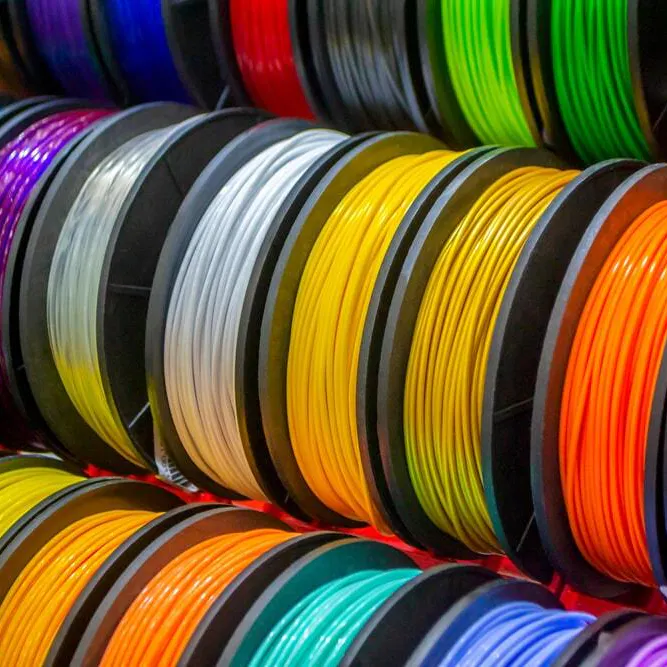
Multicolored filaments of plastic for 3D printing. Image Credit: Shutterstock.com/MarinaGrigorivna

The 26 types of 3D printer filament represent a broad range of materials used in FDM three-dimensional printing through heated extrusion and controlled layer stacking under the category of types of 3d printer filament. Filament feeds from a spool into the extruder, softens in the heated hotend, and forms each layer through controlled deposition until the object reaches full geometry. Filament type selection depends on part function, mechanical load requirements, surface finish expectations, and environmental exposure across different types of 3d printer filament. The breakdown presents defined properties, advantages, and limitations to support accurate material selection for specific project requirements.

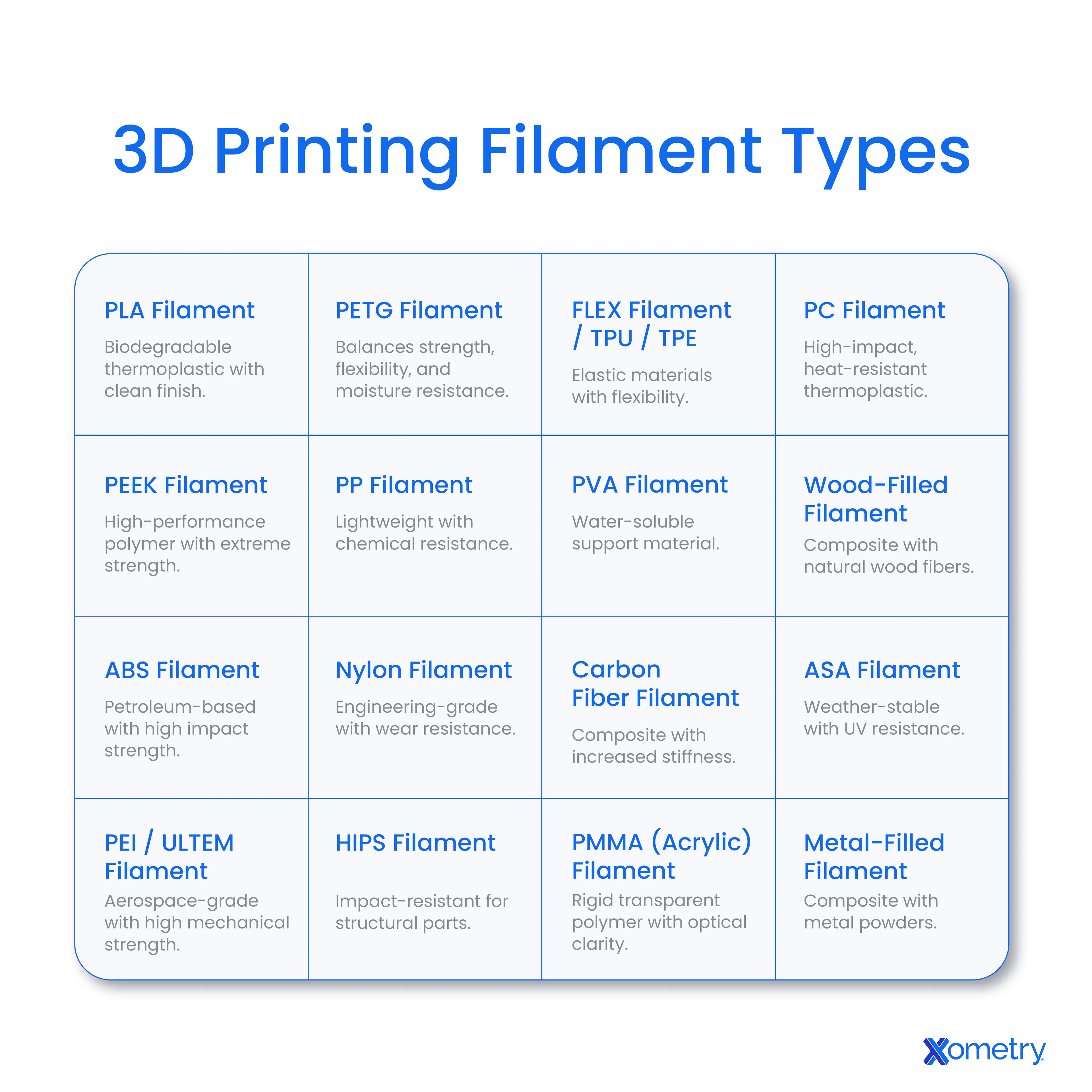
The 26 types of 3D printer filament are listed below.

  • PLA Filament: Polylactic Acid (PLA) filament is a biodegradable thermoplastic derived primarily from plant-based sources that delivers a clean surface finish, low warp behavior, and stable extrusion for visual models and prototypes.
  • ABS Filament: Acrylonitrile Butadiene Styrene (ABS) filament is a petroleum-based thermoplastic that delivers high impact strength, heat resistance, and structural durability for functional mechanical parts.
  • PETG Filament: Polyethylene Terephthalate Glycol (PETG) filament is a chemically stable thermoplastic that balances strength, flexibility, and moisture resistance for containers and durable prints.
  • Nylon Filament: Nylon filament is an engineering-grade polyamide material that delivers high wear resistance, toughness, and thermal stability for mechanical components.
  • FLEX Filament / TPU / TPE: Thermoplastic Polyurethane (TPU) and Thermoplastic Elastomer (TPE) filaments are elastic materials that deliver flexibility, abrasion resistance, and vibration dampening.
  • Carbon Fiber Filament: Carbon fiber filament is a composite material that blends chopped carbon fibers with a thermoplastic base to increase stiffness and dimensional stability.
  • PC Filament: Polycarbonate (PC) filament is a high-impact, heat-resistant thermoplastic used for industrial enclosures and moderately load-bearing parts.
  • ASA Filament: Acrylonitrile Styrene Acrylate (ASA) filament is a weather-stable thermoplastic that delivers UV resistance, heat stability, and outdoor durability.
  • PEEK Filament: Polyether Ether Ketone (PEEK) filament is a high-performance polymer that delivers extreme tensile strength, chemical resistance, and sustained high-temperature stability.
  • PEI / ULTEM Filament: Polyetherimide (PEI) filament, widely known as ULTEM, is an aerospace-grade thermoplastic with high mechanical strength, flame resistance, and thermal stability.
  • PP Filament: Polypropylene (PP) filament is a lightweight polymer that delivers chemical resistance, fatigue resistance, and extremely low water absorption.
  • HIPS Filament: High Impact Polystyrene (HIPS) filament is an impact-resistant structural parts used for as dissolvable support with ABS in limonene.
  • PVA Filament: Polyvinyl Alcohol (PVA) filament is a water-soluble support material that enables clean removal of internal structures from complex printed models.
  • PMMA (Acrylic) Filament: Polymethyl Methacrylate (PMMA) filament is a rigid transparent polymer that delivers high optical clarity and UV resistance for display parts.
  • Wood-Filled Filament: Wood-filled filament is a composite material that blends thermoplastic with natural wood fibers to create organic texture and grain appearance.
  • Metal-Filled Filament: Metal-filled filament is a composite material that combines thermoplastic with metal powders to produce dense prints with metallic weight and surface finish.
  • Ceramic-Filled Filament: Ceramic-filled filament is a composite material that blends thermoplastic with ceramic particles to produce a stone-like surface texture, which achieves ceramic hardness only after kiln firing.
  • Silk PLA Filament: Silk PLA filament is a modified PLA material that delivers high surface reflectivity and smooth visual sheen for decorative prints.
  • PLA+ Filament: Polylactic Acid Plus (PLA+) filament is an improved PLA formulation that improves impact resistance, layer bonding, and brittleness control.
  • Foaming PLA / LW-PLA: Lightweight Polylactic Acid (LW-PLA) filament is a foaming PLA material that expands during extrusion to create low-density lightweight printed structures.
  • Glow-in-the-Dark Filament: Glow-in-the-dark filament is a phosphorescent composite material that absorbs light and emits visible glow under low-light conditions.
  • Magnetic Filament: Magnetic filament weakly responds to magnets; does not retain magnetism.
  • Conductive PLA Filament: Conductive PLA filament is a carbon-infused PLA material that enables low-voltage electrical signal transfer.
  • Support Filaments (Soluble Supports): Soluble support filaments are water-dissolvable or solvent-dissolvable materials used for internal support removal during post-processing.
  • Nylon-Carbon Fiber Filament: Nylon carbon fiber filament is a composite material that combines nylon polymer with carbon reinforcement for extreme stiffness and strength.
  • TPU Filament: Thermoplastic Polyurethane (TPU) filament is a flexible elastomer that delivers high abrasion resistance, elastic recovery, and chemical stability for impact-resistant parts.
"PLA is mostly suitable for low-cost, low-function parts."
Christian Tsu-Raun,
Team Lead, Manual Quoting

1. PLA Filament

Polylactic Acid (PLA) filament is a biodegradable thermoplastic made from renewable resources (cornstarch or sugarcane). PLA Filament is easy to use, produces minimal odors, and works well for 3D printing prototypes and models. The filament provides moderate strength, smooth surface finish, and lower printing temperatures compared to many other filaments. The characteristics make PLA suitable for beginners. PLA derives from renewable resources and becomes compostable under appropriate industrial composting conditions. The PLA Filament exhibits brittle behavior under mechanical stress and degrades under prolonged exposure to UV light and moisture, rendering it unsuitable for load-bearing parts or protracted outdoor use.
The properties/characteristics of PLA Filament are shown in the table below.

Property / CharacteristicTypical Value or Description (PLA)
Property / Characteristic
Density
Typical Value or Description (PLA)
1.24-1.26 g/cm³
Property / Characteristic
Glass Transition Temperature
Typical Value or Description (PLA)
50-60 °C (57 °C)
Property / Characteristic
Shrinkage Rate
Typical Value or Description (PLA)
Low shrinkage / minimal warping after cooling.
Property / Characteristic
UV Resistance
Typical Value or Description (PLA)
Limited. PLA degrades under prolonged UV exposure.
Property / Characteristic
Moisture Absorption
Typical Value or Description (PLA)
Moisture absorption is typically higher; PLA can absorb up to ~0.5% water by weight over time.
Property / Characteristic
Surface Finish
Typical Value or Description (PLA)
Smooth and glossy surface achievable with good extrusion and cooling.
Property / Characteristic
Odor Level
Typical Value or Description (PLA)
Low odor / almost odor-free during printing.
Property / Characteristic
Biodegradability
Typical Value or Description (PLA)
Biodegradable under industrial composting conditions, environmental degradation is slower under normal conditions.
Property / Characteristic
Recommended Nozzle Type
Typical Value or Description (PLA)
Standard FFF/FDM nozzle. Typical extrusion temperature 190-210 °C.
Property / Characteristic
Recommended Use Cases
Typical Value or Description (PLA)
Prototypes, models, decorative parts, educational projects, and general-purpose prints not exposed to high heat or stress.
Property / Characteristic
Cost Level
Typical Value or Description (PLA)
Low to moderate compared with more advanced engineering filaments.
Property / Characteristic
Print Speed Compatibility
Typical Value or Description (PLA)
Compatible with typical print speeds, some PLA variants are rated for high-speed printing (250 to 300 mm/s).
Property / Characteristic
Layer Adhesion
Typical Value or Description (PLA)
Good interlayer adhesion under correct print settings and cooling.
Property / Characteristic
Post-Processing Compatibility
Typical Value or Description (PLA)
Acceptable for sanding, painting, smoothing, or coating, sometimes necessary for a high-quality surface finish.
Property / Characteristic
Food-Safe Potential
Typical Value or Description (PLA)
Possible if material and extrusion conditions are appropriate, some PLA formulations are labelled as food-safe.

2. ABS Filament

Acrylonitrile butadiene styrene (ABS) filament is a durable thermoplastic commonly used in 3D printing. ABS is known for its strength, toughness, and heat resistance, making it suitable for functional parts, automotive components, and industrial prototypes. A heated bed is required when printing ABS, and it tends to emit strong fumes while printing, which requires proper ventilation. ABS is more prone to cracking under stress and degrades when exposed to UV light over time, although it offers better durability than PLA. The ABS filament remains a popular choice for creating strong, long-lasting parts despite the limitations.

The properties/characteristics of ABS Filament are shown in the table below.

Property / CharacteristicTypical Value or Description (ABS)
Property / Characteristic
Density
Typical Value or Description (ABS)
1.04 g/cm³
Property / Characteristic
Glass Transition Temperature
Typical Value or Description (ABS)
105-110 °C
Property / Characteristic
Shrinkage Rate
Typical Value or Description (ABS)
Moderate shrinkage requires a heated bed.
Property / Characteristic
UV Resistance
Typical Value or Description (ABS)
Moderate. ABS degrades under prolonged UV exposure.
Property / Characteristic
Moisture Absorption
Typical Value or Description (ABS)
Moderate moisture absorption.
Property / Characteristic
Surface Finish
Typical Value or Description (ABS)
Rougher surface finish compared to PLA.
Property / Characteristic
Odor Level
Typical Value or Description (ABS)
Strong odor during printing requires ventilation.
Property / Characteristic
Biodegradability
Typical Value or Description (ABS)
Non-biodegradable. Suitable for industrial applications but not compostable.
Property / Characteristic
Recommended Nozzle Type
Typical Value or Description (ABS)
Standard FFF/FDM nozzle. Typical extrusion temperature 220 to 250 °C.
Property / Characteristic
Recommended Use Cases
Typical Value or Description (ABS)
Parts for automotive, engineering, durable goods, toys, and household items.
Property / Characteristic
Cost Level
Typical Value or Description (ABS)
Moderate to high compared with PLA and PETG.
Property / Characteristic
Print Speed Compatibility
Typical Value or Description (ABS)
Compatible with most standard print speeds, it can handle faster prints with the correct setup.
Property / Characteristic
Layer Adhesion
Typical Value or Description (ABS)
Good adhesion with a heated bed requires an adhesive surface like glue stick or hairspray.
Property / Characteristic
Post-Processing Compatibility
Typical Value or Description (ABS)
Suitable for sanding, painting, and acetone smoothing.
Property / Characteristic
Food-Safe Potential
Typical Value or Description (ABS)
Not food-safe unless specifically designed and certified as such.

3. PETG Filament

Polyethylene terephthalate glycol-modified (PETG)  filament is a strong, durable thermoplastic used in 3D printing. PETG combines the best features of PLA and ABS, offering excellent impact resistance, flexibility, and chemical stability. The polyethylene is known for its ease of printing, minimal warping, and low odor, making it ideal for beginners and advanced users. PETG is resistant to moisture and has some UV resistance, making it suitable for indoor functional applications. Prolonged UV exposure causes some degradation. PETG provides a smooth finish and is more durable than PLA and offers better heat resistance than PLA, but it is not as heat-resistant as ABS. The strength and versatility of PETG Filament make it a popular material for a variety of printed parts.

The properties/characteristics of PETG Filament are shown in the table below.

Property / CharacteristicTypical Value or Description (PETG)
Property / Characteristic
Density
Typical Value or Description (PETG)
1.27 g/cm³.
Property / Characteristic
Glass Transition Temperature
Typical Value or Description (PETG)
80-85 °C.
Property / Characteristic
Shrinkage Rate
Typical Value or Description (PETG)
Low shrinkage, minimal warping.
Property / Characteristic
UV Resistance
Typical Value or Description (PETG)
Moderate UV resistance, performs better than PLA under UV exposure.
Property / Characteristic
Moisture Absorption
Typical Value or Description (PETG)
Low moisture absorption compared to nylon or ABS.
Property / Characteristic
Surface Finish
Typical Value or Description (PETG)
Smooth surface finish, slightly more glossy than PLA.
Property / Characteristic
Odor Level
Typical Value or Description (PETG)
Low odor during printing, less intense than ABS.
Property / Characteristic
Biodegradability
Typical Value or Description (PETG)
Non-biodegradable, recyclable, but not compostable.
Property / Characteristic
Recommended Nozzle Type
Typical Value or Description (PETG)
Standard FFF/FDM nozzle. Typical extrusion temperature 220-250 °C.
Property / Characteristic
Recommended Use Cases
Typical Value or Description (PETG)
Mechanical parts, enclosures, automotive components, and wear-resistant applications.
Property / Characteristic
Cost Level
Typical Value or Description (PETG)
Moderate compared with PLA and ABS, more expensive than PLA.
Property / Characteristic
Print Speed Compatibility
Typical Value or Description (PETG)
Compatible with standard and faster print speeds, ideal for high-quality prints.
Property / Characteristic
Layer Adhesion
Typical Value or Description (PETG)
Excellent layer adhesion, no heated bed required, but it improves adhesion.
Property / Characteristic
Post-Processing Compatibility
Typical Value or Description (PETG)
PETG is not chemically smoothed with acetone or MEK; chemical smoothing is limited.
Property / Characteristic
Food-Safe Potential
Typical Value or Description (PETG)
FDA-approved for food contact in certain grades, check certification for specific uses.

4. Nylon Filament

Nylon filament is a strong, flexible, and durable thermoplastic used in 3D printing. Nylon filament is highly resistant to wear, abrasion, and impact, making it ideal for creating functional parts, gears, and mechanical components. The high chemical resistance of nylon, along with its ability to withstand moderately high temperatures, makes it suitable for a wide range of demanding applications. The Nylon filament is more challenging to print with compared to PLA and ABS due to its high moisture absorption, which leads to printing issues (warping, poor layer adhesion, and bubbling). The material's strength and versatility make it a top choice for producing durable, long-lasting parts.

The properties/characteristics of Nylon filament are shown in the table below.

Property / CharacteristicTypical Value or Description (Nylon)
Property / Characteristic
Density
Typical Value or Description (Nylon)
1.14 g/cm³
Property / Characteristic
Glass Transition Temperature
Typical Value or Description (Nylon)
especially Nylon 6 or 6/66) is typically around 70 °C.
Property / Characteristic
Shrinkage Rate
Typical Value or Description (Nylon)
Moderate to high shrinkage, requires heated bed and careful print settings.
Property / Characteristic
UV Resistance
Typical Value or Description (Nylon)
Good UV resistance, performs well outdoors and in harsh conditions.
Property / Characteristic
Moisture Absorption
Typical Value or Description (Nylon)
High moisture absorption, needs to be stored in dry conditions to avoid warping and strength loss.
Property / Characteristic
Surface Finish
Typical Value or Description (Nylon)
Smooth surface finish, but requires high extrusion temperature for best results
Property / Characteristic
Odor Level
Typical Value or Description (Nylon)
Moderate odor during printing, similar to ABS but less intense.
Property / Characteristic
Biodegradability
Typical Value or Description (Nylon)
Non-biodegradable, recyclable but not compostable.
Property / Characteristic
Recommended Nozzle Type
Typical Value or Description (Nylon)
Standard FFF/FDM nozzle. Typical extrusion temperature 240- 260 °C.
Property / Characteristic
Recommended Use Cases
Typical Value or Description (Nylon)
Functional parts, mechanical components, gear wheels, tools, and outdoor applications.
Property / Characteristic
Cost Level
Typical Value or Description (Nylon)
Moderate to high compared with other filaments, higher than PLA and PETG.
Property / Characteristic
Print Speed Compatibility
Typical Value or Description (Nylon)
Can be printed at standard and high speeds, though requires a dry filament for consistent results.
Property / Characteristic
Layer Adhesion
Typical Value or Description (Nylon)
Good layer adhesion, especially when printed with high extrusion temperature and moisture control.
Property / Characteristic
Post-Processing Compatibility
Typical Value or Description (Nylon)
Post-processing is required for smoothing and improving appearance. It can be dyed and chemically smoothed.
Property / Characteristic
Food-Safe Potential
Typical Value or Description (Nylon)
FDA approval varies, check specific manufacturer certifications for food-safe use.

5. FLEX Filament / TPU / TPE

FLEX filament, including thermoplastic polyurethane (TPU)  and thermoplastic elastomer (TPE) is a flexible, rubber-like material used in 3D printing. FLEX filament offers excellent elasticity, impact resistance, and flexibility, making it ideal for printing parts that need to bend or stretch, such as phone cases, wearables, and seals. TPU and TPE have good chemical and abrasion resistance, but TPU is stiffer and more durable than TPE under high-stress conditions. FLEX filaments require specific printing conditions (slower speeds, lower extrusion temperatures, and a heated bed) to avoid issues (stringing, poor layer bonding, and warping). The FLEX filament is favored for applications requiring flexibility and strength despite the printing challenges.

The properties/characteristics of FLEX filament are shown in the table below.

Property / CharacteristicTypical Value or Description (FLEX / TPU / TPE)
Property / Characteristic
Density
Typical Value or Description (FLEX / TPU / TPE)
1.10-1.25 g/cm³
Property / Characteristic
Glass Transition Temperature
Typical Value or Description (FLEX / TPU / TPE)
30-70 °C (depending on formulation)
Property / Characteristic
Shrinkage Rate
Typical Value or Description (FLEX / TPU / TPE)
Very low shrinkage, ideal for flexible parts.
Property / Characteristic
UV Resistance
Typical Value or Description (FLEX / TPU / TPE)
Moderate to good UV resistance, but not suitable for extended outdoor exposure.
Property / Characteristic
Moisture Absorption
Typical Value or Description (FLEX / TPU / TPE)
Low moisture absorption, although it can be sensitive to humidity.
Property / Characteristic
Surface Finish
Typical Value or Description (FLEX / TPU / TPE)
Rubbery, flexible finish with excellent tactile feel.
Property / Characteristic
Odor Level
Typical Value or Description (FLEX / TPU / TPE)
Low odor during printing, much less than ABS or Nylon.
Property / Characteristic
Biodegradability
Typical Value or Description (FLEX / TPU / TPE)
Non-biodegradable, recyclable but not compostable.
Property / Characteristic
Recommended Nozzle Type
Typical Value or Description (FLEX / TPU / TPE)
Standard FFF/FDM nozzle. Typical extrusion temperature 210-250 °C.
Property / Characteristic
Recommended Use Cases
Typical Value or Description (FLEX / TPU / TPE)
Flexible parts like gaskets, phone cases, wearable accessories, toys, and mechanical components.
Property / Characteristic
Cost Level
Typical Value or Description (FLEX / TPU / TPE)
Moderate to high, more expensive than standard filaments.
Property / Characteristic
Print Speed Compatibility
Typical Value or Description (FLEX / TPU / TPE)
Works well with slower print speeds for high-quality flexible parts.
Property / Characteristic
Layer Adhesion
Typical Value or Description (FLEX / TPU / TPE)
Good adhesion between layers, especially with proper temperature and print settings.
Property / Characteristic
Post-Processing Compatibility
Typical Value or Description (FLEX / TPU / TPE)
Post-processing requires careful handling, can be smoothed or painted but is harder to sand.
Property / Characteristic
Food-Safe Potential
Typical Value or Description (FLEX / TPU / TPE)
FDA approval varies based on the grade of material used,check specific manufacturer certifications.

6. Carbon Fiber Filament

Carbon fiber filament is a composite material made by infusing carbon fiber strands into a base thermoplastic, PLA, ABS, or Nylon. The filament offers exceptional strength, stiffness, and lightweight properties, making it ideal for high-performance applications (aerospace components, automotive parts, and structural prototypes). The addition of carbon fibers improves the material's rigidity and resistance to deformation while improving its strength-to-weight ratio. The Carbon fiber filament is more challenging to print due to its abrasiveness, which wears down printer nozzles faster, making hardened steel or ruby tips necessary for longer-lasting performance. The material's improved mechanical properties make it a preferred choice for parts requiring high strength-to-weight ratios despite the challenges.

The properties/characteristics of Carbon fiber filament are shown in the table below.

Property / CharacteristicTypical Value or Description (Carbon Fiber Filament)
Property / Characteristic
Density
Typical Value or Description (Carbon Fiber Filament)
1.27-1.30 g/cm³
Property / Characteristic
Glass Transition Temperature
Typical Value or Description (Carbon Fiber Filament)
60-62 °C (depending on base polymer and fiber content)
Property / Characteristic
Shrinkage Rate
Typical Value or Description (Carbon Fiber Filament)
Low shrinkage, minimal warping
Property / Characteristic
UV Resistance
Typical Value or Description (Carbon Fiber Filament)
Moderate resistance to UV, long-term exposure degrades the matrix.
Property / Characteristic
Moisture Absorption
Typical Value or Description (Carbon Fiber Filament)
Low moisture absorption, better than nylon composites.
Property / Characteristic
Surface Finish
Typical Value or Description (Carbon Fiber Filament)
Matte or textured finish, with visible carbon fiber texture.
Property / Characteristic
Odor Level
Typical Value or Description (Carbon Fiber Filament)
Low to moderate odor during printing, lower than ABS.
Property / Characteristic
Biodegradability
Typical Value or Description (Carbon Fiber Filament)
Non-biodegradable, not compostable.
Property / Characteristic
Recommended Nozzle Type
Typical Value or Description (Carbon Fiber Filament)
Hardened, abrasion-resistant nozzle recommended, extrusion temp 200-250°C.
Property / Characteristic
Recommended Use Cases
Typical Value or Description (Carbon Fiber Filament)
Structural parts, automotive components, drone frames, functional end-use parts
Property / Characteristic
Cost Level
Typical Value or Description (Carbon Fiber Filament)
Higher cost compared to standard filaments due to the composite nature.
Property / Characteristic
Print Speed Compatibility
Typical Value or Description (Carbon Fiber Filament)
Compatible with standard print speeds, optimal for structural parts.
Property / Characteristic
Layer Adhesion
Typical Value or Description (Carbon Fiber Filament)
Good layer adhesion, interlayer adhesion weaker due to fiber reinforcement
Property / Characteristic
Post-Processing Compatibility
Typical Value or Description (Carbon Fiber Filament)
Suitable for sanding and painting, but limited flexibility for smoothing.
Property / Characteristic
Food-Safe Potential
Typical Value or Description (Carbon Fiber Filament)
not food-safe unless certified for food-grade use.

7. PC Filament

Polycarbonate (PC)  filament is a strong, durable thermoplastic known for its high impact resistance and excellent heat tolerance. PC Filament is capable of withstanding temperatures up to 110°C to 130°C, making it suitable for applications that require moderate to high thermal stability, such as automotive parts, electrical housings, and industrial components. PC filament offers good optical clarity, enabling transparent prints, and it has strong chemical and impact resistance. Printing with a PC requires a high extrusion temperature and a heated bed to minimize warping. The filament's strength, heat resistance, and versatility make PC filament ideal for demanding and functional parts.

The properties/characteristics of PC Filament are shown in the table below.

Property / CharacteristicTypical Value or Description (PC Filament)
Property / Characteristic
Density
Typical Value or Description (PC Filament)
1.18-1.20 g/cm³
Property / Characteristic
Glass Transition Temperature
Typical Value or Description (PC Filament)
113-147 °C (145 °C for many PC grades).
Property / Characteristic
Shrinkage Rate
Typical Value or Description (PC Filament)
Low to moderate shrinkage, amorphous structure gives near-isotropic shrinkage and better dimensional stability than semi-crystalline plastics.
Property / Characteristic
UV Resistance
Typical Value or Description (PC Filament)
Moderate, PC offers good toughness and impact resistance, long-term UV exposure degrades the polymer matrix.
Property / Characteristic
Moisture Absorption
Typical Value or Description (PC Filament)
Hygroscopic, absorbs moisture from the air, which causes print defects if the filament is not stored dry.
Property / Characteristic
Surface Finish
Typical Value or Description (PC Filament)
Smooth and strong appearance, prints tend to exhibit good clarity (in transparent grades) and a mechanical finish depending on print parameters.
Property / Characteristic
Odor Level
Typical Value or Description (PC Filament)
Low odor during printing compared with high-temperature or fiber-filled filaments (when properly dried).
Property / Characteristic
Biodegradability
Typical Value or Description (PC Filament)
Non-biodegradable, polycarbonate is a permanent thermoplastic, not compostable or biodegradable under normal conditions.
Property / Characteristic
Recommended Nozzle Type
Typical Value or Description (PC Filament)
Hardened steel or all-metal nozzle recommended due to high extrusion temperatures.
Property / Characteristic
Recommended Use Cases
Typical Value or Description (PC Filament)
Functional parts, engineering components, mechanical housings, high-strength prototypes, heat-resistant components.
Property / Characteristic
Cost Level
Typical Value or Description (PC Filament)
Higher than basic filaments (PLA, PETG) due to engineering-grade performance and printing requirements.
Property / Characteristic
Print Speed Compatibility
Typical Value or Description (PC Filament)
Moderate, requires careful settings. Typical printer speed is 30-70 mm/s, speed depends on nozzle temp, bed, and moisture control.
Property / Characteristic
Layer Adhesion
Typical Value or Description (PC Filament)
Strong layer adhesion is possible if print bed temperature, chamber temperature, and extrusion temperatures are well controlled.
Property / Characteristic
Post-Processing Compatibility
Typical Value or Description (PC Filament)
Acceptable for machining, sanding, drilling, or gluing. Printed PC parts are modified or finished similarly to other engineering plastics.
Property / Characteristic
Food-Safe Potential
Typical Value or Description (PC Filament)
Limited, PC offers chemical and heat resistance, but suitability for food contact depends on specific filament grade and manufacturer certification.

8. ASA Filament

Acrylonitrile styrene acrylate (ASA) filament is a durable thermoplastic known for its superior UV resistance and weatherability compared to other materials like acrylonitrile butadiene styrene (ABS). ASA filament is similar to ABS in strength and toughness but outperforms ABS in outdoor applications due to its superior UV and weather resistance. ASA offers good chemical resistance and withstands high temperatures. ASA tends to warp less and produces fewer fumes during printing, while it prints similarly to ABS. The properties make ASA filament an excellent choice for projects requiring strength and longevity in outdoor environments.

The properties/characteristics of ASA Filament are shown in the table below.

Property / CharacteristicTypical Value or Description (ASA Filament)
Property / Characteristic
Density
Typical Value or Description (ASA Filament)
1.08-1.09 g/cm³
Property / Characteristic
Glass Transition Temperature
Typical Value or Description (ASA Filament)
98-112 °C depending on formulation and testing method.
Property / Characteristic
Shrinkage Rate
Typical Value or Description (ASA Filament)
Moderate shrinkage requires a heated bed for dimensional stability.
Property / Characteristic
UV Resistance
Typical Value or Description (ASA Filament)
High, retains color and structural integrity under prolonged sunlight exposure.
Property / Characteristic
Moisture Absorption
Typical Value or Description (ASA Filament)
Low hygroscopic tendency. less sensitive to moisture compared with some engineering plastics.
Property / Characteristic
Surface Finish
Typical Value or Description (ASA Filament)
Smooth, weather-resistant surface suited for outdoor and aesthetic parts.
Property / Characteristic
Odor Level
Typical Value or Description (ASA Filament)
Moderate during printing, similar to but less intense than ABS.
Property / Characteristic
Biodegradability
Typical Value or Description (ASA Filament)
Non-‘biodegradable, thermoplastic polymer stable under normal conditions.
Property / Characteristic
Recommended Nozzle Type
Typical Value or Description (ASA Filament)
Standard FFF/FDM nozzle capable of 240-260 °C extrusion, heated bed (90-110 °C) recommended.
Property / Characteristic
Recommended Use Cases
Typical Value or Description (ASA Filament)
Outdoor parts, automotive components, enclosures, functional prototypes, and parts needing UV/weather resistance.
Property / Characteristic
Cost Level
Typical Value or Description (ASA Filament)
Higher than basic filaments (PLA, PETG) due to improved performance and printing requirements.
Property / Characteristic
Print Speed Compatibility
Typical Value or Description (ASA Filament)
Typical print speeds, some ASA brands recommend moderate speed (30-50 mm/s) for reliable results
Property / Characteristic
Layer Adhesion
Typical Value or Description (ASA Filament)
Good adhesion when printing temperature, bed temperature, and ambient conditions are well controlled
Property / Characteristic
Post-Processing Compatibility
Typical Value or Description (ASA Filament)
Suitable for sanding, painting, vapor smoothing, tolerates outdoor environmental exposure
Property / Characteristic
Food-Safe Potential
Typical Value or Description (ASA Filament)
Limited, suitability depends on specific formulation and manufacturer certification.

9. PEEK Filament

Polyetheretherketone (PEEK) filament is a high-performance thermoplastic known for its exceptional strength, heat resistance, and chemical stability. PEEK filament withstands continuous service temperatures up to 250°C, with short-term exposure to even higher temperatures, making it suitable for applications in aerospace, automotive, medical devices, and industrial parts. The filament is resistant to wear, abrasion, and a broad range of harsh chemicals, offering exceptional durability in extreme environments. Printing with PEEK requires specialized equipment, including a high-temperature extruder and heated bed, due to its high melting point and glass transition temperature. The material's superior mechanical properties and ability to perform in demanding conditions make PEEK filament a top choice for critical, high-performance applications despite its printing challenges.

The properties/characteristics of PEEK Filament are shown in the table below.

Property / CharacteristicTypical Value or Description (PEEK Filament)
Property / Characteristic
Density
Typical Value or Description (PEEK Filament)
1.30-1.32 g/cm³
Property / Characteristic
Glass Transition Temperature
Typical Value or Description (PEEK Filament)
143-160 °C, depending on formulation and grade
Property / Characteristic
Shrinkage Rate
Typical Value or Description (PEEK Filament)
Low shrinkage, excellent dimensional stability in high-temperature environments
Property / Characteristic
UV Resistance
Typical Value or Description (PEEK Filament)
Excellent resistance to UV degradation, suitable for long-term outdoor applications
Property / Characteristic
Moisture Absorption
Typical Value or Description (PEEK Filament)
Very low moisture absorption, ideal for applications requiring high mechanical strength in humid environments
Property / Characteristic
Surface Finish
Typical Value or Description (PEEK Filament)
Smooth finish, high-performance prints have a glossy appearance, and require high-quality printing settings for best results
Property / Characteristic
Odor Level
Typical Value or Description (PEEK Filament)
Low odor during printing compared to some engineering polymers, although high extrusion temperatures produce a slight odor
Property / Characteristic
Biodegradability
Typical Value or Description (PEEK Filament)
Non-biodegradable, PEEK is a high-performance thermoplastic that is durable but not compostable
Property / Characteristic
Recommended Nozzle Type
Typical Value or Description (PEEK Filament)
Hardened, wear-resistant nozzle, typical extrusion temperature 350-400 °Cl, heated bed temperature 120-150 °C is recommended
Property / Characteristic
Recommended Use Cases
Typical Value or Description (PEEK Filament)
Aerospace, automotive, medical, and industrial components requiring high heat resistance, chemical resistance, and strength
Property / Characteristic
Cost Level
Typical Value or Description (PEEK Filament)
High, due to advanced material properties and manufacturing complexity, one of the most expensive filaments for 3D printing
Property / Characteristic
Print Speed Compatibility
Typical Value or Description (PEEK Filament)
Low print speeds are used, printing speeds around 20-30 mm/s for best results in terms of precision and layer bonding
Property / Characteristic
Layer Adhesion
Typical Value or Description (PEEK Filament)
Excellent interlayer adhesion, requires high temperature to achieve the best mechanical properties
Property / Characteristic
Post-Processing Compatibility
Typical Value or Description (PEEK Filament)
Suitable for machining, drilling, and sanding, PEEK is not typically solvent-smoothed; chemical resistance makes smoothing difficult. High-temperature stability allows for detailed mechanical post-processing
Property / Characteristic
Food-Safe Potential
Typical Value or Description (PEEK Filament)
Can be certified as food-safe if specific grades and formulations meet food safety certifications, and requires FDA approval

10. PEI / ULTEM Filament

Polyetherimide (PEI) is a high-performance thermoplastic known for its excellent mechanical properties, heat resistance, and chemical stability. PEI is available under the brand name ULTEM. The filament withstands continuous use at temperatures up to 170°C, with short-term exposure to higher temperatures, making it suitable for demanding applications in aerospace, medical devices, and industrial components. PEI filament offers exceptional strength, rigidity, and dimensional stability, even at high temperatures, and exhibits resistance to many chemicals (acids, bases, and solvents). The material requires high-temperature 3D printing equipment due to its elevated glass transition temperature (Tg), and it is more challenging to print with compared to other materials (PLA or ABS). PEI's strength, durability, and resistance to harsh conditions make PEI / ULTEM filament a preferred material for critical, high-performance applications despite the challenges.

The properties/characteristics of PEI / ULTEM Filament are shown in the table below.

Property / CharacteristicTypical Value or Description (PEI / ULTEM Filament)
Property / Characteristic
Density
Typical Value or Description (PEI / ULTEM Filament)
1.27 g/cm³
Property / Characteristic
Glass Transition Temperature
Typical Value or Description (PEI / ULTEM Filament)
217 °C
Property / Characteristic
Shrinkage Rate
Typical Value or Description (PEI / ULTEM Filament)
Low shrinkage, high dimensional stability in high-temperature environments
Property / Characteristic
UV Resistance
Typical Value or Description (PEI / ULTEM Filament)
Good resistance to UV degradation, suitable for demanding environments
Property / Characteristic
Moisture Absorption
Typical Value or Description (PEI / ULTEM Filament)
Very low moisture absorption, ideal for applications requiring high mechanical strength in humid environments
Property / Characteristic
Surface Finish
Typical Value or Description (PEI / ULTEM Filament)
Smooth finish, high-performance prints have a glossy appearance, require high-quality printing settings for best results
Property / Characteristic
Odor Level
Typical Value or Description (PEI / ULTEM Filament)
Low odor during printing compared to some engineering polymers, although high extrusion temperatures produce a slight odor
Property / Characteristic
Biodegradability
Typical Value or Description (PEI / ULTEM Filament)
Non-biodegradable, PEI is a high-performance thermoplastic that is durable but not compostable
Property / Characteristic
Recommended Nozzle Type
Typical Value or Description (PEI / ULTEM Filament)
Hardened, wear-resistant nozzle, typical extrusion temperature around 370-390 °C, heated bed and enclosure required
Property / Characteristic
Recommended Use Cases
Typical Value or Description (PEI / ULTEM Filament)
Aerospace, automotive, electronics, medical and industrial components that demand high heat resistance, flame retardance, and chemical stability
Property / Characteristic
Cost Level
Typical Value or Description (PEI / ULTEM Filament)
High cost due to advanced performance characteristics and manufacturing complexity
Property / Characteristic
Print Speed Compatibility
Typical Value or Description (PEI / ULTEM Filament)
Moderate print speeds, slower speeds are used due to high extrusion temperature and thermal demands
Property / Characteristic
Layer Adhesion
Typical Value or Description (PEI / ULTEM Filament)
Strong interlayer bonding is possible under proper temperature and environmental control, supporting high mechanical performance
Property / Characteristic
Post-Processing Compatibility
Typical Value or Description (PEI / ULTEM Filament)
Compatible with machining, drilling, sanding, solvent cleaning or coating, maintains structural integrity after processing
Property / Characteristic
Food-Safe Potential
Typical Value or Description (PEI / ULTEM Filament)
Low unless filament is certified explicitly for food-contact use, used in industrial, not food-grade, contexts

11. PP (Polypropylene) Filament

Polypropylene (PP) filament is a lightweight, durable thermoplastic known for its chemical resistance, flexibility, and low moisture absorption. PP filament is used in 3D printing for creating functional parts (containers, hinges, and living hinges), where flexibility and resistance to wear are essential. The material is resistant to many chemicals, acids, and bases, making it suitable for applications in medical, automotive, and industrial fields. PP has moderate resistance to UV degradation, allowing it to perform well in short-term outdoor environments, though it degrades with prolonged exposure. Printing with PP is challenging due to its tendency to warp and poor adhesion to the print bed, requiring a heated bed, a heated chamber, and controlled printing conditions for optimal results. The PP filament is strong, chemically resistant, and flexible, making it an excellent material for specific functional parts, despite its challenges.

The properties/characteristics of PP filament are shown in the table below.

Property / CharacteristicTypical Value or Description (PP Filament)
Property / Characteristic
Density
Typical Value or Description (PP Filament)
0.90-0.95 g/cm³
Property / Characteristic
Glass Transition Temperature
Typical Value or Description (PP Filament)
Semi-crystalline, PP does not have a sharp glass transition like amorphous polymers. Printable melting temperature is 160-170 °C.
Property / Characteristic
Shrinkage Rate
Typical Value or Description (PP Filament)
High shrinkage (linear shrinkage 1.5-2.5%) warping risk.
Property / Characteristic
UV Resistance
Typical Value or Description (PP Filament)
Moderate to limited, unmodified PP degrades under prolonged UV exposure.
Property / Characteristic
Moisture Absorption
Typical Value or Description (PP Filament)
Very low, hydrophobic nature yields minimal water uptake
Property / Characteristic
Surface Finish
Typical Value or Description (PP Filament)
Smooth surface possible, though adhesion challenges affect first-layer quality.
Property / Characteristic
Odor Level
Typical Value or Description (PP Filament)
Low odor during printing compared with high-temperature or fiber-filled filaments
Property / Characteristic
Biodegradability
Typical Value or Description (PP Filament)
Non-biodegradable, PP is a stable thermoplastic intended for long-term use.
Property / Characteristic
Recommended Nozzle Type
Typical Value or Description (PP Filament)
Standard FFF/FDM nozzle, extrusion temperature 220-250 °C depending on formulation.
Property / Characteristic
Recommended Use Cases
Typical Value or Description (PP Filament)
Lightweight containers, chemical-resistant parts, snap-fits, living hinges, fluid handling components, and durable functional parts.
Property / Characteristic
Cost Level
Typical Value or Description (PP Filament)
Moderate, PP remains relatively economical compared with engineering-grade filaments.
Property / Characteristic
Print Speed Compatibility
Typical Value or Description (PP Filament)
Moderate print speeds recommended (30-50 mm/s) to reduce warping and improve layer adhesion.
Property / Characteristic
Layer Adhesion
Typical Value or Description (PP Filament)
Challenging due to low surface energy, requires optimized bed prep and heat management for good interlayer bonding.
Property / Characteristic
Post-Processing Compatibility
Typical Value or Description (PP Filament)
Limited due to chemical resistance and flexibility, trimming, light sanding or adhesive joining is possible where geometry allows.
Property / Characteristic
Food-Safe Potential
Typical Value or Description (PP Filament)
High chemical resistance and inertness offer potential, but suitability depends on filament grade and certification.

12. HIPS Filament

High Impact Polystyrene (HIPS) filament is a versatile thermoplastic known for its strength, toughness, and ease of use in 3D printing. HIPS filament is used for creating durable parts, prototypes, and supports in combination with ABS filament, as HIPS is dissolved in a solvent (limonene), making it an ideal support material for ABS prints. The material offers good impact resistance and a smooth surface finish, making it suitable for functional parts and visual models. HIPS prints at a similar temperature to ABS and can be used with most standard 3D printers. The strength and ease of use of HIPS Filament make it popular for multi-material 3D printing, although it is more prone to warping than PLA.

The properties/characteristics of HIPS filament are shown in the table below.

Property / CharacteristicTypical Value or Description (HIPS Filament)
Property / Characteristic
Density
Typical Value or Description (HIPS Filament)
1.04-1.08 g/cm³
Property / Characteristic
Glass Transition Temperature / Melt Range
Typical Value or Description (HIPS Filament)
Temperature – ~100 °C; extrusion temp is 220–250 °C.
Property / Characteristic
Shrinkage Rate
Typical Value or Description (HIPS Filament)
Low to moderate shrinkage, warping risk lower than PS but adequate heated bed required for dimensional stability.
Property / Characteristic
UV Resistance
Typical Value or Description (HIPS Filament)
Moderate, decent resistance to environmental stress, but long-term UV degrade material depending on formulation.
Property / Characteristic
Moisture Absorption
Typical Value or Description (HIPS Filament)
Low hygroscopicity, minimal moisture uptake which helps maintain dimensional stability and reduces warp risk.
Property / Characteristic
Surface Finish
Typical Value or Description (HIPS Filament)
Smooth matte or semi-matte finish, suitable for painting or post-processing.
Property / Characteristic
Odor Level
Typical Value or Description (HIPS Filament)
Moderate odor during printing, ventilation is recommended for enclosed prints.
Property / Characteristic
Biodegradability / Recycling
Typical Value or Description (HIPS Filament)
Non-biodegradable, recyclable under conventional plastic recycling streams.
Property / Characteristic
Recommended Nozzle Type / Printing Conditions
Typical Value or Description (HIPS Filament)
Standard FFF/FDM nozzle, nozzle temperature 220-250 °C, heated bed 90-110 °C, enclosure recommended for better adhesion.
Property / Characteristic
Recommended Use Cases
Typical Value or Description (HIPS Filament)
Structural parts, enclosures, and prototypes are used as soluble support material (with dual-extrusion) for overhangs and complex geometries.
Property / Characteristic
Cost Level
Typical Value or Description (HIPS Filament)
Low to moderate, HIPS remains cost-effective compared to engineering-grade materials.
Property / Characteristic
Print Speed Compatibility
Typical Value or Description (HIPS Filament)
Typical printing speeds around 35-60 mm/s for balance between quality and time, slower speeds for complex prints.
Property / Characteristic
Layer Adhesion
Typical Value or Description (HIPS Filament)
Good layer adhesion with correct bed temperature and prep, adhesion challenges minimized with heated bed.
Property / Characteristic
Post-Processing Compatibility
Typical Value or Description (HIPS Filament)
Acceptable for sanding, painting, and dissolvable support (limonene) surface suitable for finishing.
Property / Characteristic
Food-Safe Potential
Typical Value or Description (HIPS Filament)
Not considered food-safe, food contact suitability depends on formulation and certification.

13. PVA Filament

Polyvinyl alcohol (PVA) alcohol filament is a water-soluble thermoplastic used as a support material in 3D printing.  PVA Filament is ideal for printing complex geometries and overhangs, as it dissolves in water, leaving behind the primary print without residue. The material is compatible with PLA, ABS, and other filaments, making it a versatile option for multi-material prints. PVA Filament is biodegradable and non-toxic, making it a safer and more environmentally friendly choice compared to some other support materials. PVA is sensitive to moisture and must be stored in a dry environment, ideally with desiccants, to prevent it from absorbing water and losing its printability. The material's unique ability to dissolve in water makes PVA Filament indispensable for intricate and detailed prints despite its vulnerability to humidity.

The properties/characteristics of PVA Filament are shown in the table below.

Property / CharacteristicTypical Value or Description (PVA Filament)
Property / Characteristic
Density
Typical Value or Description (PVA Filament)
1.25-1.26 g/cm³
Property / Characteristic
Glass Transition Temperature / Melt Range
Typical Value or Description (PVA Filament)
Glass transition temperature is ~85 °C
Property / Characteristic
Shrinkage Rate
Typical Value or Description (PVA Filament)
Low shrinkage provides stable dimensions and minimal warping during printing.
Property / Characteristic
UV Resistance
Typical Value or Description (PVA Filament)
Limited, material degrades if exposed to moisture or UV over time.
Property / Characteristic
Moisture Absorption
Typical Value or Description (PVA Filament)
High moisture sensitivity, hygroscopic absorbs moisture from the air, requiring dry storage.
Property / Characteristic
Surface Finish
Typical Value or Description (PVA Filament)
Smooth surface on supported parts, dissolving support yields clean surfaces on the main print.
Property / Characteristic
Odor Level
Typical Value or Description (PVA Filament)
Low odor during printing.
Property / Characteristic
Biodegradability
Typical Value or Description (PVA Filament)
Biodegradable when dissolved in water, water-soluble support material that dissolves without harmful byproducts.
Property / Characteristic
Recommended Nozzle Type / Printing Conditions
Typical Value or Description (PVA Filament)
Standard FFF/FDM nozzle, typical extrusion temp 190- 220°C, bed temperature 45-60 °C recommended.
Property / Characteristic
Recommended Use Cases
Typical Value or Description (PVA Filament)
Support material for complex prints with overhangs or internal cavities when using dual-extrusion printers.
Property / Characteristic
Cost Level
Typical Value or Description (PVA Filament)
Higher than basic rigid filaments due to water-soluble and specialty nature.
Property / Characteristic
Print Speed Compatibility
Typical Value or Description (PVA Filament)
Slow to moderate speeds (25-35 mm/s) advised to ensure reliable extrusion and layer bonding.
Property / Characteristic
Layer Adhesion
Typical Value or Description (PVA Filament)
Good adhesion with appropriate print settings, bonds well when the filament is kept dry.
Property / Characteristic
Post-Processing Compatibility
Typical Value or Description (PVA Filament)
Supports dissolve in water leaving clean surface, no sanding required for support removal.
Property / Characteristic
Food-Safe Potential
Typical Value or Description (PVA Filament)
Low, PVA is used as support and not certified for food-contact use unless specified by the manufacturer.

14. PMMA (Acrylic) Filament

Polymethyl methacrylate (PMMA) filament is a transparent thermoplastic known for its excellent clarity, weather resistance, and optical properties. PMMA filament is known as acrylic filament and is used in 3D printing to create clear or transparent parts (display cases, light covers, and lenses). The material offers moderate UV resistance, making it suitable for short-term outdoor applications, though prolonged exposure leads to degradation. PMMA is resistant to scratching, but it is more prone to impact damage compared to tougher materials like ABS or polycarbonate. Printing with PMMA requires temperature control and a heated bed to prevent warping and ensure adhesion. The material's high transparency and durability make PMMA filament ideal for aesthetic and functional applications.

The properties/characteristics of PMMA Filament are shown in the table below.

Property / CharacteristicTypical Value or Description (PMMA Filament)
Property / Characteristic
Density
Typical Value or Description (PMMA Filament)
1.17-1.20 g/cm³
Property / Characteristic
Glass Transition Temperature
Typical Value or Description (PMMA Filament)
100-130 °C (typical commercial range)
Property / Characteristic
Shrinkage Rate
Typical Value or Description (PMMA Filament)
Low to moderate shrinkage, printing requires careful bed and temperature control.
Property / Characteristic
UV Resistance
Typical Value or Description (PMMA Filament)
Good UV resistance, retains transparency and resists yellowing under sunlight.
Property / Characteristic
Moisture Absorption
Typical Value or Description (PMMA Filament)
Low water absorption (0.3% by weight) under normal conditions.
Property / Characteristic
Surface Finish
Typical Value or Description (PMMA Filament)
Smooth, glass-like finish, transparent or translucent depending on filament grade and print settings.
Property / Characteristic
Odor Level
Typical Value or Description (PMMA Filament)
Low odor during printing (when properly dried and ventilated).
Property / Characteristic
Biodegradability
Typical Value or Description (PMMA Filament)
Non-biodegradable, stable thermoplastic not designed for composting.
Property / Characteristic
Recommended Nozzle Type / Printing Conditions
Typical Value or Description (PMMA Filament)
Standard FFF/FDM nozzle, typical extrusion temperature 230-250 °C, bed temperature 90-110 °C recommended.
Property / Characteristic
Recommended Use Cases
Typical Value or Description (PMMA Filament)
Transparent or translucent parts, light covers, enclosures, aesthetic or optical components, UV-resistant housings.
Property / Characteristic
Cost Level
Typical Value or Description (PMMA Filament)
Moderate, higher than standard PLA but lower than some engineering-grade filaments.
Property / Characteristic
Print Speed Compatibility
Typical Value or Description (PMMA Filament)
Moderate printing speeds - slower speeds improve clarity and layer adhesion (30 to 50 mm/s).
Property / Characteristic
Layer Adhesion
Typical Value or Description (PMMA Filament)
Good layer adhesion achievable with correct bed and nozzle temperatures and a stable build environment.
Property / Characteristic
Post-Processing Compatibility
Typical Value or Description (PMMA Filament)
Can be sanded, polished, glued, transparent parts maintain optical clarity after finishing.
Property / Characteristic
Food-Safe Potential
Typical Value or Description (PMMA Filament)
Low unless the filament is formulated and certified for food contact due to possible chemical sensitivities.

15. Wood-Filled Filament

Wood-filled filament is a 3D printing material that combines a standard thermoplastic base, PLA, with wood particles or wood dust. Wood-filled filament produces prints with a wood-like appearance and texture, resembling natural wood rather than plastic. The mechanical properties of wood-filled filament differ from pure PLA, as its tensile strength is lower due to the high wood content. Printing with Wood-filled filament requires careful handling, using a larger nozzle diameter (≥ 0.5 mm) to avoid clogs caused by the wood particles. Post-processing techniques (sanding, staining, or varnishing) improve the wood-like finish and allow for further customization. The Wood-filled filament is ideal for creating decorative items, models, and art pieces, where the appearance of wood is more important than structural strength.

The properties/characteristics of Wood-filled filament are shown in the table below.

Property / CharacteristicTypical Value or Description (Wood-Filled Filament)
Property / Characteristic
Density
Typical Value or Description (Wood-Filled Filament)
1.15 g/cm³ (slightly lower than pure PLA)
Property / Characteristic
Glass Transition / Extrusion Temperature
Typical Value or Description (Wood-Filled Filament)
Uses base polymer (PLA) typical extrusion around 190-220 °C
Property / Characteristic
Shrinkage Rate / Warping Risk
Typical Value or Description (Wood-Filled Filament)
Low shrinkage, minimal warping when printed under correct settings
Property / Characteristic
UV Resistance / Environmental Stability
Typical Value or Description (Wood-Filled Filament)
Lower UV / heat resistance compared with engineering plastics, not ideal for long-term outdoor exposure
Property / Characteristic
Moisture Absorption / Sensitivity
Typical Value or Description (Wood-Filled Filament)
Some sensitivity to moisture because of wood-fiber content, storage in dry conditions recommended
Property / Characteristic
Surface Finish / Aesthetic Look
Typical Value or Description (Wood-Filled Filament)
Wood-like texture and appearance, visible grain effect, natural matte/semi-matte finish giving real wood-feel
Property / Characteristic
Odor Level During Printing
Typical Value or Description (Wood-Filled Filament)
Mild wood-like smell during printing due to wood particles, considered pleasant or natural
Property / Characteristic
Biodegradability / Compostability
Typical Value or Description (Wood-Filled Filament)
Partially biodegradable or compostable depending on PLA base, wood-fiber addition reduces biodegradability compared with pure PLA but environment-friendlier than many plastics
Property / Characteristic
Recommended Nozzle Type / Printing Conditions
Typical Value or Description (Wood-Filled Filament)
Standard FFF/FDM nozzle works, use of slightly larger nozzle (0.5 mm) recommended to avoid clogs from wood particles
Property / Characteristic
Recommended Use Cases
Typical Value or Description (Wood-Filled Filament)
Decorative items, furniture-style prints, art pieces, vases, planters, aesthetic prototypes, small household objects, figurines objects where appearance matters more than mechanical load
Property / Characteristic
Cost Level
Typical Value or Description (Wood-Filled Filament)
Comparable or slightly higher than standard PLA depending on grade and manufacturer, cost increases due to wood additive processing
Property / Characteristic
Print Speed Compatibility
Typical Value or Description (Wood-Filled Filament)
Similar to PLA, moderate print speeds recommended, slower speeds and careful flow calibration improve surface quality and reduce clog risk
Property / Characteristic
Layer Adhesion / Mechanical Behavior
Typical Value or Description (Wood-Filled Filament)
Weaker than pure PLA under stress wood-filled prints tend to be more brittle, layer adhesion adequate for decorative parts but poor for load-bearing use
Property / Characteristic
Post-Processing Compatibility
Typical Value or Description (Wood-Filled Filament)
Prints can be sanded, stained, painted, or varnished, finish can resemble real wood, surface accepts wood-style finishes and coatings
Property / Characteristic
Food-Safe Potential
Typical Value or Description (Wood-Filled Filament)
Low. Wood-fiber filaments are not certified for food contact due to composite nature and risk of bacterial growth in pores or additives, not recommended for food-use containers without proper certification

16. Metal-Filled Filament

Metal-filled filament is a composite material made by combining a thermoplastic base (PLA) with fine metal powders (brass, copper, or bronze). Metal-filled filament offers the appearance of metal, producing prints with a metallic finish and the weight of metal, though the material itself is primarily plastic. Metal-filled filaments are used for creating decorative items, jewelry, and functional parts that require a premium look or additional mass for stability. The printing process is similar to PLA, but the filament's abrasive nature, due to the metal powders, requires the use of hardened steel or ruby nozzles to prevent nozzle wear. The Metal-filled filament offers an aesthetically appealing result but increases clogging risk and requires adjustments in printing speed and temperature due to its higher density.

The properties/characteristics of the Metal-filled filament are shown in the table below.

Property / CharacteristicTypical Value or Description (Metal-Filled Filament).
Property / Characteristic
Density / Weight
Typical Value or Description (Metal-Filled Filament).
Much heavier than standard plastic filaments, printed parts have a noticeably metallic heft and weight.
Property / Characteristic
Glass Transition / Extrusion Temperature
Typical Value or Description (Metal-Filled Filament).
Similar to base polymer (PLA), the typical nozzle temperature is 190-220 °C when the base is PLA.
Property / Characteristic
Shrinkage Rate / Warping Risk
Typical Value or Description (Metal-Filled Filament).
Low to moderate, warping risk similar to or slightly greater than base polymer due to composite behavior.
Property / Characteristic
UV Resistance / Environmental Stability
Typical Value or Description (Metal-Filled Filament).
Comparable to base polymer, metal-filled filaments are composites long-term environmental stability depends on polymer matrix.
Property / Characteristic
Moisture Absorption / Sensitivity
Typical Value or Description (Metal-Filled Filament).
Similar to polymer base, moisture absorption is typical of the polymer (PLA or ABS).
Property / Characteristic
Surface Finish / Aesthetic Look
Typical Value or Description (Metal-Filled Filament).
Metallic look and feel, prints show a metal-like texture and can be polished or patinated for realistic metal appearance.
Property / Characteristic
Odor Level During Printing
Typical Value or Description (Metal-Filled Filament).
Low to moderate odor during printing, the metal powder does not introduce strong odor by itself.
Property / Characteristic
Biodegradability / Compostability
Typical Value or Description (Metal-Filled Filament).
Non-biodegradable, composite material with polymer and metal powder, not suitable for composting.
Property / Characteristic
Recommended Nozzle Type / Printing Conditions
Typical Value or Description (Metal-Filled Filament).
A hardened or wear-resistant nozzle strongly recommended. Standard brass nozzle wears rapidly. Extrusion T around 190-220°C for PLA-based.
Property / Characteristic
Recommended Use Cases
Typical Value or Description (Metal-Filled Filament).
Decorative objects, art pieces, jewelry, statues, props, parts requiring a metallic appearance rather than structural load-bearing use.
Property / Characteristic
Cost Level
Typical Value or Description (Metal-Filled Filament).
Higher than standard plastic filaments due to composite manufacturing and metal powder content.
Property / Characteristic
Print Speed Compatibility
Typical Value or Description (Metal-Filled Filament).
Moderate speeds preferred, slower printing reduces risk of clogs and extrusion issues due to abrasive particles.
Property / Characteristic
Layer Adhesion / Mechanical Behavior
Typical Value or Description (Metal-Filled Filament).
Layer adhesion tends to be poorer than pure plastic filaments, parts exhibit stiffness but increased brittleness.
Property / Characteristic
Post-Processing Compatibility
Typical Value or Description (Metal-Filled Filament).
Good for sanding, polishing, patination final parts resemble real metal when finished properly.
Property / Characteristic
Food-Safe Potential
Typical Value or Description (Metal-Filled Filament).
Low. Metal-filled filaments use composite materials not formulated for food contact, unless specifically certified.

17. Ceramic-Filled Filament

Ceramic-filled filament is a composite material that combines a thermoplastic base, PLA, with ceramic particles. Ceramic-filled filament produces prints with a smooth, stone-like finish that mimics the appearance of real ceramic materials. The material used for creating decorative items, sculptures, and pottery-like objects is further refined through post-processing, such as firing in a kiln. The hardened ceramic-like quality of ceramic-filled filaments is obtained by firing them in a kiln after printing, making them suitable for items requiring more strength or heat resistance. The Ceramic-filled filament is more brittle than standard PLA and requires careful handling during printing to avoid breakage, but it offers a unique, stone-like finish that is difficult to achieve with other materials.

The properties/characteristics of the Ceramic-Filled Filament are shown in the table below.

Property / CharacteristicTypical Value or Description (Ceramic-Filled Filament)
Property / Characteristic
Density / Weight
Typical Value or Description (Ceramic-Filled Filament)
Much heavier than standard plastic filaments. Printed parts have a stone-like or ceramic heft, not metallic.
Property / Characteristic
Glass Transition / Extrusion Temperature
Typical Value or Description (Ceramic-Filled Filament)
Similar to base polymer (PLA), extrusion temperature ~190-220°C depending on base polymer.
Property / Characteristic
Shrinkage Rate / Warping Risk
Typical Value or Description (Ceramic-Filled Filament)
Low to moderate shrinkage, minimal warping risk if properly handled. Final ceramic-like part properties require post-processing or sintering.
Property / Characteristic
UV Resistance / Environmental Stability
Typical Value or Description (Ceramic-Filled Filament)
Similar to polymer matrix, ceramic fillers improve thermal and chemical stability.
Property / Characteristic
Moisture Absorption / Sensitivity
Typical Value or Description (Ceramic-Filled Filament)
Depending on the polymer base, the composite retains polymer hygroscopic or moisture properties.
Property / Characteristic
Surface Finish / Aesthetic Look
Typical Value or Description (Ceramic-Filled Filament)
Matte or stone-like appearance, visible ceramic texture, prints produce a more realistic ceramic look than plain plastic.
Property / Characteristic
Odor Level During Printing
Typical Value or Description (Ceramic-Filled Filament)
Similar to a base polymer. Ceramic powder does not introduce a strong odor.
Property / Characteristic
Biodegradability / Compostability
Typical Value or Description (Ceramic-Filled Filament)
Non-biodegradable, composite remains as a long-term stable plastic/ceramic mix, not suitable for composting.
Property / Characteristic
Recommended Nozzle Type / Printing Conditions
Typical Value or Description (Ceramic-Filled Filament)
Standard FFF/FDM nozzle works, but ceramic particles cause nozzle wear, a hardened nozzle is recommended. Extrusion temperatures match the base polymer.
Property / Characteristic
Recommended Use Cases
Typical Value or Description (Ceramic-Filled Filament)
Decorative parts, sculptures, aesthetic items, architectural models, or objects requiring a ceramic-like appearance and improved resistance.
Property / Characteristic
Cost Level
Typical Value or Description (Ceramic-Filled Filament)
Higher than standard filaments due to composite manufacturing and ceramic powder content.
Property / Characteristic
Print Speed Compatibility
Typical Value or Description (Ceramic-Filled Filament)
Similar to base polymer, slower speeds are required to prevent clogging due to ceramic particles.
Property / Characteristic
Layer Adhesion / Mechanical Behavior
Typical Value or Description (Ceramic-Filled Filament)
Layer adhesion is reasonable but varies depending on filler dispersion and polymer base.
Property / Characteristic
Post-Processing Compatibility
Typical Value or Description (Ceramic-Filled Filament)
Suitable for sanding, polishing, painting, ceramic-like parts require additional finishing or sintering if using real ceramic composite filament.
Property / Characteristic
Food-Safe Potential
Typical Value or Description (Ceramic-Filled Filament)
Low, not certified for food contact, depends on base polymer and ceramic filler certification.

18. Silk PLA Filament

Silk PLA filament is a modified version of standard PLA that has a glossy, smooth, and silk-like finish. Silk PLA filament is used for creating visually striking prints (decorative items, sculptures, and models) due to its shiny surface that closely resembles polished metal or glass. The material is easy to print with, offering similar properties to standard PLA (low warping, minimal odor, and a smooth finish). Silk PLA filament has a lower melting temperature, making it compatible with most 3D printers. The material has a glossy finish that makes it more vulnerable to visible scratching, despite its attractive appearance. The Silk PLA filament is an ideal choice for projects where aesthetics are a priority, but it is not suitable for functional parts requiring high strength.

The properties/characteristics of the Silk PLA Filament are shown in the table below.

Property / CharacteristicTypical Value or Description (Silk PLA Filament)
Property / Characteristic
Density
Typical Value or Description (Silk PLA Filament)
1.21 g/cm³ (similar to standard PLA)
Property / Characteristic
Glass Transition / Extrusion Temperature
Typical Value or Description (Silk PLA Filament)
Similar to PLA, melting/extrusion around 190-230°C
Property / Characteristic
Shrinkage Rate / Warping Tendency
Typical Value or Description (Silk PLA Filament)
Low shrinkage and minimal warping, comparable to regular PLA
Property / Characteristic
UV Resistance / Environmental Stability
Typical Value or Description (Silk PLA Filament)
Moderate, unmodified PLA degrades under prolonged UV exposure.
Property / Characteristic
Moisture Absorption / Sensitivity
Typical Value or Description (Silk PLA Filament)
Low hygroscopic tendency, filament must be stored dry to avoid moisture-related issues.
Property / Characteristic
Surface Finish / Aesthetic Look
Typical Value or Description (Silk PLA Filament)
Smooth satin or glossy finish, reduced visibility of layer lines for a shiny effect.
Property / Characteristic
Odor Level During Printing
Typical Value or Description (Silk PLA Filament)
Low odor during printing, comparable to regular PLA.
Property / Characteristic
Biodegradability / Compostability
Typical Value or Description (Silk PLA Filament)
Biodegradable under appropriate conditions, similar to PLA.
Property / Characteristic
Recommended Nozzle Type / Printing Conditions
Typical Value or Description (Silk PLA Filament)
Standard FFF/FDM nozzle, typical extrusion temp 200-230 °C, bed temp 40-60 °C.
Property / Characteristic
Recommended Use Cases
Typical Value or Description (Silk PLA Filament)
Decorative prints, art pieces, models, figurines, display items where appearance is a priority.
Property / Characteristic
Cost Level
Typical Value or Description (Silk PLA Filament)
Slightly higher than basic PLA due to additives for sheen and finish.
Property / Characteristic
Print Speed Compatibility
Typical Value or Description (Silk PLA Filament)
Works well at standard PLA print speeds, slower speeds can improve sheen and surface finish.
Property / Characteristic
Layer Adhesion / Mechanical Behavior
Typical Value or Description (Silk PLA Filament)
Good adhesion, but slightly weaker than pure PLA due to additives for sheen.
Property / Characteristic
Post-Processing Compatibility
Typical Value or Description (Silk PLA Filament)
Compatible with sanding, light painting, or finishing for a polished appearance.
Property / Characteristic
Food-Safe Potential
Typical Value or Description (Silk PLA Filament)
Low, not certified for food contact unless stated explicitly by the manufacturer.

19. PLA+ Filament

PLA+ filament is an improved version of standard PLA, formulated to offer increased strength, durability, and printability, while maintaining the basic properties of PLA. PLA+ filament retains the environmentally friendly properties of regular PLA but is tougher and less brittle, making it more suitable for functional parts and applications requiring greater mechanical strength. The material exhibits better layer adhesion, reduces the risk of warping, and offers improved resistance to impacts and higher temperatures compared to standard PLA. PLA+ filament is easier to print with, requiring lower extrusion temperatures and offering a smoother surface finish compared to standard PLA. The PLA+ filament is a popular choice for 3D printing applications where aesthetic quality and durability are required, while being biodegradable and derived from renewable resources.

The properties/characteristics of the PLA+ filament are shown in the table below.
Property / CharacteristicTypical Value or Description (PLA+ Filament)
Property / Characteristic
Density
Typical Value or Description (PLA+ Filament)
1.22-1.25 g/cm³ (similar to standard PLA).
Property / Characteristic
Glass Transition / Extrusion Temperature
Typical Value or Description (PLA+ Filament)
Similar to PLA, melting/extrusion around 190-230 °C.
Property / Characteristic
Shrinkage Rate / Warping Risk
Typical Value or Description (PLA+ Filament)
Low shrinkage and minimal warping, comparable to regular PLA.
Property / Characteristic
UV Resistance / Environmental Stability
Typical Value or Description (PLA+ Filament)
Moderate, unmodified PLA degrade under prolonged UV exposure.
Property / Characteristic
Moisture Absorption / Sensitivity
Typical Value or Description (PLA+ Filament)
PLA+ remains moderately hygroscopic, filament must be stored dry to avoid moisture-related issues.
Property / Characteristic
Surface Finish / Aesthetic Look
Typical Value or Description (PLA+ Filament)
Smooth surface and more uniform finish than basic PLA, prints show good detail and low visible layer lines.
Property / Characteristic
Odor Level During Printing
Typical Value or Description (PLA+ Filament)
Low odor, comparable to regular PLA.
Property / Characteristic
Biodegradability / Compostability
Typical Value or Description (PLA+ Filament)
Biodegradable under appropriate conditions, similar to PLA.
Property / Characteristic
Recommended Nozzle Type / Printing Conditions
Typical Value or Description (PLA+ Filament)
Standard FFF/FDM nozzle, typical extrusion temp 200-230 °C, bed temp 30-60 °C.
Property / Characteristic
Recommended Use Cases
Typical Value or Description (PLA+ Filament)
Functional prototypes, mechanical parts under light load, aesthetic models, items needing better toughness than PLA.
Property / Characteristic
Cost Level
Typical Value or Description (PLA+ Filament)
Slightly higher than basic PLA due to additives and improved formulation.
Property / Characteristic
Print Speed Compatibility
Typical Value or Description (PLA+ Filament)
Works well at standard PLA print speeds, slower speeds can improve sheen and surface finish.
Property / Characteristic
Layer Adhesion / Mechanical Behavior
Typical Value or Description (PLA+ Filament)
Improved layer-to-layer adhesion, improved toughness and impact resistance versus standard PLA.
Property / Characteristic
Post-Processing Compatibility
Typical Value or Description (PLA+ Filament)
Compatible with sanding, painting, or finishing for a polished appearance.
Property / Characteristic
Food-Safe Potential
Typical Value or Description (PLA+ Filament)
Low, not certified for food contact unless stated explicitly by the manufacturer

20. Foaming PLA / LW-PLA

Foaming PLA is a special type of PLA filament that incorporates a foaming agent, which reduces the material's density during the printing process. The result is a lightweight print with a spongy texture, along with the printability and ease of use typical of PLA. Lightweight PLA (LW-PLA) is ideal for applications where weight reduction is essential, such as in prototypes, models, and artistic designs, but it is not suitable for structural or load-bearing applications. The foaming effect gives the printed object a distinctive surface appearance and texture, with a more porous, matte finish. The foaming PLA filament is less intense and durable than other PLA variants, and is not suitable for functional parts that require high strength or structural integrity due to its reduced density.

The properties/characteristics of the foaming filament are shown in the table below.

Property / CharacteristicTypical Value or Description (Lightweight / Foaming PLA)
Property / Characteristic
Density
Typical Value or Description (Lightweight / Foaming PLA)
0.80-1.00 g/cm³ (lighter than standard PLA due to foaming)
Property / Characteristic
Glass Transition / Extrusion Temperature
Typical Value or Description (Lightweight / Foaming PLA)
190-220 °C (similar to standard PLA, with some variations due to foaming agents)
Property / Characteristic
Shrinkage Rate / Warping Risk
Typical Value or Description (Lightweight / Foaming PLA)
Low shrinkage and minimal warping, reduced due to foaming properties
Property / Characteristic
UV Resistance / Environmental Stability
Typical Value or Description (Lightweight / Foaming PLA)
Moderate; still vulnerable to UV degradation but slightly improved over standard PLA
Property / Characteristic
Moisture Absorption / Sensitivity
Typical Value or Description (Lightweight / Foaming PLA)
Moderate hygroscopic nature; needs dry storage to avoid print issues
Property / Characteristic
Surface Finish / Aesthetic Look
Typical Value or Description (Lightweight / Foaming PLA)
Matte or slightly textured surface; foaming creates an uneven finish with visible layer lines
Property / Characteristic
Odor Level During Printing
Typical Value or Description (Lightweight / Foaming PLA)
Low odor, similar to standard PLA
Property / Characteristic
Biodegradability / Compostability
Typical Value or Description (Lightweight / Foaming PLA)
Biodegradable under appropriate conditions, similar to standard PLA
Property / Characteristic
Recommended Nozzle Type / Printing Conditions
Typical Value or Description (Lightweight / Foaming PLA)
Standard FFF/FDM nozzle, extrusion temp 200-230 °C, bed temp 30-60 °C
Property / Characteristic
Recommended Use Cases
Typical Value or Description (Lightweight / Foaming PLA)
Lightweight parts, functional prototypes, models with reduced weight requirements
Property / Characteristic
Cost Level
Typical Value or Description (Lightweight / Foaming PLA)
Typically higher than standard PLA due to foaming agents and specialized formulation
Property / Characteristic
Print Speed Compatibility
Typical Value or Description (Lightweight / Foaming PLA)
Works well at standard PLA print speeds, slower speeds may improve surface finish
Property / Characteristic
Layer Adhesion / Mechanical Behavior
Typical Value or Description (Lightweight / Foaming PLA)
Good layer-to-layer adhesion but slightly lower strength due to foaming
Property / Characteristic
Post-Processing Compatibility
Typical Value or Description (Lightweight / Foaming PLA)
Can be sanded or painted, though surface finish may require more effort due to foaming texture
Property / Characteristic
Food-Safe Potential
Typical Value or Description (Lightweight / Foaming PLA)
Low, not certified for food contact unless specified by the manufacturer

21. Glow-in-the-Dark Filament

Glow-in-the-dark filament is a type of 3D printing material that contains phosphorescent additives, allowing printed objects to absorb light and glow in low-light conditions. Glow-in-the-dark filament is made from a PLA or ABS base combined with glow-in-the-dark phosphorescent powders (strontium aluminate or zinc sulfide). The filament is used for creating decorative items, novelty objects, and safety markers that need to be visible in the dark. Glow-in-the-dark filament absorbs light and glows for varying durations, depending on the specific phosphorescent material used. The material is easy to print, but it requires higher extrusion temperatures and specific print settings, such as slower speeds, to achieve the best results. The glow effect adds an interesting visual element to prints, making glow-in-the-dark filament stand out in bright and dark environments.

The properties/characteristics of the glow-in-the-dark filament are shown in the table below.

Property / CharacteristicTypical Value or Description (Phosphorescent PLA Composites)
Property / Characteristic
Density
Typical Value or Description (Phosphorescent PLA Composites)
1.25-1.45 g/cm³ (slightly higher than standard PLA due to phosphorescent additives)
Property / Characteristic
Glass Transition / Extrusion Temperature
Typical Value or Description (Phosphorescent PLA Composites)
190-230 °C (similar to standard PLA, adjusted for phosphorescent particles)
Property / Characteristic
Shrinkage Rate / Warping Risk
Typical Value or Description (Phosphorescent PLA Composites)
Low to moderate, risk slightly higher due to added phosphorescent particles affecting thermal behavior
Property / Characteristic
UV Resistance / Environmental Stability
Typical Value or Description (Phosphorescent PLA Composites)
Moderate; phosphorescent properties may degrade over prolonged UV exposure, similar to PLA's UV sensitivity
Property / Characteristic
Moisture Absorption / Sensitivity
Typical Value or Description (Phosphorescent PLA Composites)
Similar to PLA; moderate hygroscopicity, filament should be stored dry to prevent moisture absorption
Property / Characteristic
Surface Finish / Aesthetic Look
Typical Value or Description (Phosphorescent PLA Composites)
Glow-in-the-dark effect with a smooth or slightly matte finish; appearance varies based on phosphorescent particle content
Property / Characteristic
Odor Level During Printing
Typical Value or Description (Phosphorescent PLA Composites)
Low odor, similar to PLA, phosphorescent additives do not significantly impact odor level
Property / Characteristic
Biodegradability / Compostability
Typical Value or Description (Phosphorescent PLA Composites)
Biodegradable under appropriate conditions, similar to PLA, though some additives may affect compostability
Property / Characteristic
Recommended Nozzle Type / Printing Conditions
Typical Value or Description (Phosphorescent PLA Composites)
Standard FFF/FDM nozzle, extrusion temp 200-230 °C, bed temp 30-60 °C
Property / Characteristic
Recommended Use Cases
Typical Value or Description (Phosphorescent PLA Composites)
Decorative items, glow-in-the-dark models, signage, aesthetic prototypes, safety markers, toys, and art pieces
Property / Characteristic
Cost Level
Typical Value or Description (Phosphorescent PLA Composites)
Higher than standard PLA due to the addition of phosphorescent additives and specialized processing
Property / Characteristic
Print Speed Compatibility
Typical Value or Description (Phosphorescent PLA Composites)
Works well at standard PLA print speeds, but slower speeds can help improve surface quality and glow intensity
Property / Characteristic
Layer Adhesion / Mechanical Behavior
Typical Value or Description (Phosphorescent PLA Composites)
Good layer adhesion, though slightly lower strength compared to pure PLA, parts may be more brittle due to additives
Property / Characteristic
Post-Processing Compatibility
Typical Value or Description (Phosphorescent PLA Composites)
Can be sanded and painted; glow effect may weaken with over-sanding or heavy coatings
Property / Characteristic
Food-Safe Potential
Typical Value or Description (Phosphorescent PLA Composites)
Low; not certified for food contact due to additives, unless explicitly stated by the manufacturer

22. Magnetic Filament

Magnetic filament is a composite 3D printing material that combines a thermoplastic base, PLA, with iron particles, giving printed objects magnetic properties. A magnetic filament attracts or interacts with other magnetic materials when exposed to a magnetic field or placed near magnets. The material is ideal for creating items such as customizable fridge magnets, interactive models, and decorative objects with magnetic functionality. Magnetic filament retains the printing ease of PLA but has additional challenges (the need for a hardened steel or ruby nozzle) due to the abrasiveness of the iron particles. The filament provides a unique way to incorporate magnetic properties into 3D printed parts without needing to insert magnets into the design manually. The Magnetic filament is not truly magnetic; it is ferromagnetic ,i.e.,  it responds to magnets but does not generate a magnetic field.

The properties/characteristics of the Magnetic filament are shown in the table below.

Property / CharacteristicTypical Value or Description (Magnetic Filament)
Property / Characteristic
Density
Typical Value or Description (Magnetic Filament)
1.4-1.6 g/cm³ (about 1.5 the density of base PLA).
Property / Characteristic
Glass Transition / Extrusion Temperature
Typical Value or Description (Magnetic Filament)
Similar to PLA, extrusion around 190-220°C for PLA-based magnetic filament.
Property / Characteristic
Shrinkage Rate / Warping Risk
Typical Value or Description (Magnetic Filament)
Low to moderate, warping risk slightly higher than pure PLA because heavier filler increases thermal stresses
Property / Characteristic
UV Resistance / Environmental Stability
Typical Value or Description (Magnetic Filament)
Similar to a polymer matrix, metal powder does not improve UV resistance, long-term UV exposure affects the polymer matrix.
Property / Characteristic
Moisture Absorption / Sensitivity
Typical Value or Description (Magnetic Filament)
Comparable to the base polymer, moisture absorption is typical of the polymer (PLA or ABS).
Property / Characteristic
Surface Finish / Aesthetic Look
Typical Value or Description (Magnetic Filament)
Metallic or iron-like appearance, heavier, dense feel with darker or metal-toned finish compared to plain plastic
Property / Characteristic
Odor Level During Printing
Typical Value or Description (Magnetic Filament)
Low to moderate odor, similar to base polymer, metal powder does not contribute a strong odor.
Property / Characteristic
Biodegradability / Compostability
Typical Value or Description (Magnetic Filament)
Non-biodegradable. Composite material with polymer and metal powder, not suitable for composting.
Property / Characteristic
Recommended Nozzle Type / Printing Conditions
Typical Value or Description (Magnetic Filament)
A hardened or wear-resistant nozzle is strongly recommended. Metal powder causes abrasion. Extrusion T around 190-220 °C for PLA-based
Property / Characteristic
Recommended Use Cases
Typical Value or Description (Magnetic Filament)
Decorative items, magnetic toys or models, magnetic-interactive prototypes, props, small magnetic fixtures or magnets for light-duty use.
Property / Characteristic
Cost Level
Typical Value or Description (Magnetic Filament)
Higher than standard PLA due to composite manufacturing and metal powder content.
Property / Characteristic
Print Speed Compatibility
Typical Value or Description (Magnetic Filament)
Moderate speeds preferred, slower printing reduces the risk of clogs and extrusion issues due to abrasive particles
Property / Characteristic
Layer Adhesion / Mechanical Behavior
Typical Value or Description (Magnetic Filament)
Layer adhesion tends to be poorer than pure plastic filaments, parts exhibit stiffness but increased brittleness
Property / Characteristic
Post-Processing Compatibility
Typical Value or Description (Magnetic Filament)
Good for sanding, polishing, patination final parts resemble real metal when finished properly
Property / Characteristic
Food-Safe Potential
Typical Value or Description (Magnetic Filament)
Low. Metal-filled filaments use composite materials not formulated for food contact, unless specifically certified.

23. Conductive PLA Filament

Conductive PLA filament is a type of 3D printing material that incorporates conductive carbon or other materials into a standard PLA base, enabling it to conduct electricity. Conductive PLA filament is used for creating simple electronic components, circuits, or sensors that are printed directly in 3D (conductive traces, touch-sensitive objects, or basic circuit connections). The conductivity of the material is low compared to specialized conductive materials(silver or copper filament), and it is used for low-voltage or low-current applications. Conductive PLA is printed using standard 3D printers, but it requires slower print speeds and higher extrusion temperatures compared to standard PLA. The conductive PLA filament provides a convenient way to integrate simple electrical functions into 3D printed projects without needing additional wiring or components.

The properties/characteristics of the conductive PLA filament are shown in the table below.

Property / CharacteristicTypical Value or Description (Conductive PLA Filament)
Property / Characteristic
Density
Typical Value or Description (Conductive PLA Filament)
Density is typically ~1.20–1.30 g/cm³, depending on carbon loading.
Property / Characteristic
Glass Transition / Extrusion Temperature
Typical Value or Description (Conductive PLA Filament)
Similar to PLA, extrusion around 190-220 °C for PLA-based conductive filament.
Property / Characteristic
Shrinkage Rate / Warping Risk
Typical Value or Description (Conductive PLA Filament)
Low to moderate, warping risk is higher than pure PLA because heavier filler increases thermal stresses.
Property / Characteristic
UV Resistance / Environmental Stability
Typical Value or Description (Conductive PLA Filament)
Similar to a polymer matrix, metal or carbon powder does not significantly improve UV resistance, long-term UV exposure affects the polymer matrix.
Property / Characteristic
Moisture Absorption / Sensitivity
Typical Value or Description (Conductive PLA Filament)
Comparable to the base polymer, moisture absorption is typical of the polymer (PLA or ABS).
Property / Characteristic
Surface Finish / Aesthetic Look
Typical Value or Description (Conductive PLA Filament)
Surface finish is matte black or dark gray, often slightly rough.
Property / Characteristic
Odor Level During Printing
Typical Value or Description (Conductive PLA Filament)
Low to moderate odor, similar to base polymer, metal powder does not contribute a strong odor.
Property / Characteristic
Biodegradability / Compostability
Typical Value or Description (Conductive PLA Filament)
Non-biodegradable. Composite material with polymer and metal powder, not suitable for composting.
Property / Characteristic
Recommended Nozzle Type / Printing Conditions
Typical Value or Description (Conductive PLA Filament)
A hardened or wear-resistant nozzle is strongly recommended. Metal powder causes abrasion. Extrusion T around 190-220 °C for PLA-based.
Property / Characteristic
Recommended Use Cases
Typical Value or Description (Conductive PLA Filament)
Decorative items, magnetic toys or models, magnetic-interactive prototypes, props, small magnetic fixtures, or magnets for light-duty use.
Property / Characteristic
Cost Level
Typical Value or Description (Conductive PLA Filament)
Higher than standard PLA due to composite manufacturing and metal powder content.
Property / Characteristic
Print Speed Compatibility
Typical Value or Description (Conductive PLA Filament)
Moderate speeds preferred, slower printing reduces the risk of clogs and extrusion issues due to abrasive particles.
Property / Characteristic
Layer Adhesion / Mechanical Behavior
Typical Value or Description (Conductive PLA Filament)
Layer adhesion tends to be poorer than pure plastic filaments, parts exhibit stiffness but increased brittleness.
Property / Characteristic
Post-Processing Compatibility
Typical Value or Description (Conductive PLA Filament)
Good for sanding, polishing, patination final parts resemble real metal when finished properly.
Property / Characteristic
Food-Safe Potential
Typical Value or Description (Conductive PLA Filament)
Low. Metal-filled filaments use composite materials not formulated for food contact, unless specifically certified.

24. Support Filaments (soluble supports)

Support filaments (soluble support filaments) are materials used in 3D printing to create temporary structures that support complex geometries during the printing process. The filaments are designed to be dissolved after printing, leaving behind the main object without the need for manual removal of support structures. Common types of support filaments include PVA (polyvinyl alcohol) and BVOH (butenediol vinyl alcohol), which dissolve in water, or in the case of some filaments, other solvents like limonene. The soluble supports are ideal for printing intricate models with overhangs, bridges, or cavities that otherwise require time-consuming manual support removal.  The support filaments are more expensive and require careful storage to prevent moisture absorption for PVA, while the filaments add convenience and improve print quality.

The properties/characteristics of the support filaments are shown in the table below.

Property / CharacteristicTypical Value or Description (Support Filament)
Property / Characteristic
Density
Typical Value or Description (Support Filament)
Similar or slightly higher than standard filaments, many support filaments are based on polymers like PVA or HIPS.
Property / Characteristic
Glass Transition / Extrusion Temperature
Typical Value or Description (Support Filament)
Depends on the specific support filament (for example, PVA prints around 180-210°C, HIPS around 220-250°C).
Property / Characteristic
Shrinkage Rate / Warping Risk
Typical Value or Description (Support Filament)
Low to moderate, proper bed and print settings help minimize warping during support printing.
Property / Characteristic
UV Resistance / Environmental Stability
Typical Value or Description (Support Filament)
Comparable to base polymer, supports not designed for long-term exposure, they are meant to be removed.
Property / Characteristic
Moisture Absorption / Sensitivity
Typical Value or Description (Support Filament)
Some support filaments (water-soluble ones) are hygroscopic and require dry storage to avoid poor print quality.
Property / Characteristic
Surface Finish / Aesthetic Look
Typical Value or Description (Support Filament)
Not critical, since support is removed and finish quality more relevant for the main material.
Property / Characteristic
Odor Level During Printing
Typical Value or Description (Support Filament)
Similar to base filament, not a significant concern since support is removed post-print.
Property / Characteristic
Biodegradability / Compostability
Typical Value or Description (Support Filament)
Water-soluble supports (PVA) breakdown in water, making removal easy, not meant for long-term structural use.
Property / Characteristic
Recommended Nozzle Type / Printing Conditions
Typical Value or Description (Support Filament)
Standard FFF/FDM nozzle works. Use printing parameters matched to support filament (temperature, bed, flow).
Property / Characteristic
Recommended Use Cases
Typical Value or Description (Support Filament)
Printing support structures for complex geometry, overhangs, internal cavities in dual-extrusion printers to later dissolve or remove support.
Property / Characteristic
Cost Level
Typical Value or Description (Support Filament)
Similar or higher than base filament (specialty soluble supports).
Property / Characteristic
Print Speed Compatibility
Typical Value or Description (Support Filament)
Comparable to base filaments, but slower speed sometimes recommended to maintain support quality and adhesion.
Property / Characteristic
Layer Adhesion / Mechanical Behavior
Typical Value or Description (Support Filament)
Sufficient adhesion for support structures, strength is less critical because supports are temporary.
Property / Characteristic
Post-Processing Compatibility
Typical Value or Description (Support Filament)
Supports are removed (by dissolving or break-away), with minimal post-processing on the main part, and dissolvable supports cleanly separate.
Property / Characteristic
Food-Safe Potential
Typical Value or Description (Support Filament)
Not relevant, since support material is removed, the final parts material must be assessed instead.

25. Nylon-Carbon Fiber Filament

Nylon-carbon fiber filament is a composite material that combines nylon with carbon fiber, resulting in a strong, lightweight, and highly durable 3D printing material. The addition of carbon fibers increases the material's strength, rigidity, and dimensional stability, but it slightly reduces the flexibility and toughness of nylon. The filament is ideal for producing high-performance parts (drone frames, automotive components, and industrial tools), where strength-to-weight ratio and resistance to wear are critical. Nylon-carbon fiber filament offers improved thermal and chemical resistance compared to pure nylon, making it suitable for demanding environments. A hardened steel or carbide nozzle is necessary due to the abrasiveness of carbon fibers and to prolong nozzle life. The nylon-carbon fiber filament is a top choice for demanding applications that require strength and lightness despite the challenges.

The properties/characteristics of the Nylon-carbon fiber filament are shown in the table below.

Property / CharacteristicTypical Value or Description (Nylon-Carbon Fiber Filament)
Property / Characteristic
Density
Typical Value or Description (Nylon-Carbon Fiber Filament)
1.25-1.30 g/cm³
Property / Characteristic
Glass Transition / Extrusion Temperature
Typical Value or Description (Nylon-Carbon Fiber Filament)
Glass transition for most nylon formulations is ~70 °C; 50–60 °C underestimates Tg.
Property / Characteristic
Shrinkage Rate / Warping Risk
Typical Value or Description (Nylon-Carbon Fiber Filament)
Moderate shrinkage, warping risk reduced relative to pure nylon thanks to carbon fiber reinforcing, but bed adhesion and part cooling must be managed.
Property / Characteristic
UV Resistance / Environmental Stability
Typical Value or Description (Nylon-Carbon Fiber Filament)
Moderate environmental stability, carbon fiber does not prevent UV degradation of the nylon matrix under prolonged exposure.
Property / Characteristic
Moisture Absorption / Sensitivity
Typical Value or Description (Nylon-Carbon Fiber Filament)
High moisture sensitivity due to nylon base, print quality and mechanical properties require dry filament storage and pre-drying before printing
Property / Characteristic
Surface Finish / Aesthetic Look
Typical Value or Description (Nylon-Carbon Fiber Filament)
Matte to slightly textured surface with characteristic carbon-fiber look, composite results in a more industrial finish compared to smooth nylon.
Property / Characteristic
Odor Level During Printing
Typical Value or Description (Nylon-Carbon Fiber Filament)
Mild odor, similar to nylon (less intense than high-temperature filaments), is provided when proper ventilation is used.
Property / Characteristic
Biodegradability / Compostability
Typical Value or Description (Nylon-Carbon Fiber Filament)
Non-biodegradable,composite material remains stable and is not suitable for composting.
Property / Characteristic
Recommended Nozzle Type / Printing Conditions
Typical Value or Description (Nylon-Carbon Fiber Filament)
Hardened or wear-resistant nozzle strongly recommended because carbon fibers are abrasive, heated bed (80-100°C) and preferably enclosure for a stable temperature environment.
Property / Characteristic
Recommended Use Cases
Typical Value or Description (Nylon-Carbon Fiber Filament)
Functional mechanical parts, structural components, gears, housings, load-bearing prototypes, jigs, and fixtures that need strength, stiffness, and moderate heat resistance.
Property / Characteristic
Cost Level
Typical Value or Description (Nylon-Carbon Fiber Filament)
Higher than standard nylon filament due to added carbon fiber reinforcement and manufacturing complexity.
Property / Characteristic
Print Speed Compatibility
Typical Value or Description (Nylon-Carbon Fiber Filament)
Moderate print speeds (30 to 60 mm/s) recommended, avoid very high speeds to ensure good fiber dispersion and consistent extrusion
Property / Characteristic
Layer Adhesion / Mechanical Behavior
Typical Value or Description (Nylon-Carbon Fiber Filament)
High stiffness and tensile strength thanks to fiber reinforcement, interlayer adhesion slightly lower than intralayer strength, overall good strength-weight ratio, but brittleness higher than unfilled nylon
Property / Characteristic
Post-Processing Compatibility
Typical Value or Description (Nylon-Carbon Fiber Filament)
Compatible with drilling, tapping, light machining, sanding, and coating, the composite nature limits flexibility but offers good rigidity for functional parts.
Property / Characteristic
Food-Safe Potential
Typical Value or Description (Nylon-Carbon Fiber Filament)
Low, composite likely not certified for food contact because carbon fibers and nylon additives are not food-grade.

26. TPU Filament

Thermoplastic polyurethane (TPU) filament is a flexible, durable, and impact-resistant material commonly used in 3D printing for parts that require flexibility and resilience. TPU Filament offers excellent elasticity, allowing prints to bend, stretch, and return to their original shape without permanent deformation. The material is ideal for creating parts that need to withstand wear and tear (phone cases, gaskets, seals, and wearable accessories). TPU Filament is known for its high abrasion resistance, chemical resistance, and low friction, making it suitable for functional applications. Printing with TPU requires slower speeds and careful temperature control, as it is prone to stringing, oozing, and clogging if not appropriately handled. The TPU Filament retains strong mechanical properties, making it a versatile material for aesthetic and functional parts despite its flexibility.

The properties/characteristics of the TPU Filament are shown in the table below.

Property / CharacteristicTypical Value or Description (TPU Filament)
Property / Characteristic
Density
Typical Value or Description (TPU Filament)
1.20-1.25 g/cm³
Property / Characteristic
Glass Transition / Extrusion Temperature
Typical Value or Description (TPU Filament)
Extrusion t 210-240 °C (depending on hardness and formulation) glass transition temperature (~−30 to −10 °C)
Property / Characteristic
Shrinkage Rate / Warping Risk
Typical Value or Description (TPU Filament)
Low shrinkage, minimal warping under correct print settings
Property / Characteristic
UV Resistance / Environmental Stability
Typical Value or Description (TPU Filament)
Moderate resistance, prolonged UV or strong sunlight exposure degrade flexibility and color over time
Property / Characteristic
Moisture Absorption / Sensitivity
Typical Value or Description (TPU Filament)
Low to moderate, filament storage in dry conditions is recommended to avoid printing defects
Property / Characteristic
Surface Finish / Aesthetic Look
Typical Value or Description (TPU Filament)
Smooth, rubbery, slightly matte or semi-gloss surface, good layer line blending for flexible parts.
Property / Characteristic
Odor Level During Printing
Typical Value or Description (TPU Filament)
Low to moderate odor,=, less intense than many rigid engineering materials
Property / Characteristic
Biodegradability / Compostability
Typical Value or Description (TPU Filament)
Not biodegradable, thermoplastic elastomer intended for long-term durability.
Property / Characteristic
Recommended Nozzle Type / Printing Conditions
Typical Value or Description (TPU Filament)
Standard FFF/FDM nozzle fine for most, direct-drive or flexible-compatible extruder preferred, typical bed temperature 30-60 °C depending on part design.
Property / Characteristic
Recommended Use Cases
Typical Value or Description (TPU Filament)
Flexible items such as phone cases, gaskets, wearable accessories, vibration dampeners, soft housings, and functional parts requiring elasticity.
Property / Characteristic
Cost Level
Typical Value or Description (TPU Filament)
Moderate, slightly higher than basic rigid filaments due to elastomeric properties.
Property / Characteristic
Print Speed Compatibility
Typical Value or Description (TPU Filament)
Moderate to slow speeds (20-40 mm/s) are recommended for best flexibility and print quality.
Property / Characteristic
Layer Adhesion / Mechanical Behavior
Typical Value or Description (TPU Filament)
Good layer adhesion when temperature and print settings are correct, final parts offer flexibility, impact absorption, and resilience, and elasticity allows bending without cracking.
Property / Characteristic
Post-Processing Compatibility
Typical Value or Description (TPU Filament)
Compatible with trimming, light sanding, painting/coating, suitable for elastomer surfaces, cutting or gluing is easier than with rigid plastics.
Property / Characteristic
Food-Safe Potential
Typical Value or Description (TPU Filament)
Low unless filament is explicitly certified food-safe, typical TPU formulations are not intended for direct food contact.

What are the Differences Between ABS and PLA Filaments?

The differences between ABS and PLA filaments lie in their strength, flexibility, heat resistance, and ease of printing. ABS filament is known for its durability, high heat resistance, and impact strength, making it ideal for functional, mechanical, and high-performance parts. PLA filament is biodegradable, easier to print with, and provides a smooth finish, making it suitable for beginners and aesthetic projects. 3D printer filament types (ABS and PLA) require different printing conditions. ABS requires a heated bed for optimal printing and emits fumes during the printing process, while PLA is less prone to warping and is printed without a heated bed. 3D filament types and uses vary, with each material offering unique advantages for specific applications in 3D printing.

Comparison of ABS and PLA is shown in the table below.

PropertyPLAABS
Property
Strength
PLA
Moderate
ABS
High
Property
Flexibility
PLA
Brittle, low flexibility
ABS
More flexible, can bend slightly
Property
Heat Resistance
PLA
Low (softens at ~60°C)
ABS
High (withstands up to 100°C)
Property
Ease of Printing
PLA
Easy, minimal warping
ABS
Challenging, requires a heated bed
Property
Durability
PLA
Lower, less impact-resistant
ABS
Higher, more impact-resistant
Property
Environmental Impact
PLA
Biodegradable, eco-friendly
ABS
Non-biodegradable, more pollution
Property
Surface Finish
PLA
Smooth and shiny
ABS
Rougher, needs more post-processing
Property
Best Use Cases
PLA
Models, prototypes, household items
ABS
Functional parts, automotive, industrial

ABS is best for creating durable parts (automotive components and functional prototypes), as it can withstand higher temperatures. ABS requires a heated bed and proper ventilation to mitigate fumes. PLA is suitable for prints requiring fine details and smooth surfaces (models and prototypes). PLA is easier to print and does not require a heated bed, but it is less durable and more prone to deformation at higher temperatures. The differences between ABS and PLA are apparent in terms of strength, heat resistance, and ease of printing, with each material offering distinct advantages depending on the application.
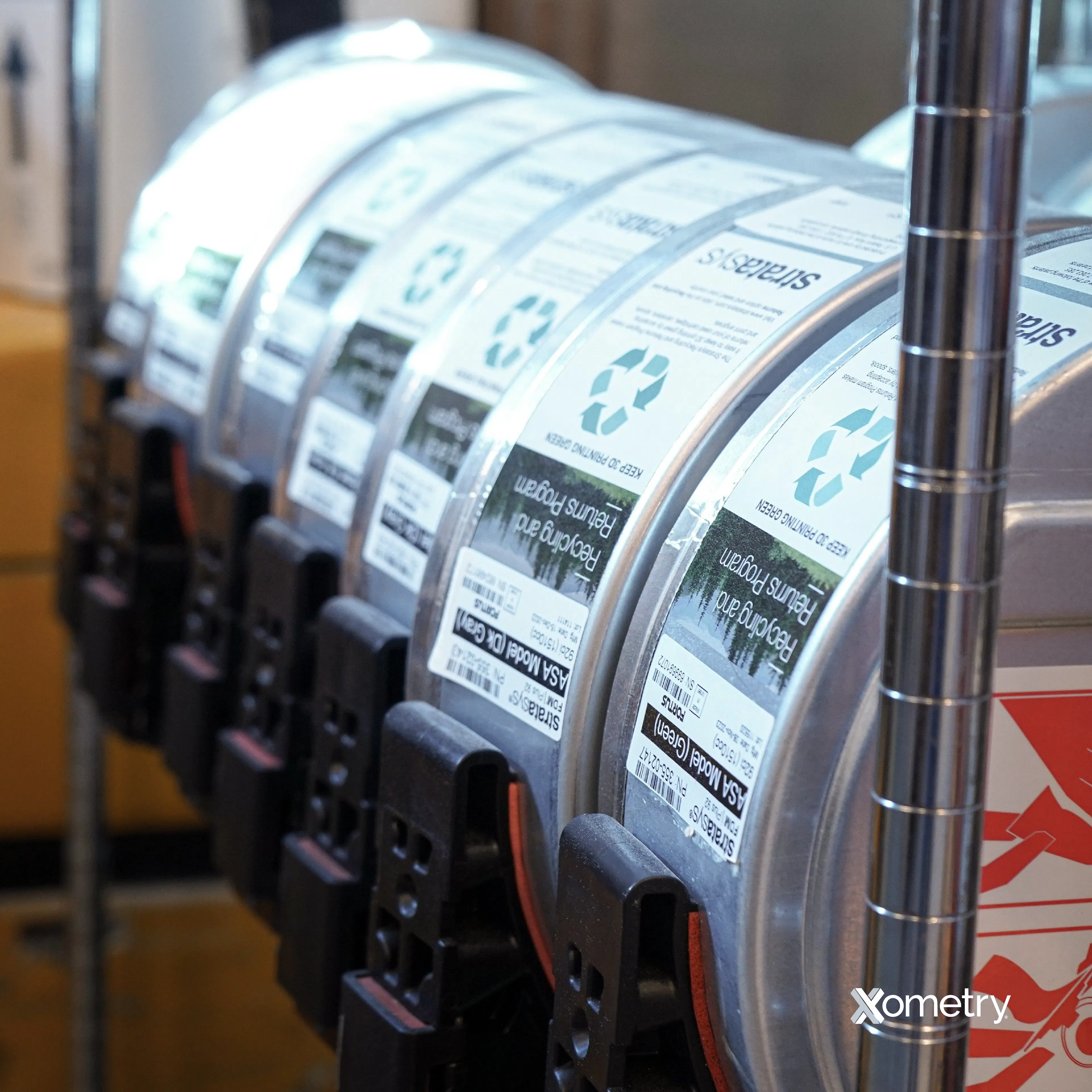
3D printing filament
Figure 1: 3D printing filament

Which Filament should I Use for Detailed Miniatures or Models?

You should use PLA filament and resin filament for detailed miniatures or models, as each offers distinct benefits depending on the desired results. PLA filament is known for its high printability and ease of use, producing crisp, clean details that make it ideal for intricate designs. Resin filament, SLA resin, offers higher resolution and smoother surfaces compared to PLA, making it suitable for capturing delicate features and achieving finer details. Use a smaller nozzle size, around 0.2 mm to 0.4 mm, and print at slower speeds (20 to 40 mm/s) for better precision and fine details to achieve the best results with PLA. PLA must be cooled correctly to avoid warping and maintain fine details and overhangs. Post-processing plays a vital role in improving the appearance of printed models. Sanding and priming smooth the surface, while painting adds precision detailing. Washing with isopropyl alcohol and curing under UV light solidifies the resin, increasing the surface finish and ensuring optimal hardness for resin prints. Each technique is beneficial for achieving high-quality 3D printing models with intricate details, whether using PLA or resin filament.

Which Filament is Best for Prototyping and Rapid Iteration?

The best filament for prototyping and rapid iteration is PLA filament and PLA plus filament due to consistent print behavior, clean surface finish, and low failure rates during repeated production cycles. PLA filament supports fast turnaround for visual models, while PLA plus filament provides higher impact strength and stronger layer bonding for functional test parts. Print speed is optimized at moderate ranges to preserve edge definition, fine layer heights improve surface clarity, and low infill reduces build time for visual prototypes while having a limited impact on non-load-bearing geometry. Iterative projects benefit from labeled version control, sealed filament storage to limit moisture absorption, and grouped print scheduling to improve consistency across revisions during the Prototyping Phase.

Which Filament should I Use for Food-Safe or Pet-Safe Prints?

Filament you should use for food-safe or pet-safe prints are listed below.

  • Polylactic Acid (PLA) filament:PLA is derived from plant-based sources, but commercial production often uses industrial solvents and additives. PLA filament is sometimes used in food contact tools and pet accessories where temperature exposure remains low, but only with proper surface sealing and verified food-safe coatings. Consideration focuses on low heat resistance and microscopic layer gaps that trap bacteria. Post-processing requires surface sealing with food-safe epoxy or resin to block moisture entry. Cleaning guidance relies on gentle hand washing with mild soap and warm water, followed by full air drying for pet safe 3d printer filament.
  • Polyethylene terephthalate glycol-modified (PETG) filament: PETG filament delivers good chemical stability and low moisture absorption. PETG filament supports repeated exposure to water and mild heat for pet bowls and food containers when properly sealed. Consideration centers on surface stringing that reduces hygienic quality without finishing work. Post-processing relies on light sanding of contact areas followed by food-safe sealant application. Cleaning guidance uses warm water and non-abrasive detergent with extended drying. 
  • Polypropylene (PP) filament: PP filament provides high chemical resistance and extremely low water absorption. PP filament is used in food storage systems and repeated-use pet products where chemical resistance and moisture stability are required. Consideration targets poor bed adhesion that risks internal void formation during printing. Post-processing focuses on food-safe coating application for surface sealing, since heat smoothing is inconsistent with PP due to low surface energy. Cleaning guidance includes warm water sanitation and periodic disinfection using food-approved solutions for Food Safe Manufacturing.
"Every material has different properties that will work well for some applications and poorly for others."
Christian Tsu-Raun,
Team Lead, Manual Quoting

Frequently Asked Questions About Types of 3D Printer Filament

How to Choose the Best Type of Filament

To choose the best type of filament, there are four steps to follow. First, identify the primary purpose of the printed object, since visual models commonly favor PLA filament, while mechanical parts require PETG filament, nylon filament, or carbon fiber–reinforced filament due to higher strength, toughness, and impact resistance. Second, evaluate temperature and environmental exposure, since high heat conditions require PC filament or PEI filament, while moisture exposure favors PETG filament or PP filament due to low moisture absorption. Third, assess printer capability and handling demands, since flexible materials like TPU filament benefit from controlled feed systems and slower print speeds, while high-temperature filaments require enclosed chambers and elevated extrusion temperatures. Lastly, confirm post-processing and storage requirements, since moisture-sensitive materials like nylon filament require sealed storage, and surface finishing expectations vary by application. The four steps support correct filament selection based on performance demands, printing stability, and long-term part reliability.

Which Filament Produces the Smoothest Prints?

The filament that produces the smoothest prints is resin material due to liquid photopolymer curing, which delivers reduced layer visibility and highly uniform surfaces. Resin material achieves micron-level layer resolution that exceeds extrusion-based material limits, which places resin at the highest tier for surface clarity in miniatures, display models, dental parts, and jewelry masters. PLA filament delivers clean edge definition, PETG filament creates naturally glossy surfaces that reduce visible layers, and silk PLA filament improves visual smoothness through reflective additives that mask layer transitions. Resin material maintains dominance in surface refinement because solidification occurs through UV curing rather than thermoplastic extrusion, which reduces stair-stepping artifacts compared to fused deposition materials.

What is the Strongest 3D Printer Filament?

The Strongest 3D Printer Filament is Polyetheretherketone (PEEK) filament for high-stress, high-temperature, and long-term structural applications due to very high tensile strength, excellent fatigue resistance, superior creep resistance, and mechanical stability near 250°C. PEEK filament supports aerospace, medical, and industrial load-bearing applications where standard engineering thermoplastics fail. Carbon fiber reinforced nylon delivers higher stiffness-to-weight efficiency for lightweight structural parts, but does not match PEEK filament in thermal endurance or long-term mechanical stability. Polycarbonate filament provides high impact resistance and moderate tensile strength, but operates well below PEEK filament in thermal, chemical, and structural performance.

What is the Best Filament to use?

The Best Filament to use is Polylactic Acid (PLA) filament for general-purpose 3D printing due to consistent extrusion behavior, low warp risk, clean surface finish, and broad printer compatibility. PLA filament supports rapid prototyping, visual models, educational prints, and decorative objects through predictable layer bonding and stable extrusion behavior at low processing temperatures. PLA filament maintains low odor output during printing, low extrusion temperature requirements, and good dimensional accuracy that helps reduce failure rates across repeated production cycles. Filament selection remains application dependent, yet PLA filament is adopted as a balanced option for reliability, print quality, accessibility, and material efficiency.

What is the Best Filament for Beginners?

The Best Filament for Beginners is Polylactic Acid (PLA) filament because PLA filament delivers stable extrusion behavior, low warp risk, low odor output, and consistent layer bonding across most entry-level printers. PLA filament operates at low extrusion temperatures that reduce thermal stress on hardware and help limit print failure during early skill development. Material performance testing shows PLA filament maintains good dimensional accuracy under standard desktop conditions, which supports predictable outcomes for first-time users. PLA filament supports rapid learning through reliable print adhesion on properly prepared build surfaces, clean surface finish, and broad compatibility with open-frame printers used in education and hobby manufacturing.

Summary

In this article, we reviewed the mechanical properties, characteristics, advantages and disadvantages of the 10 most common 3D printer filaments. To learn more about 3D printer filament types and uses, as well as how Xometry can assist with 3D printed parts, contact a Xometry representative.

Here at Xometry, we offer full range of custom 3D printing services for your project needs. Visit our Instant Quote Engine to get an instant quote in seconds.

Disclaimer

The content appearing on this webpage is for informational purposes only. Xometry makes no representation or warranty of any kind, be it expressed or implied, as to the accuracy, completeness, or validity of the information. Any performance parameters, geometric tolerances, specific design features, quality and types of materials, or processes should not be inferred to represent what will be delivered by third-party suppliers or manufacturers through Xometry’s network. Buyers seeking quotes for parts are responsible for defining the specific requirements for those parts. Please refer to our terms and conditions for more information.


Megan Conniff - Xometry Contributor
Megan Conniff
Megan is the Content Director at Xometry

Read more articles by Megan Conniff

Support
  • +1-800-983-1959

    support@xometry.com

Mailing Address

© 2026 Xometry, All Rights Reserved.

Privacy Policy | Terms of Use | Legal