
PLA vs. ABS: Differences between ABS and PLA Filaments


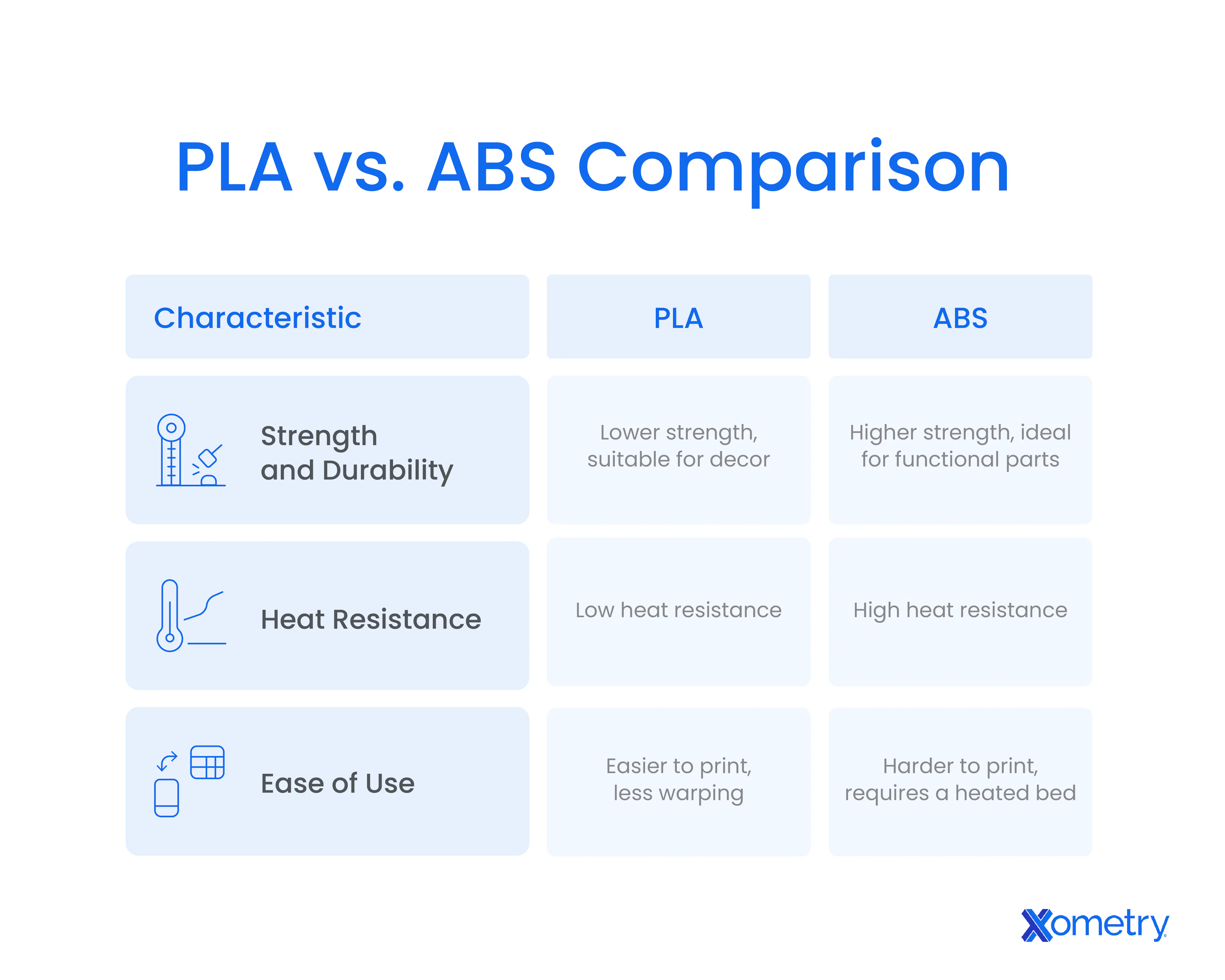
PLA and ABS are two of the commonly used 3D printing filaments, but they differ in key areas (strength, ease of use, and heat resistance). Acrylonitrile Butadiene Styrene (ABS) is stronger and more impact-resistant than Polylactic acid (PLA). ABS is ideal for parts exposed to mechanical stress (automotive or tool components) in terms of strength and durability. PLA is more suited for decorative or non-functional items where strength is not a priority in terms of heat resistance. ABS has a higher glass transition temperature, allowing it to withstand higher temperatures without warping. PLA has lower heat resistance and deforms under heat, making it unsuitable for high-temperature applications.
PLA is easier to print than ABS because it does not require a heated print bed and is less prone to warping. ABS needs a heated bed and shrink, leading to potential print failures if not appropriately managed. The cost differences stem from the materials' properties. PLA is cheaper to produce, making it more cost-effective for users focused on aesthetics or non-functional prints. ABS, with its higher strength and heat resistance, comes at a slightly higher cost due to its greater durability and applications in more demanding environments.
What Are the Advantages of PLA Compared to ABS?
The advantages of PLA compared to ABS are listed below.
- Biodegradability: PLA is derived from renewable plant-based sources, making it biodegradable. ABS is petroleum-based and non-biodegradable.
- Printability: PLA is easier to print with and requires lower extrusion temperatures compared to ABS. PLA prints at temperatures ranging from 180°C to 220°C, while ABS needs 210°C to 250°C for optimal results.
- Environmental Impact: PLA has a lower environmental impact due to its plant-based origin. ABS production relies on non-renewable fossil fuels.
- Odor: ABS releases unpleasant fumes, requiring proper ventilation. PLA produces less odor during printing
- Surface Finish: PLA prints have a smoother surface finish and are ideal for detailed models. ABS exhibits a more matte finish and requires additional post-processing.
- Strength and Durability: ABS offers better strength and impact resistance, making it more suitable for parts that endure higher stress. It is a good alternative when smooth surface finishes are needed and falls under the "What is PLA?" category.
- Cost: PLA is less expensive than ABS, making it a more economical choice for everyday printing needs.
Does PLA Give Better Detail Resolution Than ABS at the Same Layer Height?
Yes, PLA gives better detail resolution than ABS without an enclosure. PLA has a lower melting point (around 180-220°C), which reduces the risk of warping during printing. ABS has a higher melting point and tends to shrink more as it cools, causing warping and less precision when printed without an enclosure. PLA’s ability to maintain stable dimensions at room temperature makes it ideal for precise prints without the need for controlled environments. For example, PLA prints with minimal warping, ensuring better quality for intricate designs or detailed models.
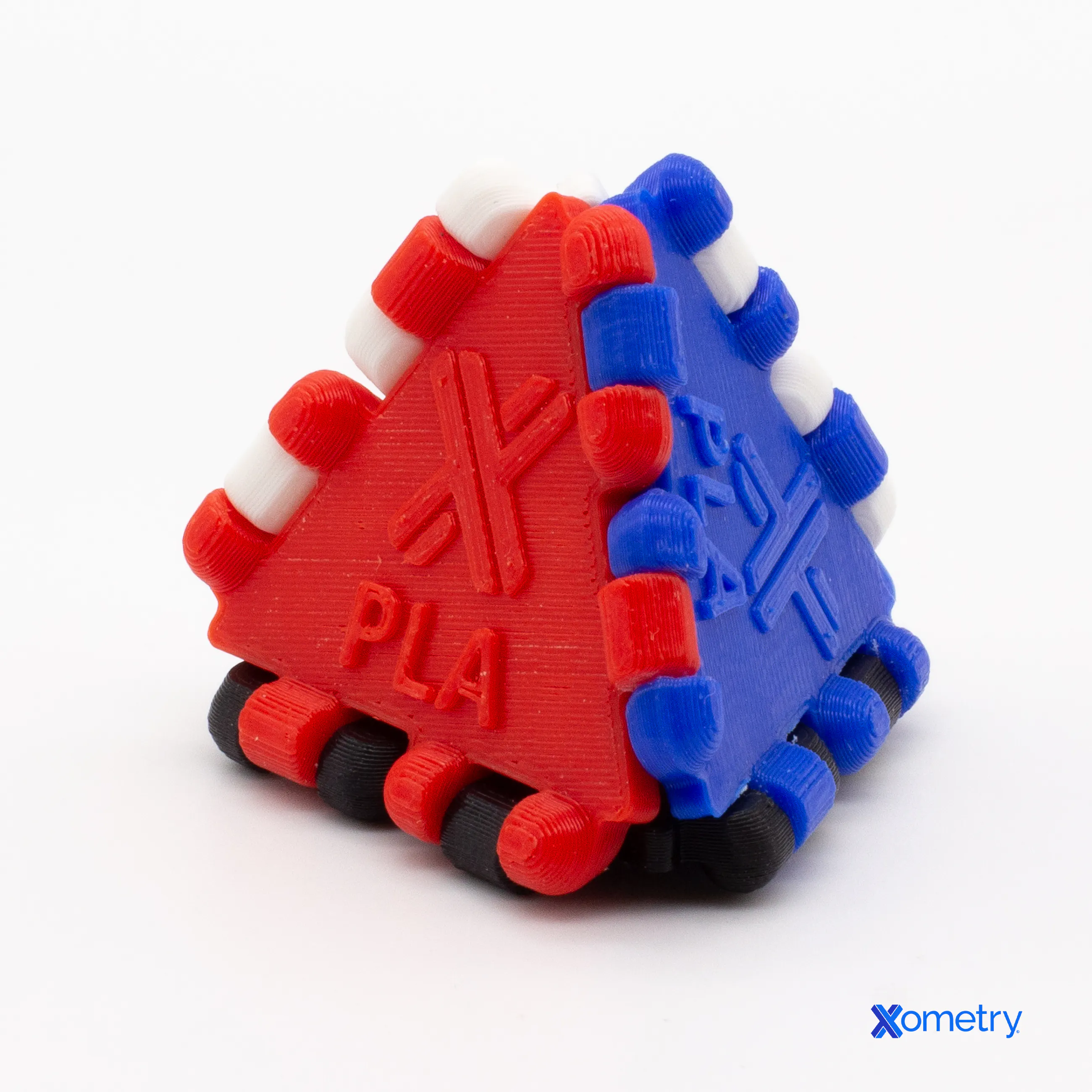
The image below shows a few parts that Xometry 3D printed using PLA:
Does PLA Require Less Bed Adhesion and Print Preparation Than ABS?
Yes, PLA requires less bed adhesion and print preparation than ABS. PLA adheres easily to most print beds without the need for a heated surface. It requires minimal preparation (a clean print bed or a light layer of adhesive). ABS, compared to PLA, requires higher temperatures and a heated bed to reduce warping. ABS benefits from an enclosure to maintain temperature consistency during printing. PLA’s ease of use makes it more accessible for quick prints and reduces the likelihood of print failures caused by bed adhesion issues.
Is PLA Better Suited Than ABS for Decorative or Non-Functional Prints?
Yes, PLA is better suited than ABS for decorative or non-functional prints. PLA provides a smoother surface finish and more vibrant colors, making it ideal for detailed designs or visual projects. It is easier to print with, reducing the likelihood of warping or failure, which is essential for intricate, non-functional items. PLA's low melting point and minimal need for a heated bed make it more convenient for fast prints. ABS is more durable and better suited for functional items, but it is more challenging to work with due to its higher printing requirements compared to PLA. PLA offers superior results and ease of use for decorative objects (figurines or art pieces).
Does PLA Maintain Color and Appearance Better Than ABS Over Time?
Yes, PLA maintains color and appearance better than ABS over time. PLA is less prone to fading or yellowing when exposed to UV light, making it a more durable choice for items that are displayed or used for long periods. It holds its vibrant colors and glossy finish longer than ABS, which degrades and loses its luster with exposure to sunlight. PLA's superior surface finish makes it more resistant to the effects of aging, while ABS requires additional post-processing to maintain its appearance. For decorative items, PLA provides a longer-lasting, visually appealing result.

Need PLA or ABS 3D Printed Parts?
What Are the Advantages of ABS Compared to PLA?
The advantages of Acrylonitrile Butadiene Styrene (ABS) compared to Polylactic acid (PLA) are listed below.
- Strength and Durability: ABS is stronger than PLA. The plastic (ABS) withstands higher stress and impact, making it ideal for functional parts such as automotive components or tools.
- Heat Resistance: ABS has a higher glass transition temperature (around 105°C), allowing it to endure higher temperatures without deforming. It makes it suitable for parts exposed to heat (engine components or household appliances).
- Post-Processing: ABS is easier to sand, paint, and smooth with acetone, which improves its surface finish. The question, “what is ABS?” is answered through the advantages that make it the go-to material for high-quality, polished prints.
- Flexibility: ABS maintains better flexibility compared to PLA, reducing the likelihood of brittleness in parts subjected to bending or impact.
Is ABS Biodegradable, Unlike PLA?
No, ABS is not biodegradable like PLA. PLA is derived from renewable resources such as corn starch and is biodegradable under certain conditions. It breaks down naturally in composting environments, making it more environmentally friendly than ABS. ABS, in comparison, is petroleum-based and does not decompose easily in natural environments. It takes hundreds of years to break down, contributing to long-term environmental impact. For eco-conscious applications, PLA is preferred over ABS due to its compostable nature.
Is ABS Stronger Compared to PLA?
Yes, ABS is stronger compared to PLA. ABS has superior impact resistance and durability, making it suitable for parts that need to withstand physical stress. It performs better under higher temperatures and is less likely to crack or break under impact. PLA is more rigid but tends to be more brittle, making it less suitable for functional parts that endure wear and tear. ABS’s strength and flexibility make it the preferred choice for mechanical applications, while PLA is more commonly used for decorative or low-stress prints.
Does ABS Resist Heat Better Compared to PLA?
Yes, ABS resists heat better compared to PLA. ABS is able to withstand higher temperatures, with a heat resistance up to ~85–95 °C, while PLA starts to deform around 60°C. It makes ABS more suitable for applications exposed to heat (automotive parts or appliances). PLA is more sensitive to high temperatures and warps or loses its structural integrity when exposed to heat for prolonged periods. ABS’s superior heat resistance makes it a better option for functional parts that need to endure higher thermal conditions.
Is ABS More Durable Compared to PLA?
Yes, ABS is more durable compared to PLA. ABS has higher impact resistance and withstands more physical stress without cracking. It is more flexible and less brittle than PLA, making it ideal for parts that are subjected to regular handling or mechanical wear. ABS performs better in high-temperature environments, where PLA softens and loses its structural integrity. For example, ABS is commonly used in automotive parts or functional prototypes, while PLA is more suited for decorative items and low-stress applications. The added durability and heat resistance of ABS make it a better choice for long-lasting and functional parts.
Does ABS Warp More Easily Compared to PLA?
No, ABS does not warp more easily compared to PLA. ABS is more prone to warping due to its higher printing temperature and tendency to shrink during cooling. PLA, with a lower melting point, experiences less shrinkage and is less likely to warp during printing. ABS requires a heated bed and controlled environment to minimize warping for larger prints. PLA is printed without a heated bed and tends to maintain its shape more easily. The difference in temperature sensitivity and shrinkage characteristics makes PLA a better option for prints that need to avoid warping.
Is ABS More Flexible Than PLA?
Yes, ABS is more flexible than PLA. ABS has better impact resistance and bends without breaking, making it ideal for functional parts that require durability and flexibility. PLA is more rigid and tends to be brittle, which leads to cracking or breaking under stress. ABS’s flexibility allows it to withstand physical stress better than PLA in applications (automotive parts or tools). PLA’s rigidity, while suitable for decorative and low-stress prints, makes it less ideal for parts that need to endure mechanical forces.
PLA and ABS differ fundamentally in thermal behavior, mechanical response, and processing requirements, which drives their distinct use cases in FDM printing. PLA has dimensional stability, low shrinkage, and is easy to process, allowing accurate prints at lower extrusion temperatures without heated beds or enclosures. However, it suffers from low glass-transition temperature and brittle failure under impact or sustained heat. ABS offers higher impact resistance, superior layer fusion, chemical resistance, and significantly higher heat tolerance due to its higher glass-transition temperature, at the cost of increased warping risk, higher energy input, and the need for controlled thermal environments. Material selection therefore hinges on whether the application favors visual quality, accuracy, and indoor safety (PLA) or functional durability, thermal resilience, and mechanical toughness under real-world loads (ABS).
What Are the Main Material Differences Between ABS and PLA for 3D Printing?
The main material differences between ABS and PLA for 3D printing are listed below.
- Printing Temperature: PLA has a lower printing temperature, between 180°C and 220°C, while ABS requires higher temperatures, ranging from 220°C to 250°C. The difference affects the ease of printing, with PLA being easier to print at lower temperatures.
- Strength and Durability: ABS is stronger and more impact-resistant than PLA. ABS is more flexible and handles higher stress without breaking. PLA is more rigid and brittle, making it less suitable for parts that undergo mechanical stress.
- Heat Resistance: ABS has better heat resistance, maintaining its shape at higher temperatures (up to 100°C). PLA begins to deform at around 60°C, limiting its use in high-temperature environments.
- Surface Finish: PLA provides a smoother, shinier finish compared to ABS. ABS is smoothed with acetone to achieve a glossy finish, while PLA’s finish is more consistent.
- Environmental Impact: PLA is biodegradable and made from renewable resources, making it more environmentally friendly than ABS, which is petroleum-based and not biodegradable.
How Do ABS Fumes Compare to PLA Fumes During Printing?
ABS fumes are compared to PLA fumes during printing by their chemical compound (styrene). ABS emits styrene, a volatile organic compound that irritates the respiratory system and causes long-term health risks if inhaled in large amounts. PLA produces minimal fumes compared to ABS, mainly consisting of harmless, biodegradable compounds (lactide). ABS requires proper ventilation or an enclosure to minimize exposure to harmful fumes, while PLA is considered safer to print with in non-ventilated spaces. PLA’s fumes pose a much lower health risk compared to the more toxic fumes released by ABS during printing. Using acrylonitrile butadiene styrene (ABS) and poly-lactic acid (PLA) presents a risk of exposure to respirable particles according to “Particle emissions from fused deposition modeling 3D printers: Evaluation and meta-analysis,” written by P Byrley and BJ George on November 12, 2018. PLA is considered safer to print with in indoor environments, as it poses lower health risks than ABS.
Which One Is Better for Temperature (Heat) Resistance, PLA vs ABS?
ABS is better for temperature (heat) resistance compared to PLA. ABS withstands temperatures up to 100°C without deforming, making it ideal for parts exposed to heat (automotive or appliance components). PLA begins to soften at around 60°C, making it unsuitable for high-temperature applications. ABS’s higher glass transition temperature allows it to maintain its shape and strength under heat, while PLA’s lower heat resistance leads to warping or failure in hot environments. For heat-resistant applications, ABS is far superior in heat resistance, as it bears temperatures up to 100°C or more without losing structural integrity, according to “PLA vs. ABS – Which Is Better?” written by BigRep, published on June 03, 2025.
Which Material, ABS or PLA, Offers Better Impact Resistance?
ABS offers better impact resistance compared to PLA because of its molecular structure and material properties. ABS is more flexible and withstands higher forces before breaking or cracking. It is used for parts that require durability (protective covers and automotive components). PLA is more brittle and tends to break under stress, making it less suitable for applications requiring high impact resistance. ABS's superior strength and toughness make it the ideal choice for functional parts exposed to mechanical stress. “PLA shows brittle nature when subjected to out-of-plane loading, i.e., impact,” according to “An Investigation Into Low Velocity Impact Of 3D Printed Thermoplastic Plates” written by Guneet Kaur Mankoo, published on October 08, 2021.
Which Material Cools and Solidifies More Predictably, PLA or ABS?
PLA is the material that cools and solidifies more predictably. PLA has a lower melting point, ranging from 180 to 220°C, and solidifies fast once the print head moves away. Its cooling process is less prone to warping, and the material retains its shape better without the need for additional temperature control. ABS has a higher melting point and tends to shrink and warp as it cools. It makes ABS more challenging to work with for larger prints, as it requires a heated bed and an enclosure to prevent temperature fluctuations that affect the solidification process.
Which Material Provides Better Overall Tensile Strength, PLA or ABS?
ABS is the material that provides better overall tensile strength. ABS has higher impact resistance and endures more stress before breaking or deforming. It is more flexible, allowing it to absorb forces without fracturing. PLA is more rigid and tends to break under stress, offering lower tensile strength. ABS is ideal for applications where durability and mechanical strength are required (automotive parts or functional components). PLA is more suited for decorative items that do not undergo significant mechanical stress.
Which Material Shows Less Warping During Printing, PLA or ABS?
PLA is the material that shows less warping during printing. PLA has a lower melting point and solidifies fast, which reduces the likelihood of warping as it cools. ABS tends to shrink more as it cools, leading to higher stress and warping on larger prints. PLA's lower temperature sensitivity makes it easier to print without the need for a heated bed or enclosure, unlike ABS, which requires both to prevent warping. It makes PLA a more reliable material for precise prints and smaller projects.
Which Material Delivers Higher Dimensional Accuracy, PLA or ABS?
PLA is the material that delivers higher dimensional accuracy. PLA has lower shrinkage during cooling, which results in fewer distortions and better precision in prints. ABS, on the other hand, tends to shrink more as it cools, leading to potential warping and dimensional inaccuracies. PLA's ease of printing without the need for a heated bed ensures that the printed object retains its intended shape and size. ABS requires more careful temperature control to maintain dimensional consistency, making PLA a more reliable material for accurate prints.
Which Material Performs Better in Outdoor Environments, PLA or ABS?
ABS is the material that performs better in outdoor environments. ABS has higher Ultraviolet (UV) resistance and withstands prolonged exposure to sunlight without degrading. PLA, being biodegradable, breaks down faster when exposed to outdoor elements (sunlight and moisture). ABS maintains its strength and color for a longer period, making it suitable for outdoor applications (automotive parts and garden tools). PLA’s sensitivity to environmental factors makes it more appropriate for indoor use or short-term outdoor projects.
Which Material Has Superior Layer Adhesion, PLA or ABS?
ABS is the material that has superior layer adhesion. ABS bonds better between layers due to its higher printing temperature and improved layer fusion. The higher extrusion temperature of ABS allows for better adhesion between layers, reducing the likelihood of delamination or layer separation. PLA, with its lower printing temperature, struggles to bond layers as effectively in prints that require strength and durability. ABS’s improved layer adhesion makes it ideal for functional parts that must endure stress and wear.
Which Material Produces Stronger Functional Parts, PLA or ABS?
ABS is the material that produces stronger functional parts. ABS has higher impact resistance and endures physical stress better than PLA, making it ideal for applications (automotive components or tools). PLA is more rigid but tends to be brittle, breaking under pressure or impact. ABS’s flexibility and durability allow it to withstand wear and tear, while PLA is more suited for decorative or low-stress applications. ABS’s ability to handle mechanical forces and higher temperatures makes it the preferred material for functional parts.
Which Material Is More Resistant to Chemicals, PLA or ABS?
ABS is a material that is more resistant to chemicals. ABS withstands exposure to a broader range of chemicals (oils, acids, and alkaline solutions) without degradation. PLA is more susceptible to chemical damage and likely breaks down when exposed to certain solvents, oils, or strong acids. For example, ABS is used in environments where chemical exposure is expected (plumbing or automotive parts). PLA’s lower resistance to chemicals limits its use in applications where durability against harsh substances is needed.
Which Material Is More Flexible or Less Brittle, PLA or ABS?
ABS is a material that is more flexible and less brittle. ABS has better impact resistance and bends without breaking, making it suitable for functional parts that need durability. PLA is more rigid and tends to be brittle, which makes it more likely to crack or break under stress. ABS’s flexibility allows it to absorb shocks and withstand mechanical forces better than PLA, making it more suitable for decorative or low-stress applications. ABS is the preferred choice due to its increased flexibility for parts exposed to regular handling or stress.
Which Material Is Safer To Print Indoors, PLA or ABS?
PLA is a material that is safer to print indoors. PLA emits fewer harmful fumes during printing, releasing biodegradable compounds (lactide). ABS releases more toxic fumes (styrene), which irritate the respiratory system and require proper ventilation. PLA is less likely to cause health concerns and is more suitable for indoor environments with limited airflow. ABS requires additional precautions (e.g., using an enclosure or ensuring good ventilation) when printing indoors due to its higher emission levels.
What Are the Similarities Between PLA and ABS?
The similarities between PLA and ABS are listed below.
- 3D Printing Compatibility: PLA and ABS are used for 3D printing. Each is compatible with consumer-grade 3D printers and is readily available in filament form.
- Ease of Use: Polylactic Acid and Acrylonitrile Butadiene Styrene are relatively simple to print with, though ABS requires a heated bed for optimal results. Its moderate printing temperatures make them accessible for general 3D printing applications.
- Strength and Durability: PLA and ABS offer adequate strength and durability for various printing needs. ABS is more flexible and durable, while PLA is more rigid but is suitable for a range of functional prints.
- Surface Finishing: PLA and ABS are post-processed to achieve smoother finishes. Sanding, painting, or chemical smoothing is possible with either material to improve the surface quality.
What Are the Mutual Alternative 3D Filaments for PLA and ABS?
The mutual alternative 3D filaments for PLA and ABS are listed below.
- Polyethylene Terephthalate Glycol (PETG): PETG is a versatile filament known for its durability, chemical resistance, and ease of use. The alternative combines the strength of ABS with the comfort of printing of PLA, making it a popular alternative.
- Thermoplastic Polyurethane (TPU): TPU is a flexible filament with excellent elasticity and abrasion resistance. It is ideal for creating rubber-like prints and is used for phone cases, wearables, and flexible parts.
- Nylon: Nylon is a strong, durable, and flexible filament that offers great impact resistance and wear properties. It is suitable for functional parts and mechanical applications, but it requires a heated bed to print correctly.
- Acrylonitrile Styrene Acrylate (ASA): For outdoor applications and parts exposed to the elements, printing ASA can be a strong alternative to ABS because it offers better UV resistance and outdoor durability.
- High Impact Polystyrene (HIPS): HIPS is used as a support material for ABS prints, but is printed on its own for low-stress applications. It is a good alternative when smooth surface finishes are needed and falls under the types of 3D filaments when considering its applications.
How Xometry Can Help
Xometry offers nine unique 3D printing processes and offers dozens of materials, including PLA printing and ABS printing. We can even print in rubbery materials like TPU or solid metal materials like stainless steel, depending on the printing process. Best of all, you can get pricing and lead times automatically by using the Xometry Instant Quoting Engine®. Get started today by uploading your STL files or other supported 3D CAD files, select the process and material you'd like, and get an instant quote!
Disclaimer
The content appearing on this webpage is for informational purposes only. Xometry makes no representation or warranty of any kind, be it expressed or implied, as to the accuracy, completeness, or validity of the information. Any performance parameters, geometric tolerances, specific design features, quality and types of materials, or processes should not be inferred to represent what will be delivered by third-party suppliers or manufacturers through Xometry’s network. Buyers seeking quotes for parts are responsible for defining the specific requirements for those parts. Please refer to our terms and conditions for more information.