
All About 1018 Steel: Properties, Uses, and Manufacturing


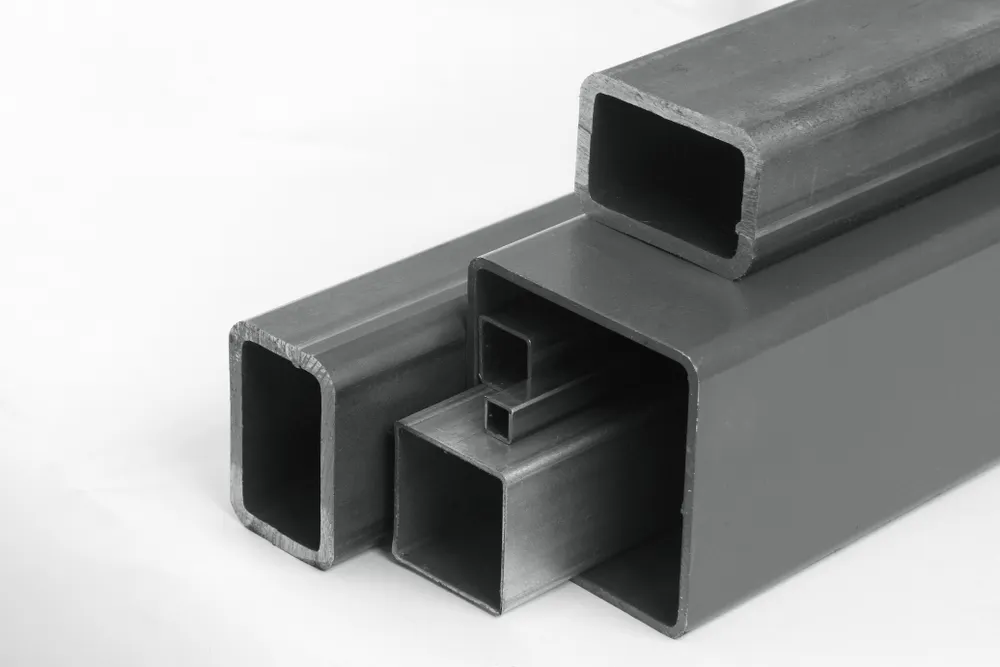
1018 steel represents a prominent low-carbon steel grade found throughout engineering and manufacturing industries. The 1018 steel has its specific definition, chemical composition, mechanical properties, and primary manufacturing processes. Common uses and equivalent international standards appear within the comprehensive guide. Machinability remains a primary reason for its popularity in machine shops. Weldability allows for easy fabrication into larger structural assemblies. Balanced strength provides a reliable foundation for many industrial components. The section provides precise data to support engineering decisions. Manufacturers choose the material for its versatility and cost-effectiveness. Detailed tables highlight the elemental balance of the alloy. Engineers utilize the data for material selection in diverse projects. 1018 steel serves as a fundamental material for modern fabrication.
What is 1018 Steel?
1018 steel is a low-carb0hmmnjnjjhn vbnm,.1ewq BNM, on mild steel commonly specified under AISI and SAE standards for diverse engineering applications. The material belongs to the plain carbon steel category due to its simple elemental makeup. Carbon content remains low to prioritize ductility and ease of processing. Manufacturers classify the alloy as a general-purpose material suitable for many non-structural and light structural parts. The composition fits within the broader family of carbon steels used extensively in cold finishing operations. Low carbon percentages ensure the metal stays soft enough for easy shaping. Strength levels remain sufficient for pins, rods, and simple machine parts. High machinability ratings distinguish the grade from higher-carbon alternatives. Fabrication processes benefit from the uniform properties found in standard batches. Diverse industrial sectors rely on the metal for consistent performance in daily operations. High-quality steel remains essential for global manufacturing infrastructure.
What Does 1018 Mean in Steel Grades?
The "1018" in steel grades refers to a specific type of carbon steel, where the numbers represent the alloy's composition and characteristics. The identification system is used by the AISI and SAE organizations. The first two digits, 10, identify the material as a plain carbon steel without significant alloying elements like chromium or nickel. The numbers indicate that carbon and manganese remain the primary factors influencing the metal properties. The last two digits, 18, represent the approximate carbon content of the alloy expressed in hundredths of a percent. The specific grade contains roughly 0.18 percent carbon on average. Numerical designations allow engineers to quickly understand the chemical nature of a metal batch. The system ensures consistency across different suppliers and manufacturing facilities. Precise labeling facilitates correct heat treatment and machining strategies. Understanding the numbering logic prevents errors during the material procurement process. Carbon levels remain the defining feature of the naming convention. The designation provides a clear baseline for mechanical expectations for steel grades.
Is 1018 Steel a Mild Steel or Low Carbon Steel?
Yes, 1018 steel is a mild steel and fits perfectly within the definition of a low-carbon steel grade. Mild steels contain between 0.05 percent and 0.25 percent carbon. 1018 steel sits comfortably in the middle of that range with approximately 0.18 percent carbon. Low carbon content provides the ductility and toughness necessary for cold forming and welding. The material lacks the high carbon levels required for significant hardening through standard quench and temper cycles. Fabrication shops prefer the grade for its predictable behavior and soft nature. Tensile strength and yield points remain consistent for general engineering tasks. Ductile characteristics allow for safe use in components prone to sudden impacts. Proper material classification ensures the correct processing methods are utilized in the shop. It serves as a standard representative for Mild Steel or Low Carbon Steel in structural and mechanical workshops.
What is the Chemical Composition of 1018 Steel?
1018 steel chemical composition includes a precise balance of carbon, manganese, phosphorus, and sulfur along with a primary iron base. Manganese improves the strength and hardenability of the alloy while controlling the effects of sulfur. Phosphorus and sulfur levels stay low to minimize brittleness and improve the internal cleanliness of the metal. Ductility remains high because the carbon concentration stays well below the threshold for high-strength grades. Machinability improves with the controlled inclusion of manganese and sulfur. Iron provides the structural matrix for the other components. The elemental balance ensures a reliable material for cold finishing. Carbon content determines the primary mechanical characteristics. Manganese acts as a vital strengthening agent.
Chemical Composition of 1018 Steel
What is the Carbon Content of 1018 Steel?
The carbon content of 1018 steel ranges between 0.15 percent and 0.20 percent by weight. The specific concentration classifies the material as a low-carbon steel suitable for diverse manufacturing tasks. Carbon atoms occupy interstitial spaces within the iron lattice to influence mechanical behavior. Lower percentages ensure the metal maintains high ductility and excellent toughness. Weldability stays superior because the low carbon levels prevent the formation of brittle martensite during cooling. Hardness remains relatively low compared to medium or high-carbon grades. The material stays soft enough for easy machining and cold drawing. Strengthening happens primarily through cold working rather than thermal treatment. Precise control of the carbon level ensures consistent performance across different production lots. Engineers prioritize the grade for parts requiring significant deformation during manufacturing. The chemistry supports a wide variety of industrial forming techniques.
What Are the Properties of 1018 Steel?
The properties of 1018 Steel are listed below.
- Mechanical Strength: The material provides a balanced combination of tensile strength and yield strength for general applications. The values remain predictable and stable across standard manufacturing batches.
- Ductility: High ductility allows the metal to undergo significant deformation without fracturing. Parts stay resilient under impact and bending stresses.
- Machinability Rating: The alloy possesses a high machinability rating compared to other carbon steels. Cutting tools experience less wear when processing the soft material.
- Weldability: Low carbon content facilitates various welding processes without the need for preheating. Joints maintain structural integrity and resist cracking.
- Surface Finish: Cold finishing processes produce a smooth and bright surface finish. Tighter dimensional tolerances stay achievable through cold drawing.
- Magnetic Response: The material exhibits strong ferromagnetic properties suitable for various magnetic applications. Induction hardening is generally ineffective for 1018 steel unless carbon is increased at the surface (e.g., carburizing) before hardening.
What is the Tensile Strength of 1018 Steel?
The tensile strength of 1018 steel is 440–700 MPa (megapascals) or 64–101 ksi (kilopounds per square inch), depending on the specific processing and heat treatment. The 1018 steel tensile strength represents the maximum stress the material survives before failing under tension. Typical values for cold-drawn 1018 steel reach approximately 64,000 psi or 440 MPa. Yield strength stays around 54,000 psi or 370 MPa in the cold-finished condition. The mechanical values depend on the manufacturing process and the degree of cold work. Ductility remains high with elongation values typically exceeding 15 percent in standard test specimens. Engineering applications rely on the figures to ensure structural safety and performance. Tensile data helps designers calculate load limits for pins, shafts, and brackets. Strength levels provide a reliable baseline for general-purpose components. Cold working increases the hardness and resistance to deformation while slightly reducing ductility. Maintaining a consistent tensile strength ensures the longevity of mechanical assemblies.
What is the Hardness of 1018 Steel?
The hardness of 1018 steel refers to the resistance of the metal surface to permanent indentation or scratching. Cold-rolled versions of the alloy show a Brinell hardness of approximately 126 HB. Rockwell B hardness values fall between 70 HRB and 80 HRB, depending on the finishing process. Values stay relatively low compared to tool steels or high-alloy grades. Low hardness correlates directly with the high ductility and machinability of the material. Wear resistance remains moderate but improves through specialized surface treatments. Machining operations benefit from the soft nature of the iron matrix. Indentation tests provide a quick way to verify the condition of the metal. Surface hardness may vary along the length due to variations in cold working, residual stresses, and processing conditions. Proper hardness levels ensure the material performs well in daily mechanical roles.
What is the Density of 1018 Steel?
The density of 1018 steel is 7.87 grams per cubic centimeter or 0.284 pounds per cubic inch. Density values provide essential information for calculating the weight of structural and mechanical components. Engineers utilize the figures to estimate the total mass of assemblies during the design phase. Shipping costs and material handling requirements depend on accurate weight assessments. The value remains consistent across different carbon steel grades due to the high iron content. Density plays a crucial role in determining the inertia of rotating shafts and gears. Volume calculations combined with density ensure precise manufacturing of specialized parts. The weight of the material influences the choice of support structures in construction. Predictable density ensures that components fit within specific weight constraints. Industrial processes rely on the physical constants for accurate modeling.
What is the Young’s Modulus of 1018 Steel?
The Young's modulus of 1018 steel, known as the elastic modulus, measures the material's stiffness or resistance to elastic deformation under stress. The value for the steel grade sits around 205 GPa or 29,700 ksi. Stiffness remains a critical factor for shafts and structural members requiring dimensional stability. The modulus stays independent of the heat treatment or cold working state of the metal. Iron-based alloys share similar elastic properties across the carbon steel family. Calculations for beam deflection and spring rates rely on its fundamental property. Engineering designs prioritize stiffness to prevent excessive vibration or misalignment in machinery. Elastic behavior ensures that parts return to their neutral state after stress removal. High stiffness supports the accuracy of precision mechanical systems. Structural engineers use the modulus to calculate the stability of columns and frames. Maintaining a stable Young's Modulus allows for precise mechanical modeling.
How is 1018 Steel Manufactured?
1018 steel is manufactured through a combination of the basic oxygen steelmaking process and either hot or cold rolling, depending on the desired properties. Steelmaking starts either with molten iron from a blast furnace (ore-based route) or by melting scrap in an electric arc furnace; these are distinct processes. Refiners adjust the carbon and manganese levels to meet the specific 1018 requirements. Molten metal is then cast into large blooms or billets for further processing. Rolling mills shape the material at high temperatures or room temperature, depending on the desired finish. Hot rolling provides the initial shape while cold drawing refines the dimensions and improves strength. Finishing processes ensure the surface remains free from defects and scale. The manufacturing sequence determines the final mechanical characteristics of every bar. Cold working introduces strain hardening for improved industrial performance. Proper processing ensures the alloy meets international quality standards. Consistent manufacturing results in a predictable material for the engineering sector.
What is 1018 Cold Rolled Steel?
1018 cold rolled steel is a low-carbon steel that undergoes a cold rolling process, where it is passed through rollers at room temperature to achieve a smoother, more refined surface compared to hot rolled steel. The process involves pulling cold rolling bars through a die to reduce the cross-sectional area. Cold working increases the yield and tensile strength through strain hardening of the iron lattice. Surface finishes stay bright, smooth, and free from the rough scale found on hot-rolled products. Tighter dimensional tolerances allow for direct use in many machining and assembly tasks. Hardness increases slightly while ductility decreases compared to the annealed state. Manufacturers prefer the cold-finished version for precision components like shafts and pins. Cold working improves dimensional consistency but can introduce residual stresses and non-uniform properties across the section. Cold drawing remains the most common method for producing 1018 bars. Precise control of the reduction ratio ensures the desired strength level is achieved. Industrial suppliers offer various cold-finished profiles to suit specific design needs.
What is 1018 Hot Rolled Steel?
1018 hot rolled steel is a low-carbon steel that is commonly used in various manufacturing and machining applications.1018 hot rolled steel is produced by shaping the metal at temperatures above the recrystallization point. High-temperature processing makes the material easier to form into large sections and complex shapes. Surface finishes appear rough and contain a dark layer of mill scale. Dimensional tolerances remain looser compared to cold-finished alternatives. The metal stays in its softest and most ductile state after cooling from the rolling temperature. Hot rolling serves as the primary stage for creating sheets, plates, and structural beams. Internal stresses stay low because the material recrystallizes during the forming process. Cost remains lower than cold-rolled steel due to the simpler finishing requirements. Industrial applications prioritize the grade for parts where surface precision stays secondary to structural bulk. Large volumes of hot-rolled material support global construction projects. Standard shapes include angles, channels, and flat bars for basic fabrication. The process enables the rapid production of raw stock for further processing.
How Machinable is 1018 Steel?
1018 steel possesses excellent machinability and remains a favorite for high-volume part production. The material has a machinability rating of approximately 78 percent compared to B1112 screw stock. Soft carbon structures allow cutting tools to remove material with minimal force and heat generation. Chips in 1018 steel tend to be continuous and can be difficult to control; chip breakers are often required to manage them effectively. Turning, milling, and drilling operations proceed smoothly with standard tooling. Surface finishes after machining appear clean and professional. The alloy stays compatible with manual and automated machining centers. Low tool wear extends the life of inserts and drills during long production runs. Efficient material removal reduces the total cost of machined components. Machinists utilize the grade for intricate parts requiring high precision. High-speed machining remains productive due to the uniform consistency of the alloy. Consistent performance ensures high yields in the machine shop.
1018 steel is distinguished not by extreme properties but by its consistency and process reliability. With a controlled carbon content near 0.18% and balanced manganese, it maintains a stable microstructure through machining, forming, and welding. Its primary value lies in tolerance-critical components, where dimensional control, surface finish, and repeatability take precedence over high strength or hardness. Its limited through-hardening capability defines a clear design boundary, often addressed with case hardening to produce a wear-resistant surface over a ductile core. Compared to broader mild steel grades, 1018 offers tighter chemical and mechanical consistency, reducing variability in production. 1018 steel is a baseline engineering material that supports precision, efficiency, and predictable performance in high-volume manufacturing.
Can 1018 Steel Be Welded?
Yes, 1018 steel can be welded and supports a wide range of common industrial welding methods. Low carbon levels minimize the risk of hydrogen cracking in the heat-affected zone. Arc welding, MIG welding, and TIG welding provide strong and reliable joints for this grade. The material does not require expensive preheating or post-weld heat treatment for standard thicknesses. Fabrication shops utilize the metal for frames, brackets, and assemblies requiring secure attachment. Weld beads flow smoothly and bond effectively with the base metal. Structural integrity stays high across the joint area after cooling. Predictable thermal behavior prevents excessive warping during the welding process. The grade serves as a benchmark for ease of fabrication in metal shops. Resistance welding provides excellent results for thin-walled sections. Low impurity levels contribute to the overall cleanliness of the weld pool.
Can 1018 Steel Be Hardened?
No, 1018 steel has very limited hardenability and cannot be significantly through-hardened, but slight hardness increases may occur under certain conditions. The low carbon content prevents the formation of a fully martensitic structure throughout the entire part. Surface hardening methods such as carburizing are most effective; nitriding is less common for plain carbon steels like 1018. Carburizing adds carbon to the outer layer to create a hard case while maintaining a tough core. Processed parts improve wear resistance for gears, pins, and bushings. Induction hardening is generally ineffective for 1018 unless the surface carbon is increased beforehand (e.g., carburized). Quenching in oil or water after carburizing ensures the case reaches the required hardness levels. The material remains soft and ductile in the center for high impact resistance. Case depths are controlled to satisfy specific engineering requirements. Proper thermal processing ensures the material performs well in friction-heavy roles.
What Are the Common Forms of 1018 Steel Material?
The common forms of 1018 Steel material are listed below.
- 1018 Cold-Rolled Steel: 1018 cold-rolled steel features a smooth surface finish and tight dimensional tolerance. Manufacturers process 1018 cold-rolled steel at room temperature to improve strength and consistency. Machinists select 1018 cold-rolled steel for precision parts, shafts, and components requiring accurate sizing.
- 1018 Steel Bar: 1018 steel bar appears in round, square, hex, and flat profiles. Fabricators use 1018 steel bar for machining operations, fasteners, and mechanical parts. 1018 steel bar supports drilling, turning, and milling due to balanced strength and ductility.
- 1018 Steel Sheet and Plate: 1018 steel sheet and plate provide flat stock for fabrication and forming. Manufacturers cut and shape 1018 steel sheet and plate for brackets, panels, and base components. 1018 steel sheet and plate allow welding and forming with minimal cracking.
- 1018 Steel Wire: 1018 steel wire forms through drawing processes that reduce the diameter while maintaining strength. Producers supply 1018 steel wire is used for general wire products and fasteners. 1018 steel wire delivers flexibility with consistent mechanical properties.
What Are the Common Uses of 1018 Steel?
The common uses of 1018 Steel are listed below.
- Shafts and Axles: The material provides a stable foundation for rotating components requiring high straightness and a smooth finish. Cold-drawn bars minimize the need for extensive surface machining.
- Pins and Bushings: Carburized parts offer a hard exterior for wear resistance, while the core stays tough against impact. The components serve in heavy machinery and agricultural equipment.
- Machine Components: Brackets, plates, and mounting blocks benefit from the ease of drilling and milling. Fabrication stays efficient due to the soft nature of the metal.
- Structural Parts: Low-carbon plates and beams support light structural frames in buildings and equipment housings. Weldability ensures secure and permanent connections.
- Tooling and Fixtures: Workholding devices and shop fixtures utilize the alloy for its cost-effectiveness and stability. Machinists create custom tools quickly using standard shop equipment.
- Fasteners: Bolts and rods requiring moderate strength and high ductility utilize the grade for reliable fastening. The material performs well in non-critical threaded applications.
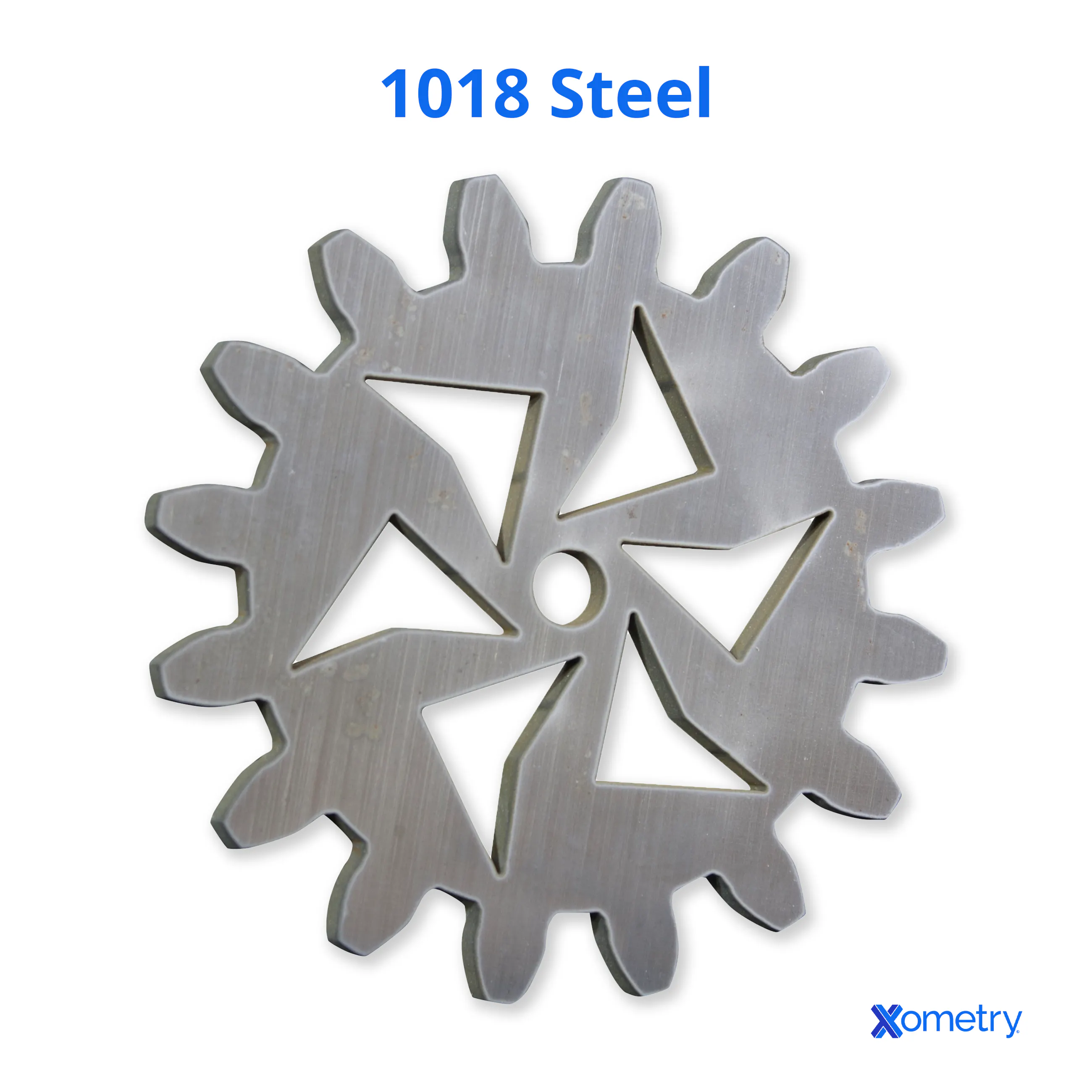
Uses for Machinery Components
1018 steel tends to produce continuous, stringy chips; tolerances can be maintained, but chip control may require tooling strategies. Machinists rely on 1018 steel for shafts, pins, gears, and spindles, where dimensional accuracy defines performance. 1018 steel supports high-speed machining without excessive tool wear. Engineers select 1018 steel when repeatable dimensions and surface finish matter. 1018 steel responds well to carburizing, which increases surface hardness while the core remains tough.
Uses for Fasteners and Tools
1018 steel suits fasteners and tools because 1018 steel handles forming and threading without cracking. Manufacturers produce bolts, nuts, studs, and light-duty tools from 1018 steel due to balanced strength and ductility. 1018 steel supports cold forming processes that require flexibility during shaping. Case hardening processes raise surface hardness for tools exposed to friction. 1018 steel maintains consistent thread quality after machining and rolling.
Uses for Automotive Parts
1018 steel works for automotive parts because 1018 steel absorbs vibration and cyclic stress without brittle failure. Engineers select 1018 steel for pins, rods, brackets, and linkage components in mechanical systems. 1018 steel has moderate wear resistance and may require surface hardening (e.g., carburizing) for improved performance under repeated motion. 1018 steel maintains a stable composition, which supports consistent performance across batches. Manufacturers rely on 1018 steel for cost-effective production of non-critical components.
Uses for General Fabrication
1018 steel performs well in fabrication because 1018 steel welds easily and forms without defects. Fabricators cut, bend, and weld 1018 steel into frames, brackets, supports, and machine bases. 1018 steel reduces distortion during welding due to low carbon content, and distortion during welding depends on heat input, geometry, and restraint. Smooth surface quality lowers finishing work after fabrication. 1018 steel supports efficient production for custom and standard fabricated parts.
Uses for Construction Components
1018 steel applies to construction components because 1018 steel provides reliable strength for light structural roles. Builders use 1018 steel for anchor bolts, base plates, and reinforcement parts. 1018 steel supports load-bearing applications where stress levels remain moderate. 1018 steel maintains structural integrity under regular service conditions. 1018 steel offers cost efficiency for projects that do not require high-strength alloy steel.
What Are the Equivalent Grades of 1018 Steel?
The equivalent grades of 1018 Steel are listed below.
- ASTM A108: The American standard covers cold-finished carbon steel bars with similar chemical and mechanical specifications. It serves as a primary reference for industrial suppliers.
- EN3B: The European standard identifies a low-carbon steel with comparable machinability and weldability. Manufacturers in Europe utilize the grade for general engineering purposes.
- 1015 Steel: A slightly lower carbon version offers even higher ductility for extreme forming tasks. It belongs to the same family of plain carbon steels.
- 1020 Steel: The grade contains slightly more carbon and provides a small increase in strength. The grades stay highly interchangeable for most general-purpose applications.
- JIS S20C: The Japanese standard defines a carbon steel for machine structural use with a similar elemental balance. It ensures compatibility for parts manufactured in Asian markets.
How Does 1018 Steel Differ From Ordinary Steel?
The 1018 steel differs from ordinary steel through its precise chemical composition and controlled carbon content. Classified under the American Iron and Steel Institute (AISI) designation system, 1018 steel contains 0.15% to 0.20% carbon, 0.60% to 0.90% manganese, 0.04% maximum phosphorus, and 0.05% maximum sulfur. “Ordinary steel” is not a formal classification; most steels are produced to defined standards with controlled compositions and predictable properties.
The controlled low-carbon percentage in 1018 steel produces a tensile strength of 440 MPa (64,000 psi) and a yield strength of 370 MPa (53,700 psi), values that ordinary steel cannot guarantee without a defined grade classification. The manganese content in 1018 steel (0.60% to 0.90%) directly improves hardenability and machinability, achieving a machinability rating of 78% relative to AISI B1112 steel. Any standardized steels have known machinability ratings or well-documented machining characteristics. 018 responds well to carburizing; cold drawing is not a case-hardening process, and achieving 58–64 HRC depends on process control and may involve some distortion.
Is 1018 Steel a Stainless Steel?
No, 1018 steel is not stainless steel. 1018 steel belongs to the AISI/SAE plain carbon steel series, containing no chromium content above the 10.5% minimum threshold required to qualify a steel alloy as stainless. Stainless steel derives its corrosion resistance from a passive chromium oxide layer that forms on the surface when chromium content meets or exceeds 10.5% by weight.
1018 steel contains 0.15% to 0.20% carbon and 0.60% to 0.90% manganese as primary alloying elements, with no intentional chromium or nickel additions. The steel surface oxidizes readily when exposed to moisture, without chromium, forming iron oxide (rust) at a measurable rate. 1018 steel requires protective coatings (zinc plating, black oxide, or epoxy primers) to resist surface corrosion in humid or saltwater environments. Stainless grades (304, 316, and 410) carry chromium content ranging from 11% to 26%, a composition entirely absent in 1018 steel. The mechanical properties of 1018 steel, tensile strength of 440 MPa, and Brinell hardness of 126 HB, reflect the behavior of a low-carbon mild steel, not the austenitic or martensitic microstructure associated with stainless steel.
Is 1018 Steel Stronger Than 1045 Steel?
No, 1018 steel is not stronger than 1045 steel. 1045 steel carries a carbon content of 0.43% to 0.50%, higher than the 0.15% to 0.20% carbon content of 1018 steel, and the increased carbon content directly raises mechanical strength. The tensile strength of 1045 steel reaches 570 MPa (82,700 psi) in its normalized state, compared to 440 MPa (64,000 psi) for 1018 steel, a difference of approximately 130 MPa (18,700 psi).
The yield strength of 1045 steel measures 310 MPa to 530 MPa, depending on the heat treatment applied, while 1018 steel yields at 370 MPa without heat treatment. The Brinell hardness of 1045 steel reaches 163 HB to 179 HB in its normalized condition, exceeding the 126 HB hardness of 1018 steel by 29% to 42%. The trade-off, however, lies in machinability and weldability. 1018 steel achieves a machinability rating of 78%, whereas 1045 steel drops to 57%, making 1018 more favorable for precision machining operations. The superior carbon composition of 1045 steel positions it as the preferred grade for shafts, gears, and structural components requiring higher load-bearing capacity over 1018 steel.
Is 1018 Steel Better Than Other Medium-Carbon Steel?
No, 1018 steel is not better than other medium-carbon steel, making a direct performance comparison against medium-carbon grades a matter of application context rather than absolute superiority. 1018 steel belongs to the low-carbon steel category, with a carbon content of 0.15% to 0.20%, well below the 0.30% to 0.60% carbon range that defines medium-carbon steels (1030, 1040, and 1045 grades).
1018 steel outperforms medium-carbon grades in applications requiring high machinability and weldability. Its machinability rating of 78% surpasses 1045 steel's 57% rating and 1040 steel's 60% rating, giving 1018 a measurable advantage in precision-machined parts. Welding 1018 steel requires no preheating in most conditions due to its low carbon equivalent, while medium-carbon steels demand preheat temperatures from 150°C to 260°C to avoid heat-affected zone cracking.
Strength remains the primary area where medium-carbon steels outperform 1018. The tensile strength of 1045 steel (570 MPa) exceeds that of 1018 steel (440 MPa) by 130 MPa. 1018 steel underperforms compared to medium-carbon steel grades under identical service conditions for components requiring surface hardness, wear resistance, and higher load capacity.
What is the Difference Between A36 Steel and 1018 Steel?
The differences between A36 Steel and 1018 Steel are listed below.
- Chemical Specification: A36 is a structural steel with a broad carbon range, allowing up to 0.26 percent. 1018 steel follows a tighter carbon specification between 0.15 and 0.20 percent.
- Manufacturing Method: A36 primarily comes in hot-rolled plates and shapes with a rougher finish. 1018 steel is found in cold-drawn bars with high dimensional precision.
- Strength Levels: Cold-drawn 1018 steel typically shows higher yield strength than standard A36 structural shapes. Strain hardening during cold work accounts for the mechanical difference.
- Intended Application: Engineers choose A36 for massive structural projects like bridges and buildings. 1018 steel remains the preferred choice for precision machined parts and small components.
- Weldability Comparison: A36 Steel and 1018 Steel grades offer excellent weldability due to their low carbon content. Fabrication shops utilize A36 Steel and 1018 Steel materials for a wide variety of joined assemblies.
- Cost and Availability: A36 remains more affordable for bulk structural needs. 1018 steel provides better value for parts requiring a superior surface finish and tighter tolerances.
How Xometry Can Help
If you’re after a highly formable carbon steel, 1018 might be just what you need. If strength or hardness are at the top of your priority list (perhaps you need to make parts that are more resistant to wear and the elements), you might want to look into a medium-carbon steel instead. Reach out to one of our reps for more information and/or guidance in the right direction, or upload your designs to our Instant Quoting Engine for a free quote and no-obligation quote.
Disclaimer
The content appearing on this webpage is for informational purposes only. Xometry makes no representation or warranty of any kind, be it expressed or implied, as to the accuracy, completeness, or validity of the information. Any performance parameters, geometric tolerances, specific design features, quality and types of materials, or processes should not be inferred to represent what will be delivered by third-party suppliers or manufacturers through Xometry’s network. Buyers seeking quotes for parts are responsible for defining the specific requirements for those parts. Please refer to our terms and conditions for more information.