Weathering Steel: Definition, Composition, Properties, and Uses


Weathering steel is a clever metal that doesn’t need protecting—it’s got the job covered all by itself! Also known as COR-TEN® steel—a United States Steel Corporation (USSC) trademark—this material naturally creates its own armor, as it were. We’ll tell you exactly how it does this, how it’s made, and what it’s used for in this article.
What Is Meant by Weathering Steel?
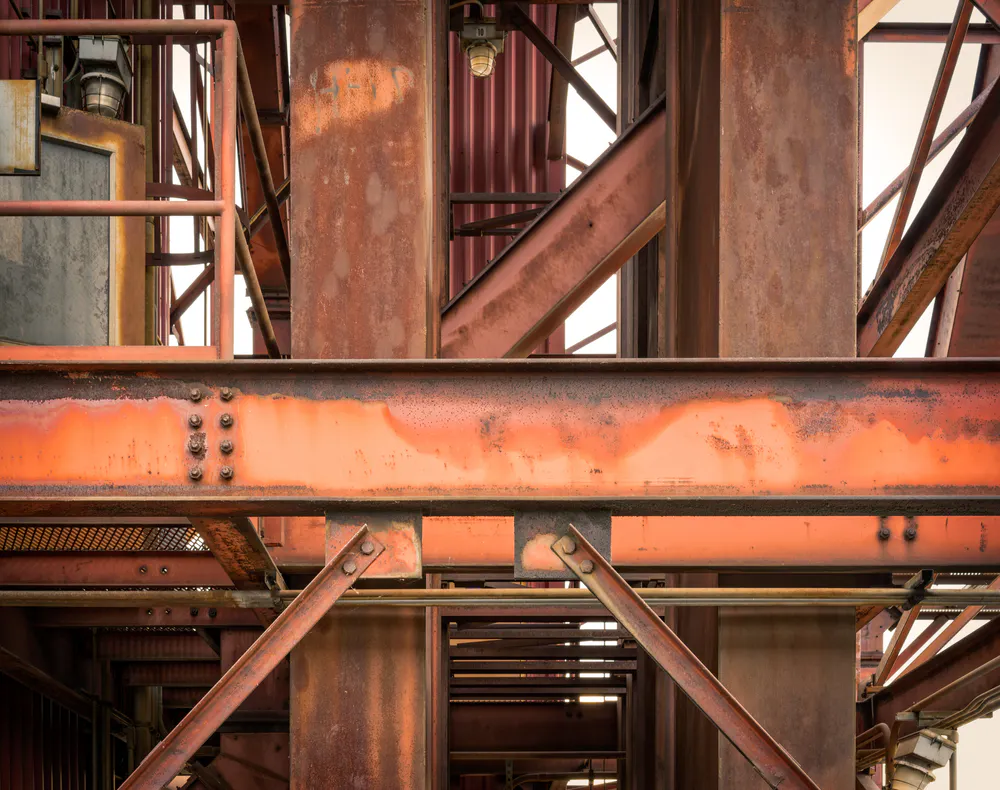
Weathering steel is a type of high-strength, low-alloy (HSLA) steel that is chemically formulated to develop a protective rust-like oxide layer called a “patina” on its surface. This patina, which gives the metal its characteristic rustic aesthetic, seals off the metal’s surface from the atmosphere and keeps it protected without the need for extra treatment or coating. The patina extends the metal’s life span and reduces the need for frequent maintenance and painting—which is why weathering steel is commonly used in outdoor settings or situations where conventional steel would very likely rust. Although the patina is technically rust, the rust stays on the surface keeping the metal underneath protected and shielded from further corrosion.
The oxide layer forms thanks to the addition of various alloying elements. Weathering steels have a carbon content below 0.2 wt%, and various alloying elements, like chromium, manganese, phosphorus, copper, and sulfur (the exact compositions can be found in a table a little further down). Together, all elements make up a total content ranging from 1.00 wt% to 5.00 wt%. The extra materials can provide many other perks, too, like more strength and 4–8 times better corrosion resistance than plain, low-carbon steels. For instance, adding copper helps the patina adhere to the metal better and slow corrosion down.
What Is the Other Term for Weathering Steel?
Weathering steel is also known by its trademarked name COR-TEN® steel. It is occasionally also written as "corten steel" without a hyphen, as a genericized trademark. It is also sometimes referred to as high-strength, low-alloy (HSLA) steel.
What Is the Origin of Weathering Steel?
Weathering steel was invented by USSC in the 1930s to fortify ore-carrying hopper carts that transferred iron ore and coal to the furnace. Thanks to its incredible strength, durability, hardness, and corrosion resistance—all without having to apply a coating—weathering steel later found a great deal of uses across many different industries. In the 1950s, it even made its way into architecture, and in 1964, the John Deere Headquarters in Moline, Illinois, was the first building to be clad in weathering steel. Used in this way, the steel gives buildings an aged and grounded ambiance, especially when the patina develops and matures. The trademarked name, which is sometimes written simply as “corten steel,” is a mixture of corrosion resistance (“COR”) and tensile strength (“TEN”).
How Does Weathering Steel Work?
Weathering steel works due to the alloying elements prompting the initial rust layer to adhere more effectively to the steel's surface. This prevents the rust from infiltrating deeper and compromising the steel's strength. While weathering steel does undergo rusting, this occurs solely on its external surface. The rust doesn't permeate the inner layers of the steel once the initial outer rust layer has formed. This outer rust layer acts as a protective shield, safeguarding the steel from further corrosion.
How Is Weathering Steel Made?
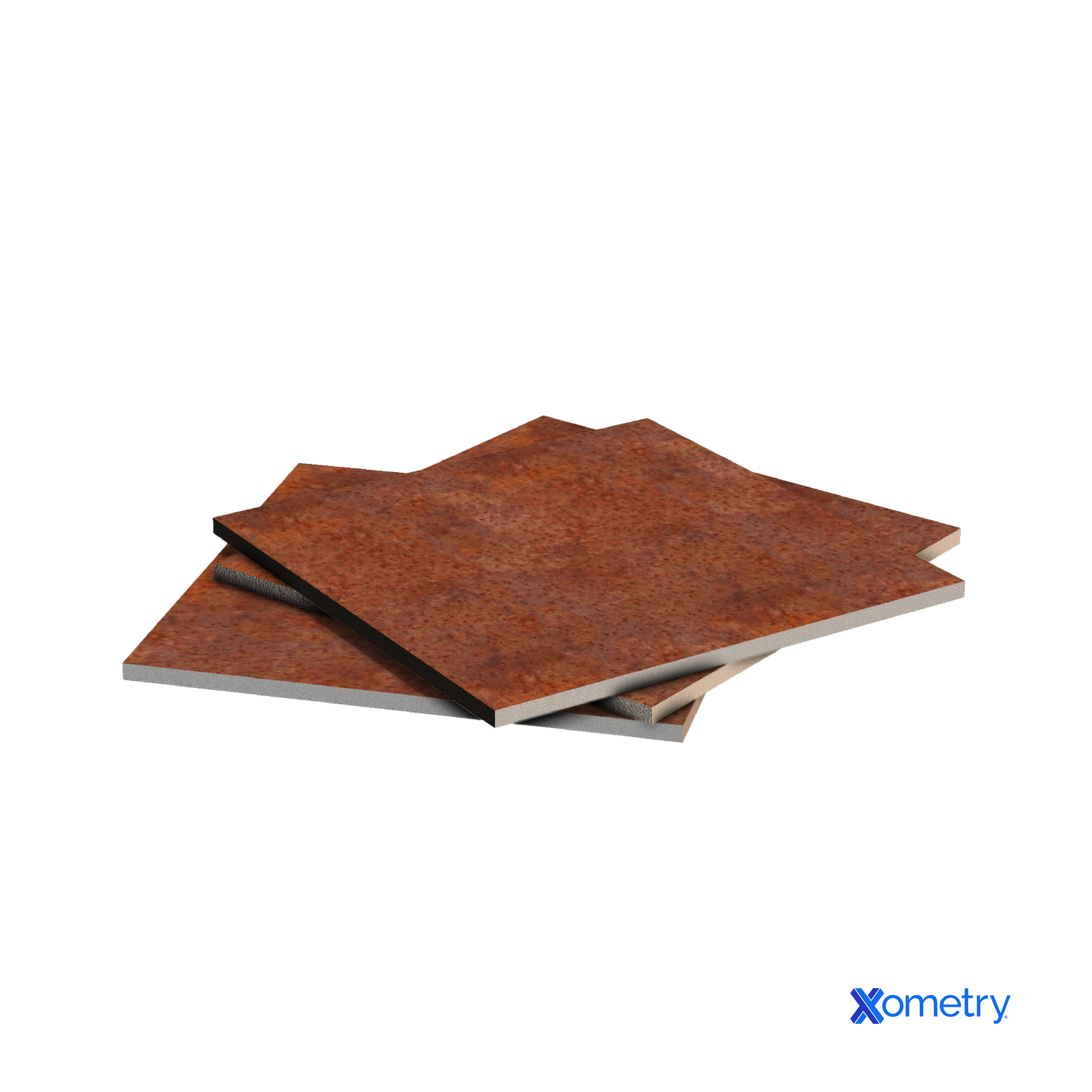
Weathering steel is made via a controlled process involving exposure to natural weathering conditions that allows it to develop the aforementioned protective surface layer over time. During the process, the steel surface is first roughened through sanding or blasting. Over time, it’s wetted and dried repeatedly to encourage the patina to develop. There are some methods used to accelerate the process involving chemical treatments or industrial-grade hydrogen peroxide that are sometimes performed. When it’s ready, the surface finish can range from orange-brown to a deeper reddish-brown. The most common form it comes in is sheet or plate steel, which is often used for architectural purposes.
How Is Weathering Steel Different From Regular Steel?
The difference between weathering steel and regular steel is that the former has extra alloying elements that allow it to develop a rust-like patina. Regular steel mainly consists of iron and carbon, which is strong but highly susceptible to rust if not protected with some type of coating. Weathering steel is better for outdoor environments but isn’t necessary for indoor or low-corrosion settings, where regular steel would suffice and also prove more cost-effective.
Is Weathering Steel Better Than D2 Tool Steel?
It depends. Weathering steel and D2 tool steel are distinct materials with different strengths and applications, making a direct comparison of "better" or "worse" challenging. The choice between the two depends on specific application requirements. For example, weathering steel excels in corrosion resistance and aesthetics, while D2 tool steel excels in hardness and wear resistance for cutting and machining tasks.
Is Weathering Steel a High-Grade Alloy Steel?
No. Weathering steel is not typically classified as high-grade alloy steel in the same sense as some other specialized alloy steels like stainless steel or tool steel. It is a specific type of steel that falls under the category of low-alloy steel.
Weathering steel is composed primarily of iron, but it also contains small amounts of various alloying elements such as: copper, chromium, and nickel. While weathering steel is valued for its corrosion resistance and unique aesthetic qualities, it is not primarily chosen for its mechanical properties like: hardness, toughness, or strength.
What Are the Different ASTM Specifications for Weathering Steel?
Weathering steel is covered by the following several ASTM specifications, each designed to provide specific corrosion-resistant properties:
1. A847
ASTM A847 pertains to low-alloy, high-strength steel used for cold-formed welded rectangular and square pipe and tubing. It offers superior resistance to atmospheric corrosion compared to carbon steel. A847 is particularly suitable for applications requiring enhanced corrosion resistance and high strength, such as bridges and structures. It features a minimum yield and tensile strength of 50 ksi and 70 ksi, respectively.
2. A709-50W
ASTM A709-50W is a specification standard for structural steel primarily which encompasses high-strength and low-alloy steel structural bars, plates, and shapes. In the majority of environments, the resistance to atmospheric corrosion of this steel significantly surpasses that of carbon steel, regardless of the presence of copper. It mandates an atmospheric corrosion index of 6.00. When appropriately designed and facing atmospheric exposure, A709-50W proves suitable for various applications without paint, including: pedestrian bridges, highway bridge girders, railroad bridges, and overpasses. This specification boasts a minimum yield and tensile strength of 50 ksi and 70 ksi, respectively.
3. A871-65
ASTM A871-65 specifies low-alloy, high-strength structural steel plate with an improved resistance to atmospheric corrosion. It offers minimum yield and tensile strength of 65 ksi and 80 ksi, respectively. A871-65 excels in corrosion resistance compared to carbon steels. It finds applications in areas like power transmission and lighting poles.
4. A242
ASTM A242 is a high-strength, low-alloy structural steel specification with enhanced atmospheric corrosion resistance. Applicable to steel plates up to half an inch in thickness, A242 provides superior atmospheric corrosion resistance compared to carbon steels. A242 boasts a minimum yield and tensile strength of 50 ksi and 70 ksi, respectively.
5. A606-4
ASTM A606-4 applies to both hot- and cold-rolled steel sheets, strips, and coils. This high-strength, low-alloy specification is known for its improved atmospheric corrosion properties. A606-4 can be used for structural and miscellaneous purposes, and can be used unpainted in many applications if properly designed. It features a minimum yield and tensile strength of 50 ksi and 70 ksi, respectively.
6. A588
ASTM A588 is a specification for high-strength, low-alloy structural steel, featuring improved atmospheric corrosion resistance. It encompasses various structural shapes like: angles, channels, beams, plates, and bars. This specification is particularly suitable for welded bridges and structures in which weight reduction, durability, and corrosion resistance are important. With a minimum yield strength and tensile strength of 50 ksi and 70 ksi, respectively, A588's corrosion resistance surpasses that of carbon steels.
What Are the Chemical Compositions of Weathering Steel?
The chemical composition of both Corten A and B weathering steels are given in Tables 1 and 2, respectively:
Table 1: Corten A Chemical Composition. Table Credit: https://masteel.co.uk/products/weathering-steel/
Table 2: Corten B Chemical Composition. Table Credit: https://masteel.co.uk/products/weathering-steel/
What Is the Carbon Content of Weathering Steel?
Weathering steels have a carbon content below 0.2 wt%. They are enriched with alloying elements such as Cu, Ni, Cr, Si, P, and Mn, which collectively contribute to a total content ranging from 1.00 wt% to 5.00 wt%.
What Are the Properties of Weathering Steel?
The properties of weathering steel are listed in Table 3:

Table 3. Properties of Corten Steel. Table Credit: https://www.azom.com/article.aspx?ArticleID=12974
What Are the Characteristics of Weathering Steel?
Weathering steel possesses several distinctive characteristics that make it unique and suitable for various applications. These are:
- Exceptional resistance to atmospheric corrosion.
- Has a distinctive appearance, ranging from shades of orange-brown to deep reddish-brown.
- Offers excellent tensile strength and durability.
- Has a longer life expectancy than bare, cold-rolled steel.
- Can be welded using appropriate methods that allow the rusting process to occur in a manner consistent with the rest of the structure.
What Are the Uses of Weathering Steel?
- Architectural structures (i.e., bridges, building facades, etc.)
- Outdoor sculptures/artworks
- Shipping containers
- Railway wagons
- Transmission poles
How Long Will Weathering Steel Last?
Corten steel has the potential to last for several decades to over a century. This is thanks to the protective rust layer that imparts corrosion resistance.
How Much Does a Weathering Steel Cost?
The cost of weathering steel can vary depending on several factors including: the specific type of weathering steel, the thickness and dimensions of the material, the supplier or manufacturer, the location where it's purchased, and any additional features or treatments applied to the steel. Generally, weathering steel may be slightly more expensive than traditional carbon steel due to its enhanced corrosion-resistant properties. However, the long-term savings in maintenance and replacement costs can make weathering steel a cost-effective choice for certain applications over its life span. It's advisable to obtain price quotes from suppliers or manufacturers based on your specific project requirements for a more accurate cost estimate.
What Is the Common Form of Weathering Steel?
The most common form of weathering steel is sheet or plate steel, often used in architectural and structural applications. This form allows for the creation of various structures, facades, sculptures, and other designs that benefit from both the unique aesthetic of the rusted surface and the material's enhanced corrosion resistance.
What Are the Advantages of Weathering Steel?
- Exceptional resistance to atmospheric corrosion
- Excellent tensile strength and durability
- Longer life expectancy than bare, cold-rolled steel (can last several decades to over a century!)
- Protective patina acts as a natural barrier against further corrosion
- Low maintenance needs (i.e., no painting or coating is needed)
- Self-protecting nature helps save costs and lowers environmental impact
- Keeps its strength and structural integrity in challenging environments
- Unique appearance adds artistic and architectural appeal
- Can be welded with appropriate methods (gas shield, spot, or submerged arc welding techniques, depending on steel thickness)
What Are the Disadvantages of Weathering Steel?
- Higher initial cost than traditional carbon steel
- The initial rust runoff can stain surrounding areas
- The early rusting stages can result in a less aesthetically pleasing appearance
- Careful consideration is needed during the design phase to prevent water accumulation in crevices
- Not good in high-chlorine environments and some other climate conditions; could lead to issues with the material’s corrosive resistance and durability
"We should consider weathering steel "4D manufacturing" because it really starts to show its characteristics over time. It is meant to corrode and look cool when it corrodes"
Is Weathering Steel Better Than Electrical Steel?
It depends. Weathering steel and electrical steel serve very different purposes and have distinct characteristics. They are designed for different applications and possess unique properties that are optimized for their respective uses. Weathering steel is engineered to develop a protective rust layer when exposed to the elements. This rust acts as a shield against further corrosion and gives the steel its characteristic appearance. Weathering steel finds its applications in outdoor structures, architectural projects, and bridges, providing durability and resilience in harsh weather conditions. On the other hand, electrical steel, also known as silicon steel, is tailored for the electrical industry. It is used to create the cores of transformers, electric motors, and electromagnetic devices. Its key attributes include low electrical resistance and high magnetic permeability, ensuring efficient transmission of magnetic fields and minimizing energy losses.
Frequently Asked Questions About Weathering Steel
How Xometry Can Help
You can get a free quote for a variety of different services that we offer here at Xometry, including options specific to weathering steel, like laser cutting, welding, and CNC machining. Get started right away by uploading your designs to the Xometry Instant Quoting Engine®!
Copyright and Trademark Notices
- COR-TEN® is a trademark of United States Steel Corporation (USS)
Disclaimer
The content appearing on this webpage is for informational purposes only. Xometry makes no representation or warranty of any kind, be it expressed or implied, as to the accuracy, completeness, or validity of the information. Any performance parameters, geometric tolerances, specific design features, quality and types of materials, or processes should not be inferred to represent what will be delivered by third-party suppliers or manufacturers through Xometry’s network. Buyers seeking quotes for parts are responsible for defining the specific requirements for those parts. Please refer to our terms and conditions for more information.