
Manganese (Mn): Element, Uses and Formula


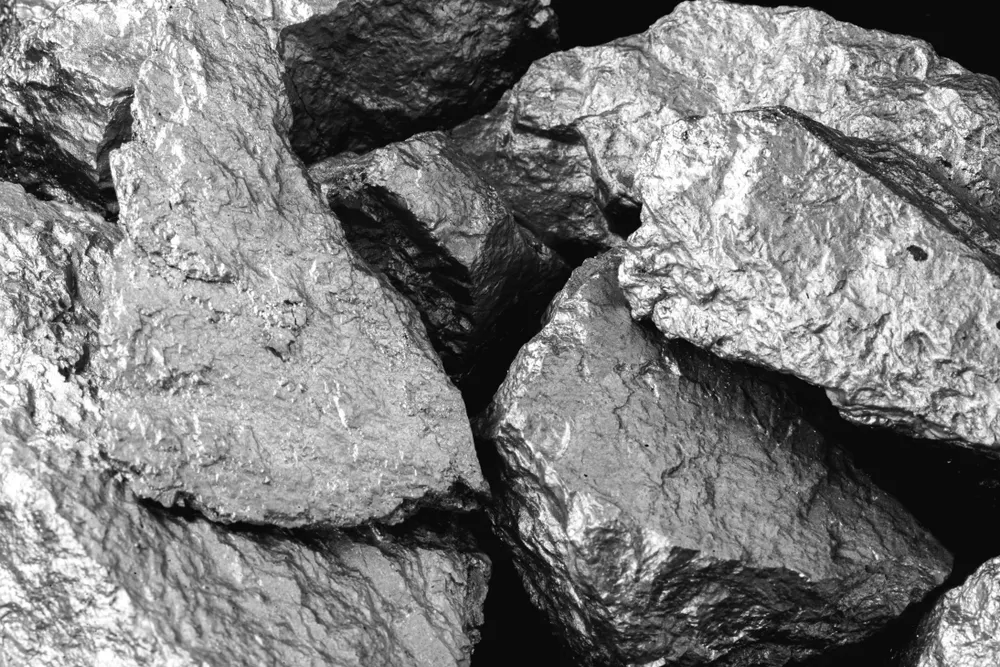
Manganese (Mn) is a naturally occurring metallic element with the atomic number 25, classified as a transition metal in the d-block of the periodic table. Manganese (Mn) plays a critical role in engineering materials, serving as a key alloying element that improves strength, hardness, toughness, and wear resistance across a wide range of industrial applications. The element appears in nearly every grade of commercial steel, making it one of the most widely consumed metals in manufacturing after iron, aluminum, and copper.
The atomic mass of manganese is approximately 54.94 g/mol, and its chemical symbol Mn is universally recognized across chemistry, metallurgy, and engineering standards. Manganese forms compounds readily, with manganese dioxide (MnO₂) being among the most common in industrial chemistry. In steelmaking, manganese removes dissolved oxygen and sulfur from molten steel, preventing brittleness and improving overall mechanical performance. Concentrations ranging from 0.25% to 1.5% appear in standard structural and alloy steels, while Hadfield manganese steel contains up to 14% manganese for extreme wear-resistance applications. The element is sourced primarily from oxide mineral ores through large-scale mining and refining operations across South Africa, Australia, and China.
What Is Manganese?
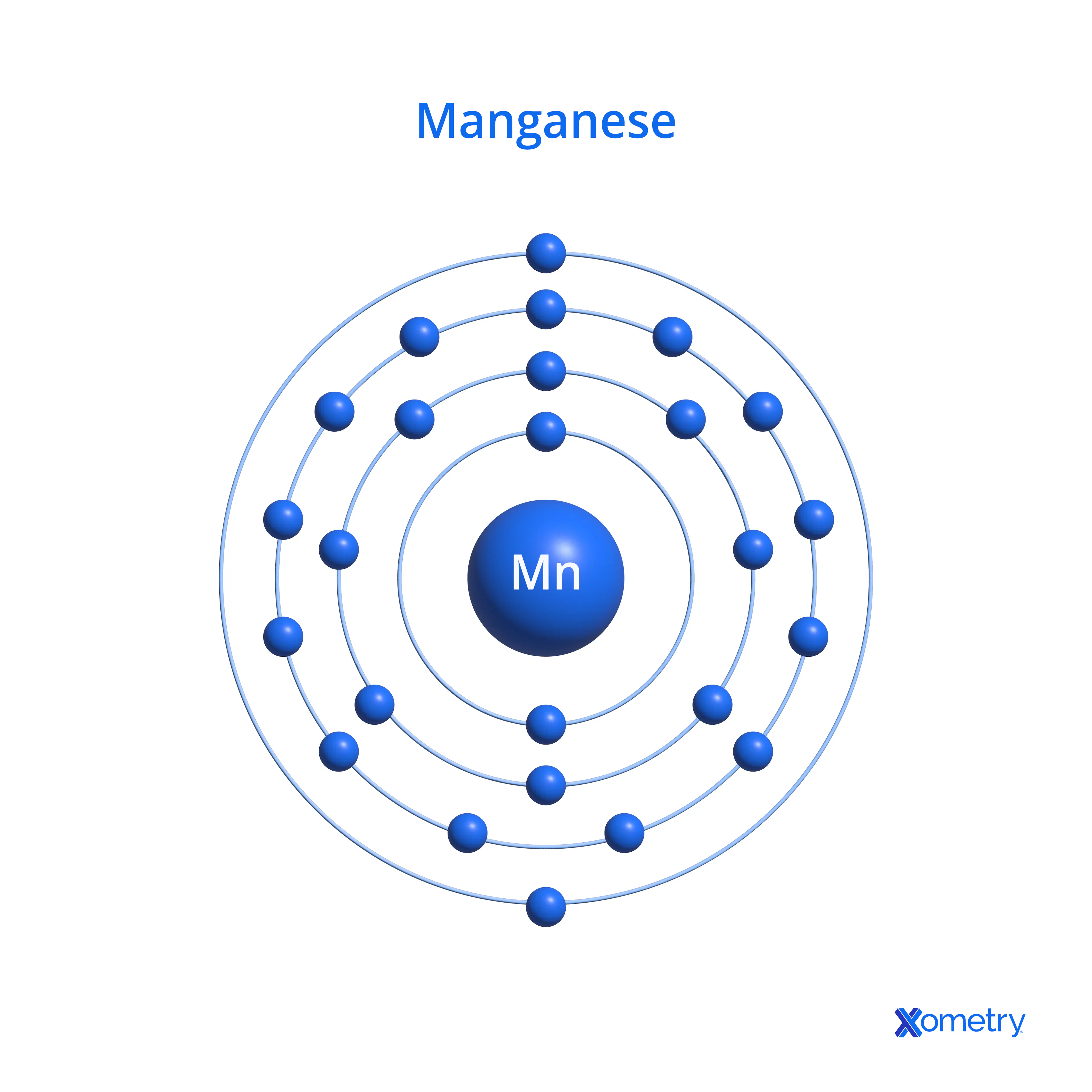
Manganese is a naturally occurring transition metal element with the chemical symbol Mn, atomic number 25, and atomic mass of 54.938 g/mol, classified in Group 7 and Period 4 of the periodic table. Manganese exists as a hard, brittle, silvery-grey metal in its pure elemental form, exhibiting a complex cubic crystal structure (alpha phase) at room temperature with a density of 7,476 kg/m³ and melting point of 1,246°C. The element ranks as the 12th most abundant element in the Earth's crust at an average concentration of 950 ppm, occurring naturally in over 300 mineral species with pyrolusite (MnO₂) representing the most commercially significant ore form. Manganese functions as a critical alloying element in steel and non-ferrous alloys in engineering and metallurgy, improving strength, hardness, toughness, wear resistance, and hardenability at addition levels from 0.25% to 14% depending on the target application. Pure manganese in its elemental state is too brittle for direct structural use, making its primary industrial value as a ferroalloy addition (ferromanganese, silicomanganese) rather than as a standalone structural metal. Annual global manganese ore production exceeds 20 million metric tons, with the majority converted into ferroalloys consumed directly by the steelmaking industry.
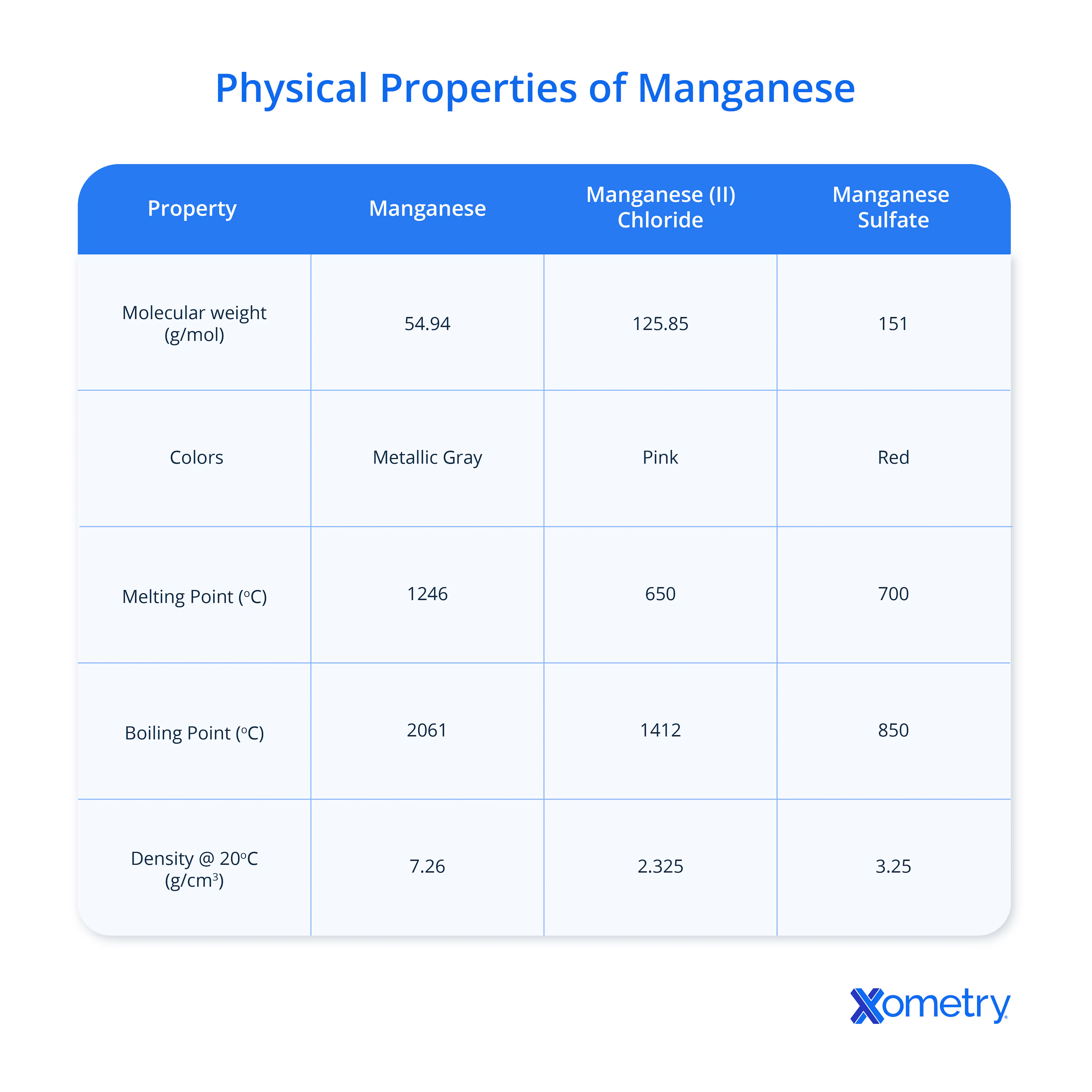
What Is the Color of Manganese? The color of manganese in its pure elemental form is silvery-grey to pinkish-grey with a bright metallic luster visible on freshly cut or polished surfaces before surface oxidation obscures the underlying metal tone. The color of manganese changes rapidly upon air exposure, as the pure metal surface oxidizes within minutes to develop a dull grey to brownish-grey manganese oxide (MnO) layer that replaces the bright metallic appearance with a matte, darkened finish. Pure manganese in bulk form closely resembles iron in visual appearance but carries a slightly lighter grey tone with occasional pinkish undertones distinguishable under direct lighting conditions.
What Does Manganese Look Like?
Manganese look like as a hard, brittle metal with a silvery-grey to pinkish-grey metallic surface luster under freshly polished conditions, closely resembling iron in overall appearance but with a slightly lighter grey tone. The surface of manganese oxidizes rapidly in air at room temperature, developing a dull grey to brownish-grey oxide layer (MnO) within minutes of exposure, which obscures the bright metallic appearance visible on freshly cut or polished surfaces. The color of manganese shifts across its naturally occurring compounds, with manganese dioxide (MnO₂) appearing black to dark grey, manganese sulfide (MnS) appearing green to grey, and rhodochrosite (MnCO₃) appearing pink to rose-red in mineral specimen form. Pure manganese metal fractures with an irregular, granular appearance on the fracture surface due to its brittle nature at room temperature, lacking the fibrous or ductile fracture morphology seen in iron or steel. Ferromanganese alloys used in steelmaking appear as dark grey to silver-black irregular lumps with metallic surface reflectivity, distinguishable from pure manganese by their higher density and the presence of visible iron-rich phases within the alloy microstructure. The characteristic silvery-grey color and rapid surface oxidation behavior of manganese allow metallurgists to visually identify the element and assess the color of manganese in pure metal and ore forms during materials inspection.
What Is Manganese (Mn) in Engineering Materials?
Manganese (Mn) is a metallic element used in engineering materials to improve strength, hardness, and wear resistance in structural and mechanical applications. With an atomic number of 25 and an atomic mass of 54.94 g/mol, manganese belongs to the transition metal group, sharing the d-block of the periodic table with iron, chromium, and nickel. Its metallic grey appearance and brittle nature in pure form contrast sharply with the significant mechanical benefits it provides when alloyed with other metals. Engineers add manganese to steel and iron-based alloys to increase hardenability, reduce brittleness caused by sulfur, and improve toughness under impact loading. Standard carbon steel grades contain manganese concentrations up to 1.65%, while high-manganese steel alloys (Hadfield steel) reach concentrations of 11% to 14% for applications demanding extreme abrasion resistance. Manganese acts as a deoxidizer during steelmaking, removing dissolved oxygen that would otherwise create porosity and weaken the final product. The combination of affordability, availability, and measurable mechanical enhancement makes manganese one of the most frequently specified alloying elements across civil, mechanical, and manufacturing engineering disciplines.
What Is the Atomic Number of Manganese in the Periodic Table?
The atomic number of manganese is 25, placing it in Period 4 and Group 7 of the periodic table between chromium (24) and iron (26). The atomic number directly defines the element's identity, representing the 25 protons present in every manganese nucleus, regardless of isotope or oxidation state. Electrons in a neutral manganese atom are also 25, arranged in the electron configuration [Ar] 3d⁵ 4s², with five unpaired d-electrons contributing to its magnetic and chemical properties. The position between chromium and iron in the periodic table gives manganese characteristics shared with neighboring transition metals, including variable oxidation states ranging from +2 to +7. The +2 oxidation state dominates in aqueous solutions, while the +4 state appears in manganese dioxide (MnO₂), the most commercially significant compound. The +7 state appears in permanganate (MnO₄⁻), widely used in water treatment and chemical synthesis. The atomic number 25 serves as the foundational reference point for all chemical, metallurgical, and engineering calculations involving manganese in material specifications and composition analysis.
How Is Manganese Represented in Chemical Reaction Formulas?
Manganese is represented by the chemical symbol Mn in all chemical reaction formulas, compound notations, and material specifications. The symbol Mn appears consistently in both inorganic and industrial chemistry contexts, whether referencing the pure element or its compounds. Common manganese compounds include manganese dioxide (MnO₂), manganese sulfide (MnS), manganese oxide (MnO), and potassium permanganate (KMnO₄), each using Mn as the core identifier within the formula. Manganese appears in reactions describing deoxidation (Mn + O → MnO) and desulfurization (Mn + S → MnS) in steelmaking reaction formulas, both of which are critical purification steps during the refining of molten steel. Manganese is listed as Mn followed by its weight percentage (0.80% Mn or 1.20% Mn) within the chemical composition table, in alloy composition charts, and material data sheets. The symbol Mn is standardized by the International Union of Pure and Applied Chemistry (IUPAC) and adopted universally across engineering material standards, including ASTM, ISO, and DIN specifications, ensuring consistent identification across international technical documentation.
Does Manganese Have 25 Protons in Its Atomic Structure?
Manganese has 25 protons in its atomic structure, a fixed value that defines its identity as an element. The atomic number of an element equals its proton count by definition, meaning every manganese atom across all isotopes and chemical compounds contains 25 protons in its nucleus. Removing or adding protons would change the element entirely, producing chromium at 24 protons or iron at 26 protons. Manganese has one stable naturally occurring isotope, ⁵⁵Mn, which contains 25 protons and 30 neutrons in its nucleus. Radioactive isotopes (⁵²Mn, ⁵³Mn, ⁵⁴Mn) also contain 25 protons but differ in neutron count, producing different mass numbers without altering the element's chemical identity. The 25-proton configuration produces the [Ar] 3d⁵ 4s² electron arrangement responsible for manganese's transition metal properties, variable oxidation states, and strong affinity for bonding with oxygen and sulfur in metallurgical processing environments.
"Material specification for structural integrity requires a precise understanding of manganese as a microalloying agent: its role in suppressing grain boundary embrittlement is contingent on maintaining a strict manganese-to-sulfur ratio (minimum 8:1) to ensure robust weldability. From a DFM standpoint, engineers should leverage manganese to stabilize the austenitic phase in wear-resistant designs (preserving the FCC structure) which allows for thinner, lighter cross-sections without sacrificing impact energy absorption."
Why Is Mn the Standard Symbol for Manganese in Technical Drawings?
Mn is the standard symbol for manganese in technical drawings because it derives from the element's historically recognized Latin-based nomenclature and has been formalized by IUPAC as the internationally accepted chemical identifier. The name manganese traces to the Magnesia region of Greece, and the symbol Mn emerged through the same European scientific tradition that produced symbols for iron (Fe from ferrum) and copper (Cu from cuprum). Technical drawings, engineering blueprints, and material data sheets across all industries use Mn consistently to eliminate ambiguity when identifying the element in multinational supply chains. Mn appears in filler metal composition tables alongside carbon (C), silicon (Si), and chromium (Cr) to define the deposited weld metal chemistry in welding procedure specifications. Structural steel specifications list Mn content to 2 decimal places (0.85% Mn, 1.20% Mn) in chemical composition certifications supplied with mill test reports. The standardization of Mn across ASTM, EN, ISO, JIS, and DIN material standards ensures that engineers in different countries reference the same element without conversion or translation, preserving accuracy in global manufacturing documentation.
How Is Manganese Identified in Material Specifications?
Manganese is identified in material specifications by its symbol Mn and a numerical value representing its weight percentage within the alloy's chemical composition. Mill test reports (MTR) issued for structural steel include a chemical composition table listing each alloying element alongside its measured percentage from spectrometric analysis. A typical ASTM A36 structural steel specification lists manganese content based on product thickness, ranging from no specified minimum for thin plates to 0.80-1.20% for thicker plates and up to 1.35% for certain shapes. . The Mn percentage directly influences the steel's mechanical property certifications, as higher manganese levels correlate with increased tensile strength and hardenability. Stainless steel grades like AISI 201 use elevated manganese content (5.5% to 7.5% Mn) as a partial substitute for nickel, reducing alloy cost while maintaining austenitic structure. High-manganese wear-resistant steels list Mn concentrations from 11% to 14% in their specification sheets. Manganese content is verified through optical emission spectrometry (OES) or X-ray fluorescence (XRF) analysis during quality control inspections at steel mills and fabrication facilities.
Is Mn the Official Symbol Used in Engineering Standards?
Mn is the official symbol for manganese used across all major engineering and scientific standards worldwide. IUPAC established Mn as the standardized chemical symbol, and every major standards organization (ASTM International, ISO, DIN, EN, JIS) adopts Mn consistently in material specifications, chemical composition tables, and technical documentation. No alternative symbol exists for manganese in any recognized engineering standard. ASTM A572 Grade 50 steel specifications list manganese as Mn with a maximum content of 1.35% in the chemical requirements table. ISO 4957 tool steel standards reference Mn in composition limits alongside carbon and chromium. DIN steel designations incorporate Mn directly into steel grade names, as seen in DIN 1.1178 (C60Mn3), where the designation explicitly encodes the manganese content. The universal adoption of Mn as the official symbol eliminates transcription errors, supports automated material tracking systems, and maintains consistency across engineering drawings, procurement documents, and quality certification records.
What Is the Atomic Mass of Manganese in Material Calculations?
The atomic mass of manganese is 54.938 g/mol, a value used in stoichiometric calculations, alloy composition analysis, and chemical reaction balancing across engineering and metallurgical applications. The atomic mass reflects the weighted average of all naturally occurring manganese isotopes, though ⁵⁵Mn constitutes 100% of natural manganese, making it monoisotopic with a precise atomic mass of 54.938045 g/mol. Material engineers use the atomic mass when calculating molar compositions in alloy batches and predicting reaction yields during steelmaking. The atomic mass of manganese (54.94 g/mol) and oxygen (16.00 g/mol) determines the stoichiometric quantity of manganese needed to react with a known oxygen concentration in molten steel in deoxidation calculations for steelmaking. A steel melt containing 0.05% dissolved oxygen, approximately 0.17% manganese, is required to stoichiometrically react to form solid MnO inclusions. The atomic mass value also appears in phase diagram calculations, diffusion modeling, and thermodynamic analyses of iron-manganese binary and ternary alloy systems used in advanced high-strength steel development.
How Is Manganese Represented in Chemical Composition Charts?
Manganese is represented in chemical composition charts as Mn followed by a numerical percentage value indicating its proportion by weight within the alloy. Composition charts in material data sheets list each element in a standardized row or column format, with Mn typically appearing after carbon (C) and silicon (Si) in conventional steel composition tables. A standard low-alloy steel composition chart lists Mn at 1.00% to 1.65%, identifying it as the second or third most abundant alloying element after carbon. Heat treatment charts and continuous cooling transformation (CCT) diagrams reference Mn content as a key variable affecting hardenability, with higher Mn percentages shifting the CCT curves to longer times and lower temperatures. Spectral analysis reports from OES testing list Mn values to 3 decimal places (1.023% Mn) for precise traceability in quality documentation. Color-coded composition charts used in production floor quality control highlight Mn values outside specification limits in red to flag non-conforming heats before casting begins.
Does Elemental Manganese Have a Fixed Chemical Formula?
Elemental manganese has the fixed chemical formula Mn, representing a pure substance composed entirely of manganese atoms in its unalloyed metallic state. As a pure element, its formula contains no subscripts or compound notation, distinguishing it from manganese compounds (MnO₂, MnS, KMnO₄) that incorporate additional elements. Pure elemental manganese exists in four allotropic forms (alpha, beta, gamma, delta) at different temperature ranges, all sharing the same chemical formula Mn despite differing crystal structures. Alpha manganese (α-Mn) is the stable form at room temperature with a complex cubic crystal structure containing 58 atoms per unit cell. Beta manganese (β-Mn) forms above 707°C, gamma manganese (γ-Mn) above 1,087°C, and delta manganese (δ-Mn) above 1,138°C until melting at 1,246°C. The formula Mn applies uniformly to all four allotropes, with the allotropic designation added separately to distinguish crystal structure instead of chemical composition.
What Mechanical Properties Make Manganese Valuable in Manufacturing?
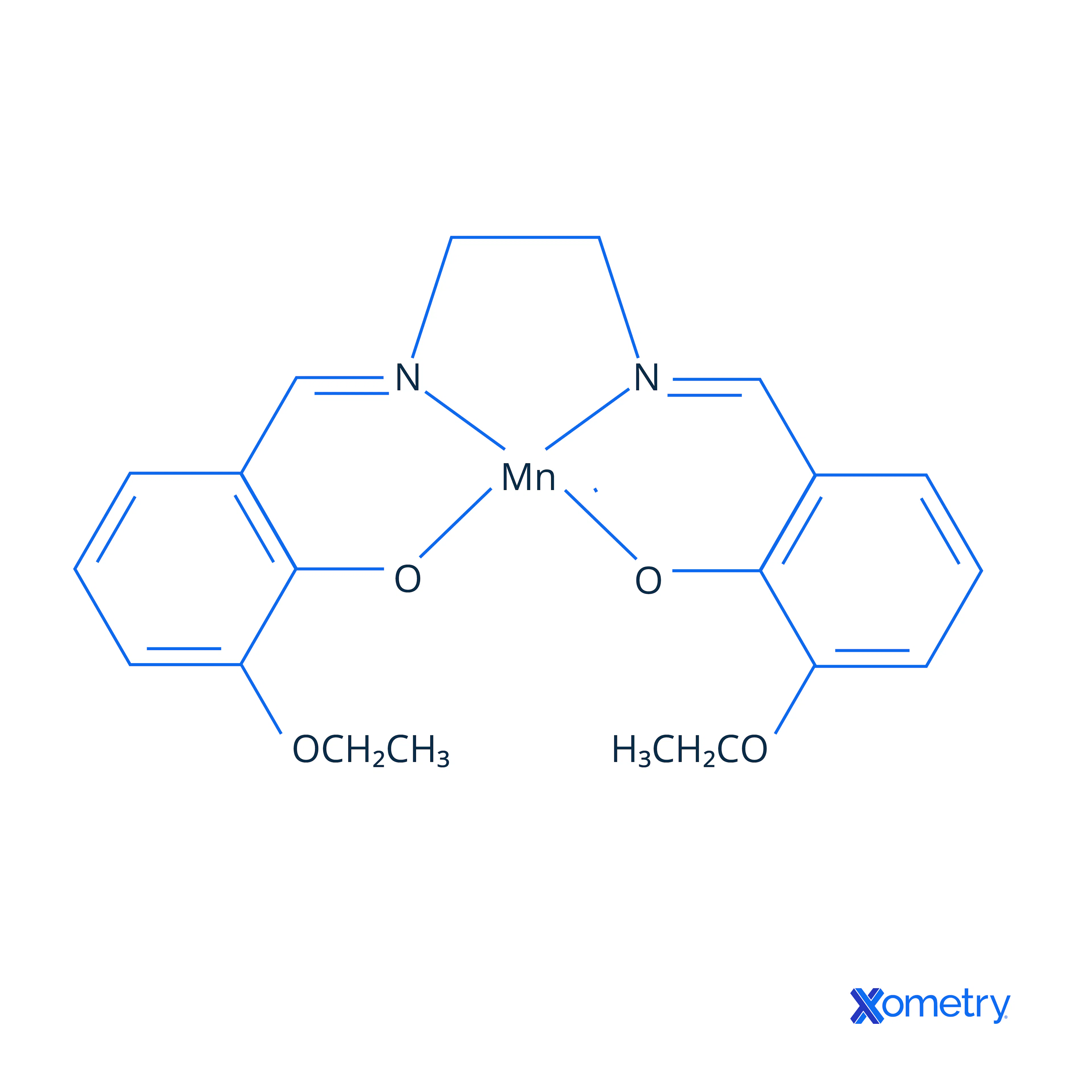
The mechanical properties that make Manganese valuable in manufacturing are listed below.
- Hardness: Manganese increases surface and bulk hardness in steel alloys by promoting martensite formation during heat treatment. High-manganese steels (11% to 14% Mn) develop hardness values up to 550 HBW after work hardening, making them suitable for crusher jaws, rail crossings, and excavator buckets subjected to severe abrasive contact.
- Toughness: Manganese improves impact toughness by refining grain structure and increasing the energy required to propagate cracks through the material. Charpy impact values for manganese-alloyed structural steels reach 40 J to 100 J at temperatures as low as -40°C, qualifying them for arctic infrastructure and cryogenic storage applications.
- Tensile Strength: Adding manganese to low-carbon steel raises tensile strength from approximately 400 MPa to over 600 MPa without requiring expensive alloying elements like nickel or molybdenum. High-strength low-alloy (HSLA) steels achieving tensile strengths of 700 MPa to 900 MPa rely significantly on manganese additions from 1.0% to 1.8%.
- Wear Resistance: Manganese promotes austenite retention in Hadfield steel, producing a surface that work-hardens under repeated impact loading. The surface hardness increases progressively from 200 HBW to 550 HBW during service, generating wear resistance that prolongs component life in mining, quarrying, and rail applications.
- Hardenability: Manganese is one of the most cost-effective elements for increasing steel hardenability, shifting the hardenability band in Jominy end-quench tests, and enabling deeper hardening of thick cross-sections without water quenching.
How Do Hardness and Toughness Define Manganese Performance?
Hardness and toughness define manganese performance by representing the two primary mechanical demands placed on wear-resistant and impact-loaded components in engineering service. Hardness measures a material's resistance to surface indentation and abrasion, quantified on the Brinell (HBW), Rockwell (HRC), or Vickers (HV) scales. Toughness measures the total energy a material absorbs before fracturing, evaluated through Charpy or Izod impact testing at defined temperatures. Manganese enhances both properties simultaneously through distinct metallurgical mechanisms. Hardness increases because manganese promotes martensite and bainite formation during heat treatment, producing fine, hard microstructural phases that resist indentation. Toughness improves because manganese refines austenite grain size and suppresses intergranular sulfide inclusions that act as brittle fracture initiation sites. Pure iron without manganese exhibits a Charpy impact energy below 20 J at -20°C, while manganese-alloyed structural steel achieves 80 J to 120 J under the same test conditions. The balance of hardness and toughness that manganese provides makes it irreplaceable in applications like rail steel, armor plate, and heavy equipment components that experience combined abrasive and impact loading simultaneously.
Is Manganese Classified as a Transition Metal in Metallurgy?
Manganese is classified as a transition metal in chemistry and metallurgy, occupying Group 7 of the d-block in Period 4 of the periodic table. Transition metals are defined by partially filled d-electron subshells in their elemental or ionic forms, and manganese satisfies the criterion with its [Ar] 3d⁵ 4s² electron configuration. The five unpaired 3d electrons produce multiple stable oxidation states (+2 through +7), variable magnetic behavior, and strong tendencies to form coordination complexes with ligands. Metallurgically, manganese behaves as a transition metal by forming solid solutions with iron, substituting iron atoms in the crystal lattice and altering mechanical properties while specifically acting to stabilize the face-centered cubic (FCC) austenite structure. The transition metal classification places manganese alongside chromium, nickel, molybdenum, and vanadium as a group of elements that form the basis of modern alloy steel design, each contributing distinct improvements to mechanical performance at relatively small addition percentages.
What Are Some Uses and Applications of Manganese?
Some uses and applications of Manganese are listed below.
- Steel: Manganese serves as a primary alloying element in steel production, improving strength, hardness, toughness, and wear resistance across structural, tool, and high-strength low-alloy (HSLA) grades. Carbon steel grades containing 0.80% to 1.65% Mn achieve yield strengths from 345 MPa to 450 MPa, while Hadfield manganese steel at 11% to 14% Mn develops surface hardness up to 550 HBW under repeated impact loading in mining and rail applications. The desulfurization and deoxidation functions of manganese during steelmaking remove harmful dissolved oxygen and sulfur from molten steel, preventing porosity, hot shortness, and grain boundary embrittlement in the finished steel product.
- Batteries: Manganese dioxide (MnO₂) functions as the cathode material in alkaline and zinc-carbon primary batteries, accepting electrons from the external circuit during discharge at a nominal cell voltage of 1.5 V. Battery-grade electrolytic manganese dioxide (EMD) achieves purity levels above 91% MnO₂ with controlled particle size distributions from 15 μm to 40 μm, optimizing electrochemical activity and discharge capacity in high-drain consumer battery applications. Lithium manganese oxide (LiMn₂O₄) spinel cathodes in lithium-ion batteries operate at voltages of 3.8 V to 4.2 V with theoretical capacities of 148 mAh/g, providing thermal stability advantages over lithium cobalt oxide cathodes in electric vehicle battery packs where safety under abuse conditions is a critical design requirement.
- Resistors: Manganese contributes to resistor manufacturing through its presence in manganin, a copper-manganese-nickel alloy containing 83% to 86% Cu, 11% to 13% Mn, and 2% to 4% Ni, specifically engineered for precision resistance wire applications. Manganin achieves an electrical resistivity of 0.43 μΩ·m to 0.48 μΩ·m with an exceptionally low temperature coefficient of resistance (TCR) from ±15 ppm/°C to ±20 ppm/°C across the temperature range from 15°C to 35°C, making it the standard material for precision shunt resistors, current sensing elements, and bridge circuit resistors in calibration instruments. Manganin resistors used in power measurement equipment maintain resistance stability within ±50 ppm per year, qualifying them for revenue-grade electrical metering and laboratory reference standard applications.
- Aluminum Alloys: Manganese is added to aluminum alloys primarily in the 3xxx series (Al-Mn alloys) at concentrations from 0.05% to 1.8% by weight, improving strength over pure aluminum without significantly reducing corrosion resistance or formability. Alloy 3003 containing 1.0% to 1.5% Mn achieves tensile strength of 95 MPa to 130 MPa in the annealed condition, representing a 40% to 70% strength improvement over 1100 pure aluminum while retaining excellent deep drawing and bending characteristics suited to cooking utensils, heat exchanger fins, and roofing sheet applications. Manganese in 3xxx series alloys forms dispersoid particles (Al₆Mn, Al₁₂Mn₃Si) during homogenization at 580°C to 620°C, controlling recrystallized grain size and improving the elevated-temperature strength of fin stock in automotive radiators and air conditioning condensers, where the material operates continuously at 100°C to 150°C under cyclic pressure loading. A complete overview of manganese's role in alloy composition and performance is available in Aluminum Alloy: Definition, Characteristics, Types, Properties, and Applications.
1. Steel
Steel is a widely used iron-carbon alloy containing carbon concentrations from 0.05% to 2.1% by weight, serving as the structural backbone of construction, manufacturing, and mechanical engineering across every major industry. The addition of carbon to iron raises yield strength from 130 MPa in pure iron to over 1,600 MPa in high-carbon heat-treated grades, making steel the most mechanically versatile metallic material available at an industrial scale. Manganese, chromium, molybdenum, nickel, and silicon are added alongside carbon in alloy steel grades to enhance hardenability, toughness, corrosion resistance, and high-temperature performance beyond what carbon alone achieves. Global steel production reaches approximately 1.9 billion metric tons annually, reflecting its irreplaceable role across infrastructure, transportation, energy, and consumer product manufacturing worldwide.
2. Batteries
Batteries are electrochemical devices that convert stored chemical energy into electrical energy through oxidation and reduction reactions occurring at two electrodes separated by an ion-conducting electrolyte. The voltage output of a battery cell depends on the electrochemical potential difference between the anode and cathode materials, with lithium-ion cells producing 3.2 V to 3.7 V per cell and lead-acid cells producing 2.0 V per cell. Energy density values range from 30 Wh/kg to 50 Wh/kg in lead-acid batteries to 150 Wh/kg to 300 Wh/kg in lithium-ion batteries, determining how much energy a given battery mass stores for portable and electric vehicle applications. Manganese dioxide (MnO₂) serves as the cathode material in alkaline batteries, exploiting manganese's +4 oxidation state to accept electrons during discharge at voltages near 1.5 V per cell, making manganese a critical material in the global battery supply chain with annual consumption exceeding 500,000 metric tons for battery-grade applications.
3. Resistors
Resistors are passive electronic components that oppose the flow of electrical current in a circuit, dissipating electrical energy as heat in proportion to the square of the current passing through them, expressed by the power equation P = I²R. Resistance values in commercial resistors span from 0.1 Ω to 10 MΩ, with tolerances from ±0.01% in precision wirewound types to ±5% in standard carbon film grades, allowing circuit designers to control current levels, set bias points, and divide voltages across electronic systems. Carbon film resistors are produced by depositing a thin carbon layer onto a ceramic substrate and laser-trimming a helical groove to achieve target resistance values, operating at power ratings from 0.125 W to 2 W at temperatures from -55°C to 155°C. Metal film resistors achieve tighter tolerances (±0.1% to ±1%) and lower temperature coefficients (±25 ppm/°C to ±50 ppm/°C) than carbon film types, qualifying them for precision instrumentation, medical devices, and signal conditioning circuits where resistance stability across temperature ranges directly affects measurement accuracy.
4. Aluminum Alloys
Aluminum alloys are engineering materials composed of aluminum as the primary element combined with copper, magnesium, silicon, zinc, or manganese additions that raise mechanical performance far above pure aluminum's tensile strength of 90 MPa. The 2xxx series (Al-Cu alloys) achieves tensile strengths from 400 MPa to 500 MPa through age hardening, making grades like 2024-T3 the standard material for aircraft fuselage skins and wing structures where strength-to-weight ratio governs design. The 6xxx series (Al-Mg-Si alloys) provides tensile strengths from 240 MPa to 310 MPa with excellent extrudability and corrosion resistance, widely used in architectural profiles, structural tubing, and automotive body components. The 7xxx series (Al-Zn alloys), particularly 7075-T6, achieves tensile strengths above 570 MPa at a density of 2,810 kg/m³, producing specific strength values competitive with high-strength steel for aerospace structural frames and sporting equipment. Aluminum alloys are characterized by densities from 2,600 kg/m³ to 2,900 kg/m³, thermal conductivity from 130 W/m·K to 210 W/m·K, and electrical conductivity from 28 MS/m to 35 MS/m, supporting applications from heat exchangers to electrical transmission conductors. A comprehensive breakdown of grades, temper designations, and application-specific properties is covered in the resource on Aluminum Alloy: Definition, Characteristics, Types, Properties, and Applications.
What Are the Uses of Manganese in Steel Manufacturing?
The uses of Manganese in steel manufacturing are listed below.
- Removing Oxygen (Deoxidizer): Manganese reacts with dissolved oxygen in molten steel to form manganese oxide (MnO), a solid inclusion that rises to the slag layer and is removed from the melt. Additions of 0.15% to 0.30% Mn reduce oxygen content in liquid steel though reaching levels below 100 ppm typically requires stronger agents like silicon or aluminum.
- Removing Impurities: Phosphorus is removed during steelmaking by reacting with basic slag components like lime, while manganese is often lost to the slag phase during this oxidation process. Lower impurity levels improve both mechanical properties and surface finish in rolled and forged products.
- Controlling Sulfur: Manganese combines with sulfur to form manganese sulfide (MnS) inclusions rather than allowing iron sulfide (FeS) to form at grain boundaries. Iron sulfide causes hot shortness, a cracking condition occurring during hot rolling above 900°C, while MnS inclusions remain stable and distribute harmlessly through the steel matrix.
- Preventing Brittleness: Manganese suppresses grain boundary embrittlement by displacing harmful iron sulfide films that concentrate at grain boundaries during solidification. Steel containing at least a 7:1 manganese-to-sulfur ratio by weight maintains ductility and toughness throughout the hot working process.
- Increasing Strength: Manganese strengthens steel through solid solution hardening, substituting iron atoms in the crystal lattice and impeding dislocation movement. Each 0.1% increase in manganese content raises the tensile strength of low-carbon steel by approximately 10 MPa to 15 MPa.
- Increasing Hardness: Manganese increases hardenability by lowering the critical cooling rate required to form martensite during quenching. A steel containing 1.5% Mn achieves a deeper hardened zone than an equivalent carbon steel without manganese when quenched under identical conditions.
- Improving Wear Resistance: High-manganese steels (11% to 14% Mn) develop exceptional wear resistance through austenite work hardening, where repeated impact loads progressively increase surface hardness from approximately 200 HBW to 550 HBW during service. Railroad crossings, crusher liners, and bucket teeth use Hadfield manganese steel for the longest service life under abrasive conditions.
- Improving Hardenability: Manganese shifts the continuous cooling transformation (CCT) curves to longer times and lower temperatures, extending the range of cooling rates that produce hardened microstructures. The Jominy hardenability band widens measurably with each 0.10% increase in manganese content in medium-carbon alloy steels.
- Enhancing Toughness: Manganese refines austenite grain size during hot rolling and heat treatment, reducing the average grain diameter and increasing the grain boundary area that resists crack propagation. Fine-grained manganese-alloyed steels achieve Charpy impact values above 80 J at -40°C, qualifying them for pressure vessel and structural applications in cold environments.
- Stabilizing Austenite Structure: Manganese is a strong austenite stabilizer, lowering the martensite start (Ms) temperature and expanding the temperature range over which austenite remains stable. Austenitic stainless steels (AISI 200 series) use manganese contents of 5.5% to 10% to stabilize the FCC austenite structure at room temperature as a cost-effective substitute for nickel.
1. Manganese for Removing Oxygen (Deoxidizer)
Manganese serves as a primary deoxidizer in steelmaking by reacting chemically with dissolved oxygen in molten steel before the metal solidifies. Oxygen dissolves in liquid steel during melting and refining operations, reaching concentrations of 300 ppm to 600 ppm in basic oxygen furnace (BOF) steel at tapping temperatures near 1,600°C. At these temperatures, manganese reacts with dissolved oxygen according to the reaction Mn + O → MnO, forming solid manganese oxide inclusions that are lighter than liquid steel and float upward into the slag layer for removal. The deoxidation efficiency of manganese depends on both its concentration and the bath temperature, with higher manganese additions producing lower residual oxygen levels in the final steel. A manganese addition of 0.30% reduces dissolved oxygen from approximately 500 ppm to 100 ppm in low-carbon steel. Aluminum and silicon are added alongside manganese in killed steel production to achieve oxygen levels below 20 ppm for applications requiring maximum cleanliness and homogeneity.
2. Manganese for Removing Impurities
Manganese contributes to impurity removal during steelmaking by reacting with dissolved elements and transferring them into the slag phase, reducing their harmful concentration in the solidified steel. Phosphorus and sulfur represent the two most damaging impurities in steel, as phosphorus promotes cold brittleness and sulfur causes hot shortness during hot working processes. Manganese binds sulfur preferentially, forming MnS inclusions rather than allowing the formation of iron sulfide (FeS) films at grain boundaries. The relative affinity of manganese for sulfur is approximately 10 times greater than that of iron at steelmaking temperatures, ensuring sulfur reports to the inclusion phase rather than remaining in solid solution. Manganese additions during secondary metallurgy (ladle refining) produce inclusion morphology control, where sulfide inclusion shape affects machinability and fatigue performance in the final product. Globular MnS inclusions formed at manganese-to-sulfur ratios above 10:1 improve machinability without significantly reducing transverse toughness in bar and plate steel products.
3. Manganese for Controlling Sulfur
Manganese controls sulfur in steel by combining with dissolved sulfur atoms to form manganese sulfide (MnS) inclusions, preventing the formation of damaging iron sulfide phases. Iron sulfide (FeS) forms a low-melting eutectic with iron at approximately 985°C, creating liquid films at austenite grain boundaries during hot rolling operations. The liquid grain boundary films rupture under rolling pressure, producing surface cracks and internal tears called hot shortness, which ruins the surface quality and mechanical integrity of hot-worked products. Manganese sulfide forms at a higher melting point than FeS and solidifies as discrete globular inclusions distributed uniformly through the steel matrix, eliminating the grain boundary film problem entirely. A minimum manganese-to-sulfur ratio of 8:1 by weight is required to fully suppress FeS formation, with ratios of 20:1 to 40:1 specified in high-quality steel grades. Free-machining steels intentionally maintain higher sulfur levels (0.15% to 0.35% S) paired with elevated manganese (0.60% to 1.65% Mn) to produce controlled MnS inclusions that act as chip-breaking agents during high-speed machining operations.
4. Manganese for Preventing Brittleness
Manganese prevents brittleness in steel by eliminating the grain boundary iron sulfide films and dissolved sulfur concentrations that promote intergranular fracture under impact and low-temperature loading. Brittleness in steel manifests as a sudden loss of toughness, causing fracture at stress levels well below the material's tensile strength without significant plastic deformation. Iron sulfide concentrations at grain boundaries reduce grain boundary cohesion, lowering the energy required to initiate and propagate cracks along grain boundaries rather than through the stronger grain interiors. Manganese removes sulfur from solid solution by forming MnS inclusions, restoring grain boundary cohesion and allowing the material to absorb impact energy through plastic deformation rather than brittle fracture. Ductile-to-brittle transition temperature (DBTT) testing confirms that manganese-alloyed steels shift their transition temperature downward by 5°C to 10°C per 0.1% Mn addition in low-carbon structural steel grades. Steels destined for arctic pipeline and offshore structural applications specify minimum manganese contents of 1.0% to 1.6% to guarantee adequate toughness at service temperatures reaching -60°C.
5. Manganese for Increasing Strength
Manganese increases strength in steel through solid solution hardening, a mechanism where manganese atoms substitute for iron atoms in the crystal lattice and create localized lattice distortions that impede dislocation movement. Dislocations are the primary carriers of plastic deformation in metallic crystals, and obstacles to dislocation motion directly increase the stress required to deform the material. Each 0.10% increase in manganese content raises the yield strength of low-carbon steel by approximately 3 MPa to 5 MPa and tensile strength by 10 MPa to 15 MPa through the solid solution strengthening mechanism alone. Combined with controlled carbon content and thermomechanical processing, manganese enables high-strength low-alloy (HSLA) steels to achieve yield strengths from 345 MPa to 690 MPa using total alloy additions below 2% by weight. Grade 50 structural steel (ASTM A572) achieves a minimum yield strength of 345 MPa using carbon content below 0.23% paired with manganese contents up to 1.35%, demonstrating the strength contribution of manganese without excessive carbon that would reduce weldability.
6. Manganese for Increasing Hardness
Manganese increases hardness in steel by enhancing hardenability, the ability of a steel to form hard martensitic and bainitic microstructures during quenching from austenitizing temperatures. Martensite is the hardest microstructural phase achievable in steel through heat treatment, and its formation depends on cooling the steel faster than the critical cooling rate defined by the CCT diagram. Manganese lowers the critical cooling rate by stabilizing austenite during cooling, allowing martensite formation at slower quench rates and through greater section thicknesses. A 1.0% manganese addition reduces the critical cooling rate by approximately 30% compared to equivalent carbon steel, enabling through-hardening of sections up to 50 mm thick with water quenching or 25 mm thick with oil quenching. Surface hardness values achievable in manganese-alloyed tool steels reach 58 HRC to 62 HRC after quench and temper heat treatment, compared to 45 HRC to 50 HRC in equivalent plain carbon steels without manganese additions at matching carbon levels.
7. Manganese for Improving Wear Resistance
Manganese improves wear resistance in steel through two distinct mechanisms depending on the alloy's manganese concentration. At standard concentrations from 0.6% to 1.8%, manganese enhances hardness and hardenability, producing harder tempered martensite microstructures that resist abrasive wear in tools, gears, and cutting components. Manganese produces Hadfield austenitic manganese steel at high concentrations from 11% to 14%, which demonstrates exceptional work-hardening behavior under impact and compressive contact loading. Hadfield steel begins service with a relatively low hardness of 170 HBW to 220 HBW in the solution-annealed condition, but repeated impact loading progressively work-hardens the surface to 450 HBW to 550 HBW as dislocation density and strain-induced martensite accumulate near the contact surface. The wear rate of Hadfield steel under combined impact and abrasion loading is 3 to 10 times lower than that of standard hardened steel in equivalent service conditions. Railroad crossings, rock crusher jaws, cement mill liners, and dragline bucket lips represent the primary applications exploiting the superior wear resistance of high-manganese steel.
8. Manganese for Improving Hardenability
Manganese improves hardenability by stabilizing austenite during cooling and reducing the critical cooling rate needed to suppress the formation of softer ferritic and pearlitic microstructures. Hardenability is measured through the Jominy end-quench test, which subjects a standard cylindrical specimen to water quenching at one end and measures hardness at defined distances from the quenched face. Greater hardenability produces measurable hardness values farther from the quenched end, confirming deeper martensitic transformation through the section. Manganese is among the most cost-effective hardenability-improving elements, with a hardenability multiplying factor of 3.3 per 1.0% Mn addition, compared to 3.5 for chromium and 4.0 for molybdenum. SAE/AISI H-steels (H-band steels) with guaranteed hardenability ranges specify minimum manganese contents of 0.75% to 1.00% to meet Jominy hardness requirements for automotive gear, axle, and crankshaft applications. Deeper hardenability reduces distortion risk during quenching of large cross-sections by enabling slower quench media (oil or air) rather than aggressive water quenching.
9. Manganese for Enhancing Toughness
Manganese enhances toughness in steel by refining austenite grain size during hot rolling, promoting grain boundary pinning that limits grain growth at elevated temperatures. Smaller grain sizes increase the total grain boundary area per unit volume, creating more obstacles to crack propagation and raising the energy absorbed per unit area of fracture surface. The Hall-Petch relationship quantifies the grain size effect, showing that reducing the average grain diameter from 100 μm to 20 μm increases yield strength by approximately 80 MPa and simultaneously improves toughness. Manganese additions from 1.0% to 1.6% in normalized structural steels achieve average prior austenite grain sizes of 20 μm to 40 μm after hot rolling, compared to 60 μm to 100 μm in equivalent plain carbon steels processed identically. Charpy V-notch impact values at -20°C reach 80 J to 120 J in manganese-alloyed structural steels versus 20 J to 40 J in plain carbon steels of equivalent strength, demonstrating the measurable toughness enhancement manganese provides for structural and pressure vessel applications operating in cold service environments.
10. Manganese for Stabilizing Austenite Structure
Manganese stabilizes the austenite crystal structure in steel by lowering the martensite start (Ms) temperature and expanding the austenite phase field on the iron-carbon phase diagram. Austenite (FCC iron) is stable above 723°C in plain carbon steel and transforms to ferrite, pearlite, or martensite on cooling, depending on cooling rate and composition. Manganese is an austenite-stabilizing element with a coefficient that lowers the Ms temperature by approximately 30°C to 45°C per 1.0% Mn addition, retaining austenite at progressively lower temperatures as manganese content increases. Manganese stabilizes austenite completely at room temperature at concentrations above 12%, producing fully austenitic steel without any heat treatment requirement. AISI 200-series austenitic stainless steels (AISI 201, 202) use manganese contents from 5.5% to 10.0% to stabilize the FCC structure as a partial substitute for nickel, reducing alloy cost by 40% to 60% compared to AISI 300-series grades. The retained austenite in these alloys provides non-magnetic behavior, excellent formability, and corrosion resistance suitable for food processing equipment, kitchen utensils, and architectural cladding applications.
How Can Manganese Be Used as a 3D Printing Material?
Manganese has not yet been widely used as a 3D printing material compared to other metals like titanium, aluminum, and steel. However, there are ongoing research and development efforts exploring the potential use of manganese in 3D printing applications.
One of the main challenges with using manganese in 3D printing is its high vapor pressure, which makes it difficult to print using traditional 3D printing methods like FDM or SLS. However, new techniques like binder jetting and PBF have shown promising results in printing high-melting-point metals like manganese.
Manganese, as an alloying element, has several properties that make it an attractive material for 3D printing, including its high strength and hardness. Manganese additions can support lightweighting in structural alloys and provide good thermal conductivity, making it suitable for various applications in industries like aerospace, automotive, and electronics.
What Is the Role of Manganese in 3D Printing?
Manganese is not used for 3D printing in its pure form, but could potentially play a role as an alloying element in raw 3D printing materials for some applications. Here are a few possible roles that manganese could play in 3D printing:
- Strengthening Alloys: Manganese is often used as an alloying element in steel, aluminum, and other metals to improve their strength, toughness, and corrosion resistance. By adding small amounts of manganese to 3D printing materials, it could be possible to produce parts with improved mechanical properties.
- Lightweighting: Manganese-aluminum alloys are lightweight and have good strength-to-weight ratios. These alloys could be used to produce lightweight parts for the aerospace and automotive industries. It could be possible to further reduce the weight of these parts without sacrificing strength by using 3D printing to produce complex geometries.
- Thermal Management: Manganese has high thermal conductivity, which makes it useful for creating parts that require effective thermal management. For example, 3D-printed heat exchangers or other thermal management components may benefit from the use of manganese or manganese alloys.
How Is the Quality of a Manganese 3D Printed Material?
Granted, manganese hasn’t yet joined the ranks of titanium, aluminum, and steel when it comes to 3D printing, but a lot of research and development efforts are going into making it happen. The first step will likely be to make it an alloying element in another 3D printing material. Just like it does when combined with metals for other applications, manganese can be used in 3D printing to make strong, lightweight, and thermal-resistant parts for aerospace, automotive, electronics, and beyond. The process can much more easily make products with complex shapes, and its thermal management could be useful for things like heat exchangers.
How Does the Availability of Manganese Impact Its Use in 3D Printing?
The availability of manganese can impact its use in 3D printing because the cost and accessibility of the material can affect its adoption and commercial viability. If manganese is widely available and affordable, it can be used more easily in 3D printing applications. However, if there are shortages or limited availability, the cost of manganese may increase, making it less competitive with other 3D printing materials. In addition, limited availability may lead to challenges in maintaining consistent quality and quantity of manganese for 3D printing.
Although the availability of manganese is a factor that can impact its use in 3D printing, it is not the only consideration. The suitability of the material for a particular application, its mechanical properties, and the cost of production are all important factors that must be taken into account when considering manganese as a 3D printing material.
Why Is Manganese Added to Structural Steel Grades?
Manganese is added to structural steel grades to increase yield strength, tensile strength, and toughness while maintaining adequate weldability and formability for construction applications. Structural steel grades without manganese rely entirely on carbon for strengthening, but carbon additions above 0.30% significantly reduce weldability and increase cold cracking susceptibility. Manganese provides a more favorable strengthening mechanism through solid solution hardening and hardenability enhancement, achieving target strength levels at lower carbon equivalents. ASTM A529 Grade 50 structural steel specifies a minimum yield strength of 345 MPa using a carbon content capped at 0.27% paired with manganese content up to 1.35%, demonstrating the strength contribution of manganese at reduced carbon levels. ASTM A572 Grade 65 achieves a minimum yield strength of 450 MPa through controlled manganese additions up to 1.65%. The combination of increased strength, impact resistance, and retained weldability from manganese alloying makes it the preferred strengthening agent in wide-flange beams, columns, and plate girders used across bridge and building construction, detailed in Steel Grades.
Does Manganese Improve Strength in Alloy Steel?
Manganese improves strength in alloy steel through solid solution hardening and hardenability enhancement, producing measurable increases in yield strength, tensile strength, and fatigue resistance. In alloy steels, manganese acts synergistically with carbon, chromium, molybdenum, and nickel to achieve strength levels far above what any single element produces alone. SAE 1340 manganese alloy steel contains 1.60% to 1.90% Mn and achieves a tensile strength of 1,000 MPa to 1,200 MPa after quench and temper heat treatment, compared to 600 MPa to 700 MPa in plain carbon steel of equivalent carbon content. Medium-carbon manganese alloy steels are widely specified for automotive axle shafts, transmission gears, and suspension springs where high strength combined with toughness is required throughout a service life of hundreds of thousands of loading cycles. The strength improvements manganese delivers in alloy steel make it one of the most cost-effective alloying elements available to the steel industry.
How Is Manganese Sourced for Industrial Production?
Manganese for industrial production is sourced through the mining of manganese-bearing ore deposits, primarily from oxide, carbonate, and silicate mineral formations distributed across major deposits in South Africa, Australia, Gabon, Brazil, and China. South Africa holds approximately 80% of the world's known manganese resources, primarily in the Kalahari Manganese Field in the Northern Cape Province. Global manganese ore production reaches approximately 20 million metric tons per year, with the majority processed into ferromanganese and silicomanganese alloys used directly in steelmaking. Mined ore undergoes crushing, screening, and beneficiation to concentrate manganese content from run-of-mine grades of 25% to 40% Mn up to commercial grades of 44% to 48% Mn. Hydrometallurgical and pyrometallurgical refining processes convert ore concentrates into ferroalloys (FeMn, SiMn) for direct steelmaking additions or into electrolytic manganese metal (EMM) with purity above 99.7% for specialty alloy and battery applications. Transportation infrastructure connecting mines to coastal ports is a critical factor in the manganese supply chain reliability, as the Kalahari field relies on a dedicated rail corridor to Saldanha Bay for export to global steel mills.
What Types of Manganese Ore Are Used in Engineering Supply Chains?
The types of Manganese Ore that are used in engineering supply chains are listed below.
- Pyrolusite (MnO₂): Pyrolusite is the most abundant and economically significant manganese ore, containing up to 63% Mn by weight in its pure form. It serves as the primary feedstock for producing electrolytic manganese dioxide (EMD) used in dry-cell batteries and as a direct charge material in electric arc furnace ferroalloy production.
- Romanechite (BaMn₉O₁₈·2H₂O): Romanechite is a mixed barium-manganese oxide ore found in secondary oxidation zones of manganese deposits. It contributes to the overall manganese content of oxide ore blends processed in ferromanganese smelters and contains 45% to 55% Mn in high-grade specimens.
- Rhodochrosite (MnCO₃): Rhodochrosite is a manganese carbonate mineral containing approximately 47.8% Mn in its pure form. Carbonate ores require calcination before smelting to decompose the carbonate and release CO₂, adding processing cost but producing a clean, low-phosphorus manganese feed for high-purity alloy production.
- Manganite (MnO(OH)): Manganite is a manganese oxyhydroxide mineral containing approximately 62% Mn, found in hydrothermal and secondary oxidation environments. It is processed alongside pyrolusite in ore blends destined for ferroalloy smelting and chemical-grade manganese compound production.
Is Manganese Extracted Primarily From Oxide Minerals?
Manganese is extracted primarily from oxide minerals, with pyrolusite (MnO₂) and romanechite accounting for the majority of global manganese ore production by tonnage. Oxide manganese ores dominate commercial deposits because oxidative weathering of primary manganese silicates and carbonates concentrates manganese into near-surface oxide layers over geological time, making them accessible for open-cut and shallow underground mining. The Kalahari Manganese Field in South Africa, the world's largest manganese deposit, consists predominantly of oxide ores developed through supergene enrichment of underlying carbonate ore bodies, with the Wessels and Hotazel mines extracting pyrolusite and romanechite at grades exceeding 48% Mn. Carbonate ores (rhodochrosite) and silicate ores (rhodonite) exist in significant quantities but require more energy-intensive processing, limiting their economic attractiveness relative to oxide ores. Seafloor polymetallic nodules represent a future potential source of manganese oxide minerals from deep ocean environments, containing 15% to 30% Mn alongside copper, nickel, and cobalt.
How Does Manganese Influence the Performance of Iron Based Alloys?
Manganese influences the performance of iron-based alloys by improving strength, hardness, toughness, and wear resistance through metallurgical mechanisms that operate at the atomic and microstructural levels. Manganese dissolves into the iron lattice as a substitutional solid solution element in iron-based alloys, creating lattice strain that impedes dislocation movement and raises the material's resistance to plastic deformation. The effect is measurable across a wide composition range, from 0.25% Mn in plain carbon steels to 14% Mn in Hadfield austenitic manganese steels. Manganese alters the phase transformation behavior of iron-based alloys by stabilizing austenite, lowering transformation temperatures, and increasing hardenability during heat treatment. The combination of solid solution strengthening, transformation control, and grain refinement effects makes manganese a uniquely versatile alloying element capable of improving multiple properties simultaneously without requiring complex heat treatment schedules. Gray cast iron, ductile iron, and white iron all benefit from controlled manganese additions, with 0.5% to 0.8% Mn used in gray iron to neutralize sulfur and prevent brittleness while improving tensile strength from 150 MPa to 250 MPa in standard grades.
How Does Manganese Modify the Properties of Carbon Steel?
Manganese modifies the properties of carbon steel by increasing yield strength, tensile strength, hardenability, and impact toughness while simultaneously reducing the harmful effects of dissolved sulfur on hot workability. In plain carbon steel, manganese content ranging from 0.30% to 0.90% raises yield strength by 20 MPa to 60 MPa through solid solution hardening without requiring heat treatment beyond normalizing or hot rolling. Higher manganese contents from 1.0% to 1.65% in medium-carbon steels produce significant hardenability improvements, enabling through-hardening of sections up to 75 mm in diameter with oil quenching. The interaction of manganese with carbon produces the greatest strengthening effect, as both elements together shift the eutectoid point composition and promote finer pearlite spacing during transformation. AISI 1045 carbon steel achieves a tensile strength of 570 MPa in the hot-rolled condition, while AISI 1345 (equivalent carbon with 1.60% to 1.90% Mn) achieves 650 MPa in the same processing condition. Manganese also lowers the ductile-to-brittle transition temperature in carbon steel by approximately 5.5°C per 0.1% Mn addition, qualifying higher-manganese carbon steels for use in carbon steel applications exposed to sub-zero service temperatures.
Is Manganese Harder Than Pure Iron in Metallic Form?
Manganese is harder than pure iron in metallic form, with alpha manganese (α-Mn) exhibiting a Vickers hardness of approximately 196 HV compared to pure iron at 70 HV to 80 HV in the annealed condition. The hardness difference stems from the complex crystal structure of alpha manganese, which contains 58 atoms per unit cell in a cubic arrangement with multiple non-equivalent atomic sites, creating significant internal lattice strain that resists plastic deformation. Pure iron adopts a simple body-centered cubic (BCC) structure with 2 atoms per unit cell and low intrinsic hardness due to the ease of dislocation movement through the regular lattice. Despite being harder than iron individually, pure manganese is brittle and not practically usable as a structural metal without alloying. The hardness of manganese translates into practical benefit primarily through alloying, where dissolved manganese atoms in the iron lattice contribute their lattice distortion effects to measurably increase the hardness of the resulting alloy above that of pure iron alone.
How Do Different Steel Grades Use Manganese for Specific Applications?
Different steel grades use manganese at varying concentrations to achieve the mechanical properties required for each specific application, with higher manganese levels targeting strength, wear resistance, and hardenability, while lower levels focus on weldability and formability. Low-carbon structural steels (ASTM A36, A572) use manganese from 0.80% to 1.65% to achieve yield strengths from 250 MPa to 450 MPa while maintaining carbon equivalent values low enough for field welding without preheat. Medium-carbon alloy steels (SAE 1340, 4140) use manganese from 0.75% to 1.90% to achieve through-hardened tensile strengths above 1,000 MPa for automotive and machinery components. Rail steel grades specify manganese from 0.70% to 1.10% to balance wear resistance at the rail head with toughness in the web and base. Wear-resistant plate grades (AR400, AR500) use manganese from 0.90% to 1.50% paired with boron additions to achieve surface hardness from 400 HBW to 500 HBW for mining and material handling equipment. The customization of manganese content across different steel grades enables engineers to tailor mechanical performance precisely to application requirements without changing alloy families or processing routes.
What Is the Purpose of Manganese in Structural Steel Like A529?
The purpose of manganese in structural steel like A529 is to provide the strength and toughness required for load-bearing structural applications while maintaining the weldability necessary for field fabrication and connection work. ASTM A529 covers carbon-manganese structural steel in shapes and plates, with Grade 50 specifying a minimum yield strength of 345 MPa and minimum tensile strength of 485 MPa. The specification permits manganese contents up to 1.35% by weight, paired with a maximum carbon content of 0.27%, to achieve the target mechanical properties at a carbon equivalent value compatible with standard welding procedures. Manganese contributes to the fatigue resistance of A529 structural members subjected to dynamic loading from wind, traffic, and mechanical equipment. The toughness enhancement from manganese refinement of austenite grain size ensures adequate Charpy impact values for connections in earthquake-resistant structures and transportation infrastructure. Engineers specify A529 carbon steel with controlled manganese content for column base plates, beam webs, and gusset plates in structures where the combination of strength, weldability, and toughness detailed in A529 Carbon Steel specifications governs material selection.
Does Manganese Improve Weldability and Durability?
Manganese improves weldability and durability in steel through complementary metallurgical effects that operate during welding and long-term service loading. Weldability improves because manganese allows target strength levels to be achieved at lower carbon contents, reducing the carbon equivalent (CE) value that governs preheat requirements and cold cracking susceptibility. The International Institute of Welding (IIW) carbon equivalent formula CE = C + Mn/6 + (Cr+Mo+V)/5 + (Ni+Cu)/15 directly quantifies manganese's contribution, where 1.0% Mn contributes 0.17 to the total carbon equivalent. Durability improves because manganese increases toughness, wear resistance, and fatigue life simultaneously. Structural members with higher manganese content maintain integrity under cyclic loading over 10⁷ to 10⁸ loading cycles in fatigue-critical applications like bridges and crane girders. Corrosion-resistant weathering steel grades (ASTM A588) use controlled manganese additions alongside copper and chromium to achieve a 4-to-8 times longer service life than plain carbon steel in atmospheric exposure conditions.
What Are the Safety Considerations When Handling Manganese in Industry?
The safety considerations when handling Manganese in industry are listed below.
- Inhalation Hazard (Manganese Dust and Fume): Exposure to manganese dust and fume above the OSHA permissible exposure limit (PEL) of 5 mg/m³ as a ceiling value causes manganism, a neurological disorder with symptoms resembling Parkinson's disease. Welding on manganese-containing steel produces manganese fume concentrations that require local exhaust ventilation and respiratory protection using P100 or supplied-air respirators in enclosed spaces.
- Dermal and Eye Contact: Manganese dust and manganese compound solutions cause skin and eye irritation upon direct contact. Appropriate personal protective equipment (PPE), including chemical-resistant gloves, safety goggles, and face shields, is required when handling manganese ore, ferromanganese alloys, or manganese compound solutions in industrial processing environments.
- Fire and Explosion Risk (Manganese Powder): Fine manganese powder with particle sizes below 44 μm presents a dust explosion hazard when suspended in air at concentrations above the minimum explosive concentration (MEC) of approximately 210 g/m³. Processing areas handling manganese powder require explosion-proof electrical equipment, grounding systems, and dust suppression measures per NFPA 654 combustible dust safety standards.
- Environmental Contamination: Manganese ore processing generates tailings and wastewater containing dissolved Mn²⁺ ions at concentrations requiring treatment before discharge. The EPA secondary drinking water standard limits manganese in drinking water to 0.05 mg/L (50 ppb) due to aesthetic concerns at higher concentrations. Industrial sites must implement containment, water treatment, and monitoring systems to prevent manganese contamination of surface water and groundwater resources near processing facilities.
- Chronic Neurological Exposure Risk: Long-term occupational exposure to airborne manganese at concentrations above 0.1 mg/m³ produces cumulative neurological damage even without acute poisoning symptoms. Medical surveillance programs, including baseline and periodic neurological assessments, are required for workers in ferroalloy smelting, welding, and battery manufacturing, where sustained manganese exposure occurs throughout extended employment periods.
How Xometry Can Help
While we don’t offer manganese in it’s pure form, as discussed it’s a crucial element in many of the steel and aluminum alloys Xometry offers. We offer a range of manufacturing processes such as CNC machining, sheet metal fabrication, and sheet cutting, all of which can work with alloys enhanced by manganese. Best of all, projects that require these processes can all be instantly quoted through our website. You can get started by uploading your 3D CAD files to the Xometry Instant Quoting Engine® and get instant pricing and lead times today!
Disclaimer
The content appearing on this webpage is for informational purposes only. Xometry makes no representation or warranty of any kind, be it expressed or implied, as to the accuracy, completeness, or validity of the information. Any performance parameters, geometric tolerances, specific design features, quality and types of materials, or processes should not be inferred to represent what will be delivered by third-party suppliers or manufacturers through Xometry’s network. Buyers seeking quotes for parts are responsible for defining the specific requirements for those parts. Please refer to our terms and conditions for more information.