How to Create 3D-Printed Molds for Injection Molding


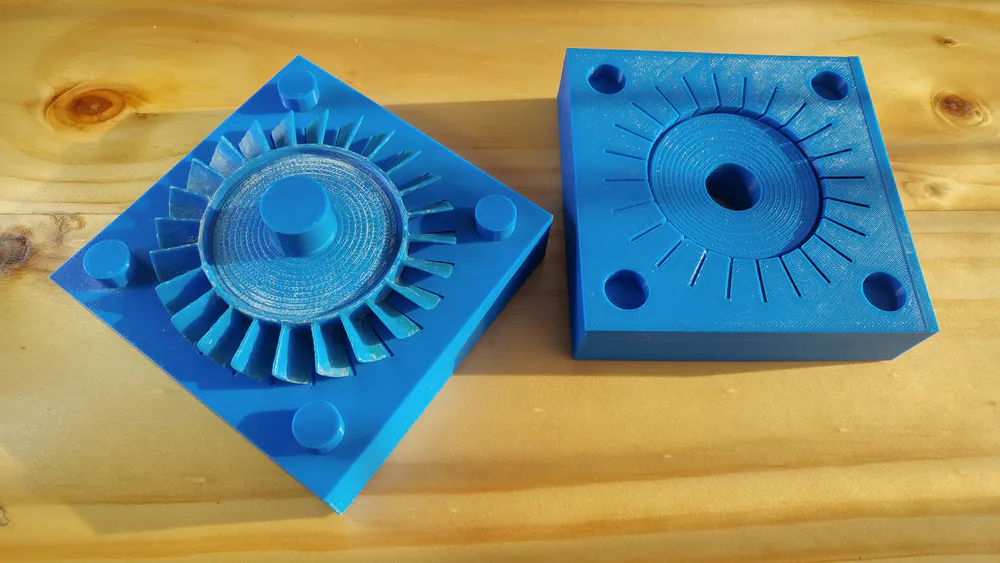
Injection molding is a popular manufacturing process used to make parts in high volumes with consistent quality. The process involves injecting molten plastic into the cavity of a mold in the shape of the final part, which is typically made from metal. As anyone familiar with the process will tell you, the traditional mold-making method can be time-consuming and expensive—not really worth the effort for small runs or custom parts. Enter 3D-printed molds: a cheaper and faster alternative ideal for low-volume production and prototyping.
1. Create the CAD Design
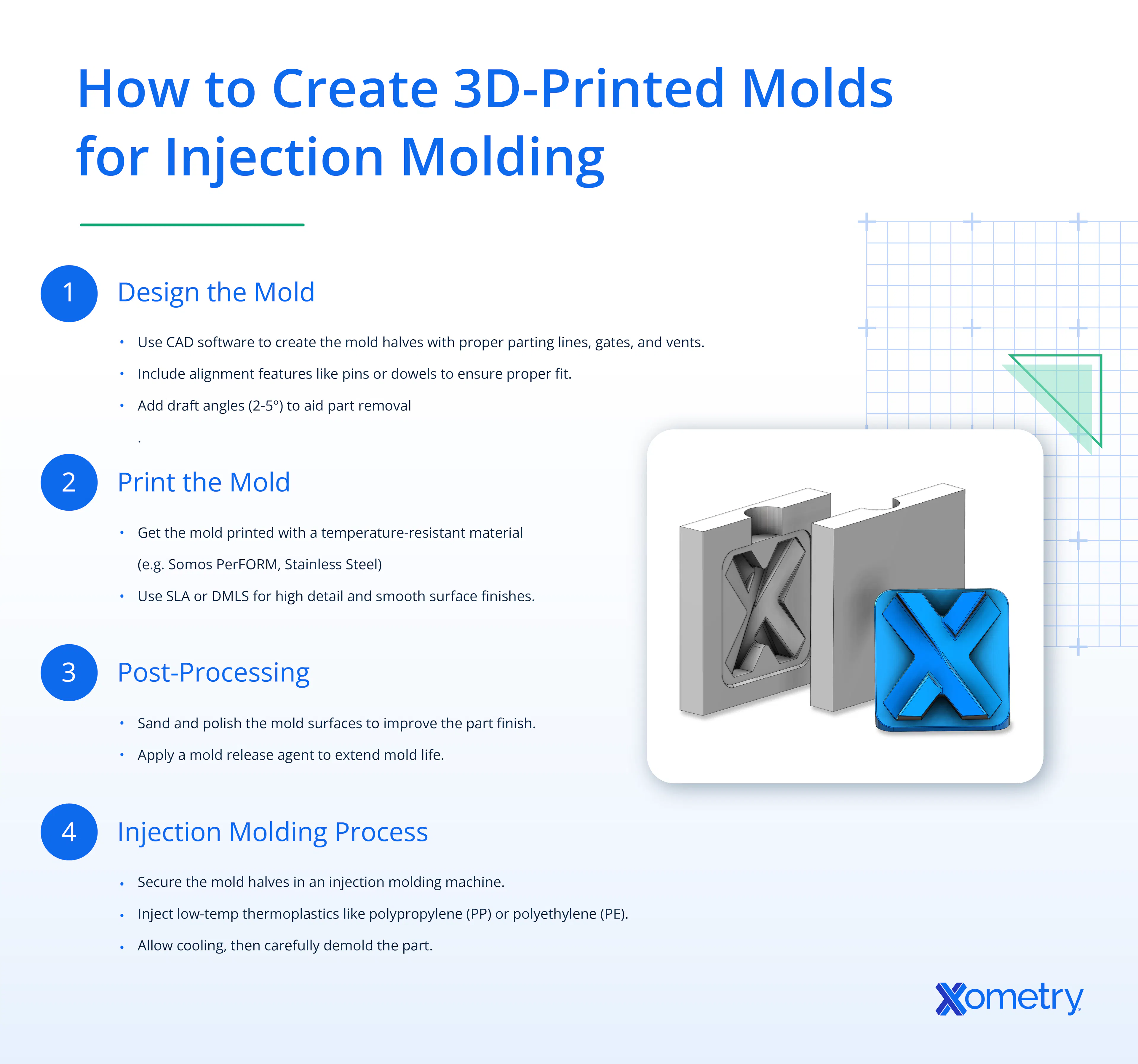
Start by creating the mold design in CAD software, considering part geometry, material choice, gate location, and cooling channels. Choose a heat-resistant, rigid material to withstand injection pressure, and design the mold to minimize support contact for a smoother finish. Adding air vents helps prevent defects like trapped air, and cooling channels speed up production.
2. Export the CAD Design File
Once the design is finalized, export it as an STL file, the standard format for 3D printing. Other supported file types include FBX, OBJ, 3MF, PLY, G-Code, X3G, and AMF.
3. 3D Print the Injection Mold
Import the STL file into 3D printing software and choose a printing method based on cost, strength, and surface finish. FDM (Fused Deposition Modeling) is a cost-effective method but may need sanding or chemical smoothing. For smoother, high-detail molds, SLA/DLP (Stereolithography/Digital Light Processing) is best, while material jetting can create multi-material/color molds with fine detail. For strong molds with good surface quality, you can use nylon with the SLS (Selective Laser Sintering) process.
4. Fit the Mold to the Metal Frame
Once printed, the mold needs to be secured in a metal mold base for support during injection molding. This can either be done with mold inserts in an aluminum frame, which are more precise, reduce defects like warping, and ensure even pressure distribution, or fully 3D-printed molds that don’t need a frame. These do, however, require more material, increasing both the cost and risk of warping.
5. Start the Injection Molding Process
Once the mold is fitted to the metal frame, it is ready for the injection molding process. During the injection molding process, the mold is clamped shut, and molten material is injected into the mold through the sprue bushing. The liquid fills the mold cavities and takes on the shape of the part to be produced. After the material cools and solidifies, the mold is opened, and the part is removed.
What Are 3D-Printed Molds for Injection Molding?
Molds shape molten plastic into final products, which take on the shape and finish of the mold’s cavity. Making these molds via 3D printing has been a game-changer. Unlike CNC machining, 3D printing doesn’t need any specialized expertise, reducing labor costs. The materials used—typically plastic—are far less expensive than aluminum or steel, and the overall cost can be up to 90% lower than traditional molds. While traditional molds can take weeks or months (yes, months!) to make, even the most complex 3D-printed molds can be ready in a matter of days. This means that any changes needed can quickly and easily be made before you scale up the production. Although 3D-printed molds have a shorter lifespan, they can still make up to 10,000 parts, depending on the material.
3D-printed molds are best suited for components up to 164 cm³ (metal molds win this round as they can accommodate much larger parts). Another area where metal molds are superior is in durability—3D-printed molds tend to struggle under the high temperatures and pressures of injection molding. They’re also prone to shrinkage and warping during cooling, which is especially a nuisance for tight-tolerance parts. In general, polymers have lower thermal conductivity than metal, so 3D-printed molds slow down the injection molding process (although making the mold is undoubtedly much quicker). Basically, you’ll want to stick to your metal molds for high-precision, high-volume manufacturing.
What Are the Advantages of 3D-Printed Molds for Injection Molding?
3D-printed molds offer several advantages over molds made by traditional manufacturing methods, including:
- Cost-Effectiveness: 3D-printed injection molds are more cost-effective than those made by traditional methods for most applications. The plastic materials used to make the printed molds are less expensive than the aluminum and steel used for conventional mold fabrication techniques. In addition, 3D printing is a quick and inexpensive approach to mold production compared to the CNC machining traditionally used for mold manufacture.
- Ease of Use: No specialized expertise is required to print an injection mold using 3D printing technology. This reduces labor costs associated with conventional mold manufacturing processes, e.g. CNC machines.
- Suitable for Low-Volume Production: 3D-printed molds are better suited to low-volume production than CNC-machined molds. With 3D printing, it is possible to produce up to 10,000 parts depending on the material used to print the mold. The cost can also be up to 90% less than that for metal molds. The initial investment cost for 3D printers is also lower, and the mold materials (plastics, for example) are less expensive.
- Flexible Mold Design Process: The versatile nature of 3D printing technology offers great flexibility in designing molds. Mold designers and manufacturers can easily create and modify molds using 3D printing. Plastic-based 3D printing is ideal for situations where low costs and short lead times are essential, as well as for prototyping. This enables companies to iterate and test more quickly before moving to traditional tooling for large-scale production.
- Quick Turnaround: In addition to their high cost, aluminum or steel molds have long lead times. For instance, the production of a complex steel tool for injection molding can take several months, while an aluminum mold can require several weeks. In contrast, a 3D-printed mold, even a complex one, can be printed and prepared within a matter of days, offering a significantly shorter turnaround time.
What Are the Disadvantages of 3D-Printed Molds for Injection Molding?
3D-printed plastic molds for injection molding do have a few disadvantages, including:
- Shrinkage Defects and Warping: During cooling, 3D-printed molds can experience shrinkage and warping, which can cause problems with tight-tolerance products. This can result in defects in the mold and affect the quality of the final product.
- Experimentation Can Result in Waste: While 3D printing allows for easy design adjustments, there is a possibility of defects in the mold that may only be noticed at the end of the printing process, leading to more waste. While it is possible to recycle the waste, it can still be a drawback in terms of time and resources.
- Size Limitations: When it comes to size limitations, 3D-printed mold inserts are most suitable for small components with a volume of up to 164 cm3. In contrast, machined metal molds have a larger capacity and can easily accommodate parts measuring up to 966 cm3 for injection molding.
- Degradation: One drawback of 3D-printed inserts is their limited ability to withstand the high temperatures involved in injection molding, especially when using high-temperature polymers. Over time, the extreme conditions in the molding process can cause degradation and deformation of the 3D-printed inserts, making them unsuitable for high-volume production.
- Longer Cooling: Although the production time for 3D-printed molds is generally faster than traditional tooling methods, the injection molding process itself can take longer. This is due to the lower pressure and temperature resistance of 3D-printed molds compared to metal molds. The thermal conductivity of the polymers is also an issue. As a result, the cycle time for injection molding increases, leading to higher production costs and reduced manufacturing output.
How Important Is the Mold for Injection Molding?
The mold is a crucial component of the injection molding process. It is responsible for shaping the molten plastic material into the desired form, making it a critical factor in determining the final quality of the injection molded product. The mold defines the product's geometry, surface finish, and dimensional accuracy, making it a vital element in achieving the desired specifications.
The mold's design and construction also play a significant role in the efficiency and productivity of the injection molding process. A well-designed and properly constructed mold can increase the production rate, reduce material waste, and minimize the risk of defects in the finished product. In contrast, a poorly designed or constructed mold can cause production delays, increased material waste, and higher production costs.
Why Are 3D-Printed Molds Cheaper?
3D-printed molds are cheaper than their traditional metal counterparts for several reasons. First, the materials used for 3D printing, such as thermoplastics and photopolymers, are cheaper than traditional mold-making materials like steel or aluminum. Second, the 3D printing process is generally faster than traditional mold-making processes, such as CNC machining or casting, which reduces the overall production time and cost. Third, 3D printing eliminates the need for specialized tooling and equipment, which can be costly to purchase and maintain. Finally, 3D printing allows for the production of complex geometries that may be difficult or impossible to achieve with traditional mold-making methods, reducing the need for costly secondary operations.
What Are the Factors to Consider When Using 3D-Printed Molds for Injection Molding?
The success of the injection molding process depends largely on the quality of the 3D-printed mold, so there are a few things to keep in mind when you’re making it. Firstly, the mold material must be able to withstand high temperatures and pressure without warping or melting, so choose wisely. The mold’s design is equally as important. Uniform wall thickness helps prevent warping and defects, while avoiding sharp corners reduces stress points and improves durability. Gate location should be optimized to ensure proper material flow, and runner systems should be incorporated to prevent flash, or excess material escaping the mold. Tweaks like adjusting clamping force and injection pressure can further improve results.
Surface quality is also an important consideration. 3D-printed molds tend to have a rougher surface than aluminum or steel molds. This can impact the final product’s texture and may require post-processing to achieve a smoother finish. For parts requiring a high-quality surface, metal molds are the better choice. Refining the surface finish minimizes roughness and enhances part quality. Finally, draft angles of 1.5° to 2° make part ejection easier and prevent damage to the molded piece, improving both mold longevity and product quality. Before full production, the mold needs to be thoroughly tested and validated to find any design flaws or weaknesses so that you can make the adjustments before going ahead with production. You’ll also have to choose a mold that matches the scale of the part you want to make.
"Creating a 3D printed mold is a little bit of art and science. I typically rely on 3D printing for any of the organic or curved features, but may add metal machined inserts for anything that requires a long pull or is a narrow, delicate feature."
What Are the Other Types of Injections Molding Processes?
There are different types of injection molding techniques. Some of these techniques are listed and discussed in the sections that follow:
1. Gas-Assisted Injection Molding
The challenge with producing thick injection-molded parts out of plastic is that they may warp as they cool. Gas-assisted injection molding provides a solution to this problem by injecting gas, usually nitrogen, into an injection mold filled with plastic material. This enables the plastic on the mold's exterior to remain smooth and finished, while the interior becomes porous or hollow. This prevents the part from deforming during the cooling process and reduces the part's cost by reducing the amount of material used. It's used for creating parts with thick walls and complex geometries, reducing material usage and cycle times, and improving part quality. This process can be more expensive compared to other injection molding techniques.
2. Unique Material Formulations
The use of unique material formulations enhances molding capabilities. Injection molding companies can use various additives, fillers, and specialized materials to create custom parts with unique properties, such as electrical conductivity, biocompatibility, or flame retardancy.
3. Metal Injection Molding
Metal injection molding (MIM) uses a combination of powdered metal and binder material as the injection feedstock. The mixture is heated above the melting point of the binder so that the mixture can flow into the mold under pressure. When the binder cools, the "green" part is ejected. The binder material is burned out, and then the remaining metal is sintered at a suitable temperature to attain its final form. The technique is more costly than plastic injection molding and is typically used in specialized applications. For instance, metal injection molding is used in the cell phone industry to shield electronic components from radio or microwave interference.
4. 3D Printing
3D printing is not an injection molding technique. It is a method for directly creating parts using certain thermoplastics or metals by depositing them, layer by layer, onto a print bed. The significance of 3D printing in injection molding technology is that 3D printing can be used to produce the injection molds used to create multiples of the same part. Additionally, 3D printing can produce injection molds using plastic or metal. However, plastic 3D-printed molds are currently more common than metal 3D-printed molds.
5. Thermoplastic Injection Molding
Thermoset plastic injection molding is the most commonly used method of injection molding. Liquid silicone rubber and a suitable catalyst are injected into a hot mold which vulcanizes or sets the shape of the part within the mold. Such materials cannot be melted and recycled through the process. However, if you require a part that can withstand high temperatures or chemical agents, such as in medical devices or car parts, you may need to use liquid silicone injection molding.
6. Thin-Wall Molding
This type of injection molding involves creating plastic parts with walls that are typically thinner than 1 mm. Thin-wall molding is used to produce lightweight, high-volume parts that require minimal material usage. It finds applications in various fields such as: test apparatus, electronics, vessels, tubes, and other enclosures. To ensure that the thin wall geometry can withstand application conditions without any defects, plastic injection molders performing thin wall moldings must meticulously consider every aspect of the part design, mold design, and processing.
Frequently Questions About 3D-Printed Molds for Injection Molding
How Xometry Can Help
We have instant quoting available at Xometry for both injection molding and various types of 3D printing methods. Get a better idea of pricing for HP MJF, SLS, fused deposition modeling, injection-molded surface finishes, and more by uploading your designs to the Xometry Instant Quoting Engine®!
Disclaimer
The content appearing on this webpage is for informational purposes only. Xometry makes no representation or warranty of any kind, be it expressed or implied, as to the accuracy, completeness, or validity of the information. Any performance parameters, geometric tolerances, specific design features, quality and types of materials, or processes should not be inferred to represent what will be delivered by third-party suppliers or manufacturers through Xometry’s network. Buyers seeking quotes for parts are responsible for defining the specific requirements for those parts. Please refer to our terms and conditions for more information.