SLS vs. SLM: Differences and Comparisons


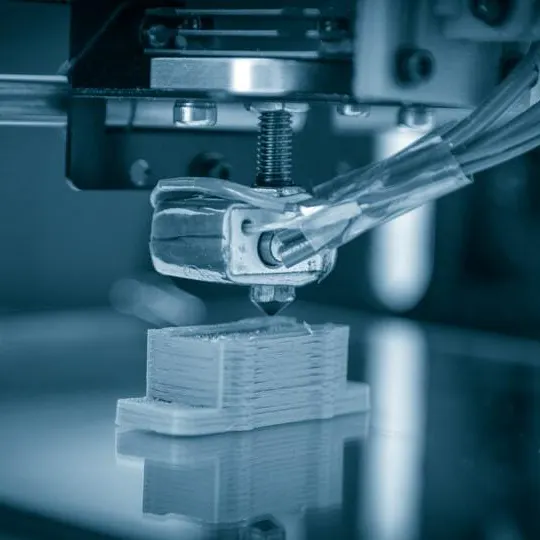
You’ll have no trouble finding a 3D printing method that works for the products you’re trying to build. The difficulty comes down to deciding between different additive manufacturing options. When you’re shopping around for options, two types that often go head to head in comparison are selective laser sintering (SLS) and selective laser melting (SLM), and understanding what both can offer makes it easier to determine what’s best for the products you’d like to develop.
"SLS is a plastics process, producing parts in nylon. It is suitable for prototyping and limited production. SLM is a metal process producing parts in limited steel and aluminum alloys. It is suitable for prototyping primarily. Both use lasers to melt powder, but for very different materials and outcomes."
SLS Definition and Comparison to SLM
Its name gives a pretty good idea of what SLS does. It uses a laser to sinter powder together into a layer and repeats this process until the full design is finished. This type of 3D printing came out of the University of Texas in the 1980s, but the patent has since expired, meaning that it’s a technology option many companies have redeveloped and lessened the price of.
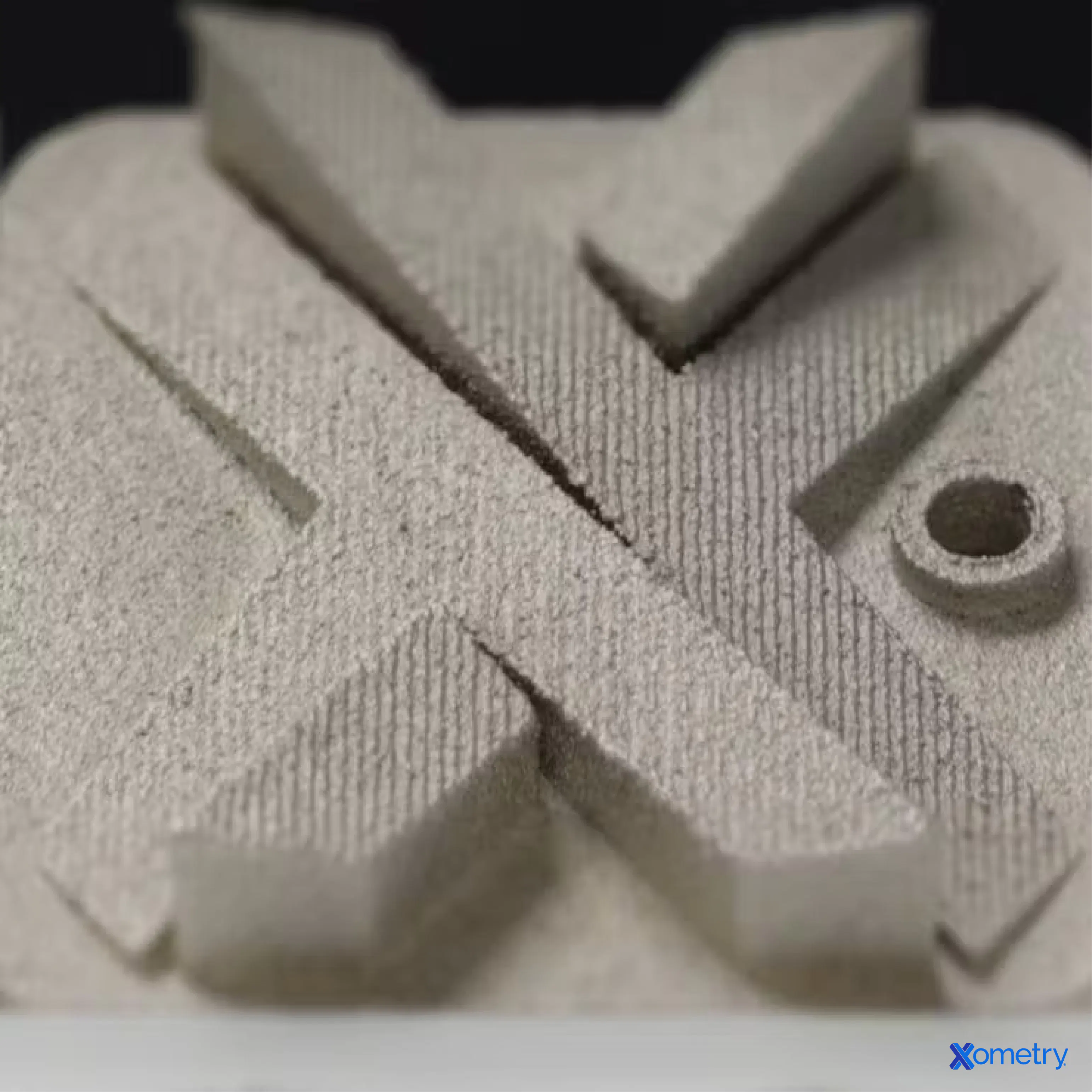
To create parts with SLS, a CO2 laser is programmed to sinter and fuse together a polymer-based powder until it forms a layer. It’ll then create another layer until your build is complete. Then, it’ll need a period to properly cool off (usually 12 hours at the very least) and time for blasting and finishing. You can see an example of a product we made through SLS in the photo below.
To learn more, see our full guide on What is SLS.

What are the Advantages of SLS Compared to SLM?
The advantages of SLS compared to SLM are listed below:
- SLS-printed parts have excellent mechanical properties.
- SLS easily makes complex-geometry parts since no supports are needed.
- SLS allows the recycling and reusing of unsintered powders.
What are the Disadvantages of SLS Compared to SLM?
The disadvantages of SLS compared to SLM are listed below:
- SLS printers have long lead times since only industrial-scale SLS printers are widely available.
- SLS parts commonly have poor and grainy surface finishes and may require post-processing to achieve desired surface finishes.
- Warping and oversintering can occur on large, flat surfaces and small holes in SLS-printed parts.
SLM Definition and Comparison to SLS
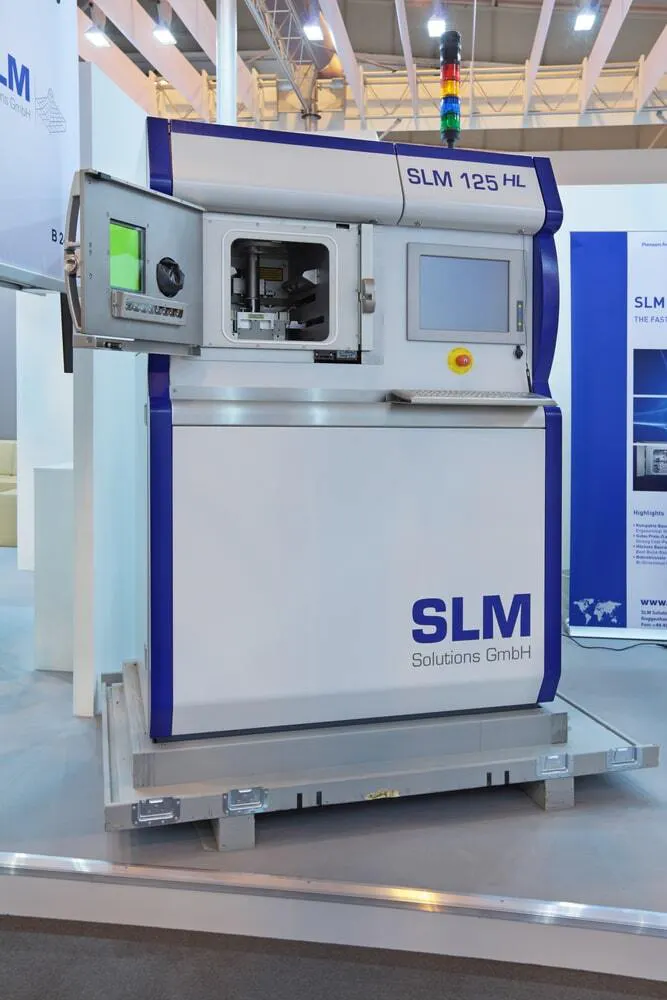
This kind of 3D printing method came to be in the early 21st century from Fraunhofer Institute in Germany. SLM also uses a high-powered laser on powders, but it melts it rather than sinters and works with metal powders instead of plastic ones. It builds up layers through additive manufacturing, too, and does so in a more controlled environment filled with inert gases like argon and nitrogen. Below, you can see a photo of an SLM printer.
What are the Advantages of SLM Compared to SLS?
The advantages of SLM compared to SLS are listed below:
- An extensive range of potential materials makes SLM a well-rounded, robust alternative to traditional metal-fabrication methods.
- SLM can reduce manufacturing lead times and tooling costs.
What are the Disadvantages of SLM Compared to SLS?
The disadvantages of SLM compared to SLS are listed below:
- SLM systems are expensive due to their costly technology and equipment.
- SLM requires extensive post-processing to achieve desired surface finishes.
- SLM requires increased material usage due to the need for support for overhangs on parts during printing.
Comparison Table Between SLS and SLM
The main differences between SLS and SLM are the type of powder they use and the method of combining materials they rely on (sintering vs melting). However, there are a few other properties you can look at to see differences, which you’ll find in our table below:
SLS vs. SLM Comparisons
SLS and SLM are nearly-identical AM processes. They utilize similar technology, so are both expensive when compared to other AM processes. Both SLS and SLM produce parts that have equivalent properties to parts made through traditional methods such as injection molding or CNC machining. Therefore when picking between SLS and SLM, consider the final application of the part to be printed and whether plastic or metal would have better performance.
SLS vs. SLM: Technology Comparison
Technology refers to the equipment and tools used to produce a part. Both SLS and SLM systems have similar complex technologies and processes. They use high-powered lasers, thermoplastic or metal powders, and specialized 3D-printing environments. The primary differences between the two forms of AM as it relates to technology are the addition of gas and the need for a special printing environment for SLM processes.
SLS vs. SLM: Material Comparison
SLS prints parts from thermoplastic powders such as Nylon 11, Nylon 12, and its derivatives. SLM prints parts from pure metal or alloys. While nylons are predominantly used in SLS, the possible materials that can be used with SLM are much more extensive.
SLS vs. SLM: Product Applications Comparison
Possible product applications of SLS vs. SLM depend on whether a thermoplastic or metal part would be more ideal. While both AM methods can provide parts that are environmentally stable, deciding between the two ultimately comes down to two factors: load bearing and weight. SLM may be the better option if higher loads are exerted on the parts. If light weight is more critical, SLS may be better.
SLS vs. SLM: Print Volume Comparison
The print volumes for SLS and SLM are similar since the two AM methods are nearly identical. SLS printers can have print volumes up to 550 x 550 x 750 mm while SLM printers can have volumes up to 350 x 350 x 350 mm. There isn’t a substantial difference in print volume between the two.
SLS vs. SLM: Surface Finish Comparison
SLS printers produce parts with excellent surface finishes, but sometimes leave surfaces feeling grainy and powdery. Surfaces can be post-processed with blasting media such as: water jet or sand, spray painting, or lacquering. SLM printers can produce metal parts with exceptional surface finishes that seldom require post-processing. SLM parts can be post-processed to increase corrosion resistance.
SLS vs. SLM: Cost Comparison
Because both SLS and SLM systems use complex, advanced technologies, they can be expensive. SLS systems start as low as $18,000 and can go as high as $100,000. SLM printers are more costly. They range from $55,000 to $350,000.
What are the Mutual Alternatives to SLS and SLM?
There are no mutual alternatives to both SLS and SLM printing methods. This is because one produces thermoplastic parts and another produces metal parts. However, for each case, alternative processes do exist.
What are the Similarities Between SLS and SLM?
Similarities between SLS and SLM include:
- Both SLS and SLM use a laser and a powdered material to produce parts.
- Both SLS and SLM are excellent for prototyping and proof-of-concept.
- Both SLS and SLM can rapidly produce parts for low-volume production.
- Both SLS and SLM can produce parts with complex geometries.
What are the Other Comparisons for SLS Besides SLM?
Besides FDM, other comparisons for SLS include:
- SLS vs. MJF: Multi Jet Fusion (MJF) is comparable to SLS because both methods use a powder and a fusing mechanism to build parts. There are two main differences between SLS vs. MJF, however. The MJF process uses ink agents and infrared frequencies to solidify parts. It can also print much faster than SLS since entire layers are heated at once, rather than particular areas of the build platform in SLS. To learn more, see our full guide on SLS vs. MJF.
- SLS vs. SLA: SLA is a comparative alternative because it can be used for both functional prototypes and production. The difference between SLS vs. SLA is that SLA has an even greater resolution than SLS. It offers the highest resolution out of any form of AM and therefore can also be used for molds, tooling, patterns, and textures. To learn more, see our full guide on SLS vs. SLA.
What are the Other Comparisons to SLM Besides SLS?
Other comparisons to SLM besides SLS include:
- SLM vs. DMLS: Direct metal laser sintering (DMLS) is comparable to SLM because both methods utilize a metal powder to produce parts. The main difference between SLM vs. DMLS is that in DMLS, metal powders are sintered, rather than melted – similar to SLS processes for thermoplastics. DMLS printers cannot achieve the same level of resolution as SLM since metal powders are not melted and homogenized into the structure. To learn more, see our full guide on DMLS vs. SLM.
- SLM vs. EBM: Electron beam melting (EBM) is another comparison to SLM. The difference between SLM vs. EBM is that rather than using a laser to melt powders in SLM, an electron beam is used in EBM. EBM produces parts that are of similar resolution to SLM equivalents. However, only a select few metals, like titanium alloys, can be used. To learn more, see our full guide on EBM vs. SLM.
Frequently Asked Questions About SLS and SLM
How Xometry Can Help
We have a long list of 3D printing technologies you can use here at Xometry, including SLS. Other options you can snag a free quote for are fused deposition modeling, stereolithography, and PolyJet.
Disclaimer
The content appearing on this webpage is for informational purposes only. Xometry makes no representation or warranty of any kind, be it expressed or implied, as to the accuracy, completeness, or validity of the information. Any performance parameters, geometric tolerances, specific design features, quality and types of materials, or processes should not be inferred to represent what will be delivered by third-party suppliers or manufacturers through Xometry’s network. Buyers seeking quotes for parts are responsible for defining the specific requirements for those parts. Please refer to our terms and conditions for more information.