
ABS Plastic (Acrylonitrile Butadiene Styrene): Definition, Properties, and Uses


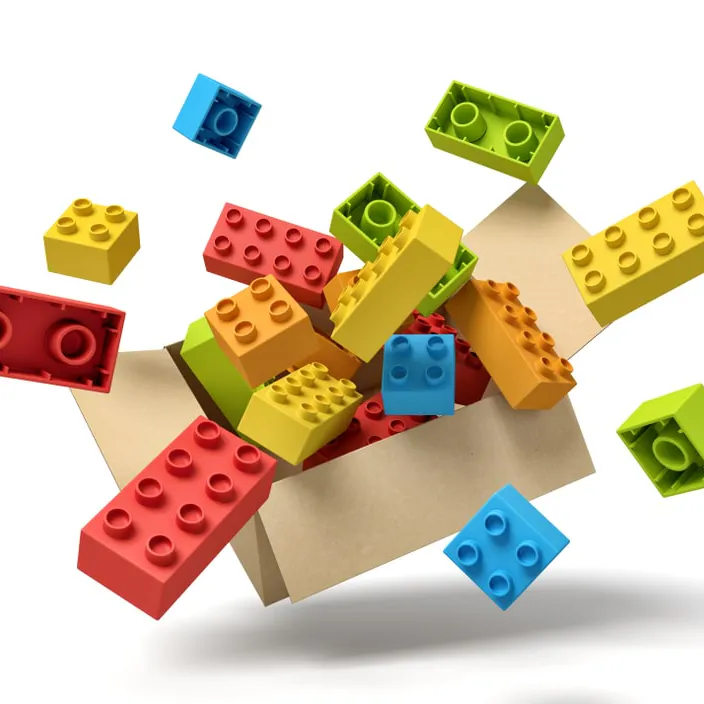
ABS plastic (Acrylonitrile Butadiene Styrene) is a thermoplastic polymer made from a combination of acrylonitrile, butadiene, and styrene. Acrylonitrile Butadiene Styrene is known for its excellent impact resistance, durability, and versatility, making it suitable for various applications (automotive parts, consumer electronics, and plumbing systems). ABS plastic offers strong toughness and is easily molded into different shapes, providing a durable material for a wide range of products. Its ability to retain strength and flexibility under stress further contributes to its popularity in industries where high performance is required.
The material’s resistance to wear and environmental factors (heat, chemicals, and Ultraviolet radiation) makes it an excellent choice for components exposed to frequent use or harsh conditions. Acrylonitrile butadiene styrene (ABS) is used in automotive components, appliance housings, and piping systems, offering structural strength and aesthetic appeal in various products.
What is Acrylonitrile Butadiene Styrene (ABS)?
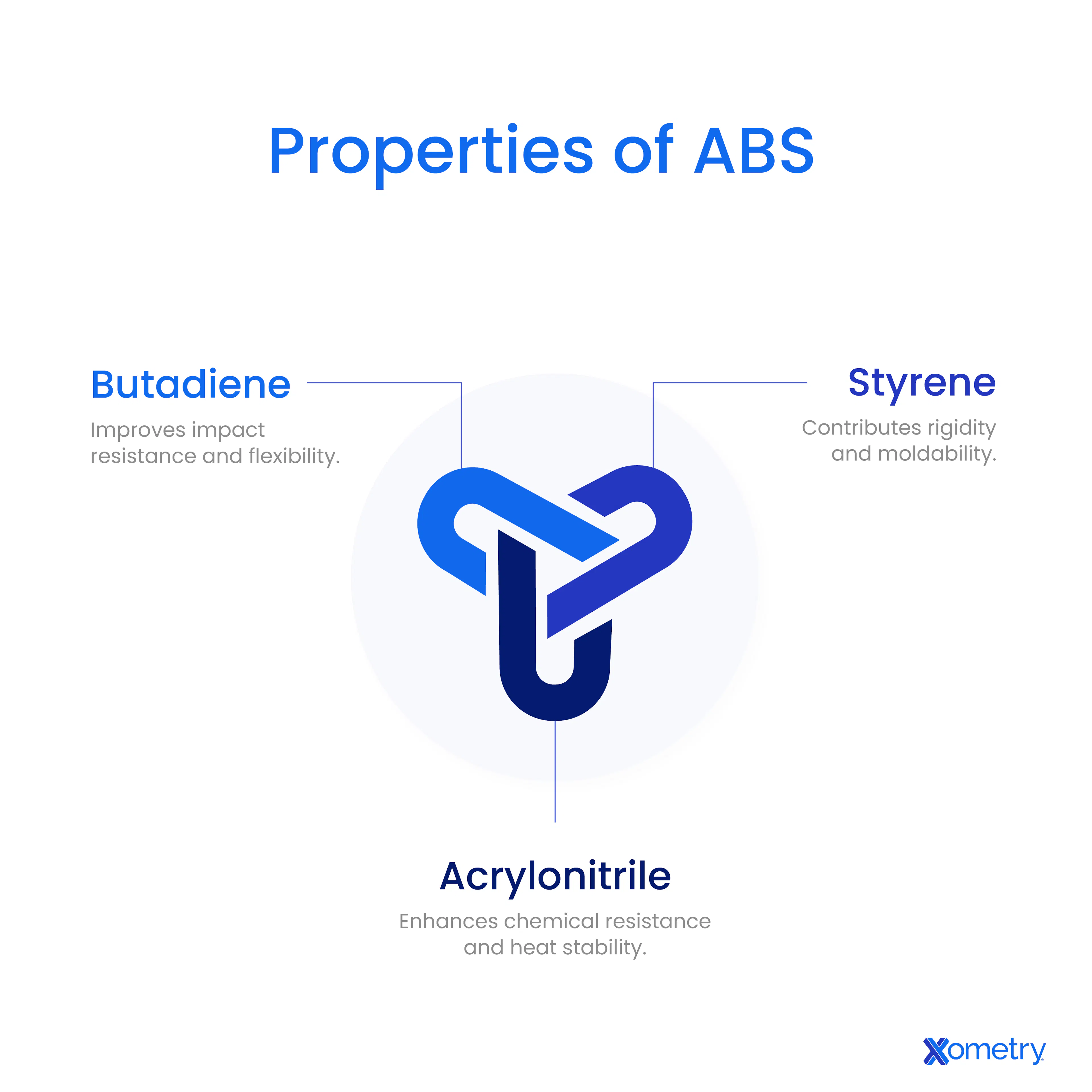
Acrylonitrile Butadiene Styrene (ABS) is a type of plastic created by combining three monomers: acrylonitrile, butadiene, and styrene. Acrylonitrile adds chemical resistance and thermal stability. Butadiene contributes elasticity and toughness. Styrene provides rigidity and a glossy finish. The structure features a combination of rigid (acrylonitrile and styrene) and flexible components (butadiene), providing the rubbery, flexible aspect that improves impact resistance, while the other components contribute to rigidity. The combination of the structural blend of a rigid outer shell and a rubbery inner core allows high impact resistance and durability. ABS is commonly used in automotive parts, electronic housings, and protective gear. The blend of strength and flexibility supports complex molding and lightweight designs. Consumer products (helmets, keyboard frames, and LEGO bricks) rely on ABS material. Industrial applications continue to favor acrylonitrile butadiene styrene for its balance of performance and cost.
How is ABS Material Made?
ABS material is made through a process called emulsion or suspension polymerization of acrylonitrile, butadiene, and styrene. The three monomers (acrylonitrile, butadiene, and styrene) are combined under controlled conditions through emulsion polymerization, where the monomers are dispersed in water with a surfactant, or suspension polymerization, where the monomers are dispersed in a solvent, commonly a non-polar liquid. It results in long polymer chains that create a strong, durable, and flexible material. The ratio of each monomer is adjusted to achieve specific properties (improved impact resistance or better heat tolerance). ABS material manufacturing allows for the creation of various grades suited for different applications, from automotive parts to consumer electronics. The final product, material ABS, offers a balance of strength and flexibility, making it suitable for a wide range of acrylonitrile butadiene styrene polymerization uses.
What is the ABS Plastic Full Form?
The full form of ABS plastic is Acrylonitrile Butadiene Styrene. ABS combines three monomers that contribute distinct properties. Acrylonitrile adds chemical resistance and thermal stability. Butadiene provides toughness and impact strength. Styrene improves rigidity and surface finish. ABS is widely used in molded components for vehicles, consumer electronics, and protective gear. Its structure allows easy machining and consistent performance under stress. The material resists cracking and deformation under repeated use. ABS plastic meaning refers to a thermoplastic polymer known for its balance of strength and flexibility. The blend of properties makes it suitable for industrial and commercial applications. The ABS plastic full form reflects its engineered composition for durability.
What Are the Main Challenges in Manufacturing ABS Plastic?
The main challenges in manufacturing ABS plastic are listed below.
- Cost of Production: Manufacturing ABS requires precise temperature control and advanced molding systems. The use of high-grade raw materials (acrylonitrile, butadiene, and styrene) increases production costs. Energy consumption adds to the total cost, making it one of the major ABS manufacturing challenges.
- Environmental Impact: ABS is derived from petroleum-based chemicals that are not biodegradable. Its production emits volatile organic compounds (VOCs) and greenhouse gases, raising concerns about environmental impact. The material’s limited recyclability adds to the long-term disposal of ABS production issues.
- Thermal Sensitivity: ABS loses impact strength in freezing conditions. Low temperatures cause brittleness, reducing its reliability in outdoor or cold-climate applications. It limits its use in certain structural or automotive parts.
- Chemical Resistance Limitations: ABS resists acids and alkalis but is able to degrade when exposed to strong solvents. Contact with solvents (acetone or esters) weakens its surface and compromises its integrity.
- Color Stability: Prolonged exposure to ultraviolet (UV) light causes yellowing and surface degradation. ABS parts fade and lose their aesthetic appeal without the addition of UV stabilizers or coatings.
- Dimensional Accuracy: ABS shrinks during cooling, which affects mold precision. Complex shapes require precise calibration to maintain consistent dimensions.
How does ABS Plastic Affect the Quality of Products?
ABS plastic affects the quality of products by increasing strength and resistance to impact. The structure improves durability in products exposed to mechanical stress, helping them maintain shape and function under repeated use. ABS provides rigidity, enabling precise molding for complex designs. Its toughness makes it ideal for applications in automotive panels, appliance housings, and electronic casings. The surface resists scratches and dents, helping to preserve appearance and performance. ABS resists wear from friction and contact, extending product lifespan. Its thermal stability helps prevent warping under moderate heat conditions. Its smooth finish improves visual appeal and supports better coating adhesion. The combined properties ensure consistent ABS plastic quality across various industries (Automotive Industry, Electronics Industry, and Consumer Goods Industry). The balance of mechanical strength and processing ease defines the ABS material impact on product reliability.
What are the Advantages of ABS Plastic?
The advantages of ABS plastic are listed below.
- Impact Resistance: ABS absorbs shocks without cracking. The toughness supports use in helmets, tool casings, and automotive panels. Its material protects internal components from damage.
- Processing Ease: ABS melts uniformly and flows well in molds. Its behavior supports fast production cycles and detailed shaping. Manufacturers benefit from reduced waste and consistent output.
- Surface Quality: ABS provides a smooth and glossy finish. Its appearance suits consumer electronics and appliance housings. The surface accepts paint and coatings without peeling.
- Dimensional Stability: ABS maintains shape under mechanical stress. The structure prevents warping and shrinkage. It supports precision in molded parts and assemblies.
Electrical Insulation: ABS resists electrical conductivity. Its properties support safe use in electronic enclosures and switch housings. The material prevents short circuits and leakage. - Cost Efficiency: ABS combines performance with affordability. Its durability reduces replacement frequency. The balance of strength and processability defines the ABS plastic advantages.
- Versatile Application: ABS adapts to various industries (construction, consumer goods, and transportation). The compatibility with additives and blends expands design options. Its features (high impact resistance, good dimensional stability, and ease of processing) highlight the ABS material benefits.
What are the Disadvantages of ABS Plastic?
The disadvantages of ABS plastic are listed below.
- Temperature Sensitivity: ABS loses impact strength in cold environments. Low temperatures cause brittleness that reduces reliability in outdoor applications. Heat exposure deforms parts without thermal stabilizers.
- Flammability Risk: ABS ignites easily when exposed to open flame. Its combustion releases toxic fumes that pose safety hazards. Fire resistance additives are required for compliance in the electrical and automotive sectors.
- Environmental Burden: ABS is derived from non-renewable petroleum sources. The decomposition rate is slow, contributing to landfill accumulation. Recycling options remain limited.
- Chemical Vulnerability: ABS reacts poorly to strong solvents (acetone). Surface damage and structural weakening occur under chemical exposure. It restricts its use in laboratory and industrial fluid systems.
- UV Instability: ABS degrades under prolonged sunlight. Ultraviolet (UV) radiation causes discoloration and surface cracking. Protective coatings are necessary for outdoor use.
- Noise Generation: ABS produces sound during mechanical contact. Its stiffness amplifies vibration, which affects acoustic comfort in consumer products. The effects (temperature sensitivity, flammability, environmental burden, chemical vulnerability, UV instability, and noise generation) contribute to ABS plastic disadvantages and increase the ABS environmental impact.
What are the Properties of Acrylonitrile Butadiene Styrene?
The properties of Acrylonitrile-Butadiene-Styrene are listed below.
- Chemical resistance: ABS resists chemicals (acids, oils, and detergents), making it ideal for harsh environments (automotive parts and medical devices). The acrylonitrile butadiene styrene characteristics provide durability in challenging conditions.
- Impact resistance: ABS maintains its integrity under impact, which is beneficial for products that need to withstand drops or shocks (housings for electronics). The ABS material properties ensure long-lasting performance in high-impact scenarios.
- Tensile strength: ABS offers high tensile strength, meaning it resists breaking under tension. It is advantageous for structural components (pipes and fittings), where strength is essential.
- Thermal stability: ABS retains its shape and strength even at high temperatures. It is commonly used in automotive interiors, where heat resistance is required.
What is the Density of Acrylonitrile Butadiene Styrene?
The density of Acrylonitrile Butadiene Styrene (ABS) ranges from 1.04 to 1.06 g/cm³. The relatively high density contributes to its strength and rigidity, making ABS a durable material for diverse applications (such as automotive parts, consumer electronics, and toy manufacturing). The density ensures that ABS withstands physical stresses, providing stability in products (automotive parts and electronics enclosures). It relies on toughness, glass transition temperature, and polymer morphology that allows ABS to maintain its structural integrity even under impact or heat. ABS material properties provide a balance of strength and flexibility, making it suitable for applications requiring durability and lightweight design. The characteristics of acrylonitrile butadiene styrene make ABS a versatile choice for industries requiring robust performance.
What is the Melting Point of Acrylonitrile Butadiene Styrene?
The melting point of Acrylonitrile Butadiene Styrene (ABS) ranges from 200 to 250°C. The temperature range makes ABS suitable for moderate heat resistance applications (automotive parts and electrical enclosures). The melting point varies based on the composition of ABS, as different ratios of the three monomers (acrylonitrile, butadiene, and styrene) influence its thermal stability. ABS thermal properties contribute to its ability to maintain strength and rigidity at elevated temperatures. The ABS melting point ensures that ABS is ideal for products that require heat resistance without losing structural integrity.
Is Acrylonitrile Butadiene Styrene (ABS) More Heat-Resistant than Polyethylene (PE)?
Yes, Acrylonitrile Butadiene Styrene (ABS) is more heat-resistant than Polyethylene. ABS withstands higher temperatures before softening or deforming. ABS has a Heat Deflection Temperature (HDT) of around 90 -100°C at 0.45 MPa, making it suitable for automotive interiors and electronic housings, though specific applications require different grades for higher heat resistance. Polyethylene (PE) starts to soften at temperatures above 80°C, with Low-Density Polyethylene (LDPE) softening around 105°C and High-Density Polyethylene (HDPE) melting between 120-130°C, which limits its use in high-temperature environments. Polycarbonate surpasses ABS in thermal resistance, with an upper limit around 140-150°C, making it suitable for higher-temperature applications. High Impact Polystyrene (HIPS) has lower heat resistance than ABS, limiting its use primarily to non-structural applications or environments with lower thermal demands. ABS maintains shape and function under moderate heat, while Polyethylene (PE) requires reinforcement or substitution in thermally demanding conditions.
What is the Chemical Formula of Acrylonitrile Butadiene Styrene?
The chemical formula of Acrylonitrile Butadiene Styrene (ABS) is a copolymer of styrene (C8H8), acrylonitrile (C3H3N), and butadiene (C4H6), with the specific ratio of each monomer varying in different ABS formulations. ABS is formed by polymerizing three monomers (styrene, acrylonitrile, and butadiene) through either emulsion or suspension polymerization. Styrene contributes to the material's rigidity and ease of molding. Acrylonitrile improves chemical resistance and heat stability, while butadiene improves impact resistance and flexibility. The three monomers (styrene, acrylonitrile, and butadiene) together create the ABS chemical formula, which defines the material's versatile ABS polymer structure suitable for a wide range of applications.
What is the Structure of Acrylonitrile Butadiene Styrene?
The structure of Acrylonitrile Butadiene Styrene (ABS) consists of a copolymer made from styrene, acrylonitrile, and butadiene. Styrene provides hardness and a smooth surface finish. Acrylonitrile adds chemical resistance and thermal stability. Butadiene contributes elasticity and impact strength. The combination creates a balanced material that resists deformation and cracking. Each monomer interacts to form a matrix that supports mechanical performance and processing efficiency. The blend allows ABS to perform in structural, electrical, and consumer applications. Its arrangement of repeating units defines the ABS polymer structure and supports the versatility of the acrylonitrile butadiene styrene structure.
What is ABS Plastic Used for?
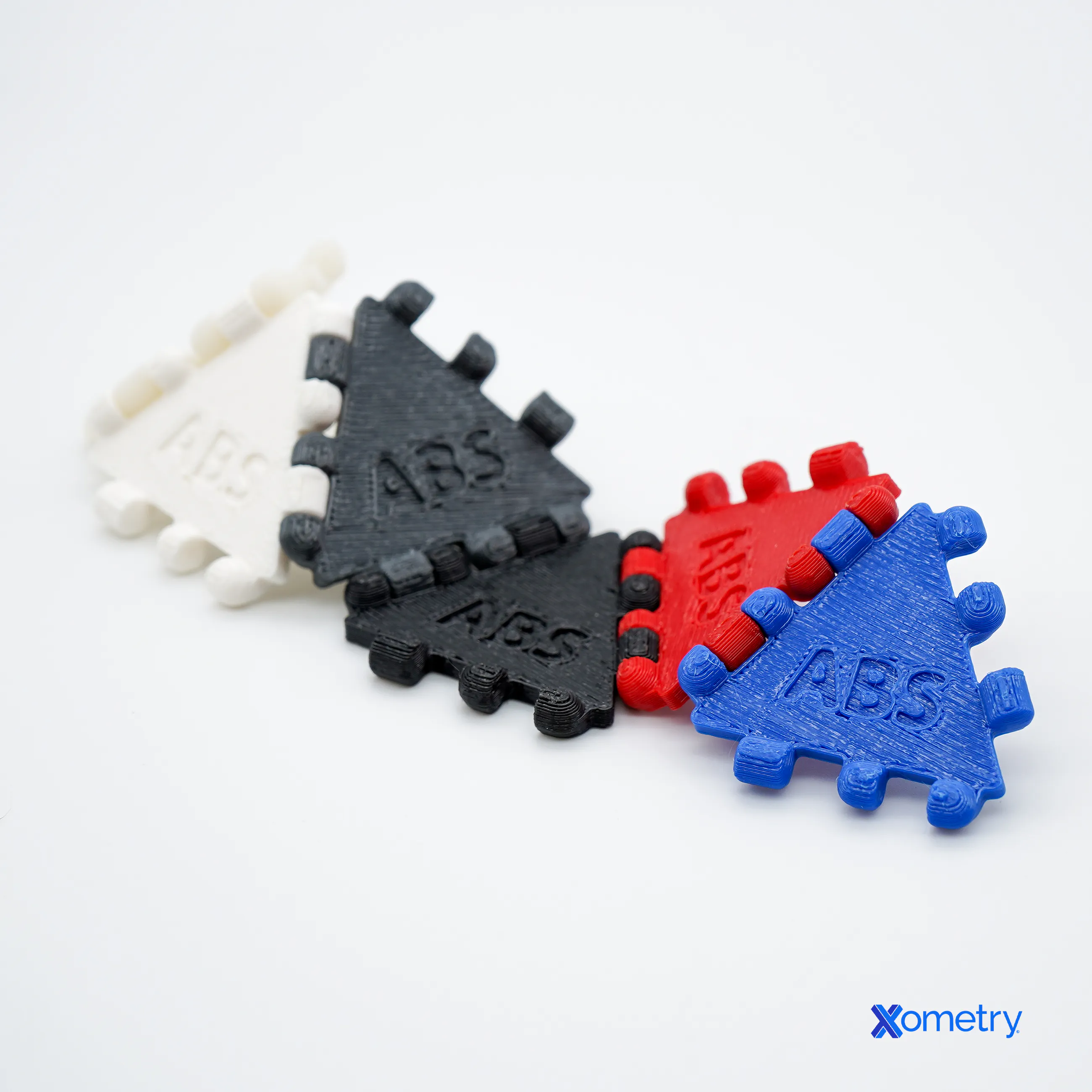
ABS plastic is used in automotive parts, electronic housings, appliance casings, and protective gear. ABS plastic is used because it combines strength, durability, and ease of molding. Automotive parts (dashboards, trims, and panels) rely on ABS for impact resistance and dimensional stability. Its ability to absorb shock without cracking supports vehicle safety and structural integrity. Consumer electronics (keyboards, remote controls, and devices) casings use ABS for its smooth finish, electrical insulation, and resistance to wear. The material allows precise molding, enabling compact, detailed designs. Plumbing systems benefit from ABS’s chemical resistance and rigidity, which support long-term performance in pipes, fittings, and drainage systems. Toys and protective gear depend on ABS for toughness and surface quality, which ensures safety and visual appeal. Appliance housings and kitchen tools use ABS for its thermal stability and ease of cleaning. The material adapts to various manufacturing processes (injection molding, extrusion, and 3D printing). Its qualities support widespread ABS plastic uses across industrial, commercial, and household sectors. The combination of mechanical strength, thermal resistance, and processing efficiency defines the versatility of ABS applications.
What is ABS Material Used for in Medical Applications?
ABS material is used in medical applications for diagnostic equipment housings, surgical instrument handles, and laboratory device components. ABS is valued for strength, safety, and sterilization compatibility. It forms outer casings of diagnostic devices (blood analyzers, imaging machines, and patient monitors), providing structural stability while being lightweight for easier handling and transport. ABS is used in surgical instrument handles, trays, and tool organizers where impact resistance and dimensional accuracy are essential. Its ability to withstand repeated stress without cracking ensures reliability in clinical settings.
Laboratory devices (centrifuge lids, sample racks, and pipettes) use ABS for its chemical resistance and ease of molding. ABS maintains its shape with cleaning agents and disinfectants. Its smooth surface facilitates cleaning and reduces contamination risk. Compatible with ethylene oxide and gamma radiation sterilization, ABS suits reusable and semi-disposable medical components. Hospital furniture components (bed rails, control panels, and monitor brackets) use ABS for durability, appearance, and safety. Its non-conductive nature ensures safe use in electronic enclosures and control systems.
ABS is used in dental equipment housings and orthodontic tools due to its hygiene, precision, and durability under thermal and mechanical stress, fitting strict safety standards. It supports injection molding and thermoforming for complex parts. The affordability and versatility make it popular in healthcare manufacturing, for non-implantable medical devices and support equipment in clinical, laboratory, and hospital settings.
Can Acrylonitrile Butadiene Styrene be Used in Medical Implants?
No, Acrylonitrile Butadiene Styrene can not be used in permanent medical implants. ABS lacks the long-term biocompatibility required for materials placed inside the human body. Its chemical composition does not meet the safety standards for permanent implantation. ABS is used in external medical devices and temporary support components. Orthopedic braces, surgical instrument handles, and diagnostic equipment housings rely on ABS for strength and impact resistance. Its surface allows easy cleaning and supports sterilization with ethylene oxide or gamma radiation. ABS forms structural parts in laboratory tools and non-invasive monitoring systems. Its mechanical stability and processing flexibility support short-term medical use but exclude internal implantation.
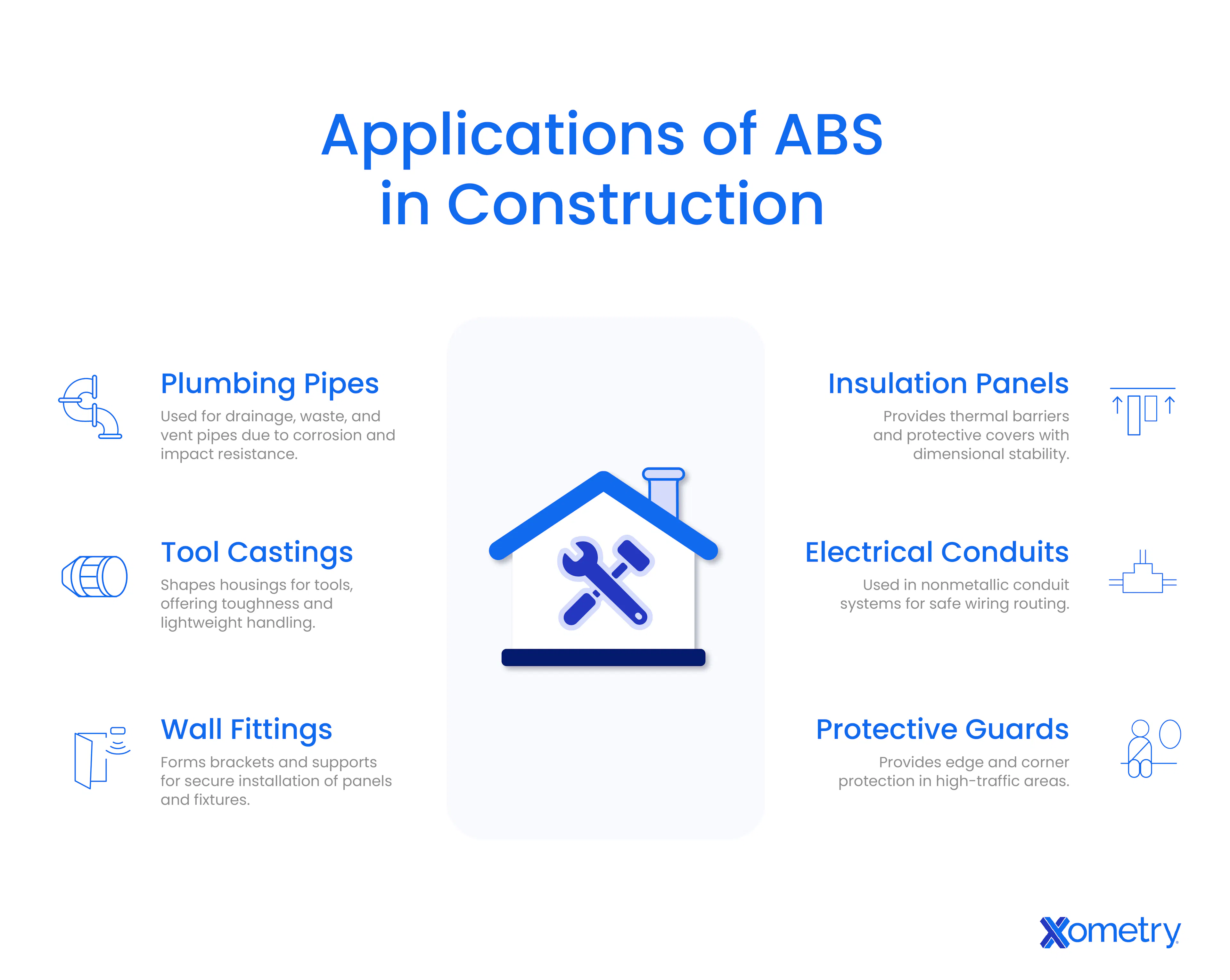
What are the Applications of ABS Material in Construction?
The applications of ABS Material in construction are listed below.
- Plumbing Pipes: ABS forms drainage, waste, and vent pipes. The resistance to corrosion and impact supports long-term use in residential and commercial systems.
- Insulation Panels: ABS is used in protective covers and thermal barriers. The dimensional stability and low moisture absorption support insulation in walls and enclosures.
- Tool Casings: ABS shapes housings for drills, saws, and measuring devices. The toughness and lightweight nature support safe handling and durability on job sites.
- Electrical Conduits: ABS is used in non-metallic conduit systems. Its non-conductive nature and flame resistance support safe routing of electrical wiring.
- Wall Fittings: ABS forms brackets, clips, and mounting supports. The rigidity and moldability support the secure installation of panels and fixtures.
- Protective Guards: ABS is used in edge protectors and corner shields. Its impact resistance supports safety in high-traffic construction zones.
What Role Does ABS Plastic Play in Automotive Safety Features?
The role ABS plastic plays in automotive safety features is to provide structural protection, energy absorption, and impact resistance. Bumpers made from ABS reduce damage by dispersing collision forces. Dashboard panels shield internal systems and help maintain cabin structure. Airbag housings secure deployment mechanisms and prevent malfunction. Seat belt guides and steering column covers require rigidity and precision, which ABS supports. Toughness prevents cracking under pressure and ensures consistent performance during impact. Lightweight composition reduces vehicle mass without compromising safety.
Interior trim parts made from ABS reduce injury risk by covering sharp edges. Door panels and pillar covers improve side-impact protection. Enclosures for safety electronics (sensors and control modules) rely on ABS for durability. Thermal stability allows components to maintain their shape under the heat generated by engines and braking systems. Moldability enables integration of complex safety features into compact spaces. Each application contributes to occupant protection and supports the reliability of modern vehicle safety systems.
What are the Benefits of ABS Plastic in Food Packaging?
The benefits of ABS plastic in food packaging are listed below.
- Structural Strength: Rigid containers made from ABS resist cracking and deformation during transport and storage.
- Moisture Resistance: The material acts as a barrier against water vapor, helping to preserve food freshness.
- Surface Protection: A smooth and non-porous finish prevents scratches and supports sanitary handling.
- Thermal Stability: Moderate heat tolerance allows use in warm environments and heated display units.
- Chemical Resistance: Resistance to oils, acids, and cleaning agents enables safe reuse and cleaning of food containers.
- Formability: Compatibility with molding and extrusion processes enables the production of custom shapes for various food products.
What is the Cost of ABS Plastic Compared to Other Plastics?
ABS plastic costs less (ranging from USD 1.40 to USD 3.00 per kilogram) compared to other plastics (Polycarbonate, Polypropylene, and Polyethylene), making it a cost-effective option for mass production. Polycarbonate is more expensive due to its superior impact resistance, optical clarity, and higher temperature tolerance. PBT, while offering excellent chemical resistance and dimensional stability, is more expensive than ABS. The affordability of ABS makes it a practical choice for manufacturers seeking a balance between performance and cost when large quantities are required. The material’s lower cost helps reduce production expenses, making it attractive for industries focused on cost control without sacrificing durability.
ABS’s cost-effectiveness benefits industries (automotive, electronics, and consumer goods). ABS is widely used for parts (bumpers, dashboards, and interior components due to its ability to withstand impact and maintain structural integrity in the automotive industry. The cost of ABS enables large-scale production of components while keeping vehicle costs competitive. ABS is used for casings, connectors, and housings in electronics, as it provides durability and resistance to wear and tear without driving up product prices. The advantages make ABS a preferred material in various applications, where performance and affordability are key considerations.
How is ABS Plastic Recycled?
ABS plastic is recycled through a process that includes cleaning, melting, and re-molding. ABS is cleaned to remove contaminants (dirt, oils, and other impurities). The plastic is melted at a high temperature after cleaning, making it easier to mold into new shapes or products. Once melted, the material is re-molded into pellets or sheets that are used for manufacturing new ABS products.
Recycling ABS presents several challenges (contamination, sorting, and degradation). The material must be carefully sorted to avoid contamination with other plastics, which compromise the quality of the recycled product. Specialized facilities are required to handle the high temperatures needed for melting and to ensure the recycling process meets industry standards. The process is expensive and energy-intensive, making large-scale ABS recycling less common compared to other plastics (Polypropylene and Polyethylene).
Is Acrylonitrile Butadiene Styrene (ABS) More Scratch-Resistant than Polycarbonate (PC)?
No, Acrylonitrile Butadiene Styrene (ABS) is not more scratch-resistant than Polycarbonate (PC). Polycarbonate has better scratch resistance due to its tougher, more resilient surface. PC’s molecular structure allows it to withstand scratches and abrasions more effectively than ABS, which is more prone to surface damage under harsh conditions. Polycarbonate is commonly used in applications (eyewear lenses, automotive headlights, and protective covers) where scratch resistance is critical for maintaining clarity and functionality. ABS, while durable, is used in applications (such as automotive parts and electronic housings) where scratch resistance is less of a concern. The Polycarbonate material's superior scratch resistance makes it a preferred choice for high-clarity and high-durability applications.
Does Acrylonitrile Butadiene Styrene (ABS) Have Better Tensile Strength than High-Density Polyethylene (HDPE)?
Yes, Acrylonitrile Butadiene Styrene (ABS) has better tensile strength (ranges 40-70 MPa) than High-Density Polyethylene (20-40 MPa lower end of ABS). ABS offers superior structural integrity under tension, reducing the likelihood of deformation under stress. Its tensile strength is higher due to its rigid molecular structure, which allows it to resist stretching and breaking under load. HDPE, while tough and impact-resistant, has lower tensile strength, making it more susceptible to deformation when stretched. ABS is used in applications requiring high-strength, durable materials (automotive parts, electronics enclosures, and certain medical devices), where maintaining shape and structural integrity is important
HDPE, in contrast, is better suited for applications where flexibility, chemical resistance, and impact resistance are more important than tensile strength. HDPE is used for piping systems, plastic bottles, and containers that need to withstand chemical exposure or rough handling. While it does not match ABS in tensile strength, its high resistance to chemicals and environmental stress cracking makes it ideal for outdoor and industrial applications. The combination of properties in High-Density Polyethylene (HDPE) makes it a versatile material for applications requiring flexibility and resistance to harsh conditions. However, it is not the best choice when tensile strength is a primary requirement.
Does Acrylonitrile Butadiene Styrene (ABS) Offer Better Surface Finish Quality than High Impact Polystyrene (HIPS)?
Yes, Acrylonitrile Butadiene Styrene (ABS) offers better surface finish quality than High Impact Polystyrene (HIPS). ABS has a smoother texture, resulting in a more polished, visually appealing surface. The material’s ability to provide a high-quality finish makes it suitable for products where appearance matters (automotive parts, consumer electronics, and household appliances). HIPS has a rougher texture, requiring additional treatment to achieve a comparable surface quality.
Surface finish is critical in applications (product housings, visible components, and decorative) items. ABS’s superior surface finish ensures products have a clean, glossy, and consistent appearance without the need for extensive post-processing. The High Impact Polystyrene (HIPS) material’s lower surface finish quality limits its use in high-visibility applications, where aesthetics are a significant factor.
Is Acrylonitrile Butadiene Styrene (ABS) More Transparent than Polylactic Acid (PLA)?
No, Acrylonitrile Butadiene Styrene (ABS) is not more transparent than Polylactic Acid (PLA). ABS has an opaque appearance, while PLA is designed to be more transparent, especially in thinner sections or specific grades. The molding characteristics of materials differ significantly. ABS exhibits better dimensional stability during cooling, leading to less shrinkage than PLA. It allows ABS to maintain its shape and size more consistently throughout the molding process.
Shrinkage plays a significant role in the molding process for Acrylonitrile Butadiene Styrene and Polylactic Acid. ABS’s lower shrinkage ensures that molded parts retain their designed dimensions and fit more precisely. PLA tends to shrink more during cooling, leading to warping or dimensional inconsistencies. The characteristics make Polylactic Acid a better choice for applications requiring transparency, while ABS is more suitable for parts where dimensional stability and strength are priorities.
Does Acrylonitrile Butadiene Styrene (ABS) Have Better Mold Shrinkage Properties than Polyethylene Terephthalate (PET)?
Yes, Acrylonitrile Butadiene Styrene (ABS) has better mold shrinkage properties than Polyethylene Terephthalate (PET). ABS exhibits lower shrinkage during cooling, resulting in better dimensional stability. The material’s ability to maintain its shape makes it ideal for applications requiring precise dimensions (automotive parts and consumer electronics). PET experiences greater shrinkage during cooling, leading to warping or dimensional inconsistencies.
Shrinkage affects the molding process for both materials (Acrylonitrile Butadiene Styrene and Polyethylene Terephthalate). ABS’s lower shrinkage ensures a more predictable and stable molding process, reducing the risk of defects. PET’s higher shrinkage requires more attention to cooling rates and mold design to prevent issues. The Polyethylene Terephthalate material’s greater shrinkage makes it more challenging to achieve tight tolerances without specialized adjustments in the molding process.
Is Acrylonitrile Butadiene Styrene (ABS) More Stable Under Outdoor Conditions than Nylon (PA)?
Acrylonitrile Butadiene Styrene (ABS) is more stable under outdoor conditions than Nylon (PA). Nylon is prone to degradation from UV exposure and moisture, leading to weakening over time. Moisture absorption leads to dimensional changes and reduced mechanical properties. ABS exhibits superior resistance to UV radiation and humidity, making it a better choice for outdoor applications.
ABS maintains its structural integrity in harsh environments and is less affected by UV rays. The material does not absorb moisture, which helps preserve its performance and appearance over time. Products exposed to the elements (outdoor furniture, automotive parts, and electrical housings) benefit from the advantages of ABS compared to Nylon (PA).
Does Acrylonitrile Butadiene Styrene (ABS) Have Better Thermal Conductivity than Polybutylene Terephthalate (PBT)?
No, Acrylonitrile Butadiene Styrene (ABS) does not have better thermal conductivity than Polybutylene Terephthalate (PBT). PBT has higher thermal conductivity, making it more suitable for applications that require effective heat dissipation. ABS has lower thermal conductivity, which limits its ability to transfer heat efficiently.
The property affects material selection in thermal management applications. PBT’s higher thermal conductivity makes it a preferred choice for electronic or automotive components that need to manage heat. ABS, with its lower thermal conductivity, is more commonly used in applications where heat management is less critical. The Polybutylene Terephthalate (PBT) material’s superior thermal conductivity makes it ideal for such uses, while ABS is better suited for other types of products (automotive interior parts, consumer electronics housings, and household appliances) where thermal performance is not a primary concern.
Is Acrylonitrile Butadiene Styrene (ABS) More Resistant to Fatigue than Acetal (POM)?
No, Acrylonitrile Butadiene Styrene (ABS) is not more resistant to fatigue than Acetal (POM). Acetal (POM) is known for its superior fatigue resistance, allowing it to withstand repeated stress and strain without losing structural integrity. ABS tends to exhibit greater wear and fatigue under cyclic loading, yet remains durable, leading to reduced performance over time in applications subject to repetitive stress.
Acetal’s crystalline molecular structure allows it to maintain strength and stiffness in applications subject to constant movement or stress, improving its fatigue resistance. ABS is suitable for applications where fatigue is not a significant concern, but its performance degrades over time under repetitive loading. Products in industries (automotive, machinery, and applications involving frequent motion) benefit from the superior fatigue resistance of Acetal (POM) compared to ABS.
How Xometry Can Help
Producing plastic parts is more than possible at Xometry, and we have a long list of manufacturing services you can get instant quotes for depending on your needs, including plastic injection molding and customized services like thermoforming. Take a look at our plastic 3D printing, plastic extrusion, and plastic laser cutting pages for more information.
Disclaimer
The content appearing on this webpage is for informational purposes only. Xometry makes no representation or warranty of any kind, be it expressed or implied, as to the accuracy, completeness, or validity of the information. Any performance parameters, geometric tolerances, specific design features, quality and types of materials, or processes should not be inferred to represent what will be delivered by third-party suppliers or manufacturers through Xometry’s network. Buyers seeking quotes for parts are responsible for defining the specific requirements for those parts. Please refer to our terms and conditions for more information.